Artwork
Frauenräuber (Rape)
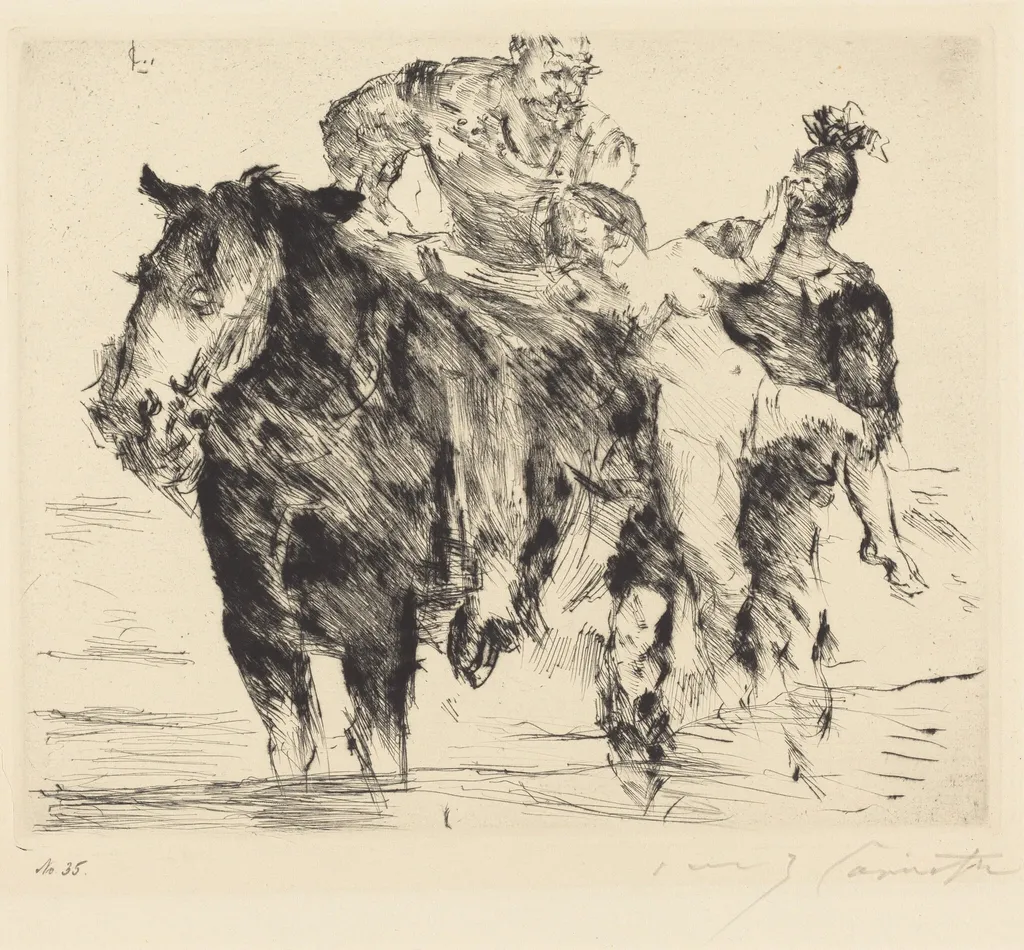
Frauenräuber (Rape) is an ink print by Lovis Corinth. It dates from 1920 and is held in the collection of the National Gallery of Art.
About this work
Overview
Frauenräuber (Rape) is a 1920 drypoint print in black on wove paper by German artist Lovis Corinth, reflecting his stylistic transition post-1911, characterized by increased expressiveness.
Subject & Meaning
The print depicts a distressing scene of a man forcefully grabbing a woman's wrist as she resists. Her calm, almost blank expression contrasts with the tense, painful grip, conveying a sense of resignation.
Technique & Style
Executed in drypoint, the work features scratchy, uneven lines, evoking a raw, tense atmosphere. This technique aligns with Corinth's post-stroke expressive evolution, though notably, the print lacks the vibrant color seen in his other later works.
History & Provenance
Created in 1920 by Lovis Corinth, a key figure bridging impressionism and expressionism, with influences from Paris, Munich, and his leadership in the Berlin Secession. The artist's style shifted after a 1911 stroke, incorporating more expressive qualities.
Context
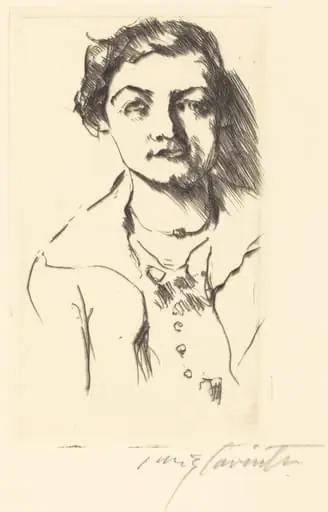
Frauenräuber (Rape) can be contextualized alongside Corinth's unvarnished portraits, sharing a similar directness. The work's themes and execution place it within the broader expressionist movement's emphasis on emotional intensity.
Legacy
While specific legacy details of Frauenräuber (Rape) are not highlighted, it contributes to Corinth's overall body of work, which remains significant in the history of German Expressionism and the evolution of printmaking techniques.
Artist & collection

Artist
Lovis Corinth was a German artist and writer whose mature work as a painter and printmaker realized a synthesis of impressionism and expressionism.

 Untitled
 Die Versuchung des heiligen Antonius (The Temptation of Saint Anthony)
 Les Petits Anes de Luchon
 Maquignons (Horse Dealers)
 Untitled
 La route d'Emmaüs (1ère planche) (The Road to Emmaus) (first plate)
 Le bon samaritain (The Good Samaritan)
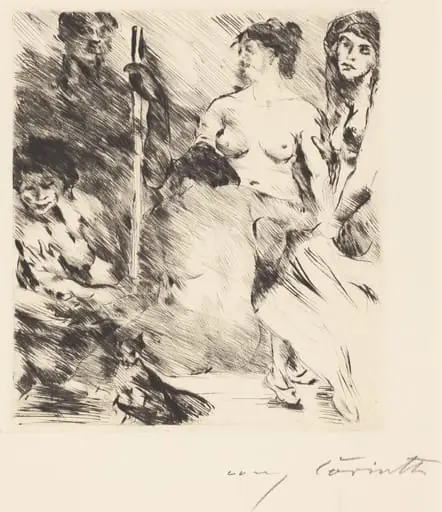 Der Harem (The Harem)
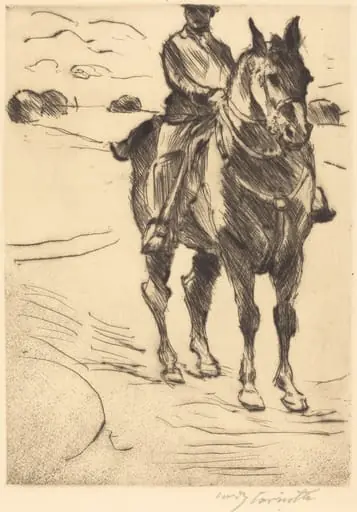 Reiter II (Horseman II)
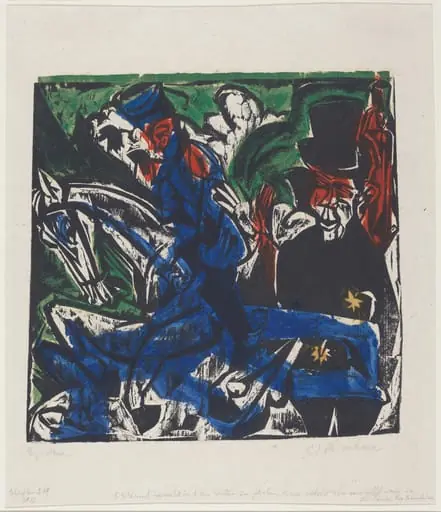 Peter Schlemihls wundersame Geschichte: Begegnung Schlemihls mit dem grauen Männlein auf der Landstrasse (Peter Schlemihl's Wondrous Story: Schlemihl Encounters the Little Gray Man on the Road)
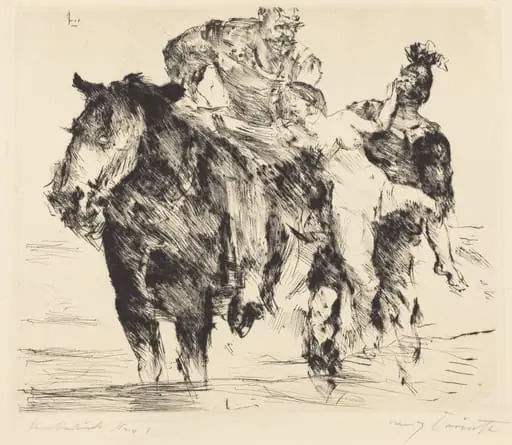 Frauenräuber (Rape)
 Untitled