Artwork
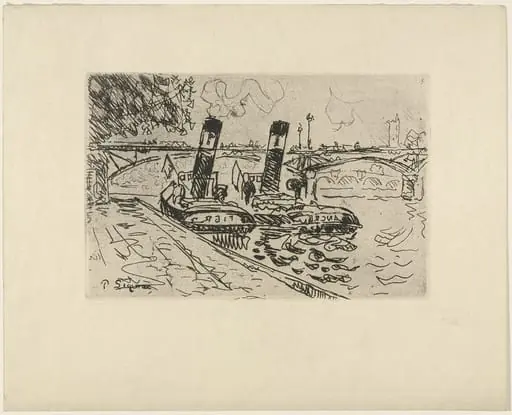
Paris, Le Pont des Arts avec Remorqeurs
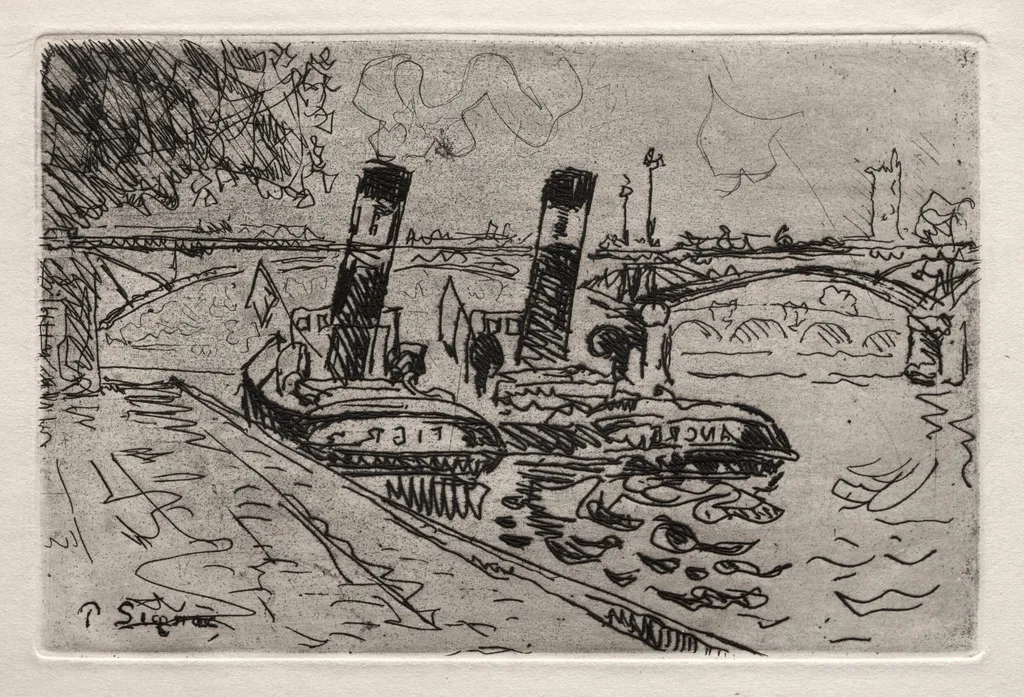
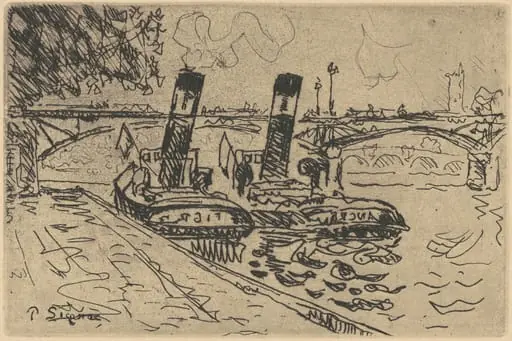
Paris, Le Pont des Arts avec Remorqeurs is a print by Paul Signac. It dates from 1927 and is held in the collection of the Cleveland Museum of Art.
About this work
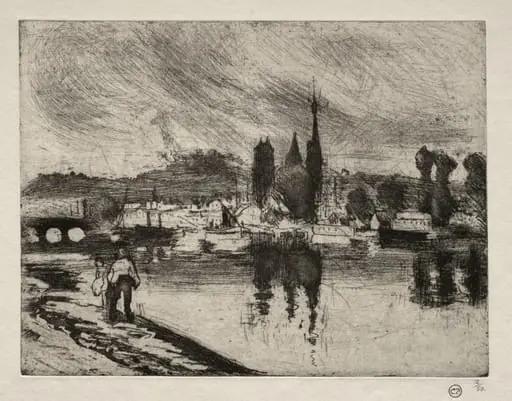
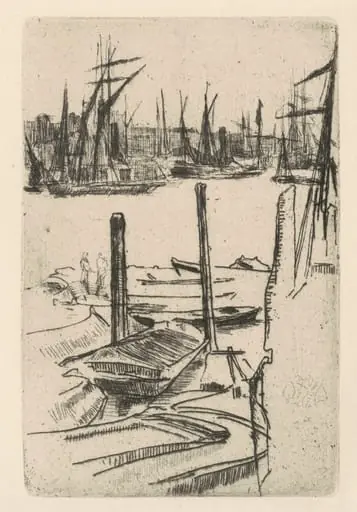
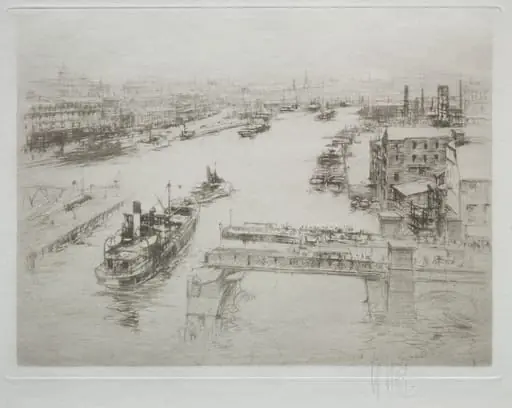
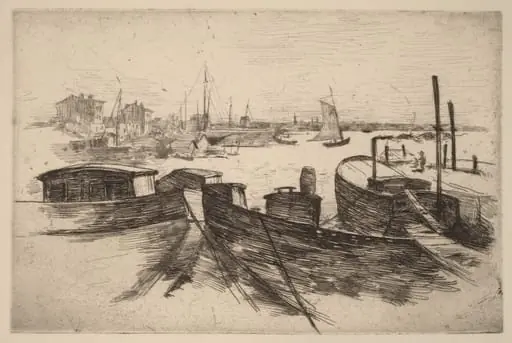
The painting shows a Paris bridge lined with boats. The water shimmers in bright blues and greens. Small figures walk the bridge under a soft sky.
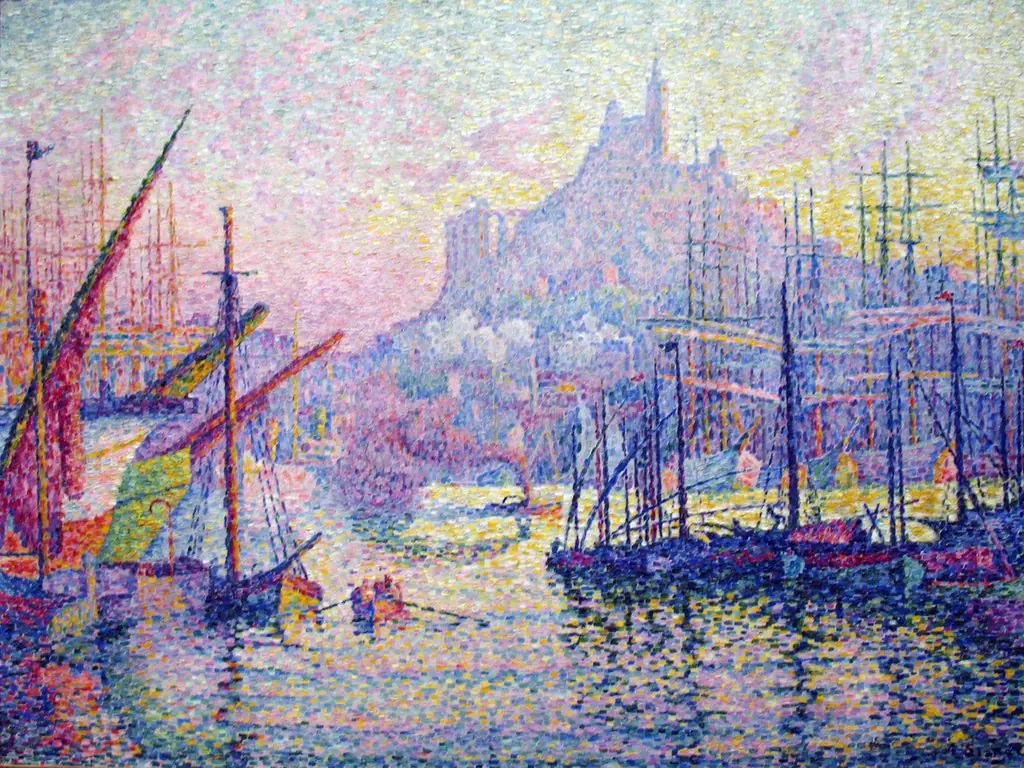
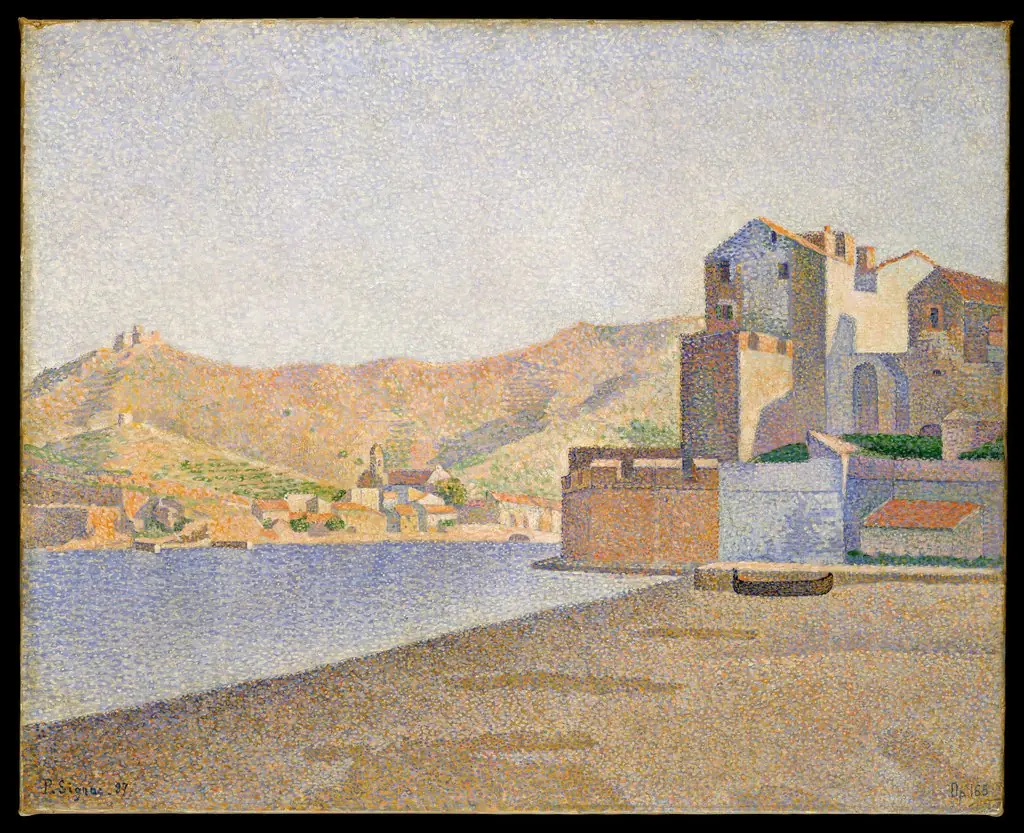
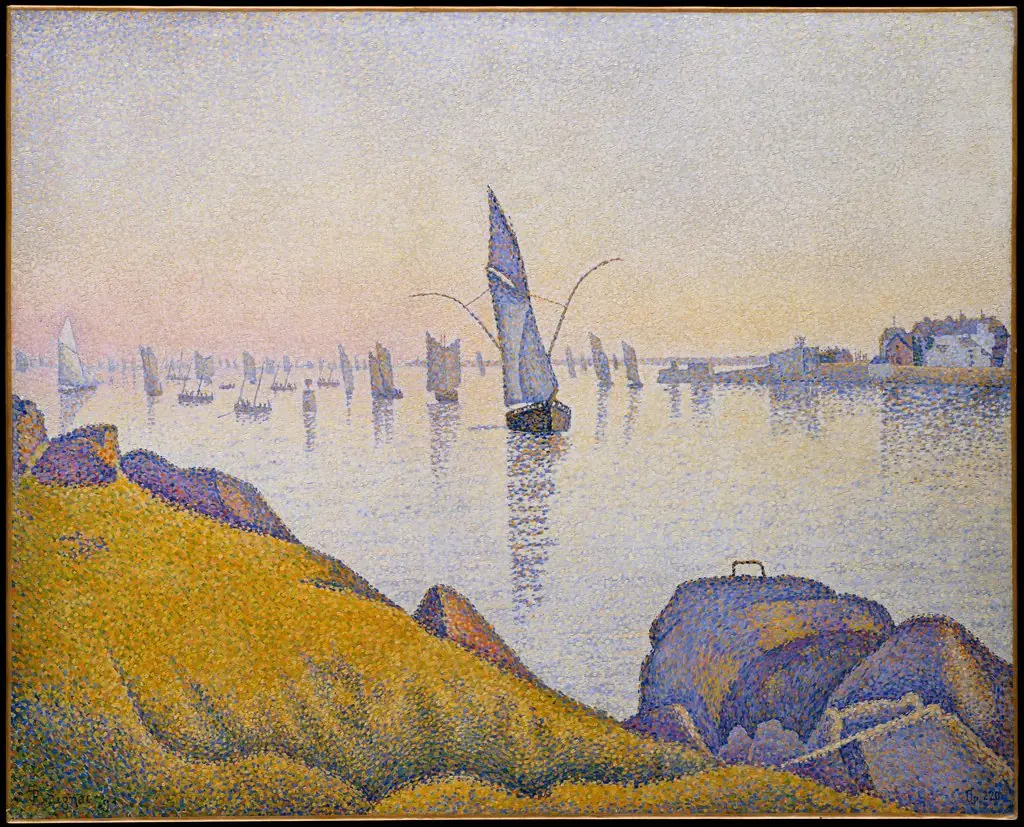
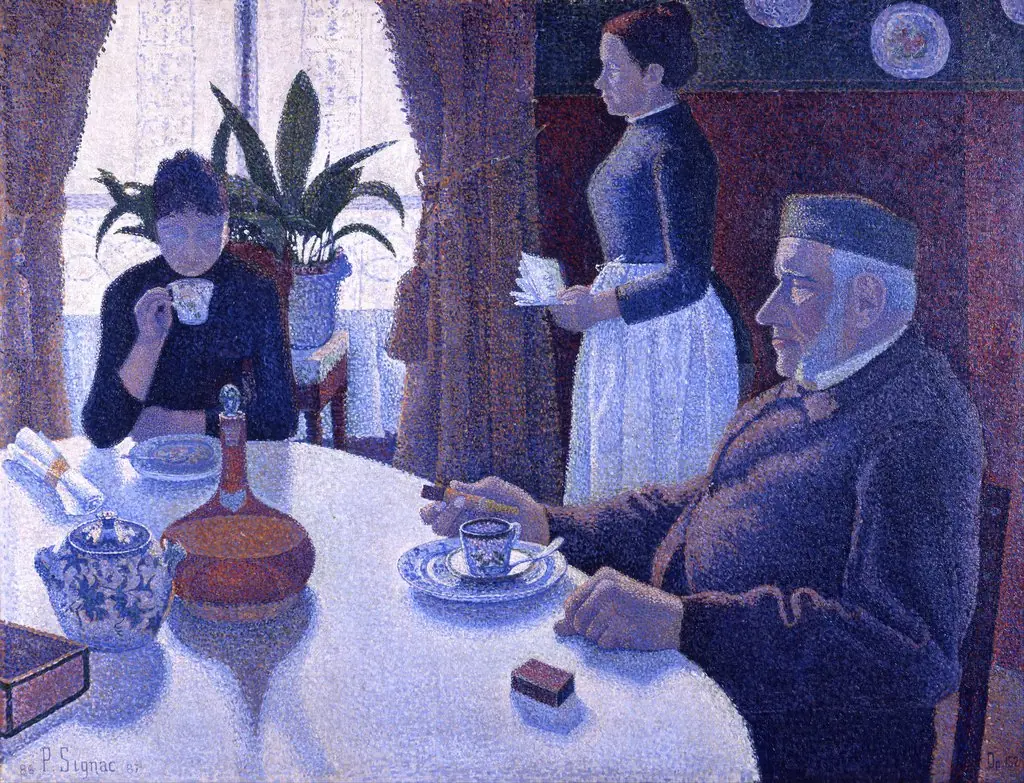
Signac used tiny dots of pure color. This builds shapes without outlines. It’s called pointillism — colors mix in your eye, not on the canvas.
Want to see more like this? Look up Paul Signac (French, 1863–1935).
Overview
Paul Signac, a French artist associated with Neo-Impressionism, produced this print in 1927 as a late example of his urban maritime observations.
Paul Signac, a French artist associated with Neo-Impressionism, produced this print in 1927 as a late example of his urban maritime observations. It captures the Pont des Arts bridge in Paris, with tugboats navigating the Seine below. Though primarily known for oil paintings, Signac also worked in print media, extending his color theories into graphic forms. The scene reflects his enduring interest in the interplay of water, light, and industrial activity along city waterways.
Subject & Meaning
The composition centers on a quiet moment in Paris’s river traffic: tugboats moving slowly beneath the pedestrian bridge. Figures on the bridge are minimal, suggesting everyday life rather than spectacle. Signac’s focus on working vessels amid a familiar urban landmark implies an appreciation for the rhythm of modern city life. The absence of dramatic action conveys a contemplative tone, aligning with his broader interest in harmony between nature and industry.
Technique & Style
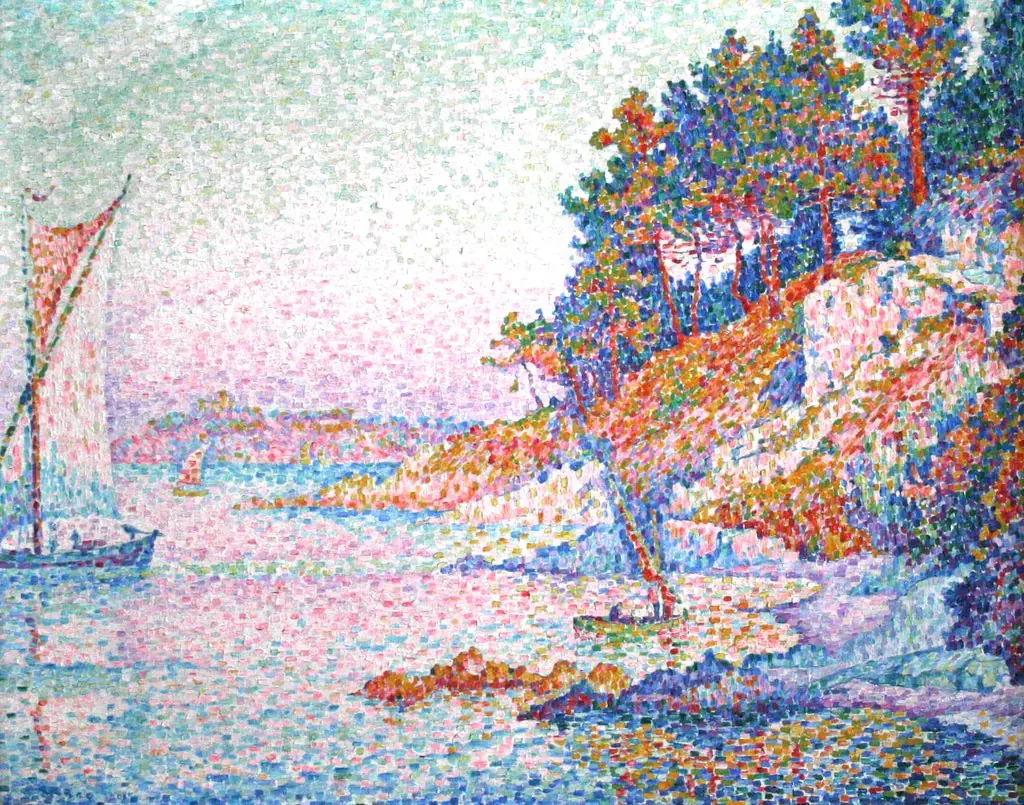
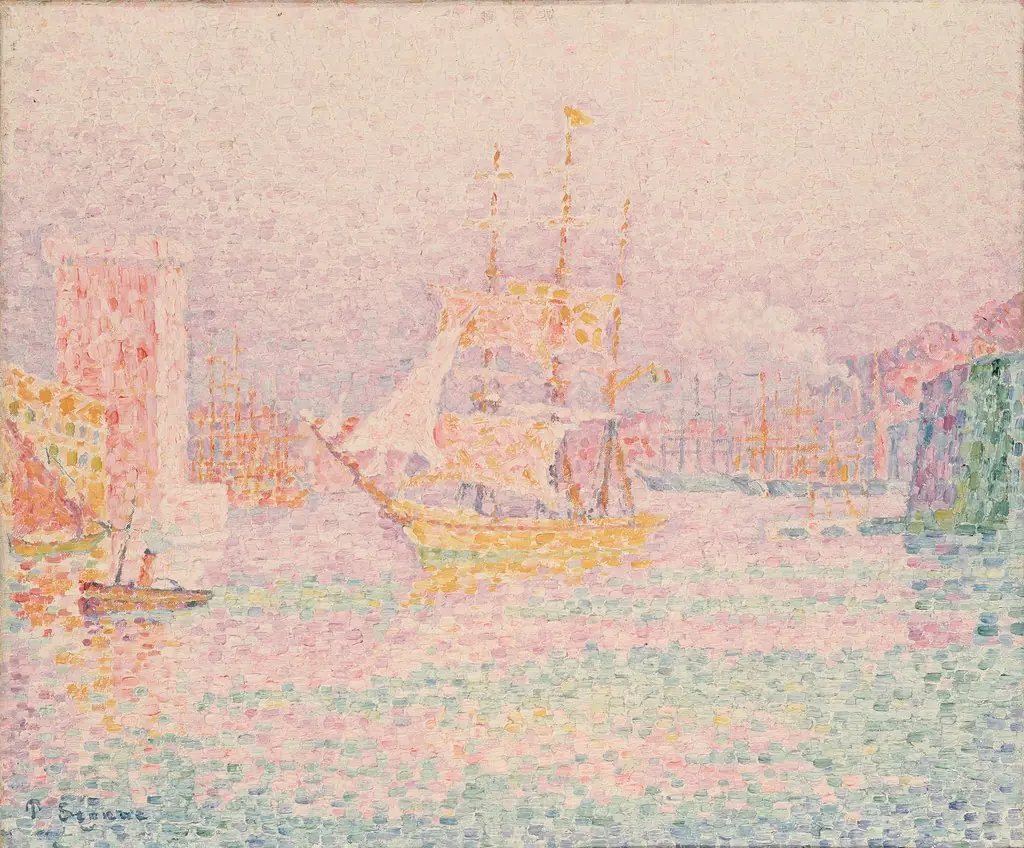
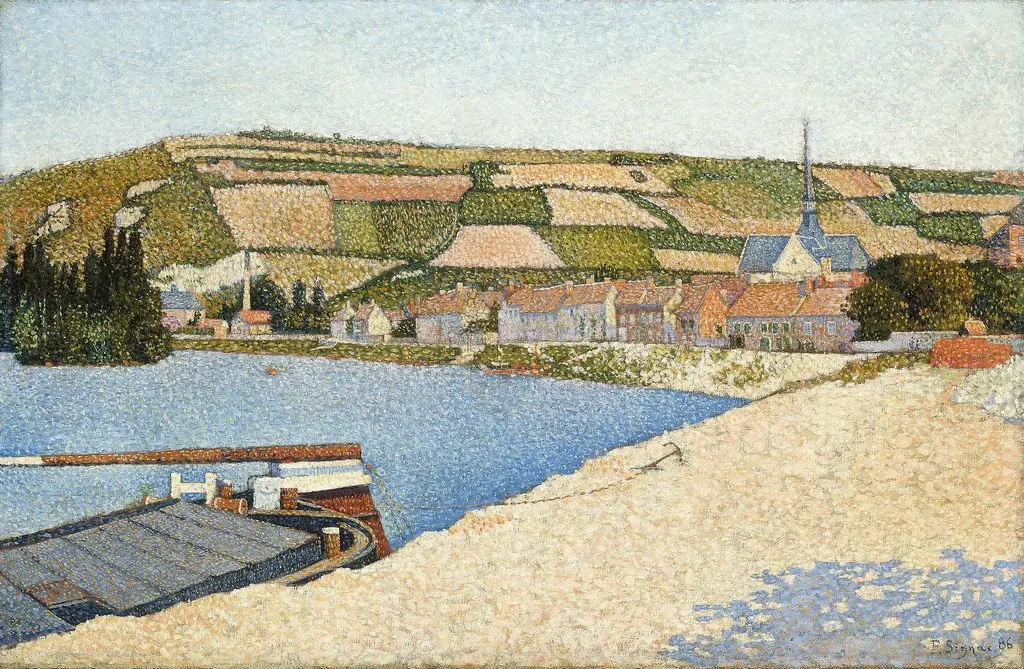
Signac employed a pointillist method, applying small, deliberate dots of unmixed pigment to construct the scene. The shimmering blues and greens of the water emerge from optical mixing, not blended pigments. Forms are defined by color relationships rather than outlines, creating a luminous, fragmented effect. This technique, developed alongside Seurat, was refined over decades and here applied with precision, even in a printed medium, emphasizing light’s transient qualities.
History & Provenance
Created in 1927, near the end of Signac’s life, the work reflects his lifelong dedication to Pointillism despite shifting artistic trends. It entered the collection of The Cleveland Museum of Art through documented acquisition, though specific prior ownership details are not widely published. As one of his final works, it stands as a testament to his consistent commitment to color theory and observational painting, even as modernism moved toward abstraction.
Context
In the 1920s, Paris was undergoing rapid modernization, and Signac’s choice of a bridge and tugboats situates the work within this evolving urban landscape. While many contemporaries embraced Cubism or Expressionism, Signac remained committed to the scientific approach to color he had championed since the 1880s. His focus on waterways connected his early seascapes to his later city views, maintaining a thematic continuity rooted in light and movement.
Legacy
Signac’s late prints, including this one, demonstrate the endurance of Pointillism beyond its initial avant-garde phase. Though less influential on later movements than his paintings, these works preserved his method for printmaking audiences. His insistence on optical color mixing contributed to broader discussions about perception in art. Today, this piece remains a quiet example of how a disciplined technique could sustain artistic inquiry across decades.
Artist & collection

Artist
Paul Victor Jules Signac ( seen-YAHK, French: ; 11 November 1863 – 15 August 1935) was a French Neo-Impressionist painter who, with Georges Seurat, helped develop the artistic technique Pointillism.

![The Harbor at Viareggio [La Darsena], by Uberto dell'Orto](https://artifactworldgallery.com/img/uberto-dell-orto--the-harbor-at-viareggio-la-darsena--bbec93909bc4f582-w320.webp)