Artwork
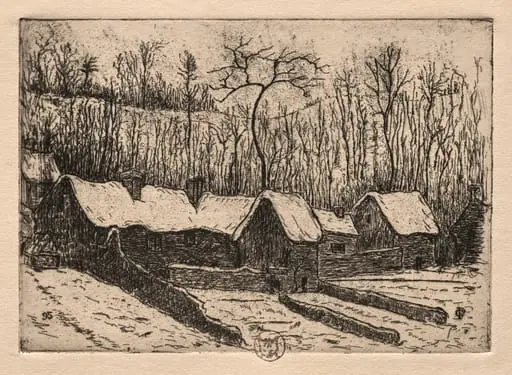
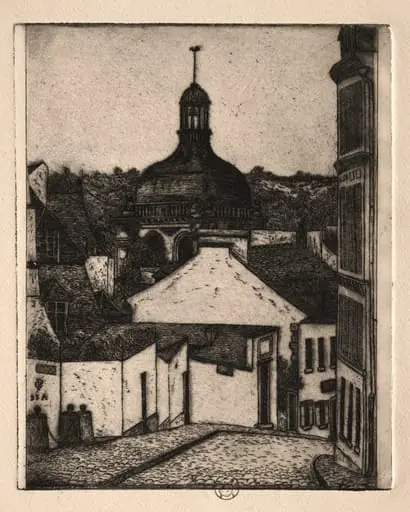
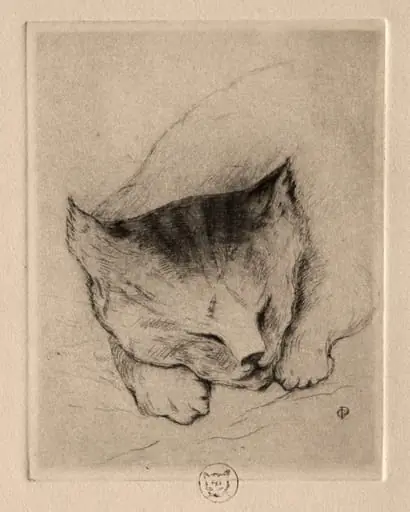
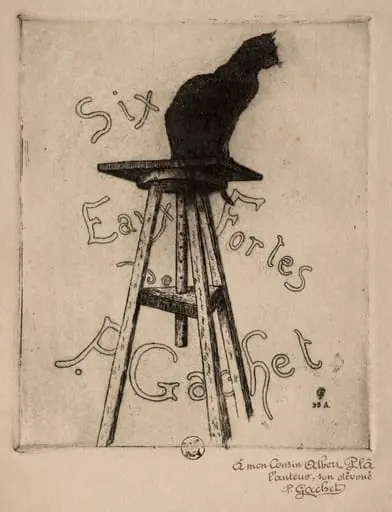
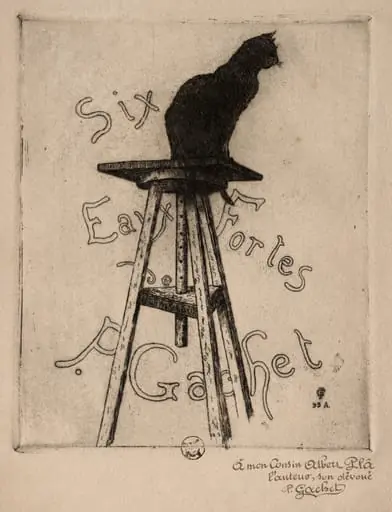
Six Etchings: Tréport
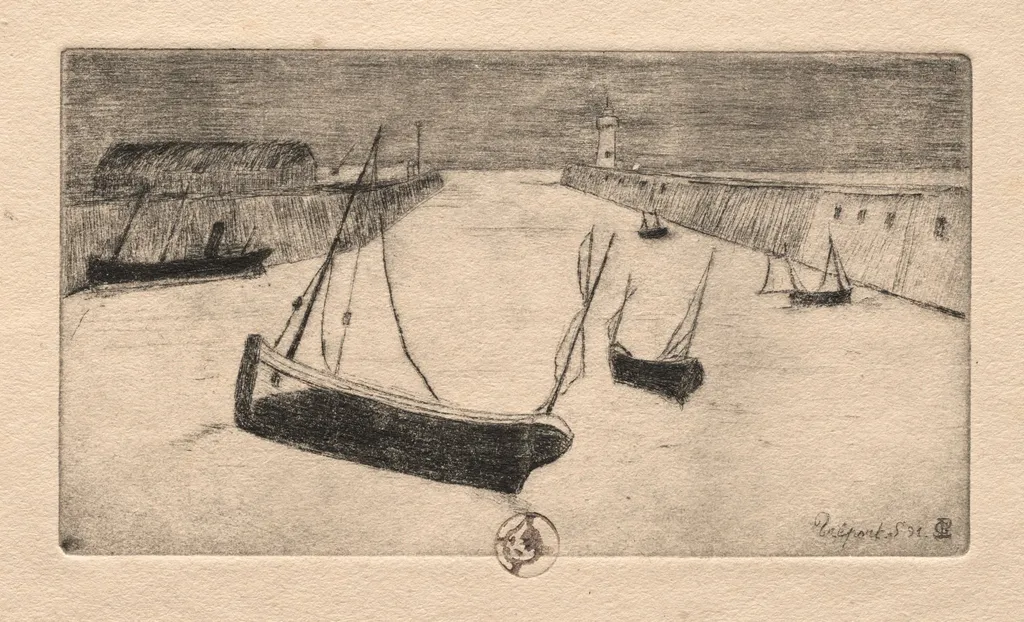
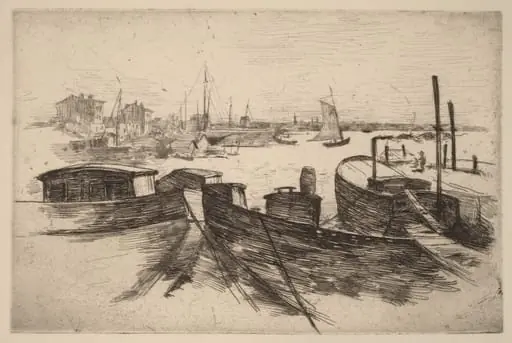
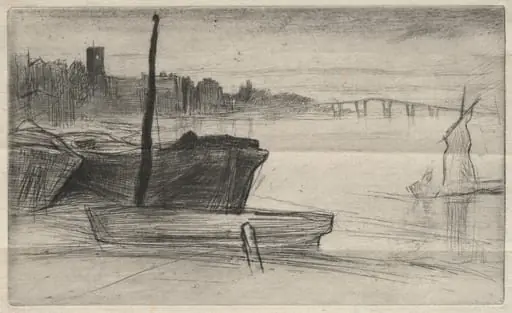
Six Etchings: Tréport is a print by the Impressionist artist Paul Gachet. It dates from 1895 and is held in the collection of the Cleveland Museum of Art.
About this work
Overview
Though trained in medicine, Gachet pursued art as a personal endeavor, often signing his works under the pseudonym 'Paul van Ryssel' to honor his Lille origins.
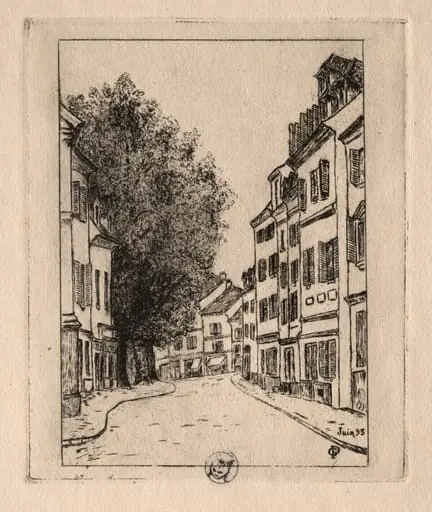
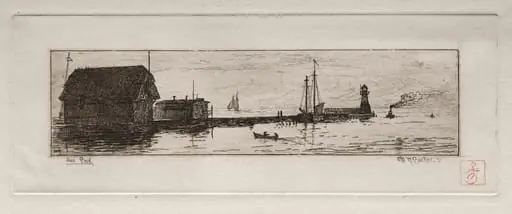
Created in 1895, *Six Etchings: Tréport* is a series of six prints by Paul Gachet, a French physician and printmaker with ties to the Impressionist circle. Though trained in medicine, Gachet pursued art as a personal endeavor, often signing his works under the pseudonym 'Paul van Ryssel' to honor his Lille origins. The series captures the quiet coastal life of Tréport, a seaside town in northern France, through delicate etched lines that emphasize atmosphere over precision.
Subject & Meaning
The etchings portray tranquil harbor views, featuring small fishing boats, a weathered dock, and distant vessels anchored near a low-roofed structure. These scenes reflect Gachet’s interest in ordinary, unidealized landscapes, aligning with the Impressionist focus on everyday environments. The absence of human figures enhances the sense of solitude and stillness, suggesting a contemplative engagement with place rather than narrative storytelling.
Technique & Style
Gachet employed etching to achieve loose, fluid lines that suggest movement and light without detailed rendering. His brushwork-like marks convey texture through minimal strokes—rippling water, weathered wood, and distant sails are implied rather than defined. This approach prioritizes visual impression over realism, echoing the broader Impressionist preference for capturing fleeting moments and natural conditions through simplified forms.
History & Provenance
The complete series of six etchings is held by the Cleveland Museum of Art. Gachet’s prints were not widely distributed during his lifetime, and few examples survive. His dual identity as a physician and artist limited his public visibility, but his connections to figures like Van Gogh ensured his work remained within intimate artistic circles. The museum’s acquisition preserves a rare record of his printmaking activity.
Context
Gachet worked alongside key Impressionist and Post-Impressionist artists, offering both medical care and artistic camaraderie. His etchings reflect the movement’s shift toward personal, observational subjects and the rejection of academic rigidity. Though not a professional artist, his engagement with landscape and light places him within the broader cultural current of late 19th-century French art that valued spontaneity and direct experience.
Legacy
Gachet’s etchings remain obscure compared to his more famous patients, yet they offer insight into the permeable boundaries between amateur and professional practice in the Impressionist era. His work illustrates how medical and artistic communities intersected, and how quiet, personal projects could embody the era’s aesthetic values. Today, they serve as modest but authentic documents of a time when art was pursued as a lived experience.
Artist & collection
Artist
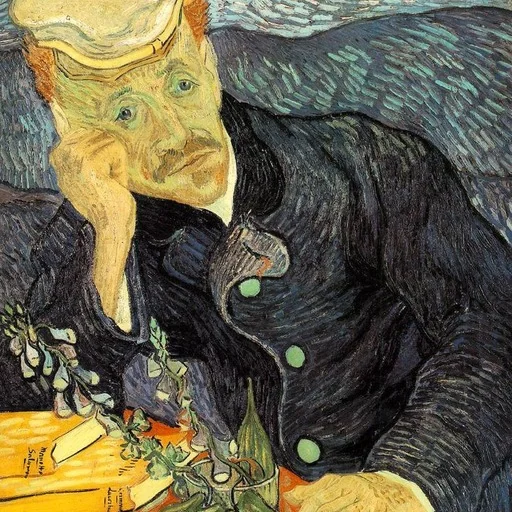
Paul-Ferdinand Gachet (30 July 1828 – 9 January 1909) was a French physician most famous for treating the painter Vincent van Gogh during his last weeks in Auvers-sur-Oise.

![The Harbor at Viareggio [La Darsena], by Uberto dell'Orto](https://artifactworldgallery.com/img/uberto-dell-orto--the-harbor-at-viareggio-la-darsena--bbec93909bc4f582-w320.webp)
![Antwerp: Sunset [Anversa: Tramonto], by Vittore Grubicy](https://artifactworldgallery.com/img/vittore-grubicy--antwerp-sunset-anversa-tramonto--1a80a00e4543adeb-w320.webp)