Artwork
The Tiny Pool
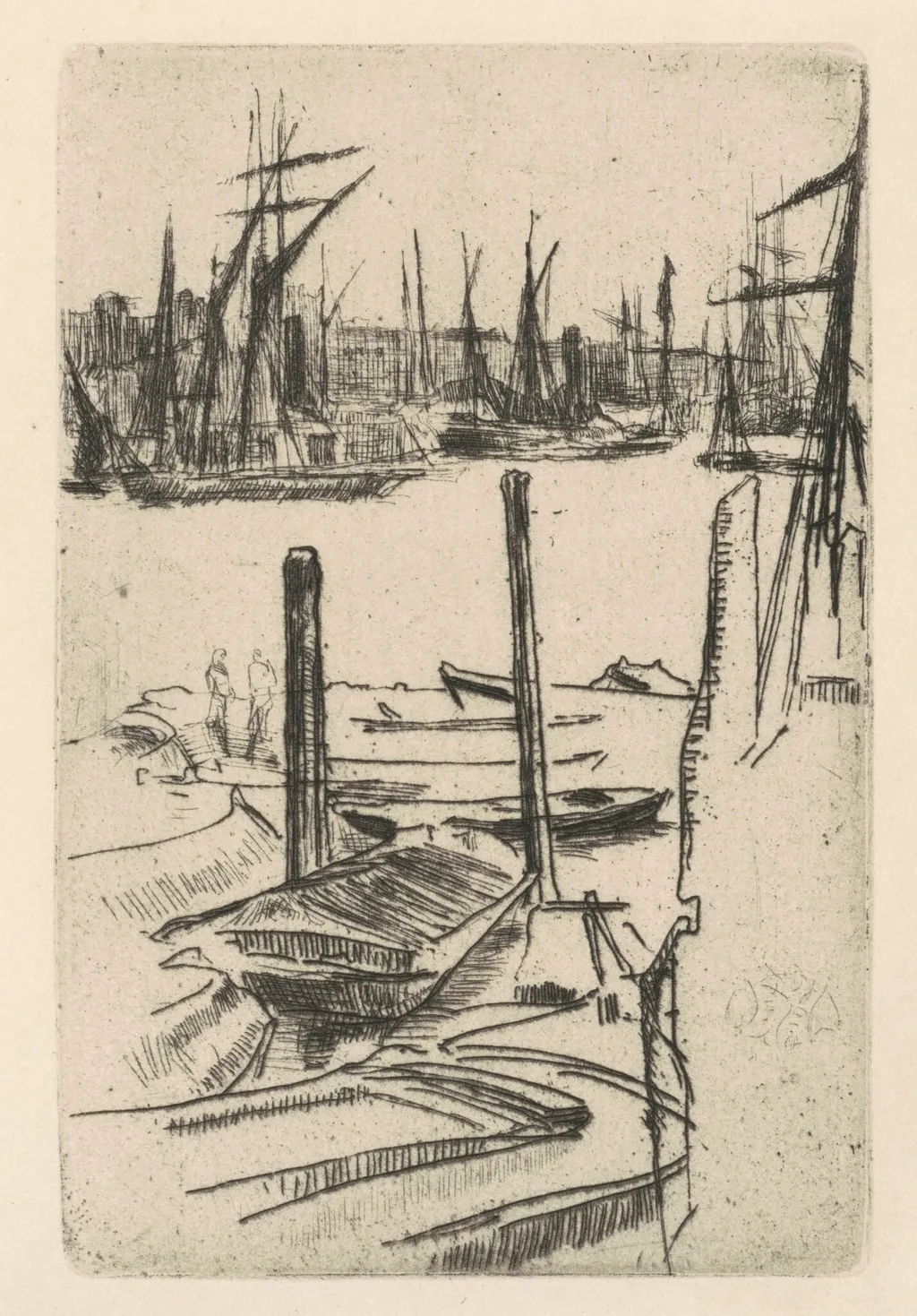
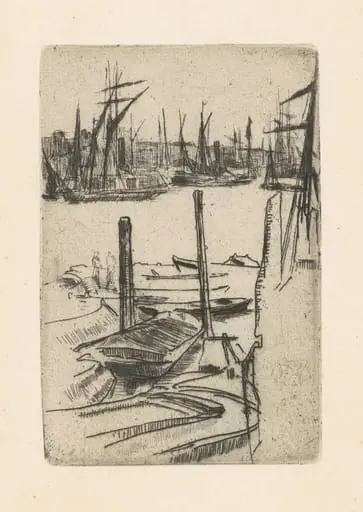
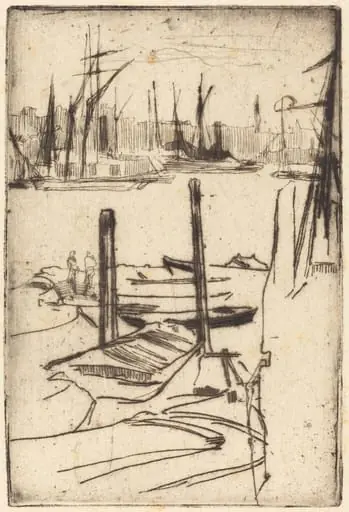
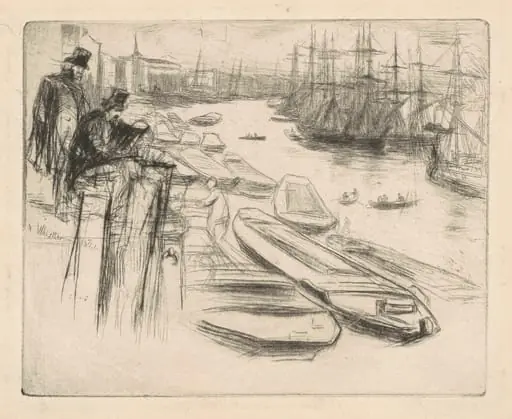
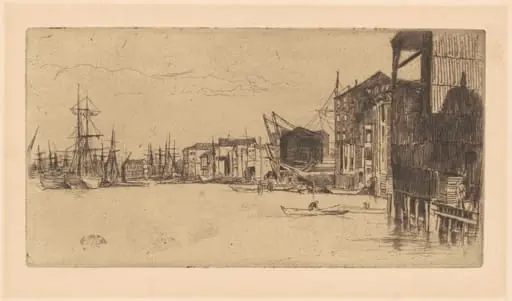
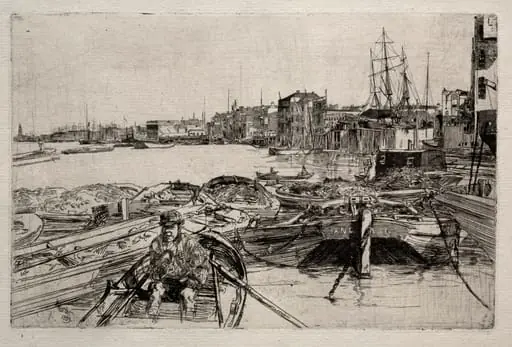
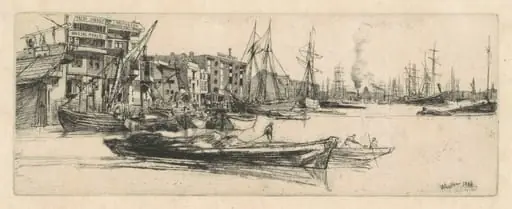
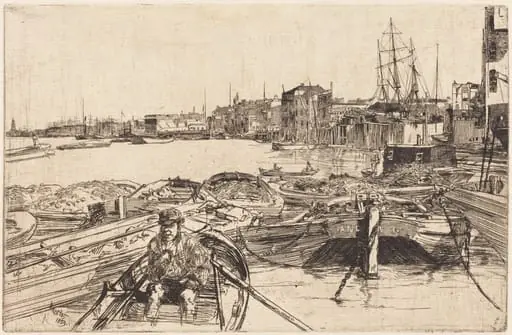
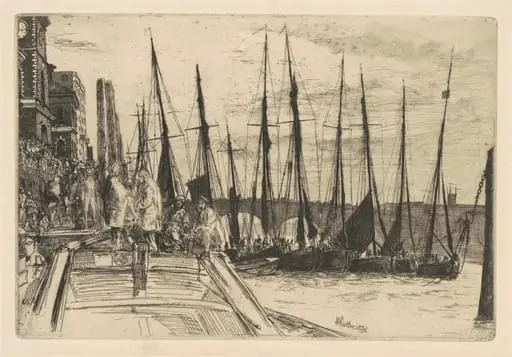
The Tiny Pool is an ink print by the Impressionist artist James McNeill Whistler. It dates from 1877 and is held in the collection of the National Gallery of Art.
About this work
Overview
Created between 1876 and 1878, The Tiny Pool is a monochrome etching and drypoint on wove paper by James McNeill Whistler.
Created between 1876 and 1878, The Tiny Pool is a monochrome etching and drypoint on wove paper by James McNeill Whistler. It depicts a quiet, elongated stretch of water lined with moored boats receding into the distance. Executed entirely in the studio, the work reflects Whistler’s deliberate, slow process—years were spent refining its delicate lines and subtle tonal shifts, avoiding direct observation of the scene.
Subject & Meaning
The scene presents a serene, almost abstracted waterfront, devoid of human figures or narrative. The arrangement of boats and the stillness of the water suggest contemplation rather than activity. Whistler’s focus on quietude and spatial recession aligns with his broader interest in harmony and atmosphere, treating the landscape as an arrangement of form and tone rather than a documentary record.
Technique & Style
Whistler combined etching with drypoint, using a needle to scratch directly into the copper plate, producing soft, velvety lines that blur at the edges. Fine cross-hatching and minimal ink pressure create gradations of gray, with water ripples rendered in nearly invisible strokes. The result is a delicate interplay of precision and ambiguity, where form emerges from subtle texture rather than bold contour.
History & Provenance
The print was developed over several years in Whistler’s London studio, not from direct sketches on location. It was likely produced for his personal exhibition purposes and circulated among collectors who valued his experimental approach to printmaking. Its slow evolution reflects Whistler’s rejection of rapid production in favor of meticulous revision and tonal refinement.
Context
During the late 1870s, Whistler was deeply engaged in exploring the limits of printmaking as an art form, distancing himself from narrative illustration. The Tiny Pool aligns with his aesthetic philosophy of 'art for art’s sake,' emphasizing composition and mood over storytelling. It reflects contemporary European interest in Japanese prints, particularly in its flattened perspective and restrained palette.
Legacy
The Tiny Pool exemplifies Whistler’s influence on modern printmaking through its emphasis on tonal subtlety and technical restraint. Its quiet intensity inspired later artists to treat etching not as a reproductive medium but as a vehicle for atmospheric expression. The work remains a key example of how minimal means can evoke profound stillness.
Artist & collection
Artist
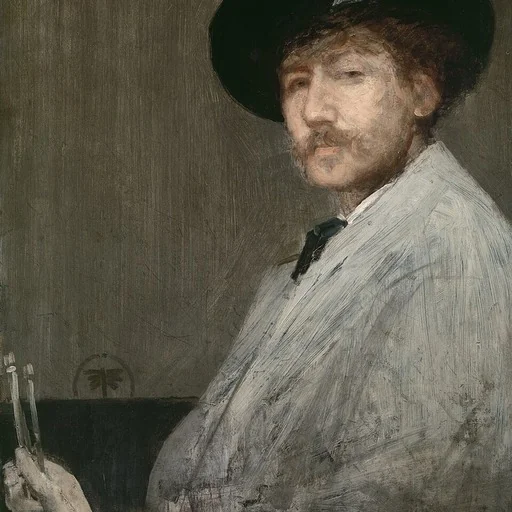
James Abbott McNeill Whistler was an American painter in oils and watercolor, and printmaker, active during the American Gilded Age and based primarily in the United Kingdom.

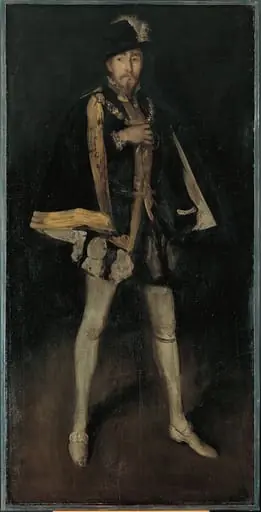 Arrangement in Black, No. 3: Sir Henry Irving as Philip II of Spain
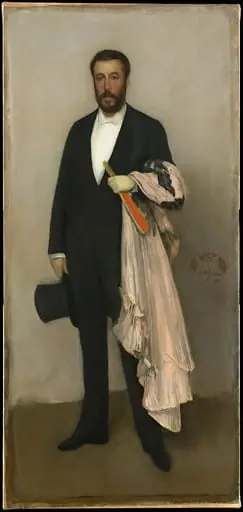 Arrangement in Flesh Colour and Black: Portrait of Theodore Duret
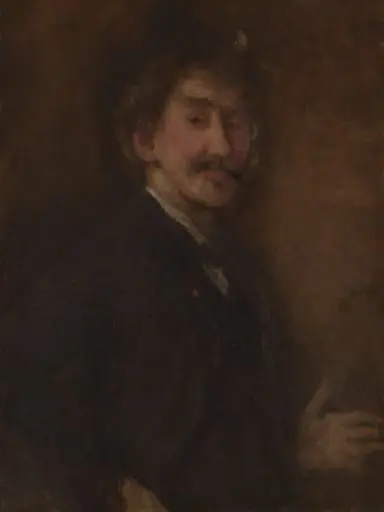 Gold and Brown: Self-Portrait
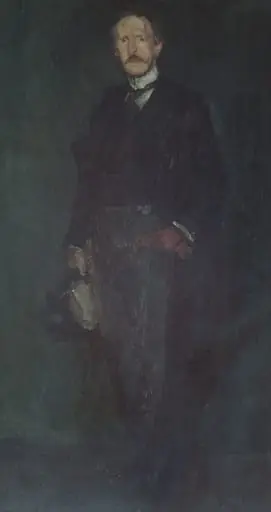 Edward Guthrie Kennedy
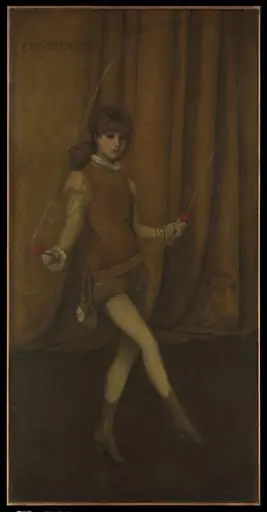 Harmony in Yellow and Gold: The Gold Girl—Connie Gilchrist
 George W. Vanderbilt
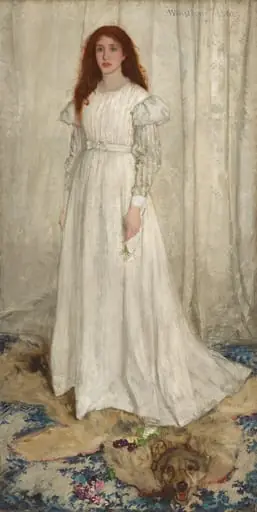 Symphony in White, No. 1: The White Girl
 Henry Irving as Philip II of Spain