Artwork
Copac
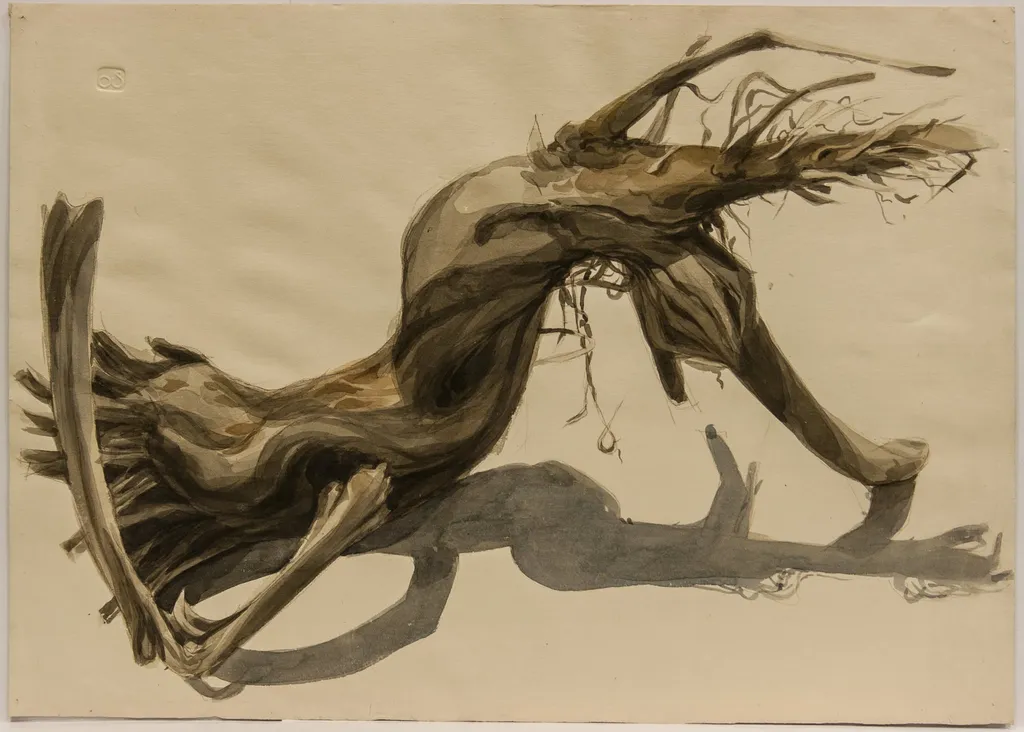
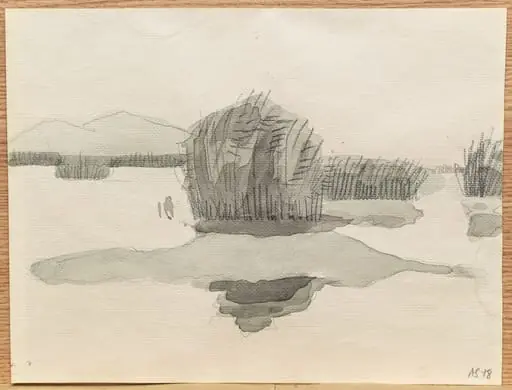
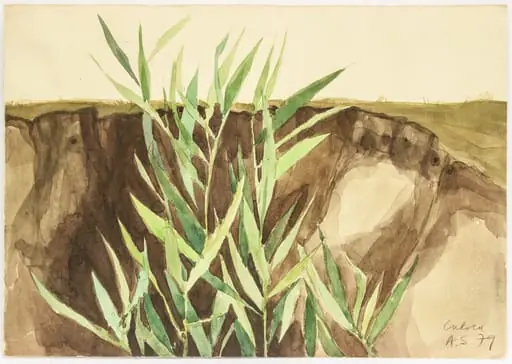
Copac is an unspecified painting by Ana Maria Smigelschi. It dates from 1950 and is held in the collection of the Gavrila Simion Eco-Museum Research Institute Tulcea.
About this work
Overview
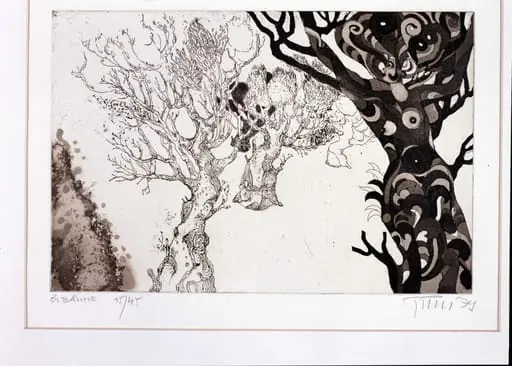
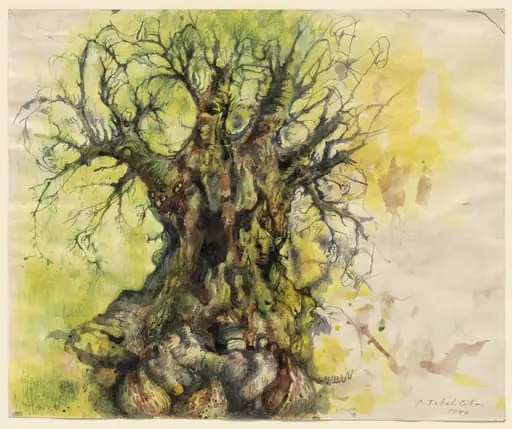
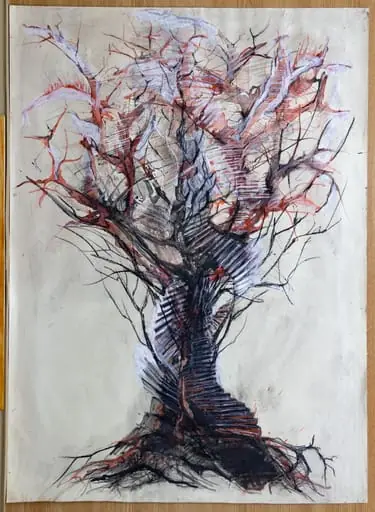
Copac, created around 1950 by Ana Maria Smigelschi, is a painted composition centered on a solitary tree. The work resides in the collection of the Museum of Ethnography. Its subdued palette of browns and grays emphasizes form over narrative, reducing the scene to the tree’s structural presence. No clear horizon or surrounding environment is depicted, isolating the subject in a neutral space.
Subject & Meaning
The tree in Copac functions as a silent, enduring symbol, its roots and branches extending symmetrically to suggest balance and continuity.
The tree in Copac functions as a silent, enduring symbol, its roots and branches extending symmetrically to suggest balance and continuity. Without contextual elements, the painting invites contemplation of growth, resilience, or rootedness. The absence of leaves or seasonal indicators removes temporal specificity, allowing the tree to stand as an abstract emblem rather than a literal representation.
Technique & Style
Smigelschi employs a restrained tonal range to model the tree’s form, using gradations of gray and brown to imply volume and shadow. While not strictly chiaroscuro, the work shares a focus on light and mass through subtle shifts in value. Brushwork is deliberate but unobtrusive, avoiding texture or detail in favor of simplified, sculptural geometry.
History & Provenance
Copac entered the Museum of Ethnography’s collection shortly after its creation, likely through direct acquisition or donation by the artist. No public record of prior ownership or exhibition history exists beyond its institutional custody. Its preservation there suggests an early recognition of its formal qualities within ethnographic or modern Romanian art contexts.
Context
Created in postwar Romania, Copac reflects a period when artists often turned to elemental forms as a response to social upheaval. While not overtly political, its minimalist focus on nature aligns with broader regional tendencies toward introspective, symbolic imagery. The work exists outside dominant socialist realism, offering a quiet alternative in mid-century Romanian art.
Legacy
Copac remains a modest but distinct example of Smigelschi’s engagement with natural forms through abstraction. It has not been widely reproduced or studied, yet its presence in a major ethnographic museum underscores its value as a personal, meditative work. It contributes to a lesser-known strand of Romanian modernism that prioritizes stillness over spectacle.
Artist & collection
Artist
A painter and printmaker, Ana Maria Smigelschi made bold, graphic works of rivers, towns, and churches in a personal style.
Museum
Gavrila Simion Eco-Museum Research Institute Tulcea
Continue through works from the same source collection.