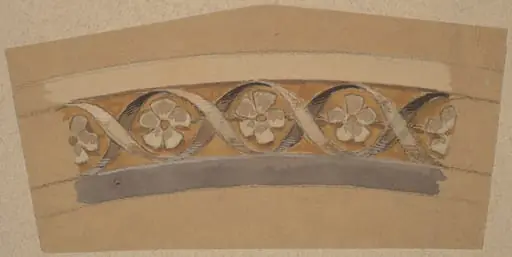
Artwork
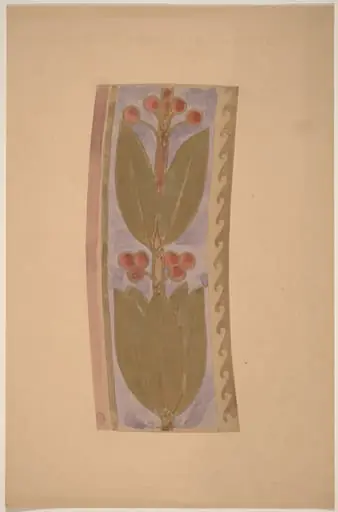
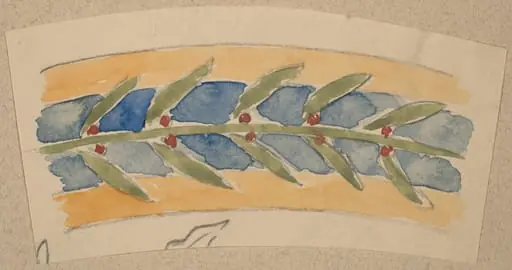
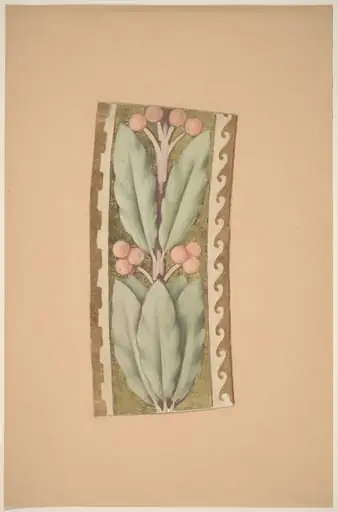
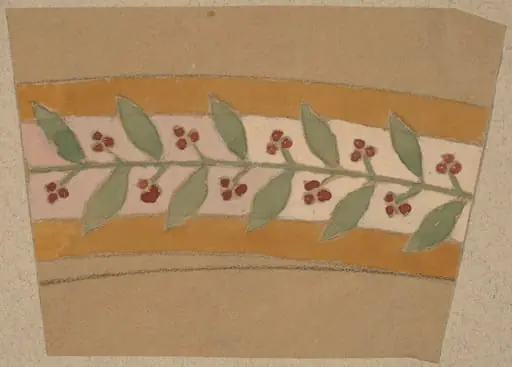
Study for a Border Design
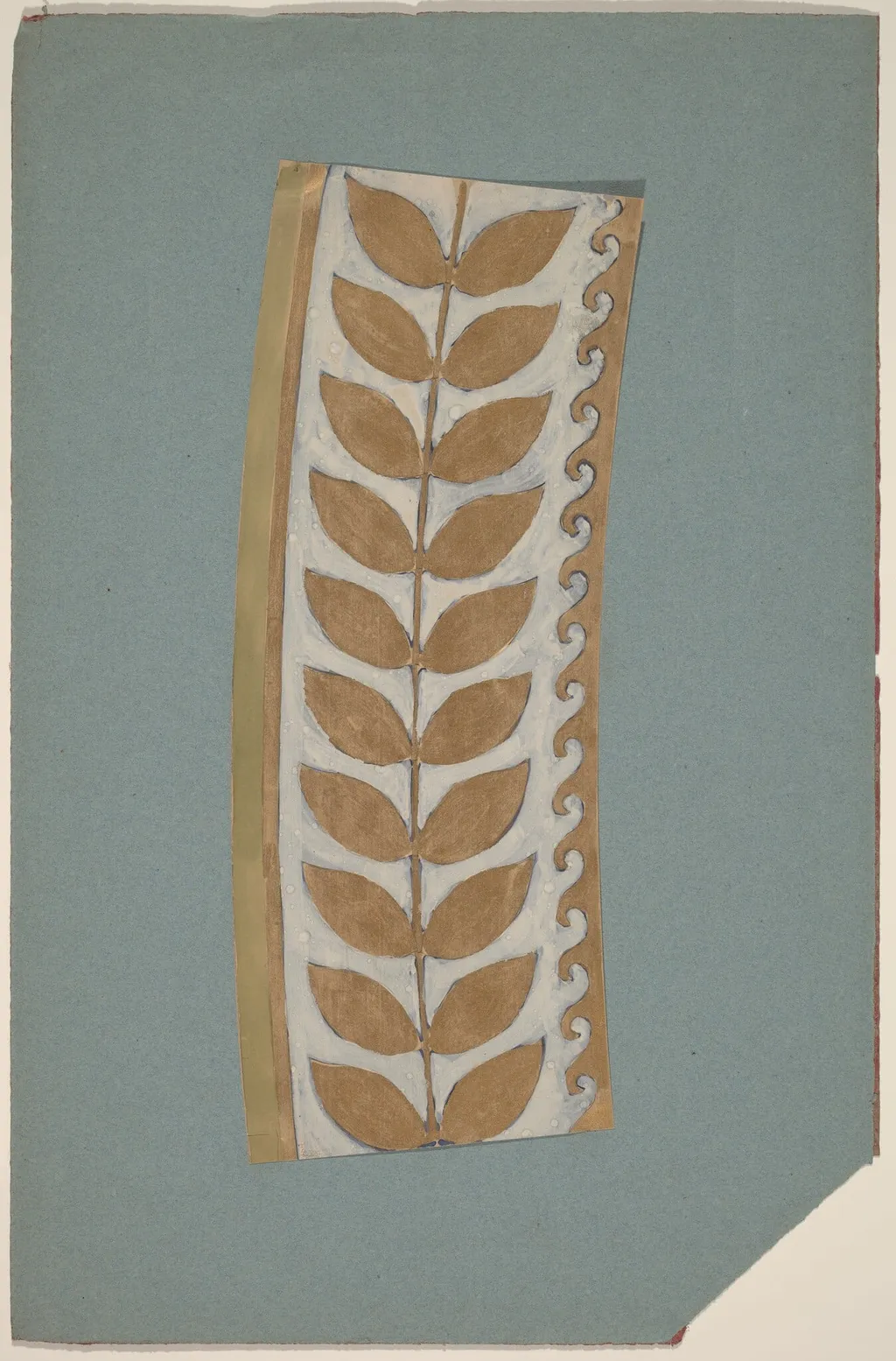
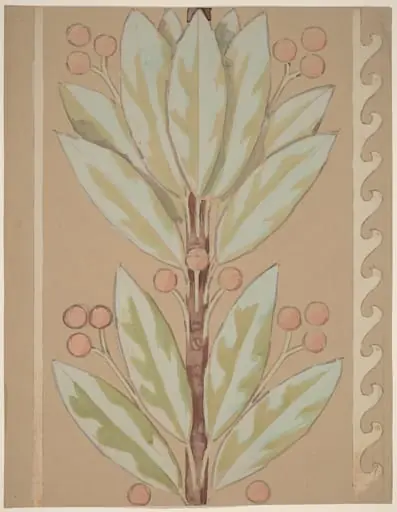
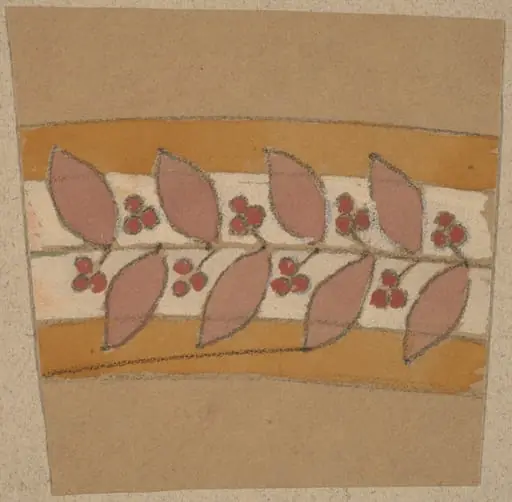
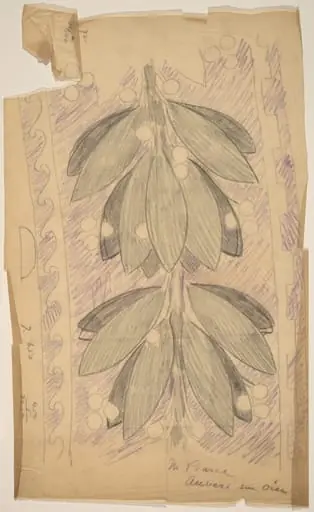
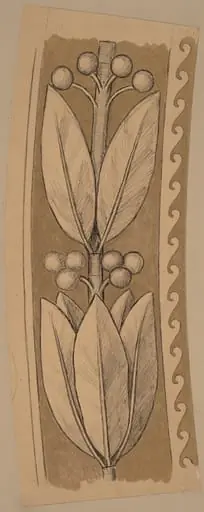
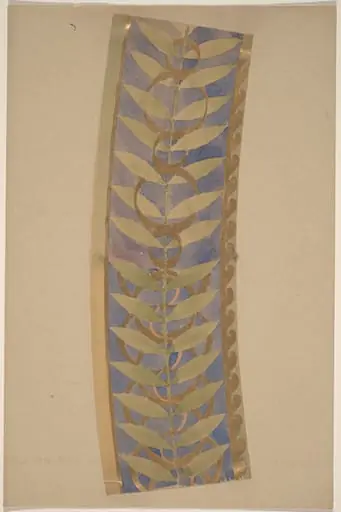
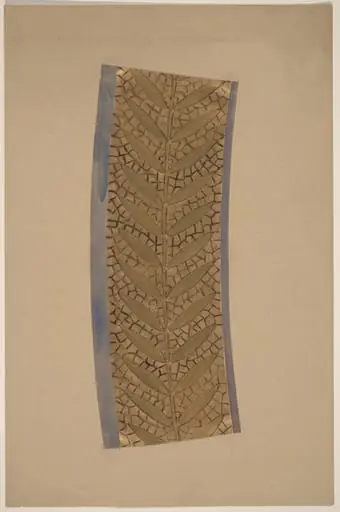
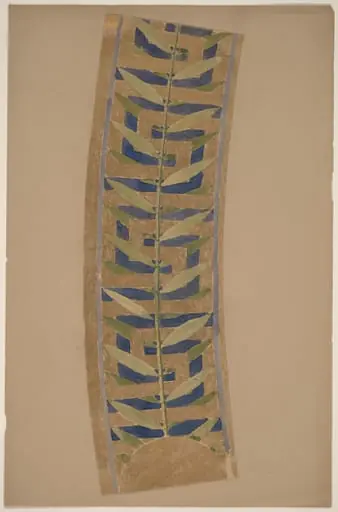
Study for a Border Design is a gouache drawing by the Impressionist artist Charles Sprague Pearce. It dates from 1894 and is held in the collection of the National Gallery of Art.
About this work
Overview
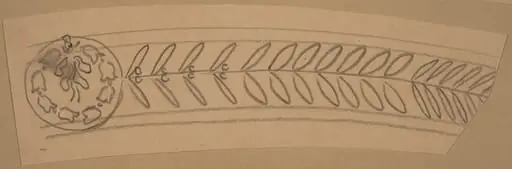
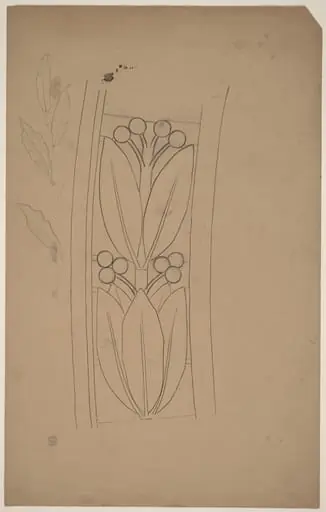
Created in 1894, this drawing by Charles Sprague Pearce is a preparatory work executed in gouache, gold paint, and graphite on blue wove paper. It functions as a design study for a decorative border, likely intended for architectural or manuscript use. The choice of materials suggests an emphasis on luminosity and fine detail, typical of late 19th-century decorative arts practices in America.
Subject & Meaning
The composition features an intricate, repeating pattern of stylized botanical and geometric forms, arranged in a continuous band. No narrative or figurative elements are present; the focus is purely on rhythm and ornamentation. The design reflects an interest in historical motifs, possibly drawing from Renaissance or Islamic precedents, adapted for contemporary decorative applications.
Technique & Style
Pearce applied gouache with precision, layering opaque pigments to achieve rich color saturation. Gold paint was used selectively to highlight key elements, enhancing visual depth and texture. Graphite underdrawing guides the composition, revealing a methodical approach to layout. The blue paper provides a cool tonal base that subtly modulates the warmth of the pigments.
History & Provenance
The work remains in private hands, with no public exhibition history documented prior to its inclusion in scholarly catalogs of Pearce’s drawings. It was likely produced during his active period in Paris, where he engaged with decorative arts circles. No record exists of its original commission, suggesting it may have been a personal exploration of ornamental form.
Context
In the 1890s, American artists increasingly turned to decorative design as part of the broader Aesthetic Movement and Arts and Crafts revival. Pearce, trained in Paris and influenced by European academic traditions, participated in this shift, seeking to elevate craft through refined draftsmanship and material sensitivity, distinct from industrial mass production.
Legacy
This study exemplifies Pearce’s engagement with ornament as a disciplined art form. Though not widely known for decorative work, this piece contributes to understanding his versatility beyond portraiture. It stands as a quiet testament to the era’s interest in integrating fine art principles into applied design, influencing later generations of American illustrators and designers.
Artist & collection

Artist
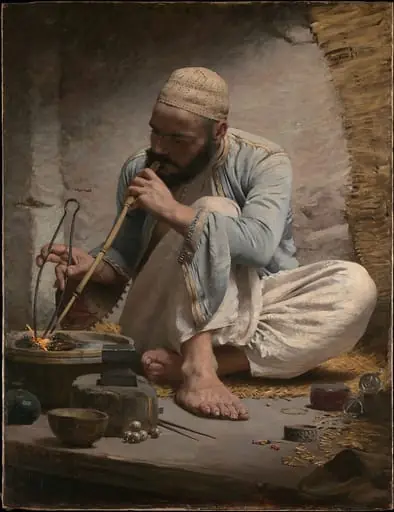
Charles Sprague Pearce (1851–1914) was an American artist, born in Boston.

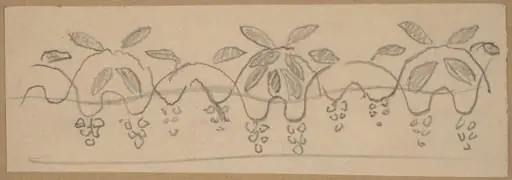
![Studies for a Lunette [recto], by Charles Sprague Pearce](https://artifactworldgallery.com/img/charles-sprague-pearce--studies-for-a-lunette-recto--07c43c96c8ad1d74-w320.webp)