Artwork
Study for a Border Design
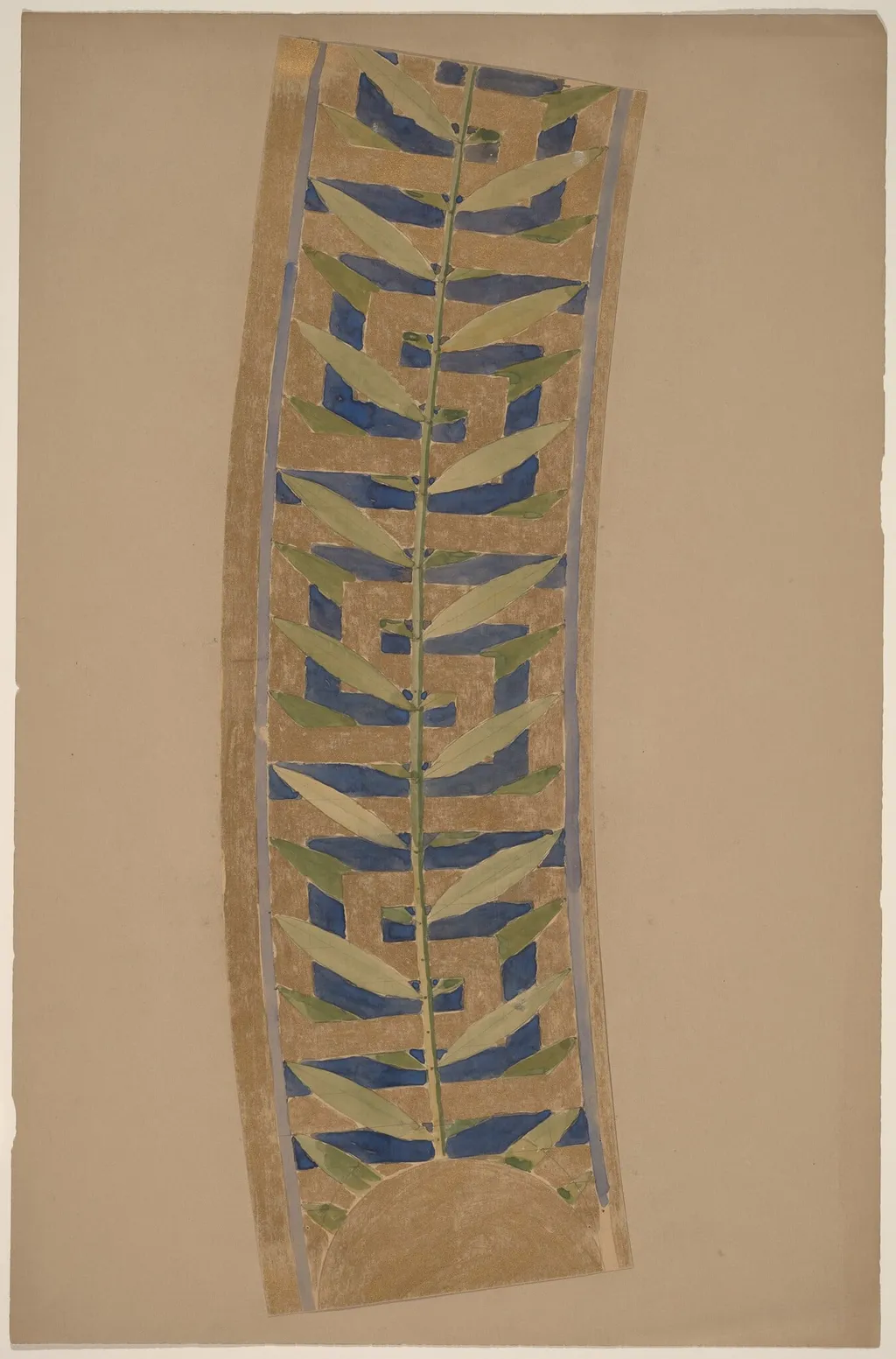
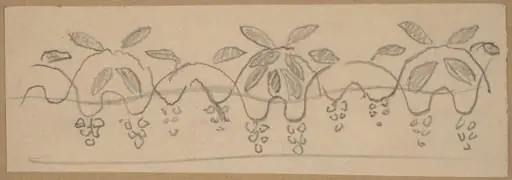
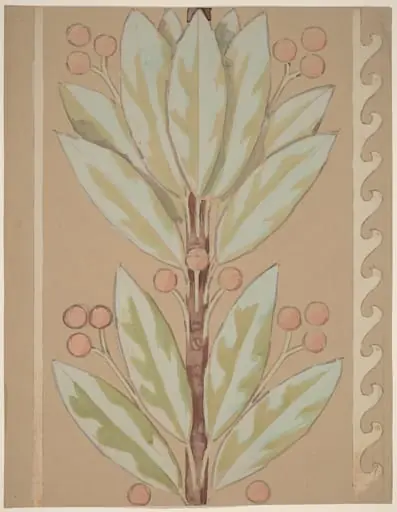
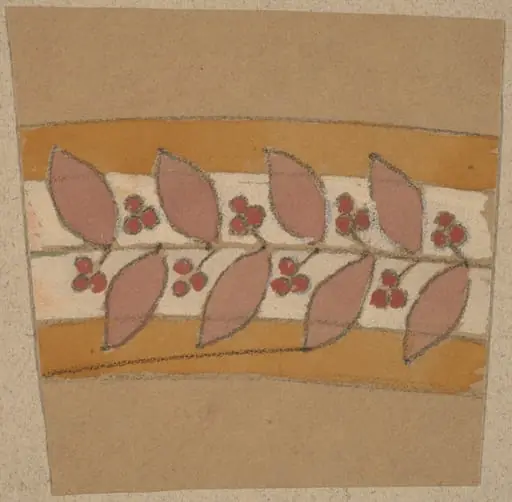
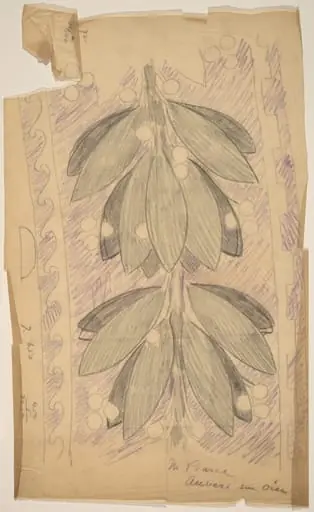
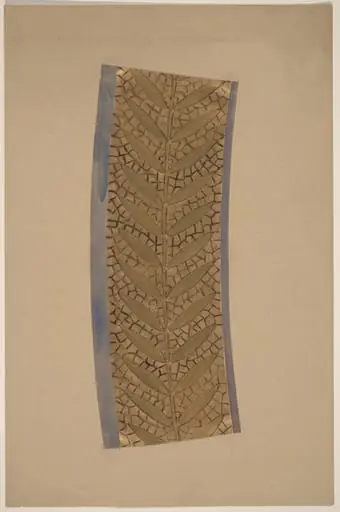
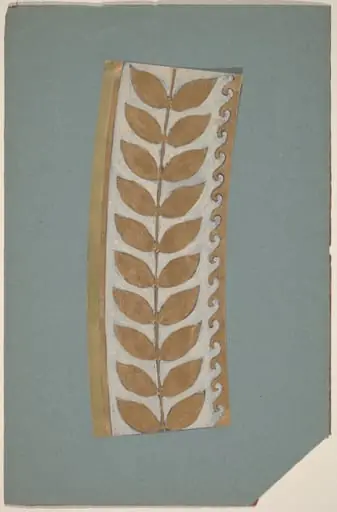
Study for a Border Design is a graphite drawing by the Impressionist artist Charles Sprague Pearce. It dates from 1894 and is held in the collection of the National Gallery of Art.
About this work
Overview
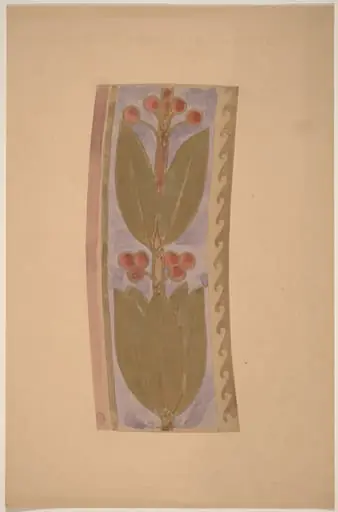
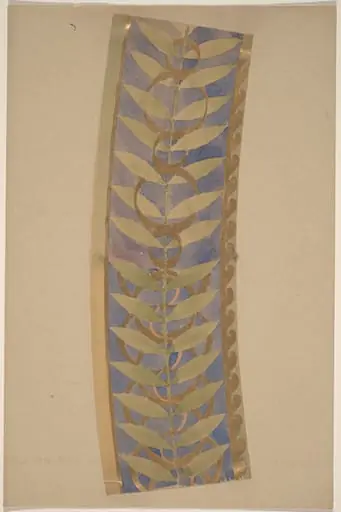
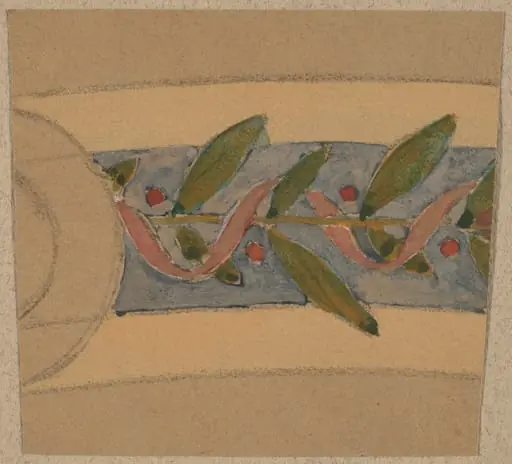
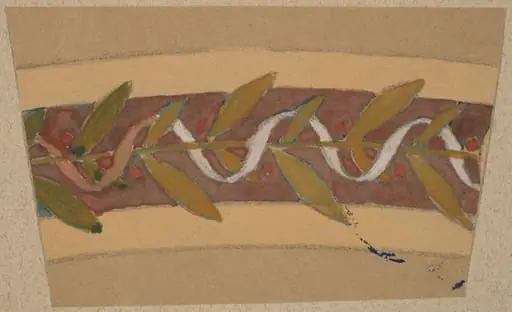
Created in 1894, this drawing by Charles Sprague Pearce serves as a preparatory study for a decorative border. Executed in gold paint, watercolor, and graphite on tan wove paper, it presents a narrow, horizontal composition dominated by a repeating botanical motif. The restrained palette and delicate line work suggest its function as a design prototype rather than a finished artwork.
Subject & Meaning
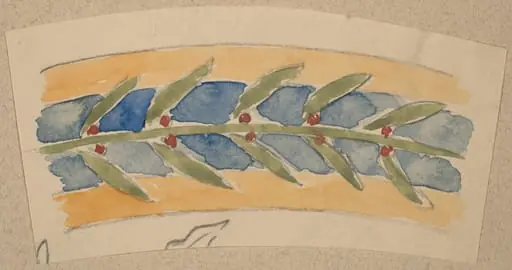
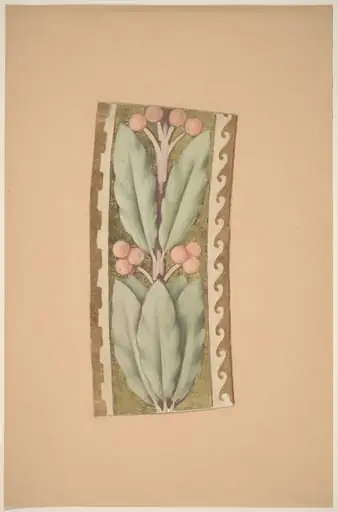
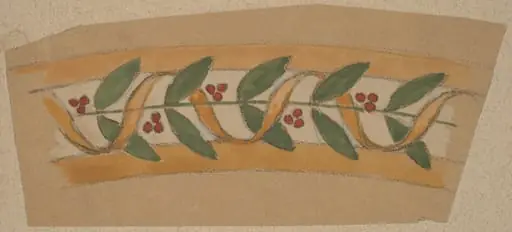
The subject is an abstracted vine-like pattern of leaves rendered in muted greens and blues, accented with scattered dots that may suggest blossoms or dew.
The subject is an abstracted vine-like pattern of leaves rendered in muted greens and blues, accented with scattered dots that may suggest blossoms or dew. The design lacks narrative, focusing instead on rhythm and repetition. Its purpose was likely architectural or textile—intended to frame a surface with organic grace, reflecting late 19th-century interests in natural forms as decorative elements.
Technique & Style
Pearce layered graphite for structure, watercolor for subtle tonal shifts, and gold paint to introduce luminosity and contrast. The thin, fluid lines and soft washes avoid heavy modeling, favoring flat planes and rhythmic contours. The tan paper acts as a neutral ground, enhancing the delicacy of the pigments and emphasizing the work’s function as a design sketch.
History & Provenance
The drawing entered the collection of the National Gallery of Art in Washington, D.C., where it remains part of its holdings in American drawings. Its origin lies in Pearce’s work for decorative arts commissions during the 1890s, a period when artists increasingly engaged with applied design. No record of its original commission has been identified.
Context
Created during the height of the American Arts and Crafts movement, the piece reflects broader trends in which fine artists contributed to interior and decorative design. While Pearce was trained in academic traditions, this study aligns with contemporaneous efforts to integrate naturalistic motifs into functional objects, bridging fine art and craft.
Legacy
Though not widely exhibited, the work exemplifies how late 19th-century American artists approached design as a disciplined, meditative practice. Its survival offers insight into the preparatory processes behind decorative arts that often went unattributed. It stands as a quiet testament to the intersection of painting and applied design in the period.
Artist & collection

Artist
Charles Sprague Pearce (1851–1914) was an American artist, born in Boston.

![Studies for a Lunette [recto], by Charles Sprague Pearce](https://artifactworldgallery.com/img/charles-sprague-pearce--studies-for-a-lunette-recto--07c43c96c8ad1d74-w320.webp)
![Study for a Border Design [recto], by Charles Sprague Pearce](https://artifactworldgallery.com/img/charles-sprague-pearce--study-for-a-border-design-recto--b4b4b2aab40da45b-w320.webp)