Artwork
Study for a Border Design
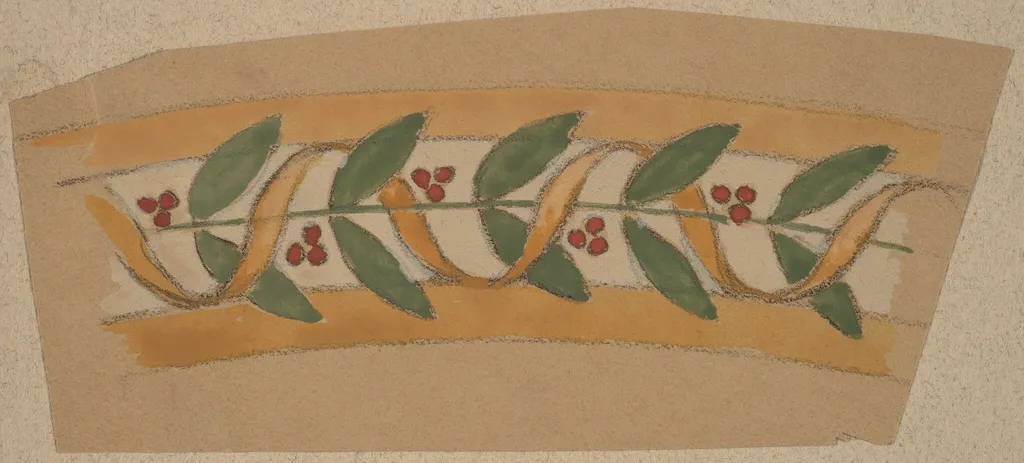
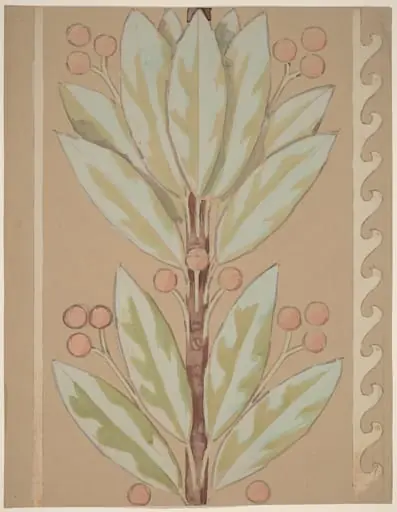
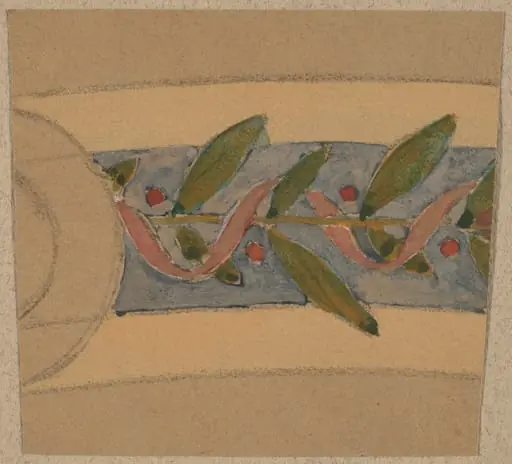
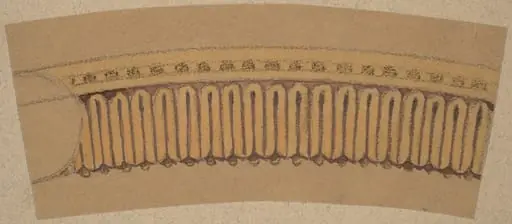
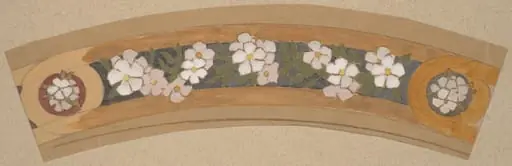
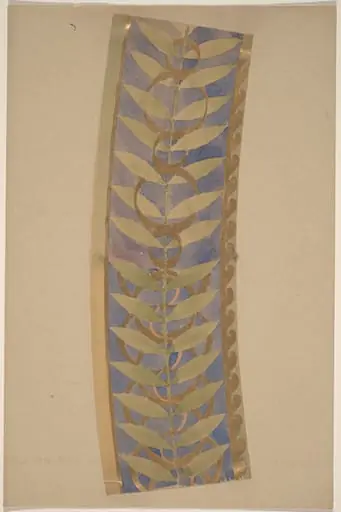
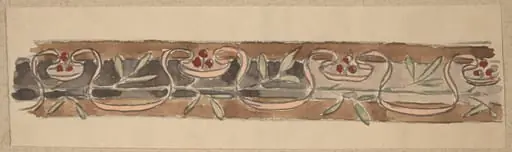
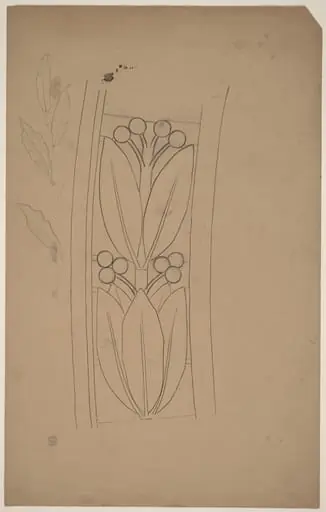
Study for a Border Design is a gouache drawing by the Impressionist artist Charles Sprague Pearce. It dates from 1894 and is held in the collection of the National Gallery of Art.
About this work
Overview
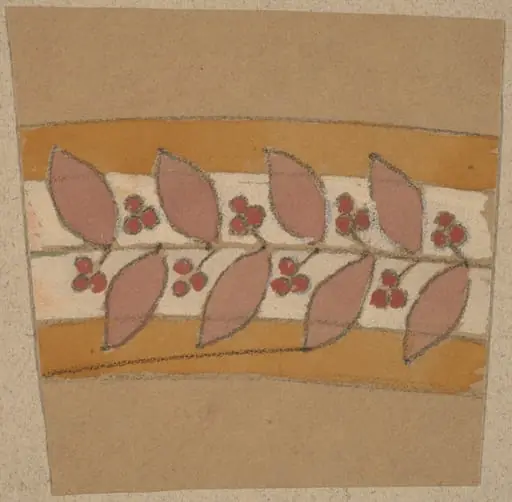
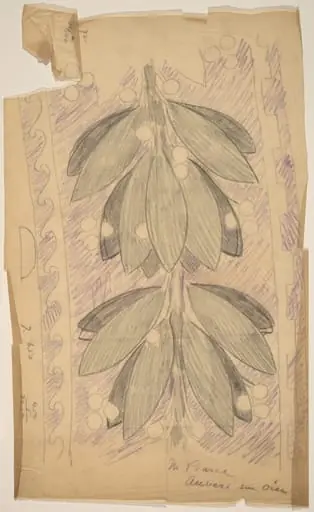
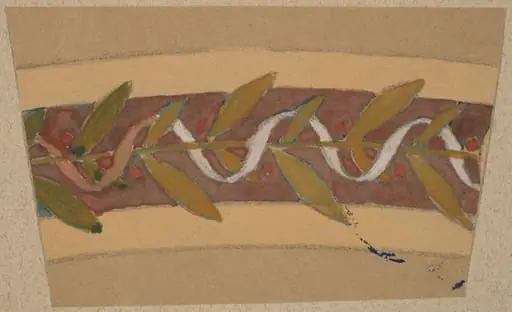
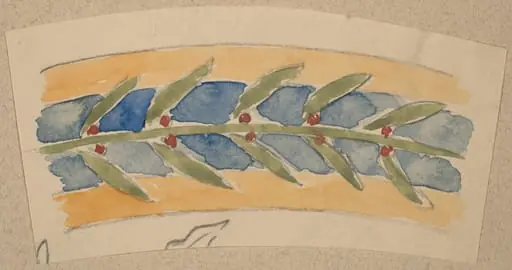
Created in 1894 by Charles Sprague Pearce, this drawing is a preparatory study executed in gouache and graphite on tan wove paper. Its modest scale and restrained palette suggest it was intended as a design reference rather than a finished work. The composition centers on a stylized plant form, rendered with deliberate simplicity and no attempt at naturalistic depth.
Subject & Meaning
The subject is a slender branch bearing clusters of red berries and bright green leaves, arranged in a rhythmic, repeating pattern. The absence of shading and the flat application of color indicate an emphasis on form and repetition, likely for use in decorative arts. The design evokes botanical observation but prioritizes ornamental function over botanical accuracy.
Technique & Style
Pearce employed gouache for its opaque, matte quality, layered over graphite underdrawing to define contours. Colors are applied uniformly without gradation, and lines are bold and unmodulated. The light tan paper serves as a neutral ground, with a faint orange stripe at the base possibly indicating a border or framing element in the intended final application.
History & Provenance
The work originates from Pearce’s period of engagement with decorative design, likely during his time in France or after his return to the United States. It was not exhibited publicly during his lifetime and remained in private hands until acquired by the institution holding it today. Its survival suggests it was valued as a working document rather than a standalone artwork.
Context
Similar designs appeared in publications by William Morris and other designers seeking to elevate everyday objects through handcrafted aesthetics.
In the late 19th century, artists frequently produced studies for textile, wallpaper, and architectural ornamentation as part of the broader Arts and Crafts movement. Pearce’s study aligns with this trend, reflecting a shift among painters toward applied arts. Similar designs appeared in publications by William Morris and other designers seeking to elevate everyday objects through handcrafted aesthetics.
Legacy
Though not widely known outside specialized circles, this study exemplifies the intersection of fine art and decorative design in the Gilded Age. It contributes to understanding how academic painters engaged with commercial aesthetics, and remains a tangible artifact of the period’s interest in integrating art into domestic environments.
Artist & collection

Artist
Charles Sprague Pearce (1851–1914) was an American artist, born in Boston.

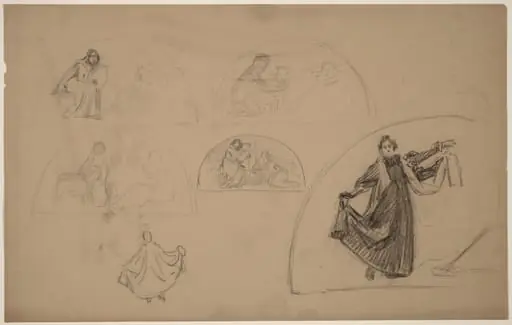
![Studies for a Lunette [recto], by Charles Sprague Pearce](https://artifactworldgallery.com/img/charles-sprague-pearce--studies-for-a-lunette-recto--07c43c96c8ad1d74-w320.webp)