Artwork
Study for a Border Design
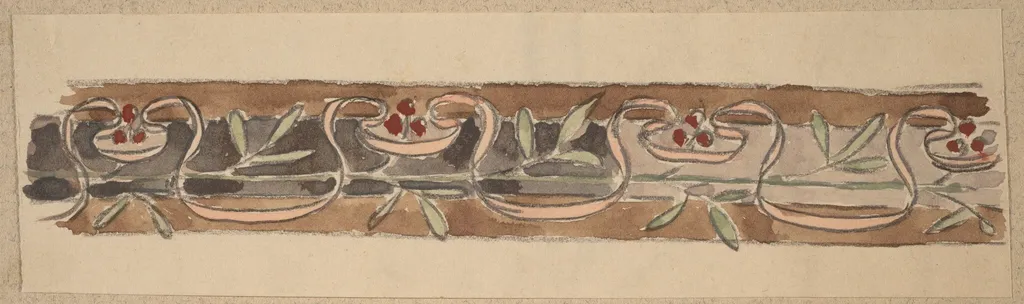
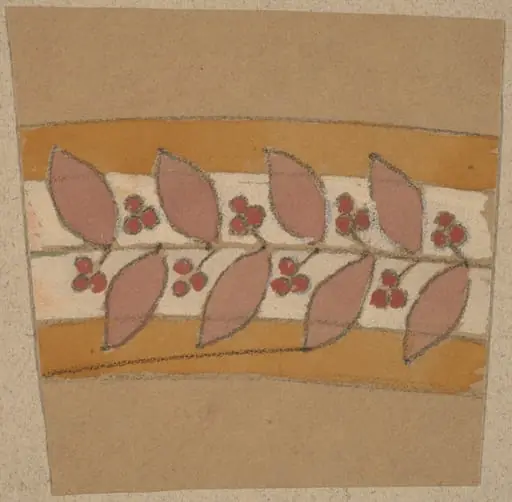
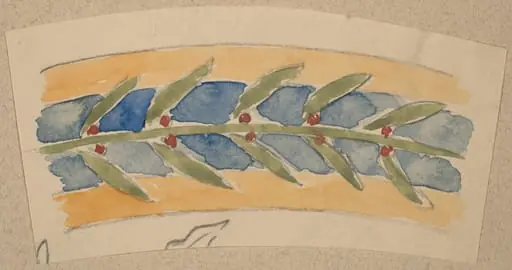
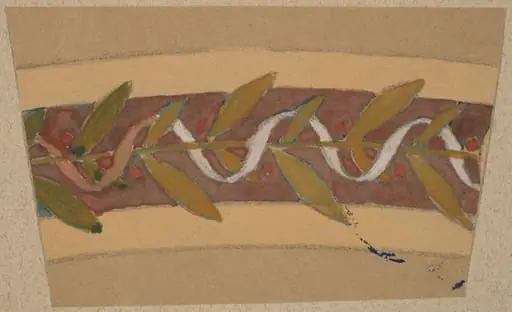
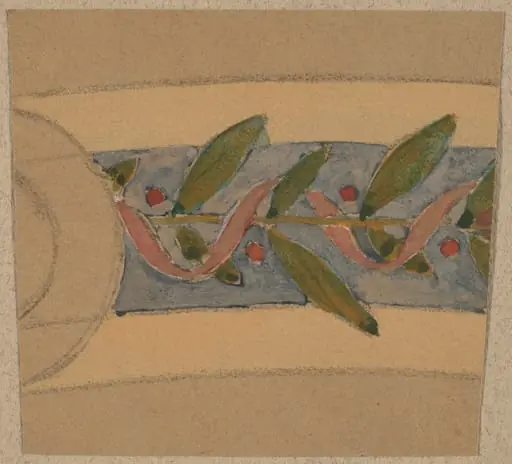
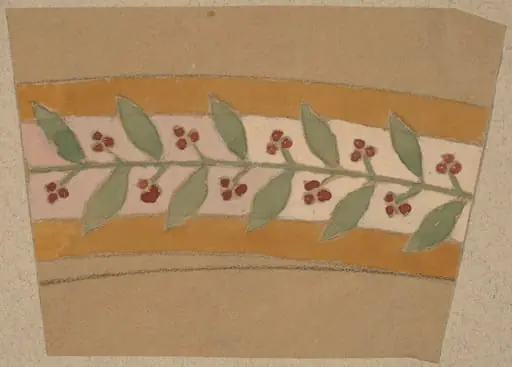
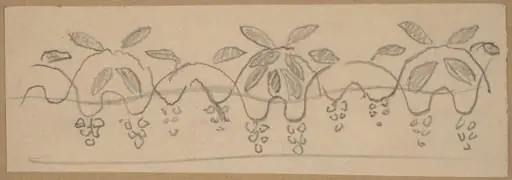
Study for a Border Design is a gouache drawing by the Impressionist artist Charles Sprague Pearce. It dates from 1894 and is held in the collection of the National Gallery of Art.
About this work
Overview
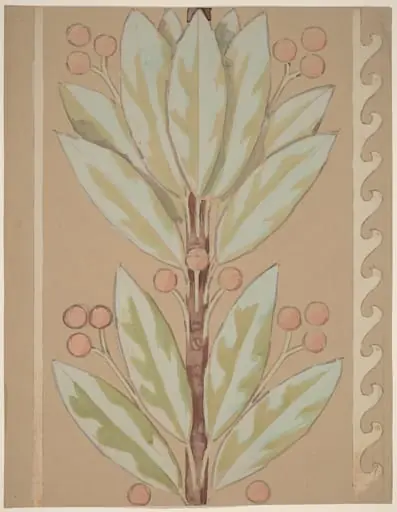
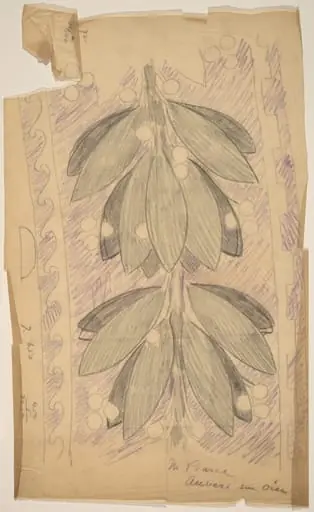
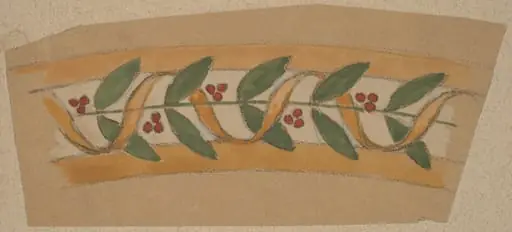
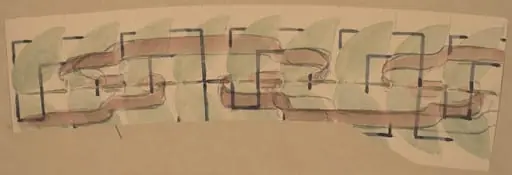
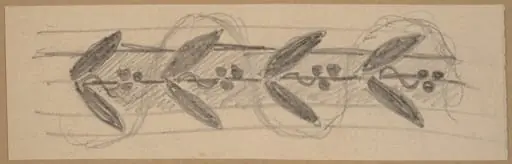
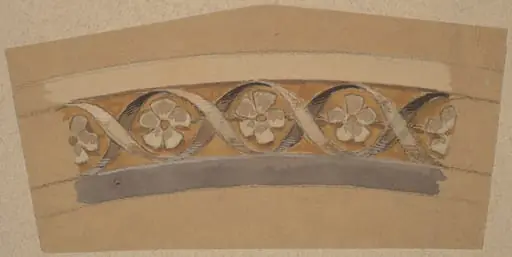
Created in 1894, this drawing by Charles Sprague Pearce is a preparatory study executed in gouache and graphite on tan wove paper. It presents a continuous, rhythmic pattern of botanical elements arranged in a linear sequence. The work was likely intended as a design template for decorative surfaces, reflecting the artist’s engagement with applied arts during the late 19th century.
Subject & Meaning
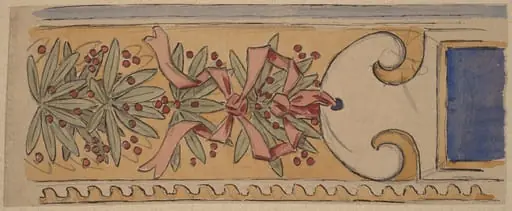
The composition features stylized leaves and clustered berries, rendered in a repetitive, interlocking format. These natural forms are abstracted rather than botanically precise, suggesting an emphasis on ornamental harmony over realism. The motif evokes traditional decorative arts, where flora symbolized growth and continuity, often used to unify architectural or textile surfaces.
Technique & Style
Pearce employed gouache for its opaque, matte quality, layered over delicate graphite underdrawing. Soft tones of pink, green, and brown are defined by crisp black outlines, enhancing the clarity of each motif. The medium allowed for both precision and subtle tonal variation, enabling the artist to test how patterns would read at scale before final execution.
History & Provenance
The work remains within institutional collections, its early ownership unrecorded. As a study, it was likely kept by the artist or his studio for reference. Its survival suggests it held value beyond its utilitarian purpose, possibly as a specimen of period design practice. No evidence indicates it was ever mass-produced as wallpaper or fabric.
Context
In the 1890s, American artists increasingly turned to decorative design as part of the broader Arts and Crafts movement. Pearce, known for academic painting, engaged with this trend, aligning with contemporaries who blurred boundaries between fine and applied art. This study reflects a wider cultural interest in integrating art into everyday environments.
Legacy
Though not widely exhibited, the drawing offers insight into the design processes of late 19th-century artists navigating the decorative arts. It stands as a quiet example of how fine artists contributed to domestic aesthetics, preserving a moment when hand-drawn patterns informed industrial production, even if never fully realized in it.
Artist & collection

Artist
Charles Sprague Pearce (1851–1914) was an American artist, born in Boston.

![Studies for a Lunette [recto], by Charles Sprague Pearce](https://artifactworldgallery.com/img/charles-sprague-pearce--studies-for-a-lunette-recto--07c43c96c8ad1d74-w320.webp)