Artwork
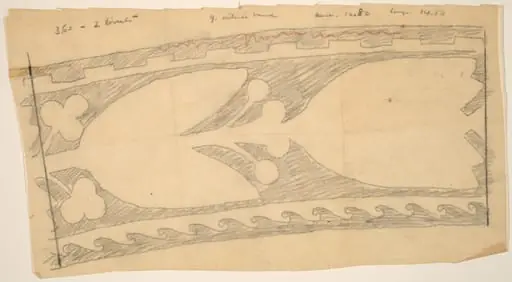
Tracing of a Border Design
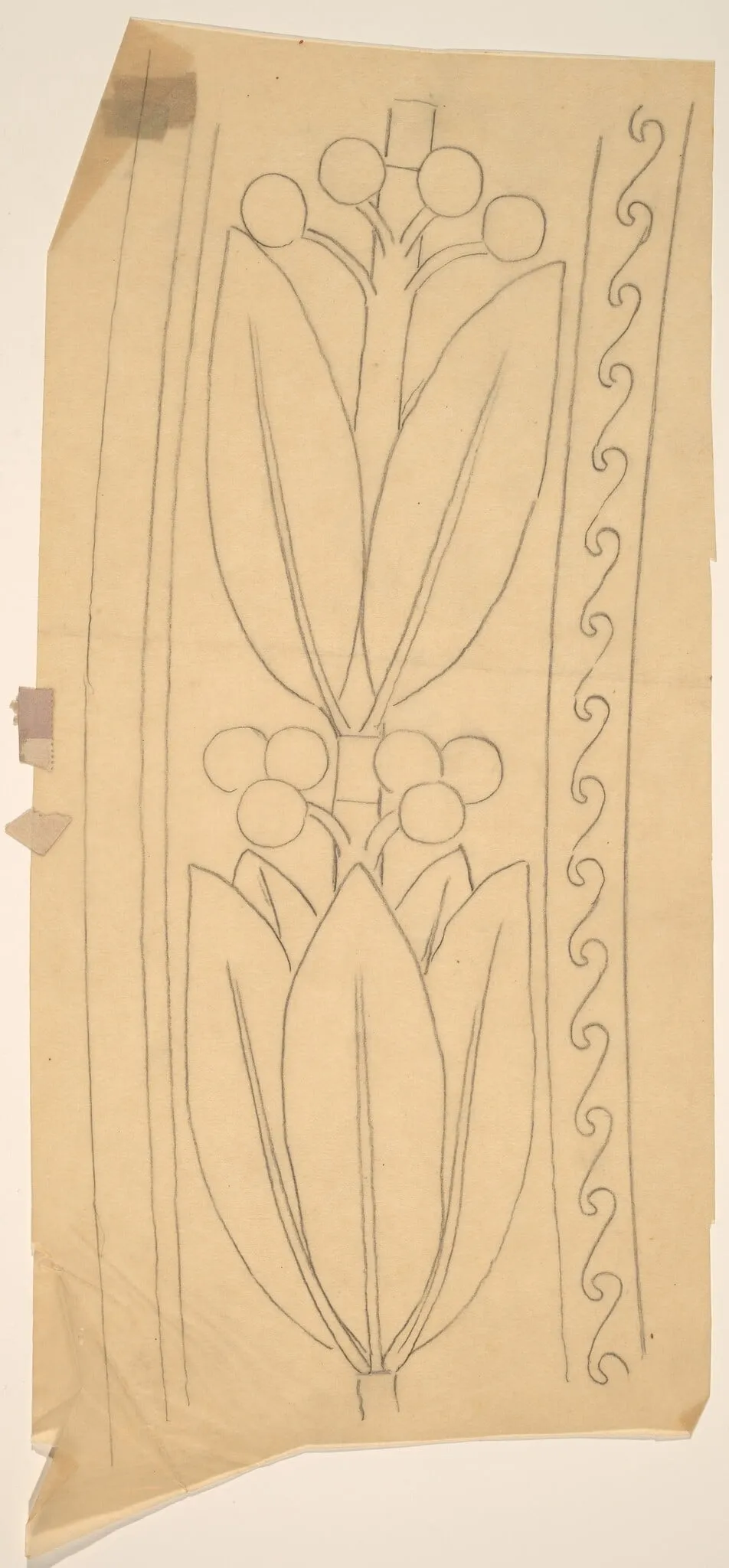
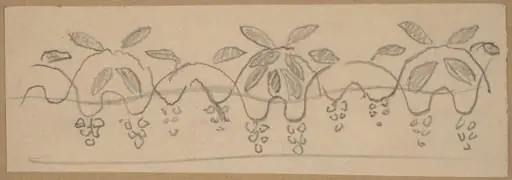
Tracing of a Border Design is a graphite drawing by the Impressionist artist Charles Sprague Pearce. It dates from 1894 and is held in the collection of the National Gallery of Art.
About this work
Overview
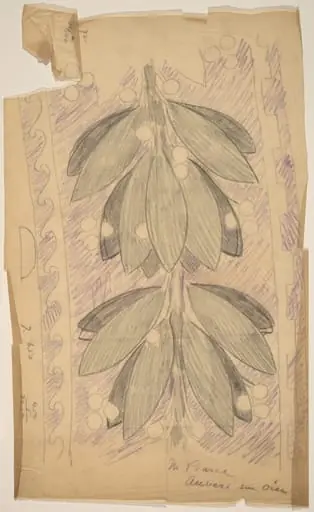
Created in 1894 by Charles Sprague Pearce, this drawing is a graphite tracing on yellow tracing paper. It functions as a preparatory study, likely used to transfer or adapt a decorative border motif for a larger design project. The choice of translucent paper suggests a practical, working method common in artistic and architectural studios of the period.
Subject & Meaning
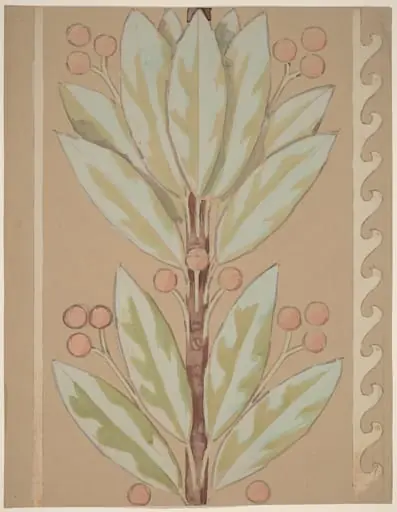
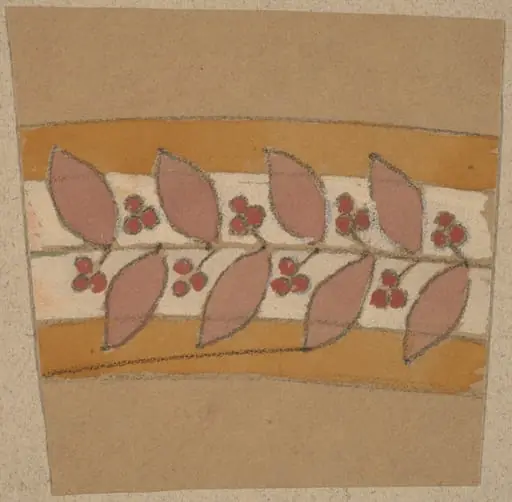
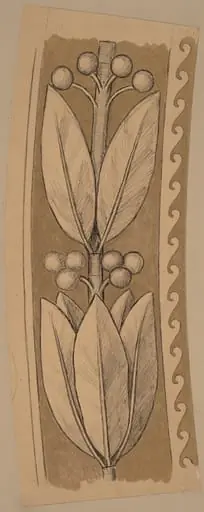
The subject is a repetitive ornamental border, possibly intended for use in interior decoration, bookbinding, or architectural detailing. Its geometric and floral elements reflect late 19th-century design sensibilities, rooted in historical revival styles. The work holds no narrative content; its purpose is formal and utilitarian, serving as a template rather than a finished composition.
Technique & Style
Pearce employed fine graphite lines on thin, yellowed tracing paper, allowing for precise replication and adjustment of patterns. The lines are clean and controlled, indicating careful drafting rather than spontaneous sketching. The use of tracing paper implies a process of layering and modification, typical of design work requiring accuracy and reproducibility.
History & Provenance
The drawing is part of a body of work produced during Pearce’s later career, when he increasingly engaged with decorative arts alongside his painting. Its survival suggests it was retained in his studio or passed to an associate. No public record details its immediate provenance after 1894, but it reflects the practical side of an artist active in both fine and applied arts.
Context
In the 1890s, American artists like Pearce often bridged fine art and design, responding to the Arts and Crafts movement’s emphasis on handcrafted ornament.
In the 1890s, American artists like Pearce often bridged fine art and design, responding to the Arts and Crafts movement’s emphasis on handcrafted ornament. Tracings such as this were essential tools in studios where motifs were adapted for textiles, murals, or furniture. This piece exemplifies the quiet, functional labor behind decorative design during a period of renewed interest in craftsmanship.
Legacy
As a working drawing, it offers insight into the iterative processes of design in the late 19th century. Though not exhibited publicly during Pearce’s lifetime, it remains a tangible artifact of how artists translated aesthetic ideas into repeatable forms. Its preservation allows modern viewers to observe the technical underpinnings of decorative art beyond finished pieces.
Artist & collection

Artist
Charles Sprague Pearce (1851–1914) was an American artist, born in Boston.

![Studies for a Lunette [recto], by Charles Sprague Pearce](https://artifactworldgallery.com/img/charles-sprague-pearce--studies-for-a-lunette-recto--07c43c96c8ad1d74-w320.webp)
![Study for a Border Design [verso], by Charles Sprague Pearce](https://artifactworldgallery.com/img/charles-sprague-pearce--study-for-a-border-design-verso--4676ba4a41cbb556-w320.webp)
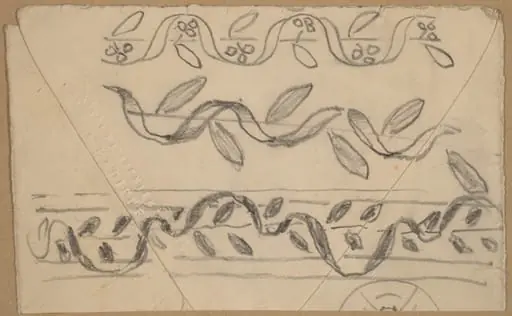
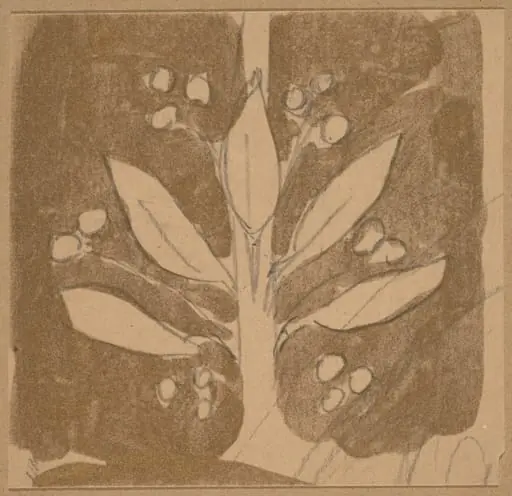
![Study for a Border Design [recto], by Charles Sprague Pearce](https://artifactworldgallery.com/img/charles-sprague-pearce--study-for-a-border-design-recto--b4b4b2aab40da45b-w320.webp)