Artwork
El gaucho Candioti
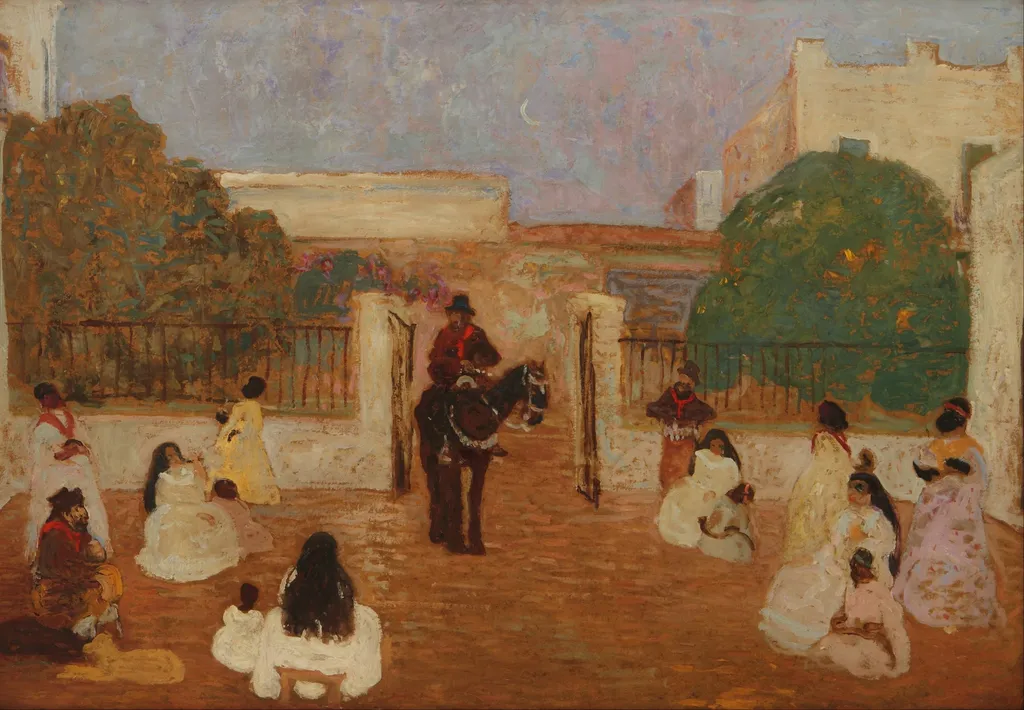
El gaucho Candioti is an unspecified painting by Pedro Figari. It dates from 1500 and is held in the collection of the National Museum of Fine Arts, Argentina.
About this work
Overview
Figari, trained as a lawyer and active in public life, turned to art later in life, drawing on personal recollections rather than academic training.
Painted around 1900 by Uruguayan artist Pedro Figari, *El gaucho Candioti* captures a moment of rural life in the River Plate region. Figari, trained as a lawyer and active in public life, turned to art later in life, drawing on personal recollections rather than academic training. His approach rejected precise realism in favor of evocative, loosely rendered scenes that convey mood and cultural memory. The work is held in the National Museum of Fine Arts in Buenos Aires.
Subject & Meaning
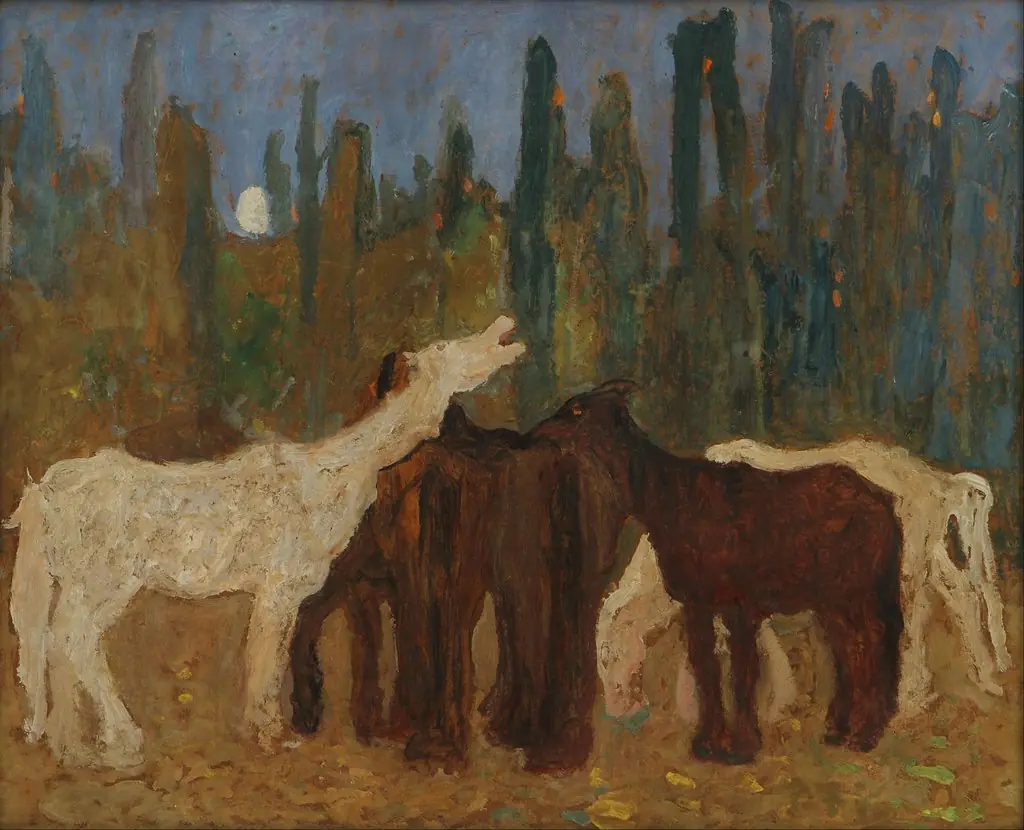
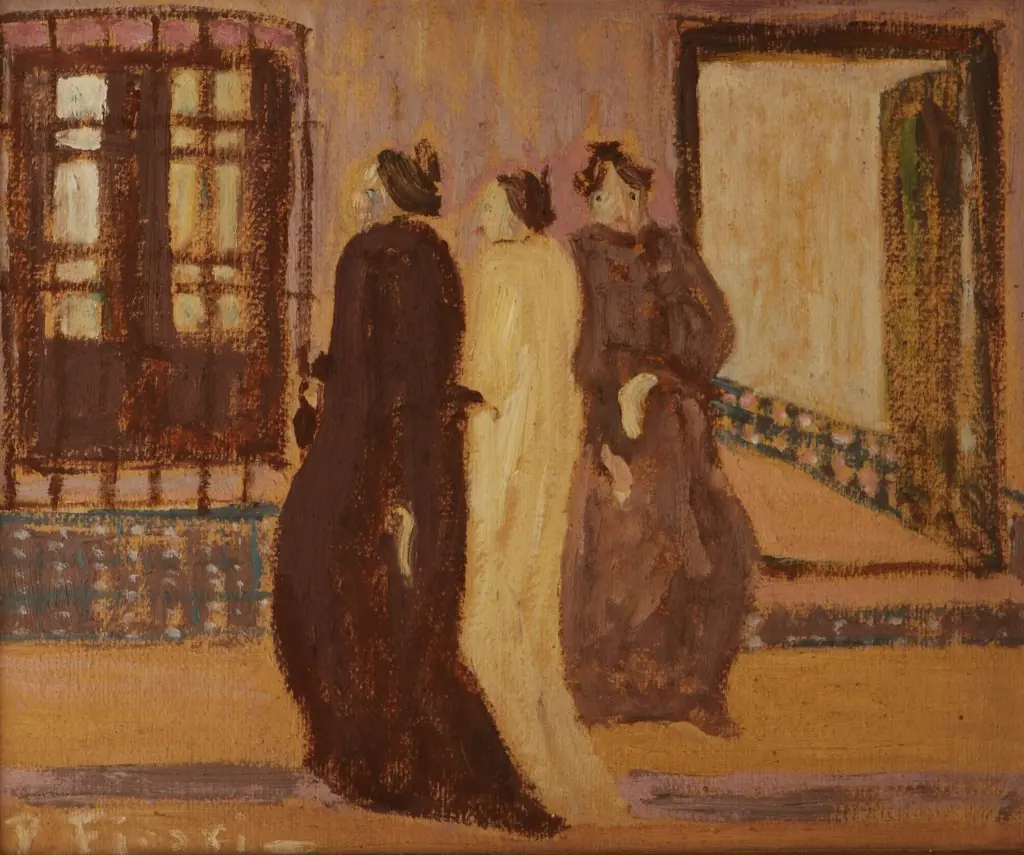
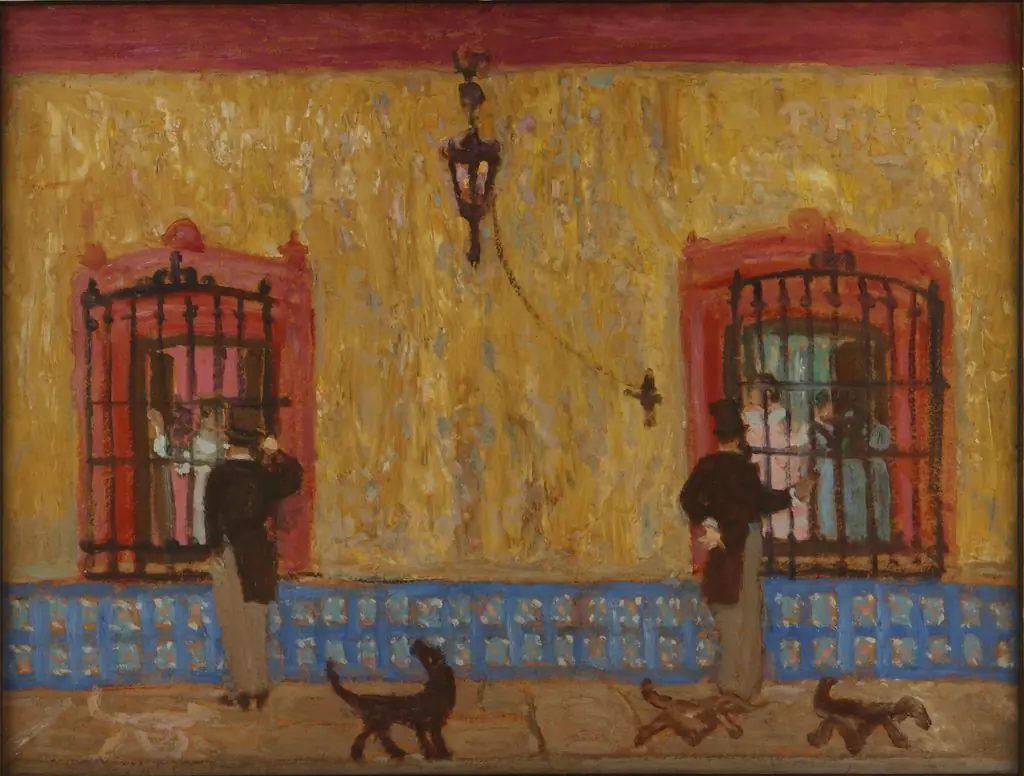
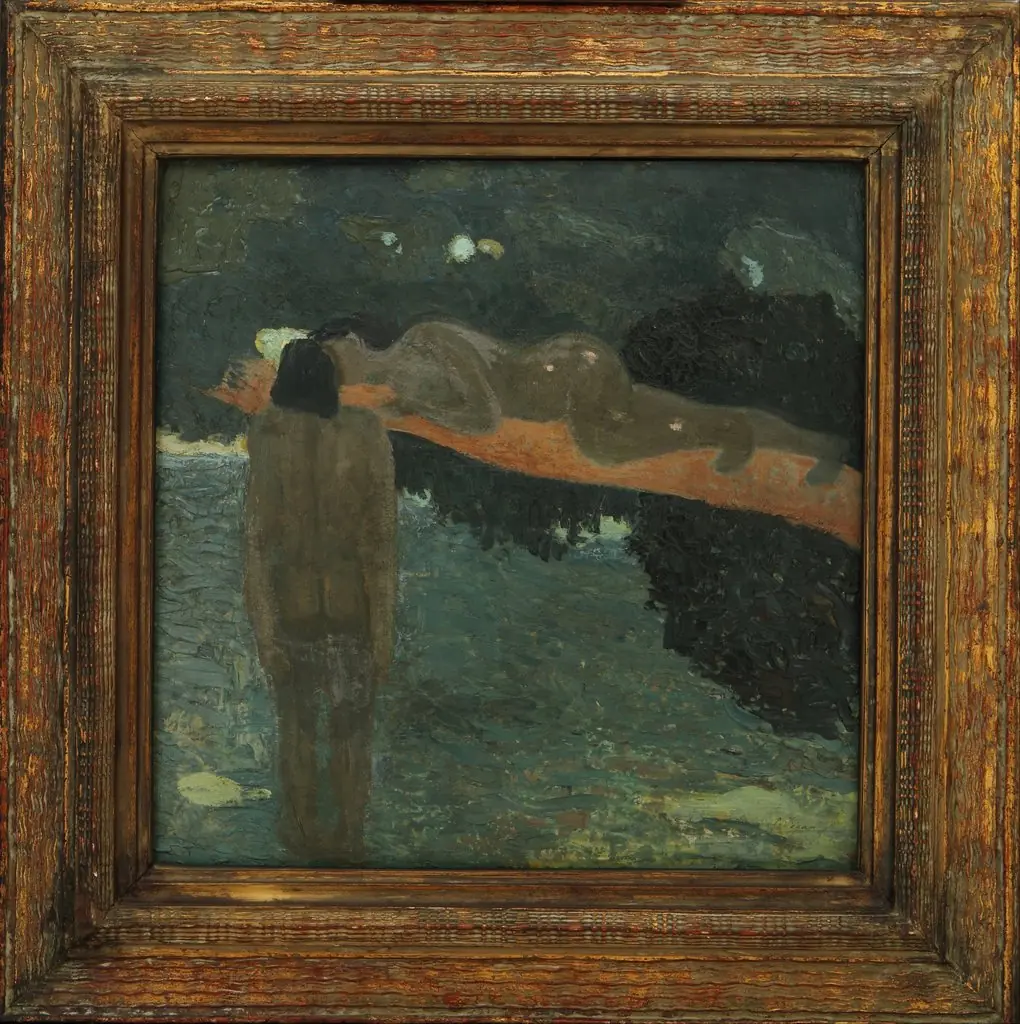
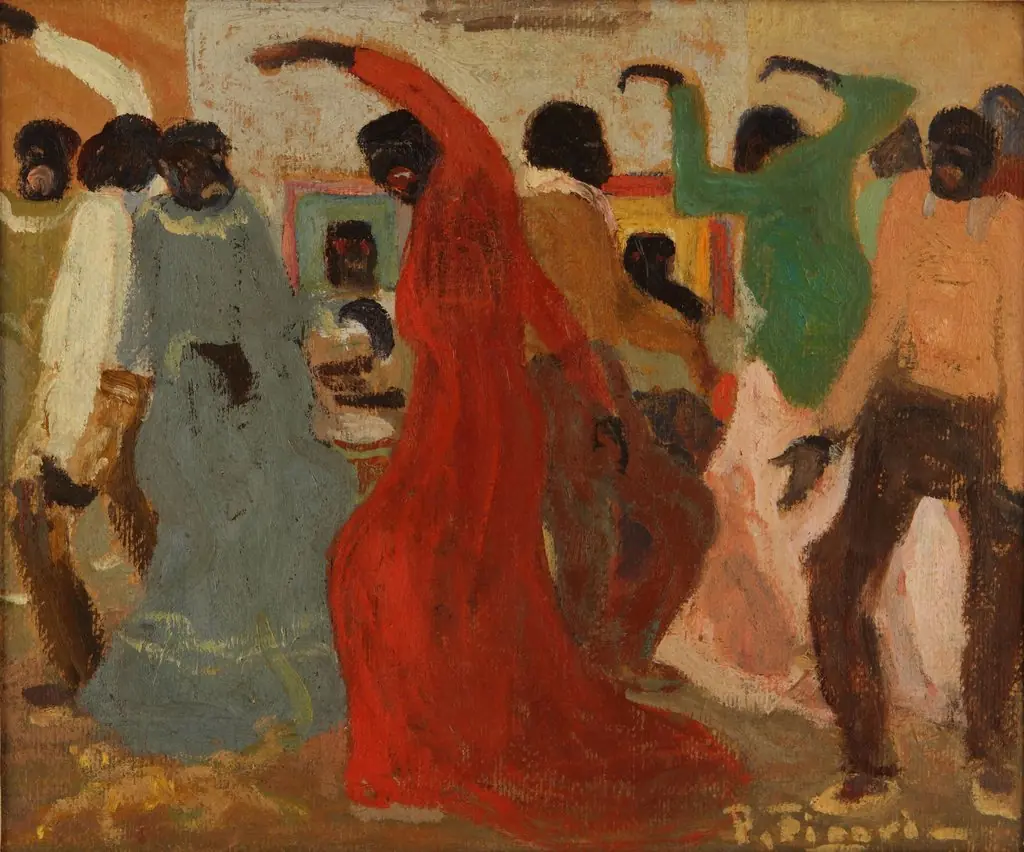
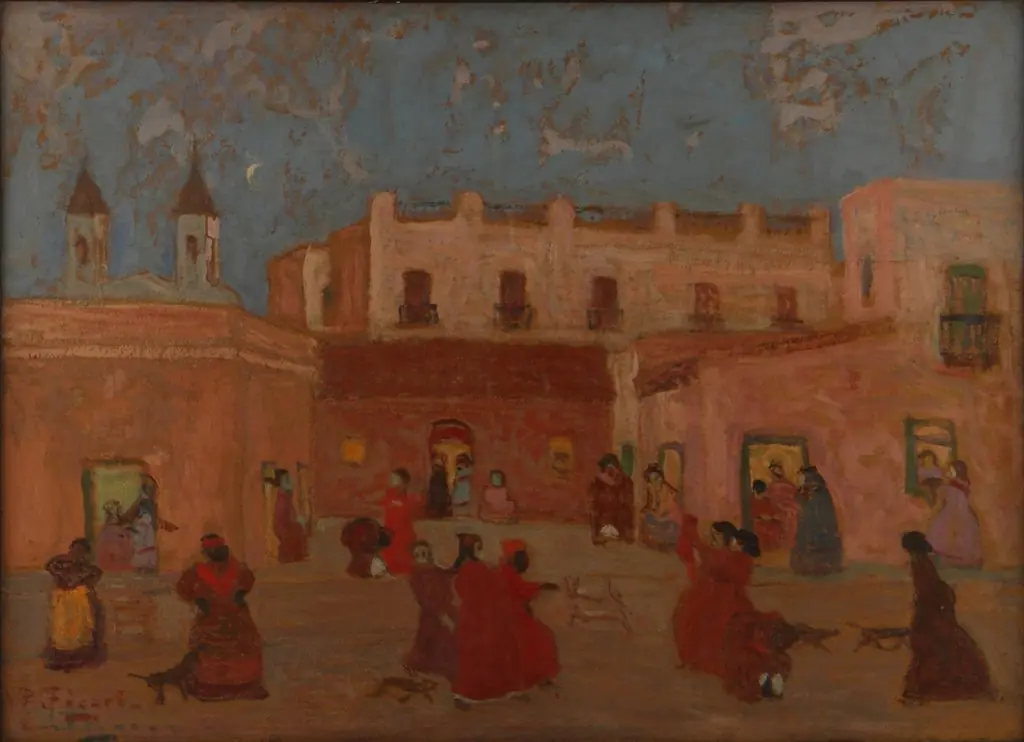
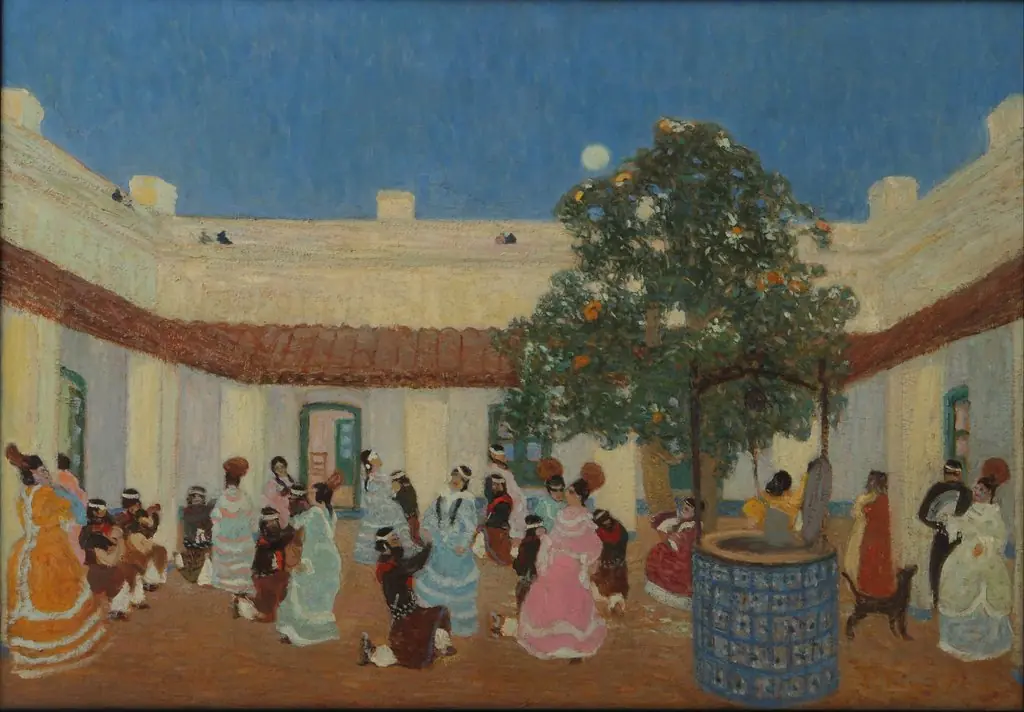
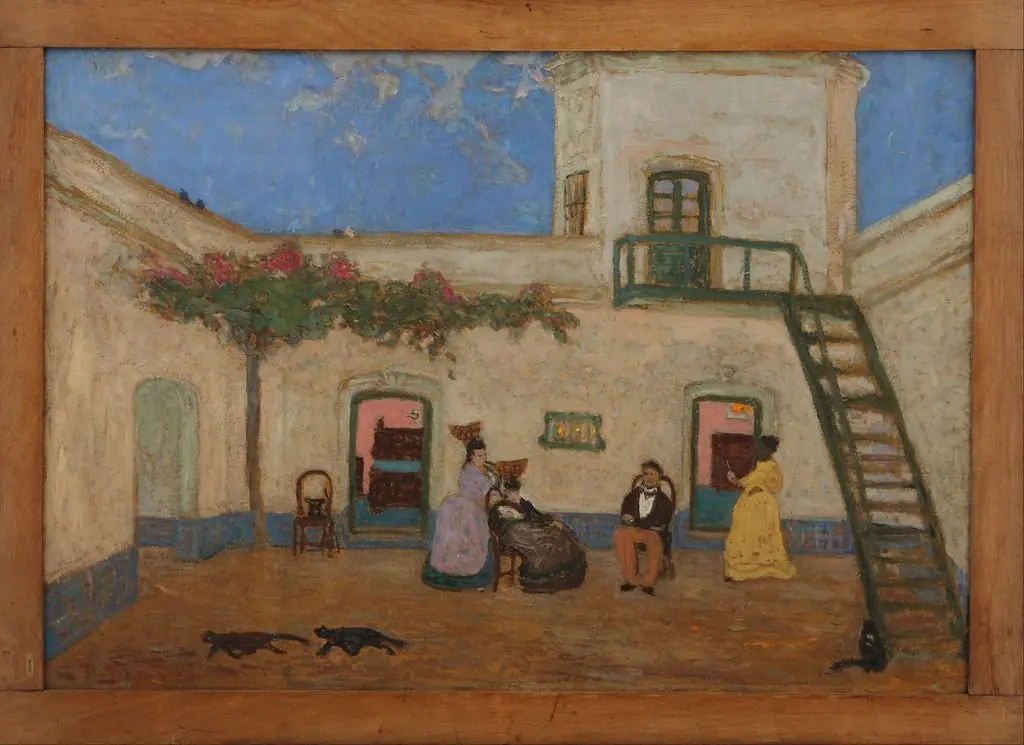
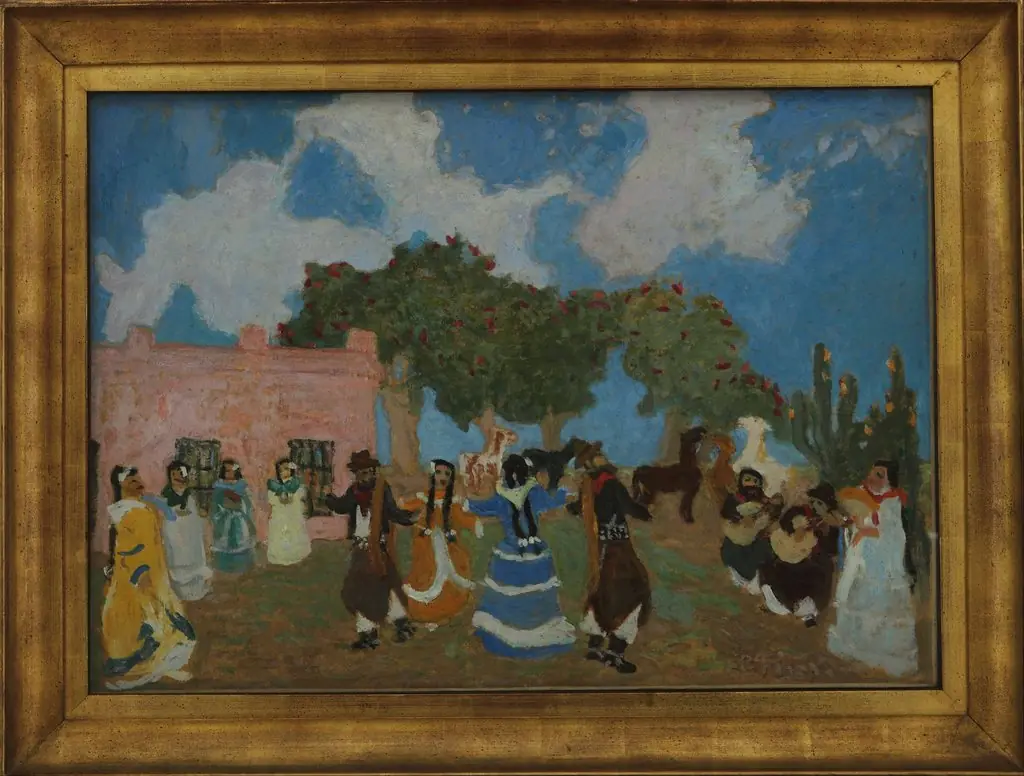
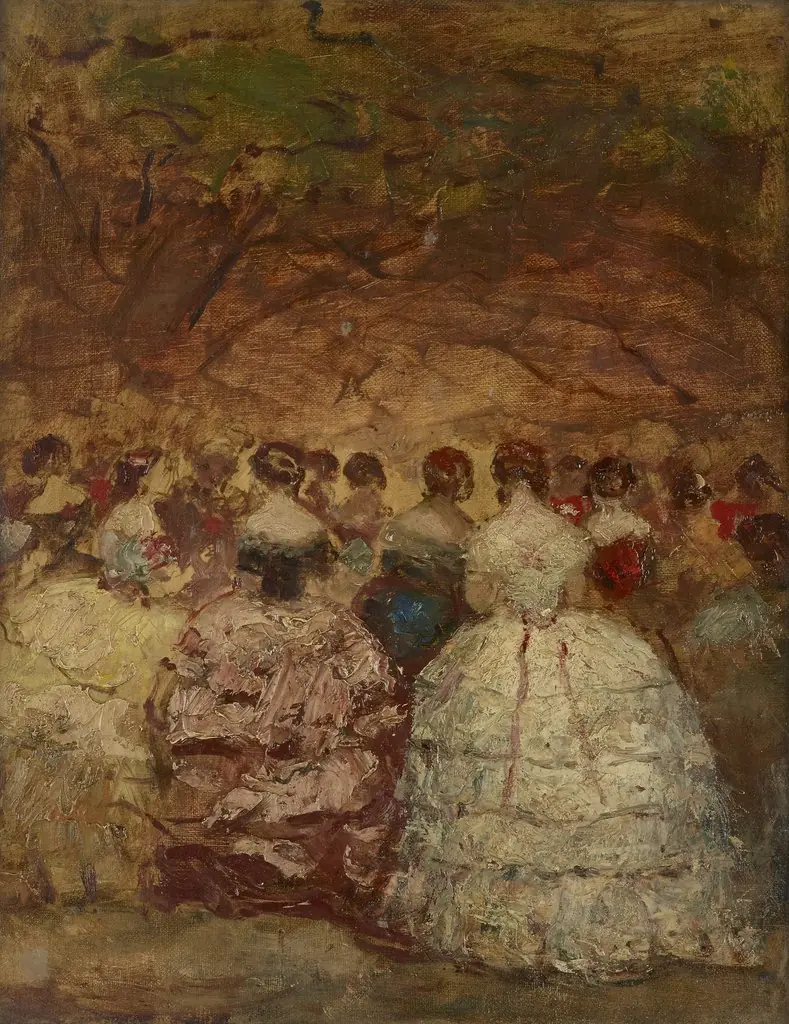
The painting depicts a group of figures gathered in a courtyard around a mounted man, likely the gaucho Candioti, identified by his distinctive red scarf and hat. Surrounding him are locals in traditional attire—women in long dresses, men in ponchos and wide-brimmed hats—suggesting a social or ceremonial moment. Figari does not narrate a specific event but evokes the presence and rhythm of gaucho culture, emphasizing communal identity over individual drama.
Technique & Style
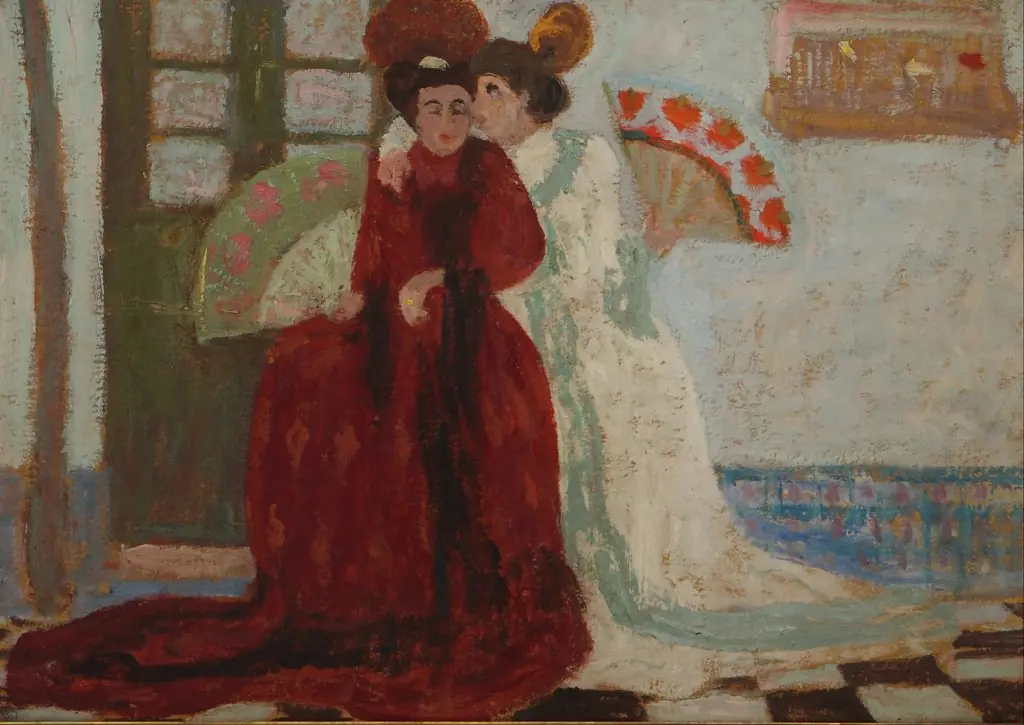
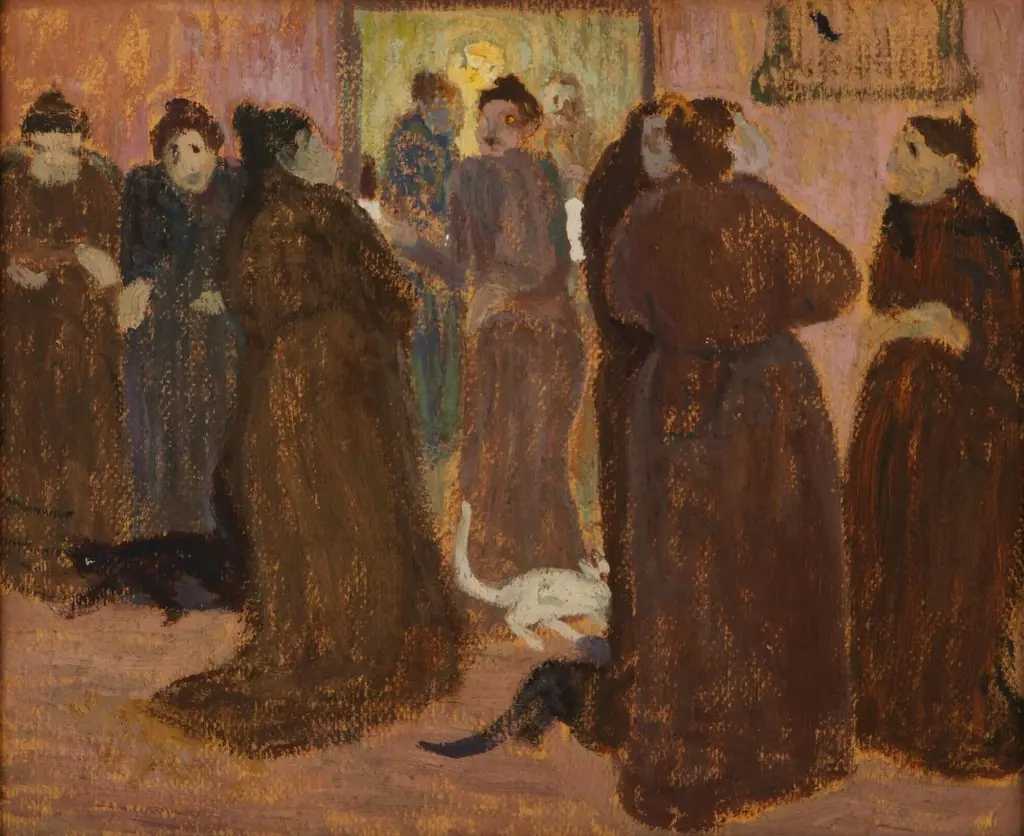
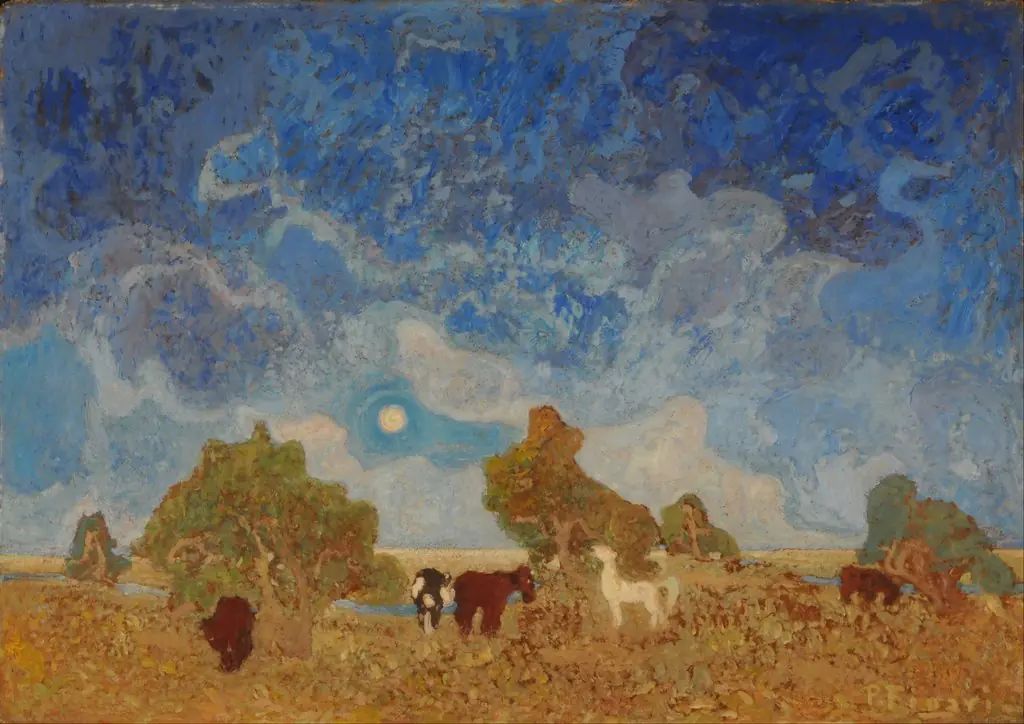
Figari employed a loose, expressive brushwork that prioritizes atmosphere over detail. Forms are suggested rather than defined, with visible strokes and flattened perspectives that align with early modernist tendencies. He used muted earth tones—ochres, browns, and grays—to ground the scene in its rural setting. Strong contrasts of light and shadow, drawn from chiaroscuro, model figures and heighten the emotional weight of the gathering without mimicking naturalism.
History & Provenance
Created during Figari’s early artistic period after his retirement from politics, the painting emerged from his reflections on Uruguayan rural life. It was likely painted in Montevideo or Buenos Aires, where he lived intermittently. The work entered the collection of the National Museum of Fine Arts in Buenos Aires in the early 20th century, where it remains as part of a broader effort to document regional cultural identity through art.
Context
In the late 19th and early 20th centuries, Latin American artists increasingly turned to local subjects as nations sought to define cultural identities distinct from European models. Figari’s focus on gauchos and rural scenes aligned with this movement, though his style diverged from academic realism. His work resonated with intellectuals and reformers interested in preserving folk traditions amid rapid urbanization and modernization.
Legacy
Figari’s approach influenced later generations of Latin American modernists who valued emotional authenticity over technical precision. *El gaucho Candioti* exemplifies his contribution to a visual language rooted in memory and regional character. Though not widely exhibited internationally, the painting remains a touchstone in Argentine and Uruguayan art history for its quiet, unidealized portrayal of rural life.
Own this work as a print
Artist & collection
Artist
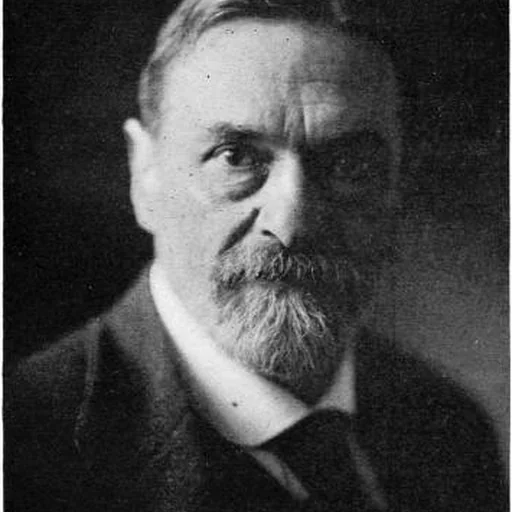
Pedro Figari (June 29, 1861 – July 24, 1938) was a Uruguayan painter, lawyer, writer, and politician.

Museum
National Museum of Fine Arts, Argentina
Continue through works from the same source collection.