Artwork
Untitled
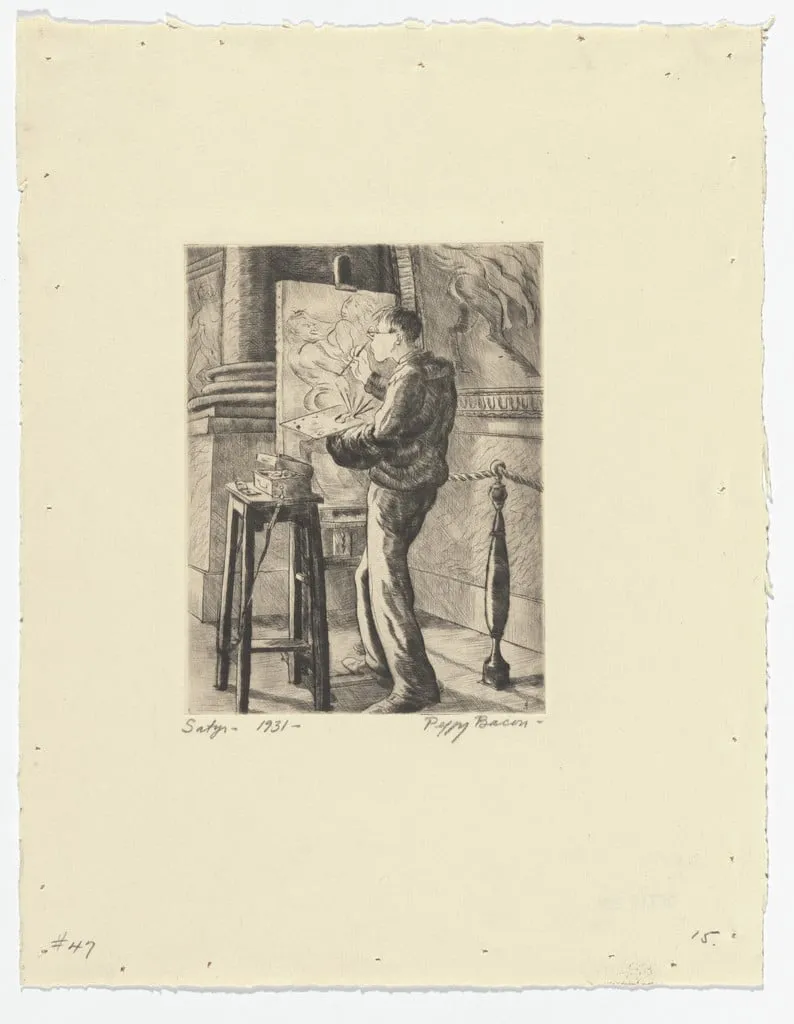
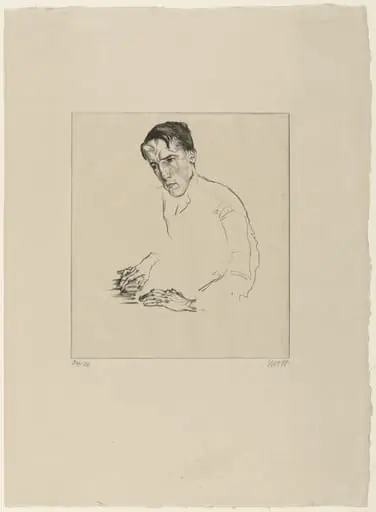
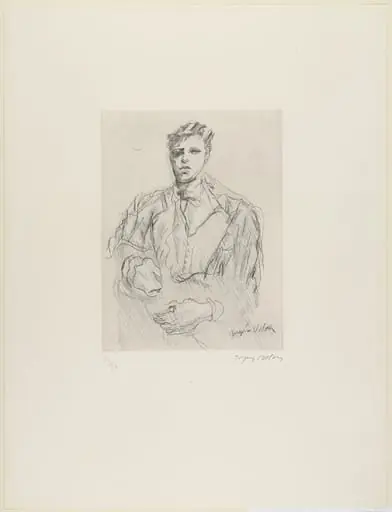
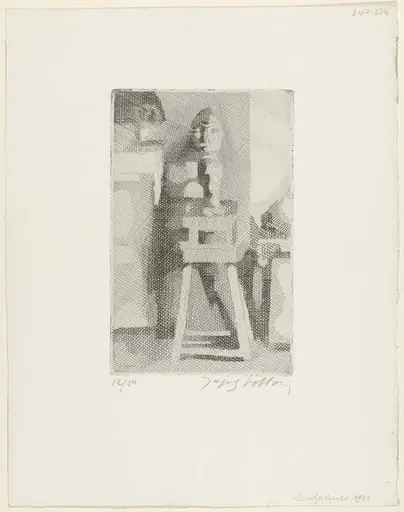
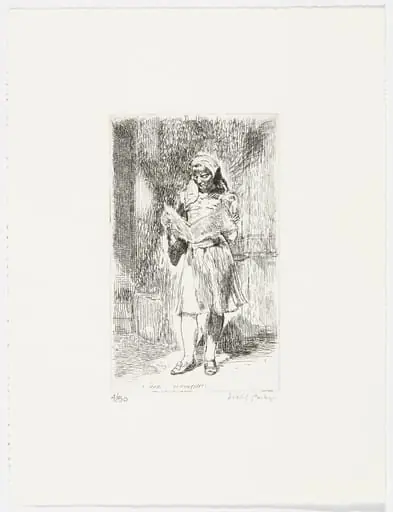
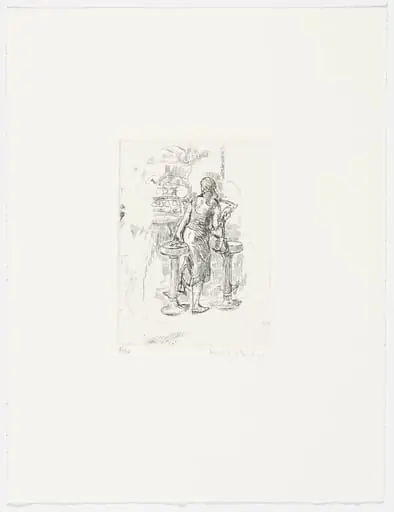
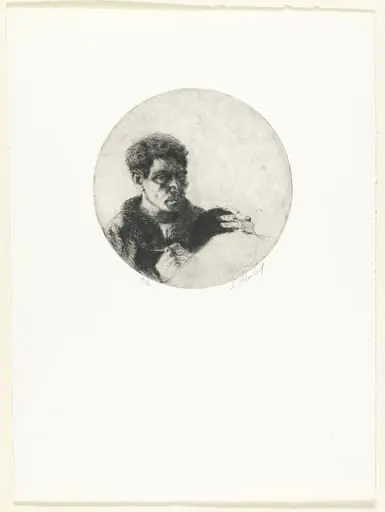
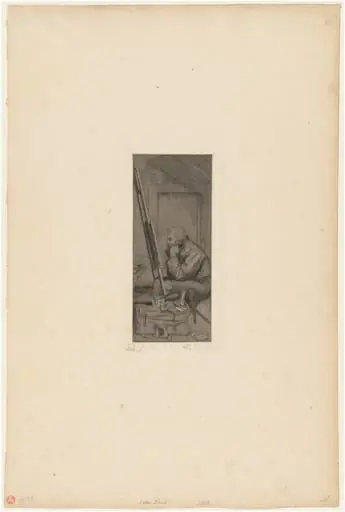
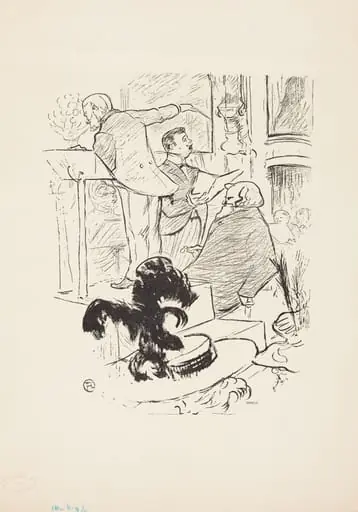
Untitled is an ink print by Peggy Bacon. It dates from 1931 and is held in the collection of the Museum of Modern Art.
About this work
The walls have carved decorations, and a tall, narrow vase stands in the corner.
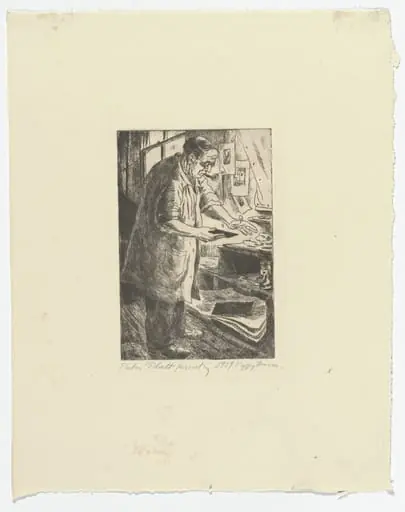
This sketch shows a person standing in a dim room, painting on an easel. The artist’s hands hold a brush, and their body leans slightly forward. A stool sits nearby, with a small table holding a lamp. The walls have carved decorations, and a tall, narrow vase stands in the corner.
The artist signed it "Peggy Bacon" in 1931. The lines are sharp and detailed, almost like an etching.
Look up *drypoint* next to see how this technique works.
Overview
Peggy Bacon produced this drypoint print in 1931, capturing a quiet moment in an artist’s studio. The work reflects her mastery of the drypoint technique, characterized by fine, incised lines that create rich tonal contrasts. Unlike etching, drypoint involves scratching directly into the plate, yielding a distinctive, slightly blurred line quality. Bacon’s attention to detail and intimate subject matter align with her broader focus on domestic and creative spaces.
Subject & Meaning
The print depicts a solitary figure engaged in painting, illuminated by a small lamp on a nearby table. The figure’s forward lean and focused posture suggest deep concentration, while the sparse furnishings imply a private, unadorned studio. The presence of a vase and carved wall details adds subtle texture to the environment, grounding the scene in a lived-in reality. The image avoids narrative drama, instead offering a contemplative view of artistic labor.
Technique & Style
Bacon employed drypoint to achieve sharp, expressive lines with a soft, velvety texture along the incised edges. The technique allowed her to render fine details—such as the brush in the artist’s hand, the grain of the stool, and the pattern on the wall—with precision. The contrast between the dark, dense lines and the pale, untouched plate creates depth without heavy shading. Her style is observational, avoiding exaggeration in favor of quiet realism.
History & Provenance
Created in 1931, this print emerged during a period when Bacon was actively contributing to major publications like *The New Yorker* and *Vanity Fair*. She had studied under Kenneth Hayes Miller at the Art Students League, where she refined her printmaking skills. The signature and date on the work confirm its origin in this productive phase of her career, preceding her 1934 Guggenheim Fellowship in graphic arts.
Context
In the early 1930s, American artists increasingly turned to printmaking as a means of accessible, personal expression. Bacon’s focus on studio interiors reflected a broader interest in the lives of artists and the spaces where creativity unfolded. Her work stood apart from overt political or social commentary, instead offering nuanced glimpses into private routines, resonating with a public drawn to intimate, human-scale narratives.
Legacy
Bacon’s drypoints, including this untitled work, contributed to the recognition of printmaking as a serious medium for personal expression in early 20th-century America. Her ability to convey atmosphere and quiet dignity through minimal means influenced later generations of printmakers. Though less celebrated than some contemporaries, her body of work remains a thoughtful record of artistic life in interwar New York.
Artist & collection
Artist
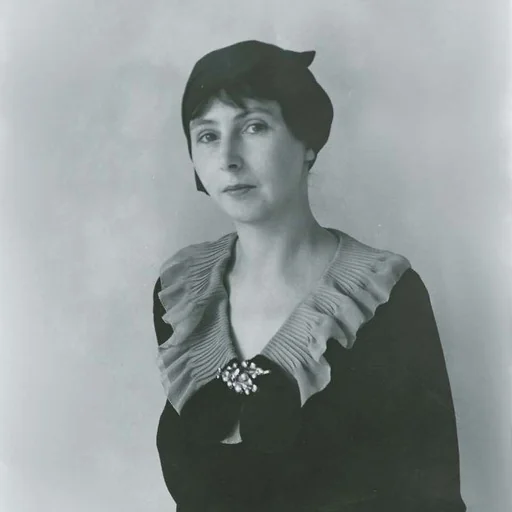
Margaret Frances Bacon (May 2, 1895 – January 4, 1987) was an American artist, best known for her satirical caricatures.