Artwork
Untitled
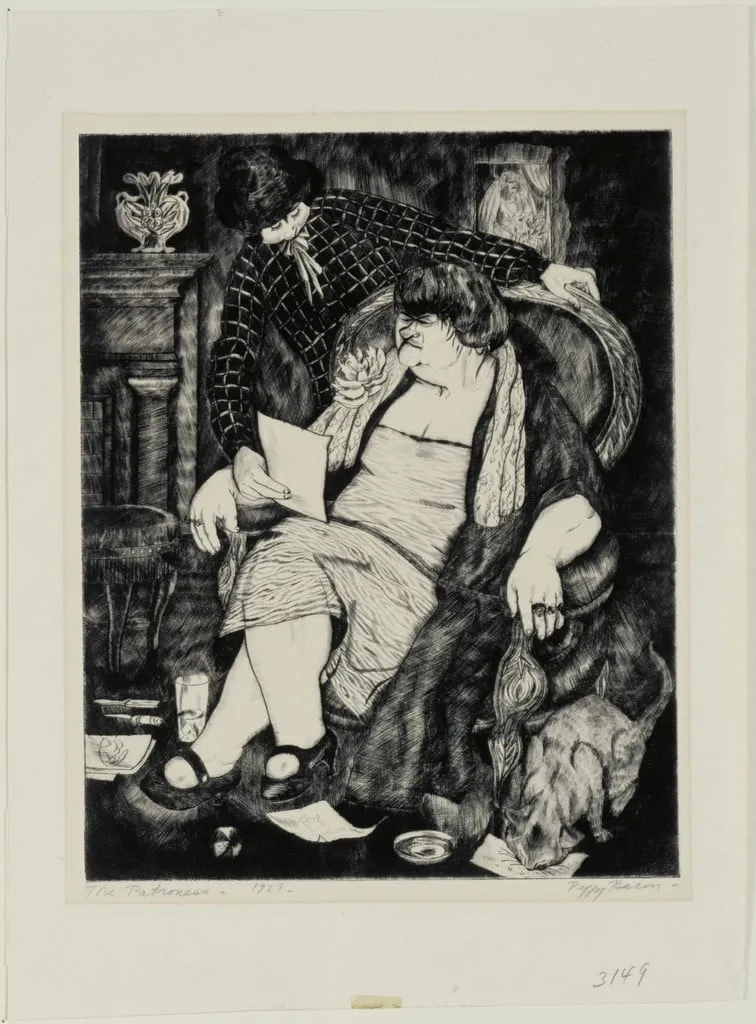
Untitled is an ink print by Peggy Bacon. It dates from 1927 and is held in the collection of the Museum of Modern Art.
About this work
Overview
Created in 1927, this drypoint print by Peggy Bacon is one of many works in which she explored domestic interiors through precise, intimate observation.
Created in 1927, this drypoint print by Peggy Bacon is one of many works in which she explored domestic interiors through precise, intimate observation. Unlike traditional etching, drypoint’s direct incision into the plate produced rich, velvety lines, a technique Bacon mastered under Kenneth Hayes Miller at the Art Students League. The work reflects her early commitment to printmaking as a vehicle for quiet narrative rather than overt satire.
Subject & Meaning
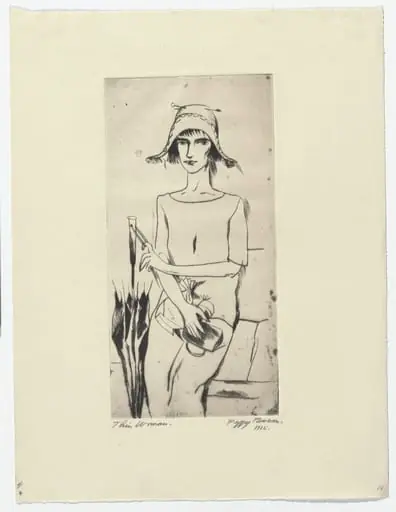
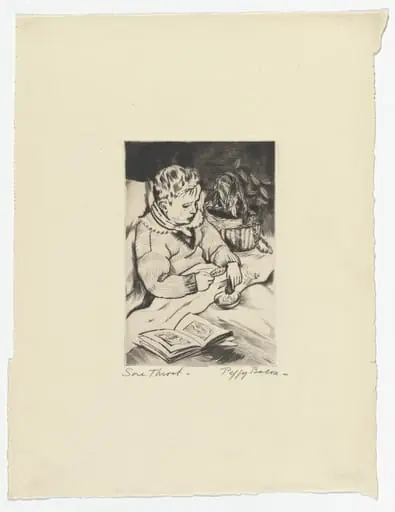
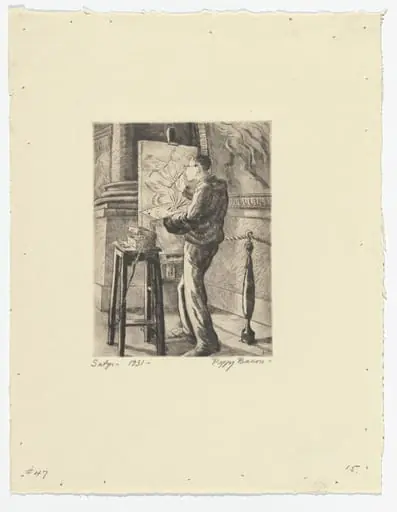
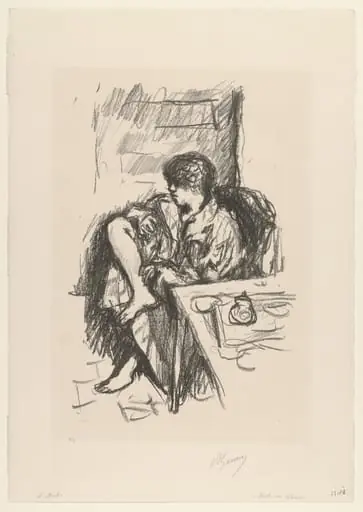
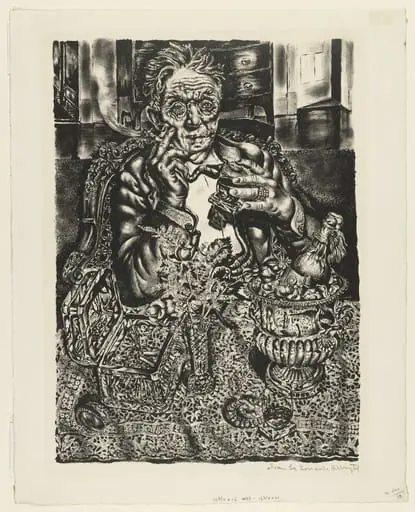
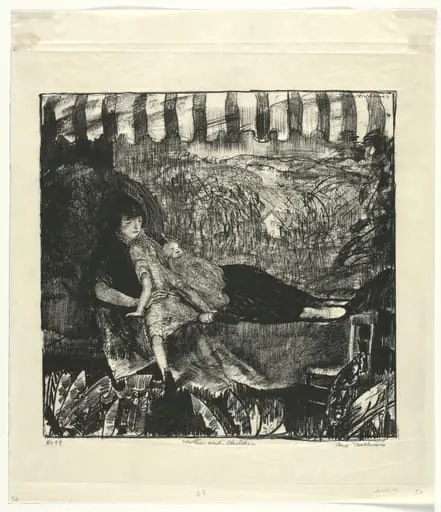
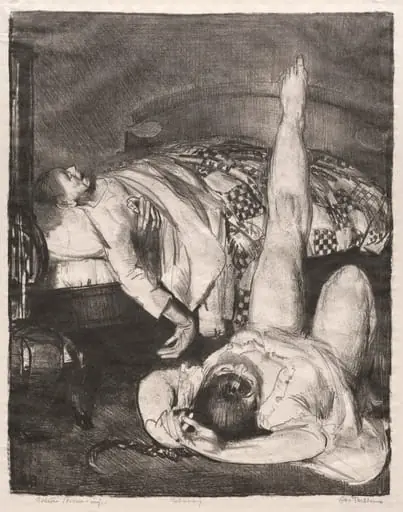
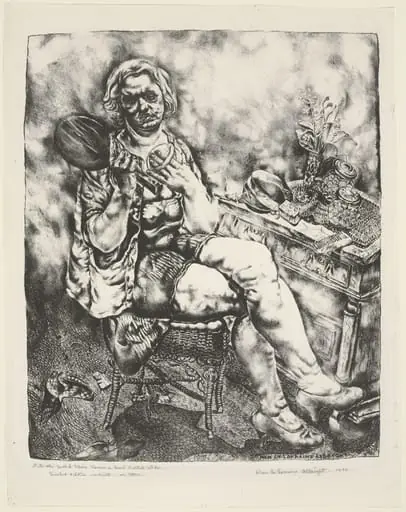
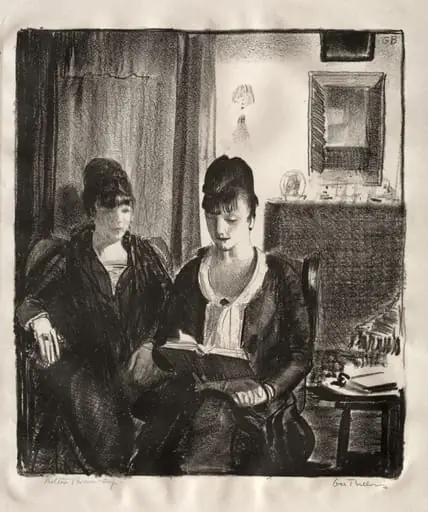
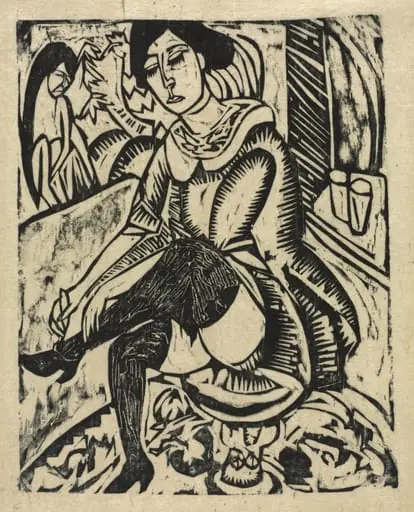
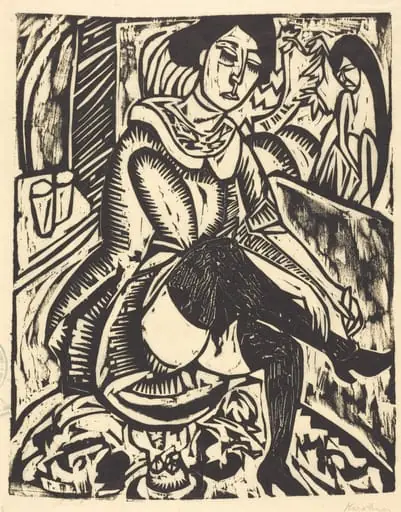
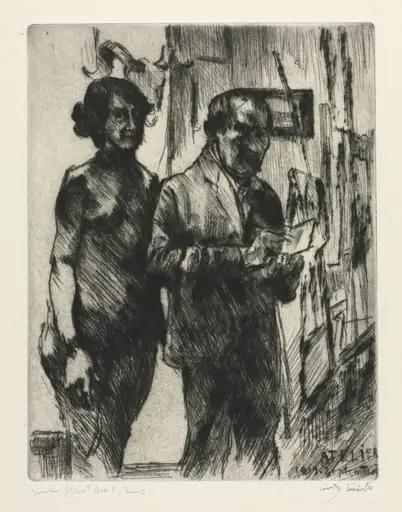
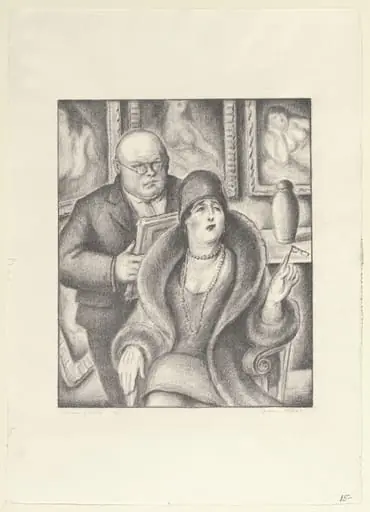
A woman sits calmly in a chair, holding a sheet of paper, her short hair and relaxed posture suggesting a moment of private reflection. Surrounding her are everyday objects—a vase, a book, a small animal—each placed to imply a lived-in space. The absence of narrative climax invites contemplation, emphasizing stillness over drama. The composition avoids caricature, instead offering a subdued portrait of interior life common in Bacon’s work of this period.
Technique & Style
Bacon employed drypoint to generate dense, tactile lines that catch light unevenly across the plate’s surface. The dark background enhances the contrast of the figure and objects, while subtle highlights suggest ambient illumination. The technique’s inherent roughness lends texture to fabric, fur, and paper, grounding the scene in physical reality. Her hand is deliberate but unadorned, favoring clarity over ornamentation.
History & Provenance
This print emerged during Bacon’s formative years as a published artist, shortly after her work began appearing in *The New Yorker* and *Vanity Fair*. Though unsigned and untitled, it aligns with her output from the late 1920s, when she was refining her graphic voice. No documented provenance exists beyond its association with her personal archive, later dispersed through private collections and institutional acquisitions.
Context
In the 1920s, American printmakers like Bacon turned to intimate subjects as a counterpoint to large-scale modernist abstraction. Drypoint, with its immediacy and affordability, suited artists seeking to reach broader audiences through magazines and small editions. Bacon’s focus on domestic scenes aligned with a broader cultural interest in the private lives of women, though her approach remained understated and observational rather than polemical.
Legacy
Bacon’s drypoints, including this work, helped establish printmaking as a legitimate medium for personal expression in early 20th-century America. Her influence extended through her teaching and her role in promoting graphic arts to a wider public. Though less celebrated than her satirical portraits, her quieter works like this one reveal a sustained interest in the poetry of ordinary moments, shaping later generations of printmakers.
Artist & collection
Artist
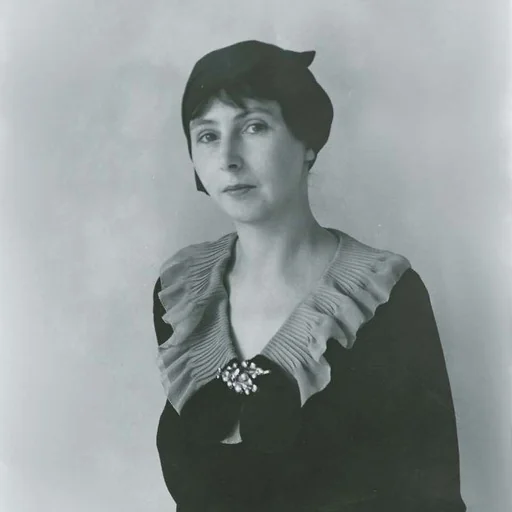
Margaret Frances Bacon (May 2, 1895 – January 4, 1987) was an American artist, best known for her satirical caricatures.