Artwork
Untitled
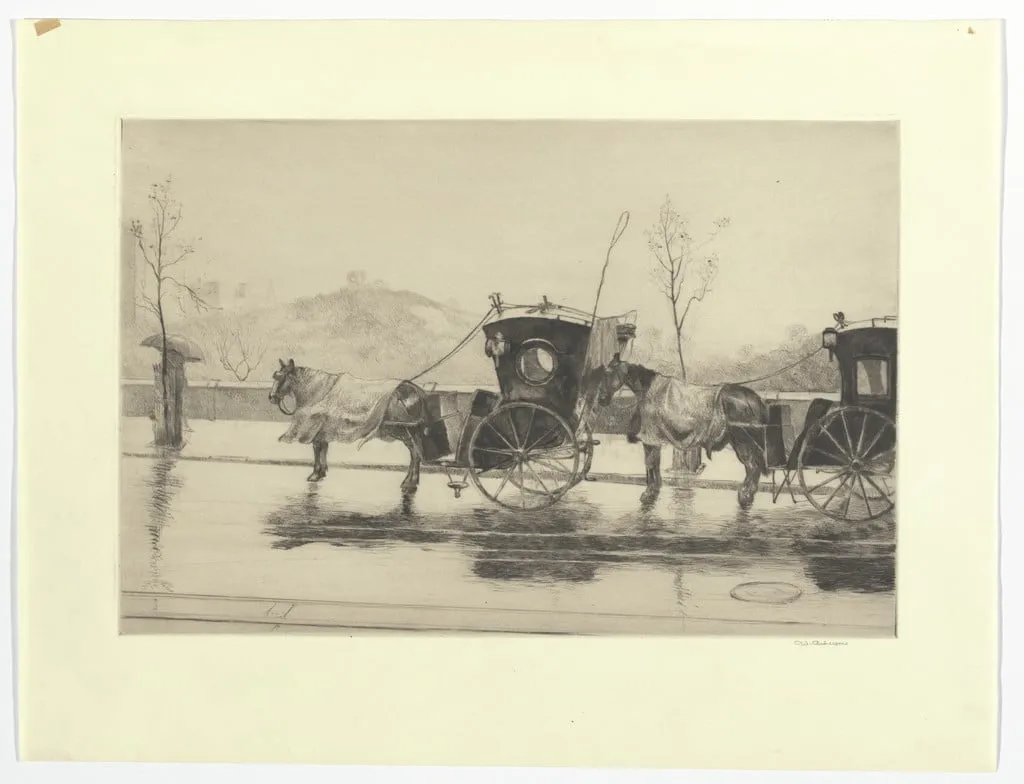
Untitled is an ink print by Clarence William Anderson. It dates from 1906 and is held in the collection of the Museum of Modern Art.
About this work
Overview
Created in 1906, this drypoint print by Clarence William Anderson captures a quiet rural scene with two horses hauling a carriage through shallow water. The artist, raised in Nebraska, brought deep familiarity with equine movement and landscape to his work. The medium’s fine, incised lines emphasize texture and precision, reflecting Anderson’s technical discipline and observational focus.
Subject & Meaning
The scene depicts two horses pulling a dark carriage through wet terrain, with a second carriage paused behind, suggesting a momentary pause in travel. Bare trees and a distant hill frame the composition, evoking a cold, early winter day. There is no overt narrative, but the stillness and repetition of forms imply routine labor and the quiet rhythm of rural life.
Technique & Style
Anderson employed drypoint, a printmaking method that scratches lines directly into a metal plate, producing rich, velvety blacks and fine detail. The water’s ripples, the carriage’s wheels, and the texture of the horses’ coats are rendered with sharp, deliberate strokes. The absence of tone or wash reinforces the stark contrast and linear clarity characteristic of the technique.
History & Provenance
This work dates from early in Anderson’s career, before he began authoring his own illustrated books. It reflects his formative years studying horses through direct observation and sketching. While specific ownership history is undocumented, the piece aligns with his known body of work from this period, rooted in regional realism and technical precision.
Context
In early 20th-century America, illustrators like Anderson often documented rural life with documentary precision. Drypoint, though less common than other print methods, was favored by artists seeking intimate, hand-crafted detail. Anderson’s focus on horses and carriage scenes resonated with contemporary interests in agricultural life and animal anatomy.
Legacy
Though not widely exhibited, this print exemplifies Anderson’s lifelong commitment to anatomical accuracy and narrative restraint. His early works, including this drypoint, laid the foundation for his later illustrated children’s books, where his precise linework and understanding of equine motion became defining traits.
Artist & collection
Artist
Clarence William Anderson (1891–1971), born in Wahoo, Nebraska, and known professionally as C.W.

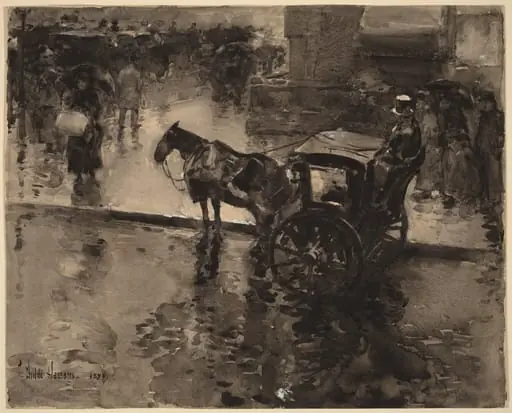 The Up-Tide on the Avenue
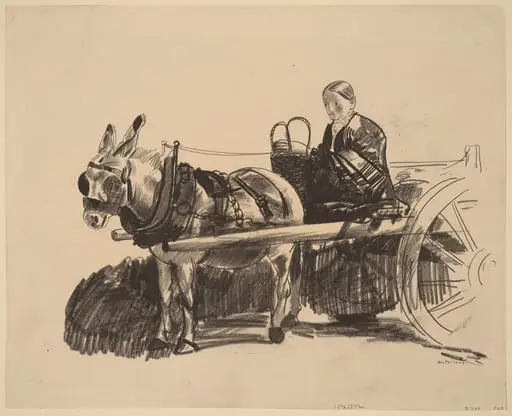 The Donkey Cart
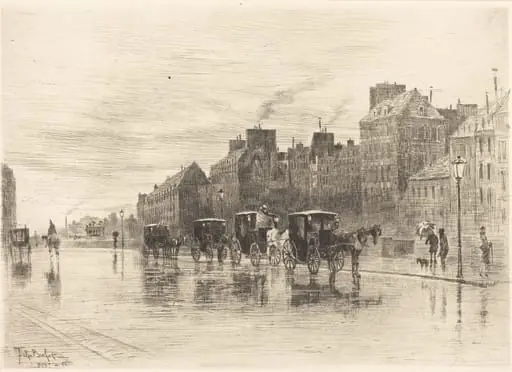 Une Matinée d'Hiver au Quai de l'Hôtel-Dieu (Winter Morning on the Quai de l'Hôtel-Dieu)
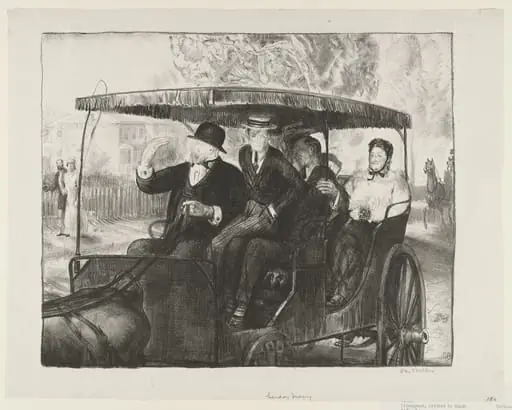 Untitled
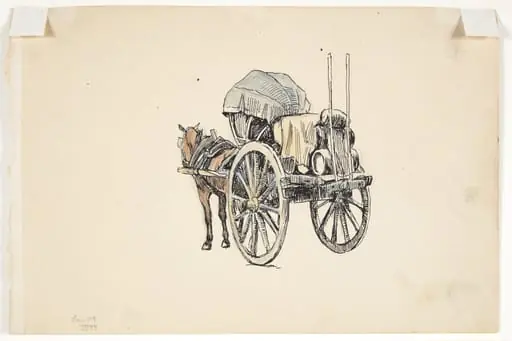 Italiensk fragtvogn
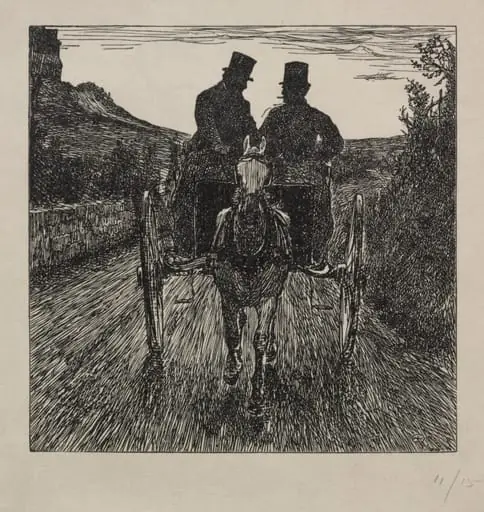 Why the Pifflers Lost their Return Match
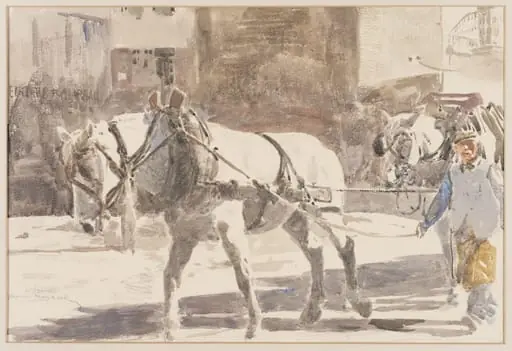 Two Percheron Horses
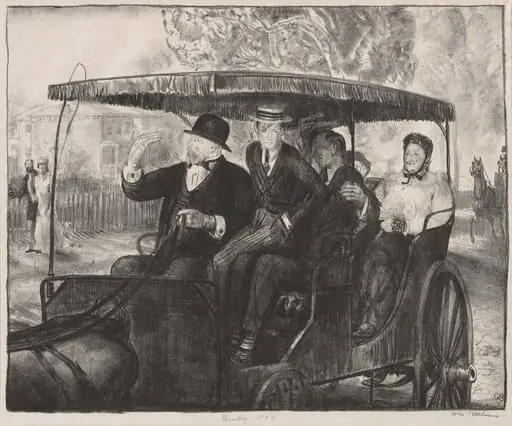 Sunday 1897
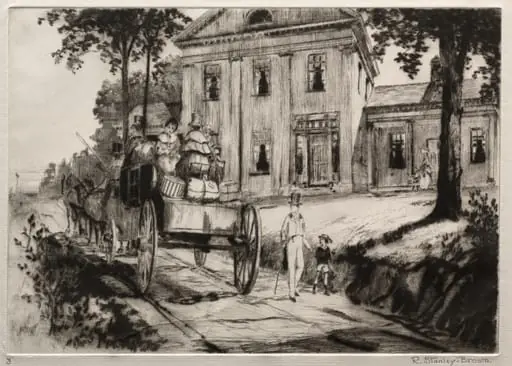 The Thirties
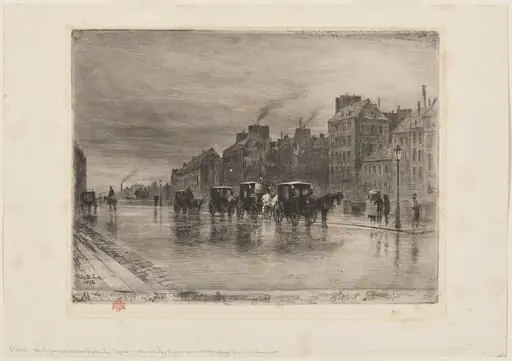 Une Matinée d'Hiver au Quai de l'Hôtel-Dieu (Winter Morning on the Quai de l'Hôtel-Dieu)
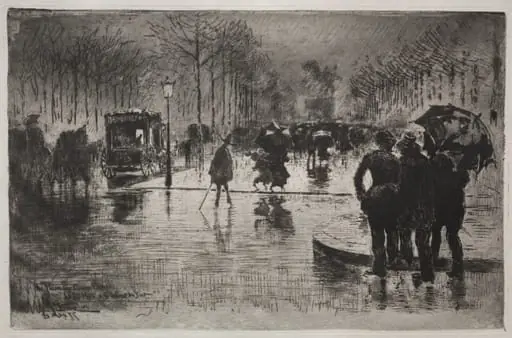 Artists Returning from the Salon
 Untitled