Artwork
Plaiuri
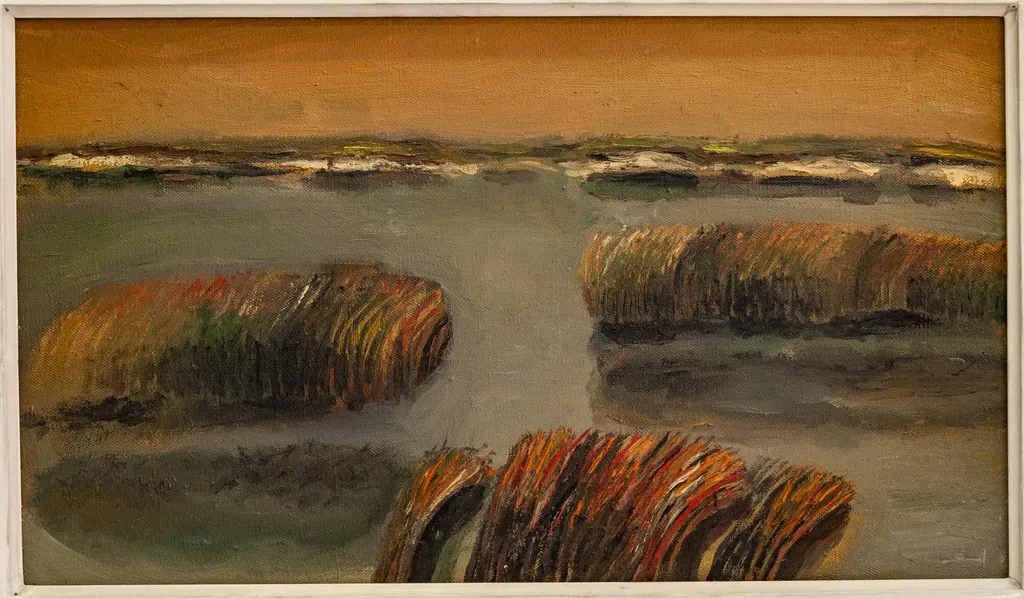
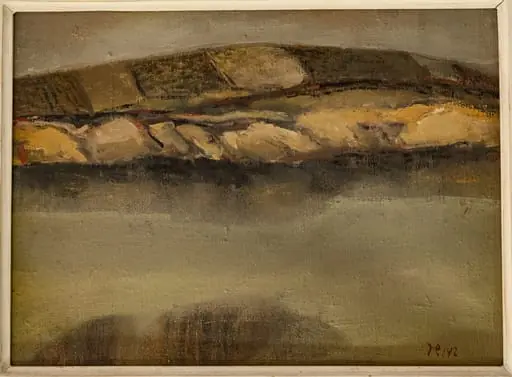
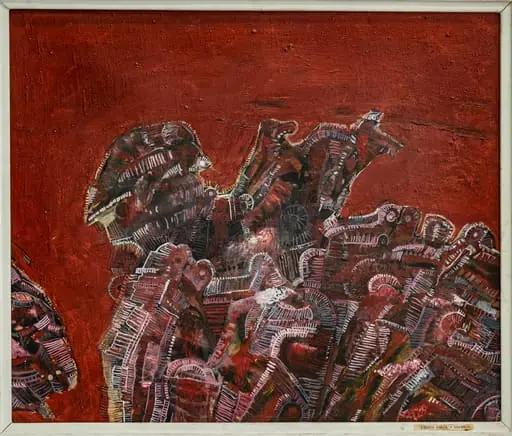
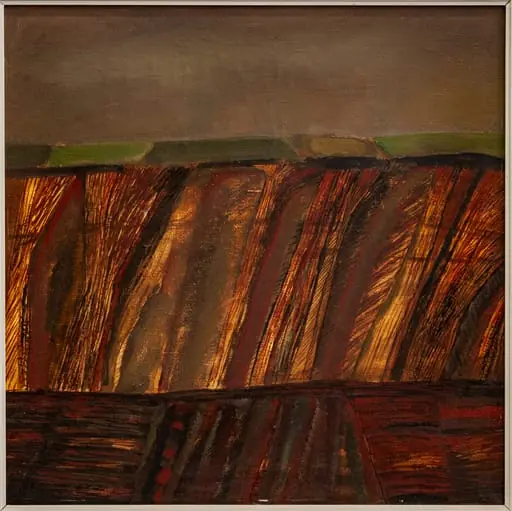
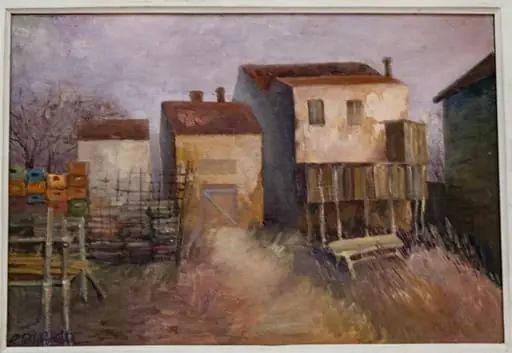
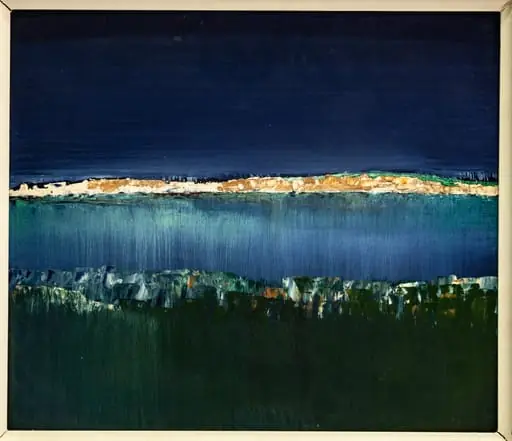
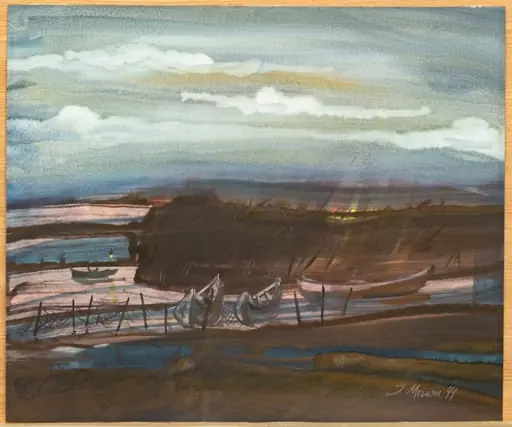
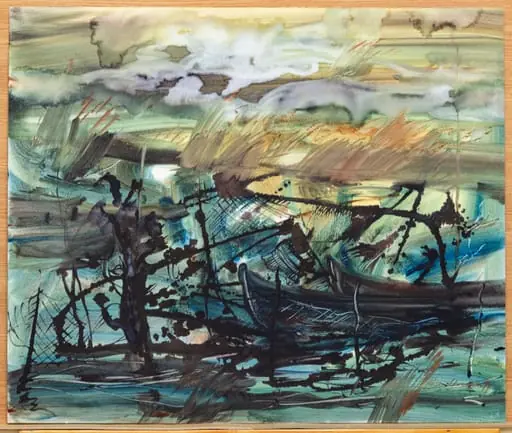
Plaiuri is a print by Maria Pelmuș. It dates from 1992 and is held in the collection of the Gavrila Simion Eco-Museum Research Institute Tulcea.
About this work
Overview
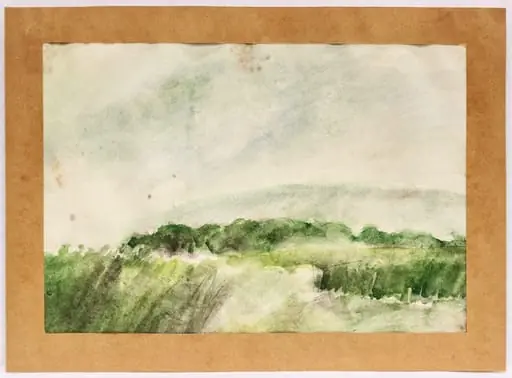
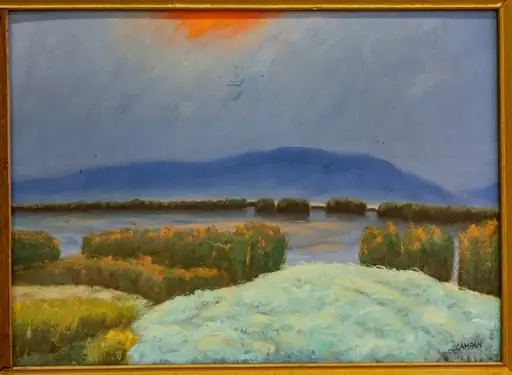
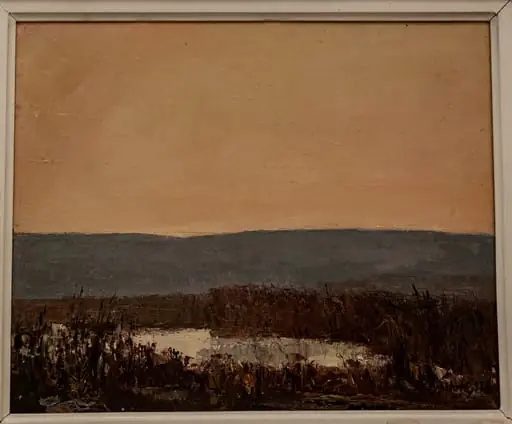
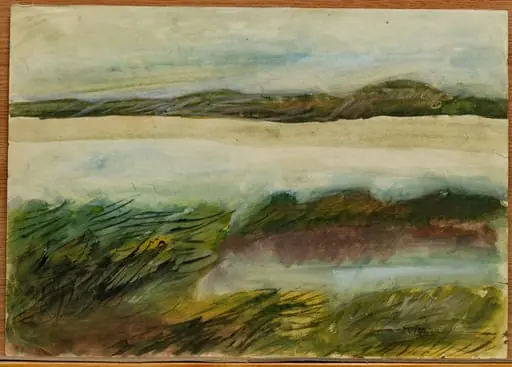
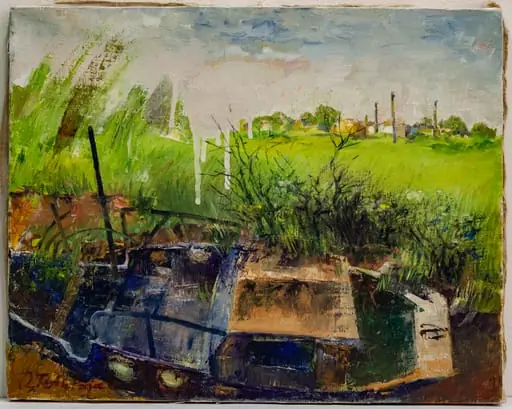
The work presents a coastal scene with minimal human presence, focusing instead on the interplay of land, water, and sky.
Plaiuri, painted by Maria Pelmuș in 1992, is a landscape composition rendered in oil or similar medium on canvas. It resides in the collection of the Museum of Ethnography. The work presents a coastal scene with minimal human presence, focusing instead on the interplay of land, water, and sky. Its raw, tactile surface and restrained palette convey a sense of quiet endurance rather than picturesque beauty.
Subject & Meaning
Two small wooden boats drift on turbulent water, their forms simplified and grounded in the physicality of the medium. The shoreline, marked by uneven patches of green and white, suggests erosion or tidal change. The dull yellow sky and dark, earthy tones evoke a mood of stillness amid instability. The scene resists narrative clarity, instead inviting contemplation of nature’s quiet persistence and the fragile presence of human activity within it.
Technique & Style
Pelmuș employs thick, uneven brushwork to build texture across the surface, emphasizing materiality over precision. Colors are muted—deep greens, rusted browns, and muted reds—applied with deliberate irregularity. The water’s agitation is suggested through broken strokes, while the sky and shore are layered with subtle shifts in tone. The style avoids idealization, favoring a tactile, almost sculptural approach to paint application.
History & Provenance
Created in 1992, Plaiuri entered the collection of the Museum of Ethnography shortly after its completion. The work reflects Pelmuș’s engagement with Romanian rural environments during the early post-communist period. Its acquisition by an ethnographic institution suggests an interest in its cultural resonance rather than its aesthetic formalism, aligning it with broader efforts to document regional visual expression.
Context
Painted during Romania’s transition from state socialism, Plaiuri reflects a shift in artistic priorities toward introspective, non-political subjects. Pelmuș’s focus on landscape and materiality aligns with a broader movement among Romanian artists who turned away from ideological imagery toward personal, sensory experiences of place. The work’s subdued palette and textured surface echo a cultural mood of recalibration and quiet resilience.
Legacy
Plaiuri remains a representative example of Pelmuș’s mature style, characterized by emotional restraint and material honesty. While not widely exhibited beyond institutional collections, it contributes to the understanding of post-1989 Romanian art that prioritizes atmosphere over spectacle. Its presence in the Museum of Ethnography underscores its role as a document of place and perception, rather than a statement of artistic innovation.
Artist & collection
Artist
Maria Pelmuș painted scenes of the Danube delta and everyday life around it. Her brush captured wide skies and watery horizons in works like *Delta* and *Peisaj*, while her prints and paintings of local people and…
Museum
Gavrila Simion Eco-Museum Research Institute Tulcea
Continue through works from the same source collection.