Artwork
The Triumph of Eternity
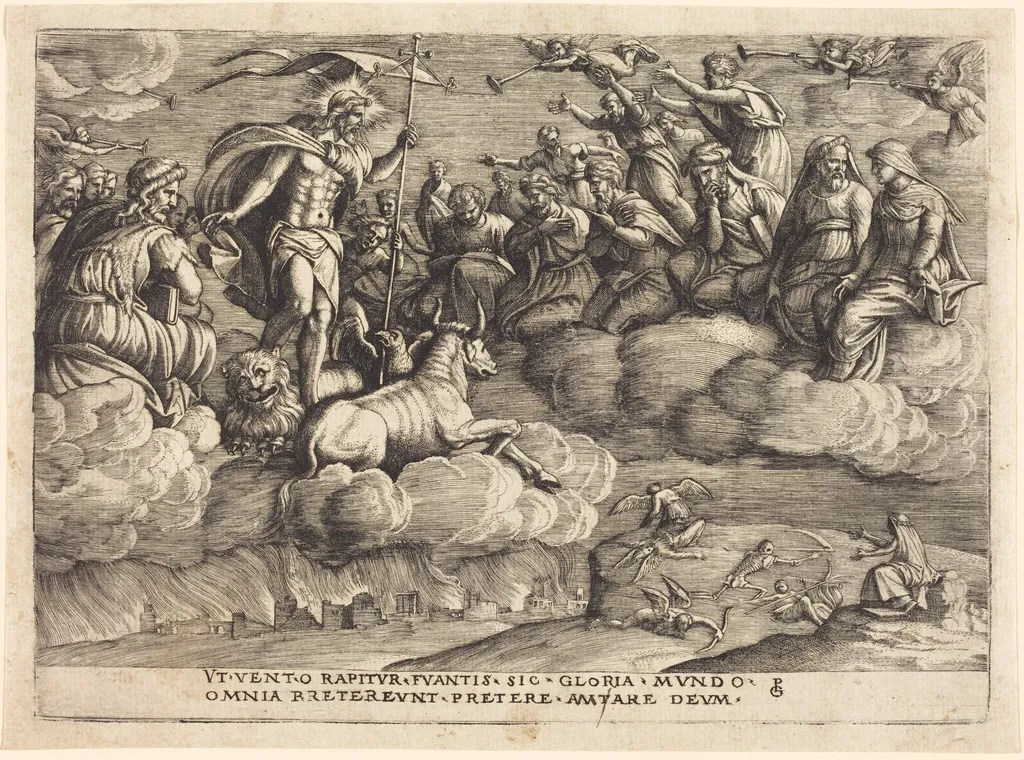
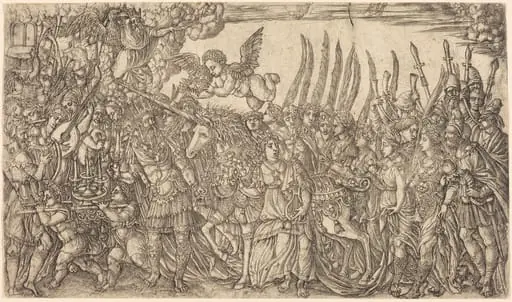
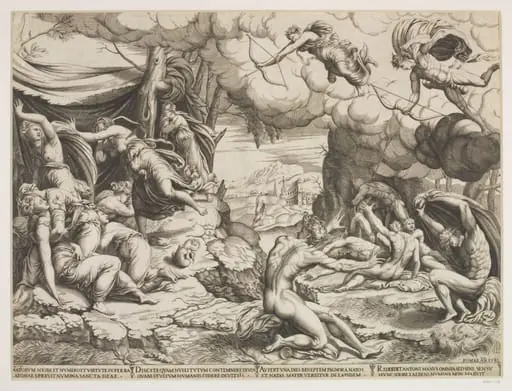
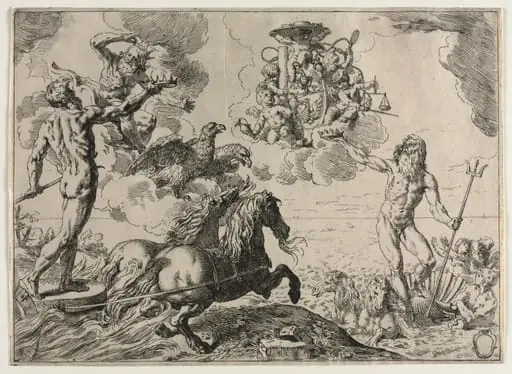
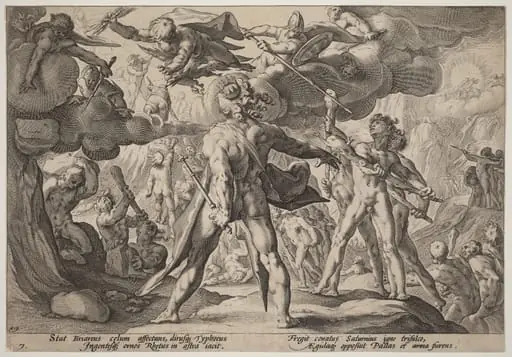
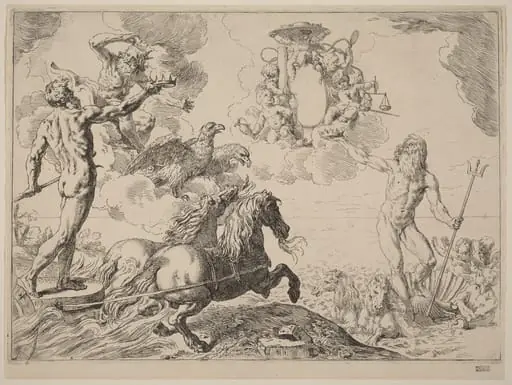
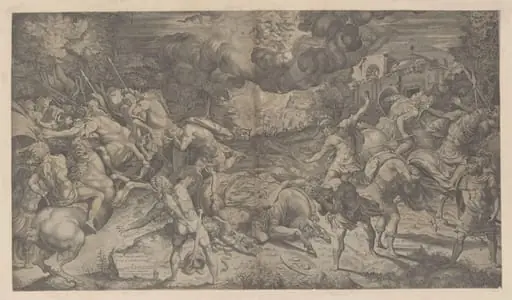
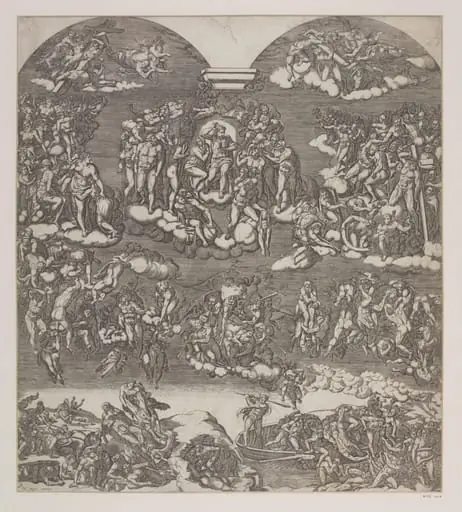
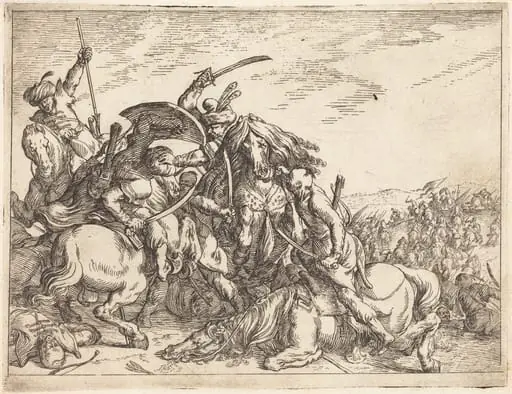
The Triumph of Eternity is an ink print by the Renaissance artist Georg Pencz. It dates from 1539 and is held in the collection of the National Gallery of Art.
About this work
Overview
Georg Pencz, a German printmaker active in the early sixteenth century, produced the engraving *The Triumph of Eternity* circa 1539. Executed in a densely incised style, the work exemplifies the technical virtuosity of Northern Renaissance printmaking and presents a complex, allegorical tableau.
Subject & Meaning
The composition centers on a semi-nude figure poised atop a cloud, clutching a staff and shield, suggesting an embodiment of time or destiny.
The composition centers on a semi-nude figure poised atop a cloud, clutching a staff and shield, suggesting an embodiment of time or destiny. Around him a tumultuous crowd gathers on a craggy shore, while a sinking vessel and swirling celestial beings—angels and demons—populate the sky, creating a narrative of chaos and divine judgment. A fragment of Latin inscription at the bottom hints at a moral or philosophical subtext, though its exact meaning remains obscure.
Technique & Style
Pencz employs fine, intersecting lines to render texture and movement, a technique honed during his apprenticeship with Albrecht Dürer in Nuremberg. The engraving’s sharp hatching and crowded composition reflect the influence of Italian, particularly Venetian, print traditions he encountered during his time in Italy, as well as the collaborative practices of the Raimondi workshop.
History & Provenance
After completing his training under Dürer, Pencz spent several years in Italy before returning north. His career was briefly interrupted in 1525 when he was detained for expressing dissenting religious views. *The Triumph of Eternity* emerged later, around 1539, and has since circulated among private collections before entering public holdings, though specific ownership records are limited.
Context
The engraving belongs to the broader Northern Renaissance movement, which combined meticulous detail with allegorical content. Pencz’s exposure to both German and Italian artistic currents allowed him to synthesize the precise line work of his northern peers with the dramatic dynamism characteristic of Italian prints, situating the work at a cultural crossroads of early modern Europe.
Own this work as a print
Artist & collection
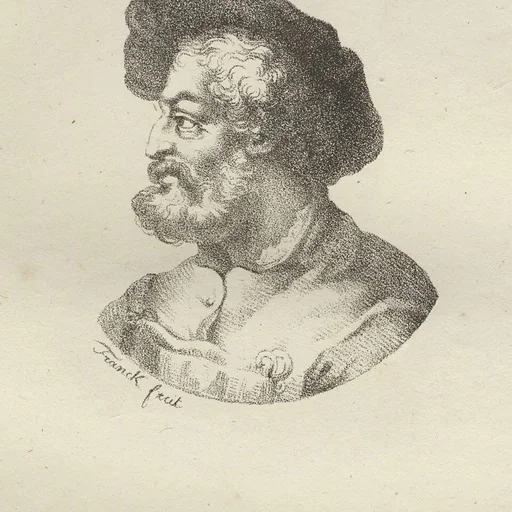
Artist
Georg Pencz (c. 1500 – 11 October 1550) was a German engraver, painter and printmaker. Pencz was probably born in Westheim near Bad Windsheim/Franconia. He travelled to Nuremberg in 1523 and joined Albrecht Dürer’s…