Artwork
The Hebrews defeat the Canaans
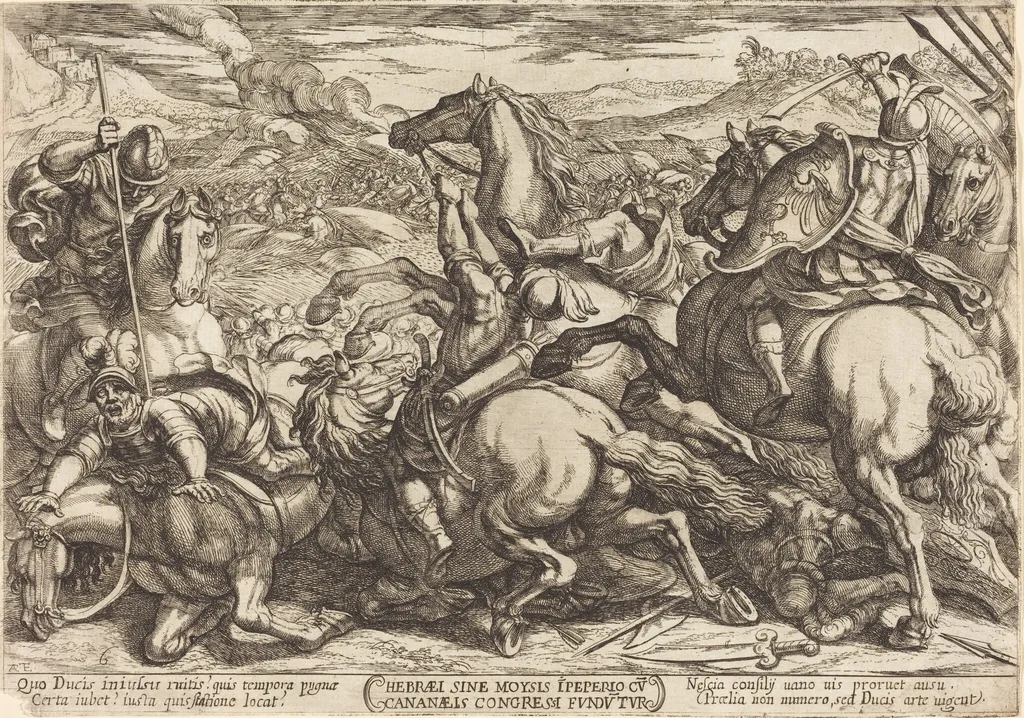
The Hebrews defeat the Canaans is an ink print by the Baroque artist Antonio Tempesta. It dates from 1613 and is held in the collection of the National Gallery of Art.
About this work
Overview
Created in 1613 by Italian artist Antonio Tempesta, this etching illustrates a biblical conflict between the Hebrews and the Canaanites.
Created in 1613 by Italian artist Antonio Tempesta, this etching illustrates a biblical conflict between the Hebrews and the Canaanites. As a printmaker active in both Rome and Antwerp, Tempesta specialized in dynamic historical and military scenes. The work is part of a broader series of engraved battle compositions that reflect his interest in narrative intensity and movement, rendered through the precise, linear qualities of etching rather than painted color.
Subject & Meaning
The scene portrays a violent clash drawn from biblical accounts of the Hebrews’ conquest of Canaan. Figures are interwoven in chaotic motion—soldiers on foot and horseback, fallen warriors, and scattered weapons convey the brutality of the encounter. The composition avoids clear heroism, instead emphasizing the disorder and physical toll of war, aligning with contemporary interpretations of divine retribution and territorial struggle in sacred history.
Technique & Style
Tempesta employed etching to achieve sharp, incised lines that create texture and urgency. The dark, jagged strokes build dense masses of figures and debris, avoiding smooth transitions in favor of energetic disruption. This method allowed for rapid, expressive mark-making suited to the scene’s turbulence. The absence of tonal shading heightens the contrast between form and chaos, reinforcing the print’s raw, unfiltered intensity.
History & Provenance
The print emerged during Tempesta’s mature period, when he was producing numerous battle scenes for collectors and publishers across Europe. Though no specific early ownership record is documented, its style and subject align with prints circulated in Rome and the Low Countries. It likely served as both a religious illustration and a demonstration of the artist’s technical command in reproductive printmaking.
Context
In early 17th-century Europe, biblical warfare was a popular subject in visual art, reflecting religious devotion and political narratives of conquest. Tempesta’s work resonated within circles influenced by Counter-Reformation ideals and the fascination with historical drama. His etchings, often based on classical and scriptural sources, bridged Italian Mannerism and Northern European print traditions, appealing to a transnational audience.
Legacy
Tempesta’s battle scenes, including this etching, contributed to the standardization of dynamic war imagery in print culture. His linear precision and compositional density influenced later engravers and illustrators of historical texts. Though less celebrated today than painters of his era, his prints remain significant for their role in disseminating visual narratives of conflict during a period of intense religious and territorial upheaval.
Own this work as a print
Artist & collection
Artist
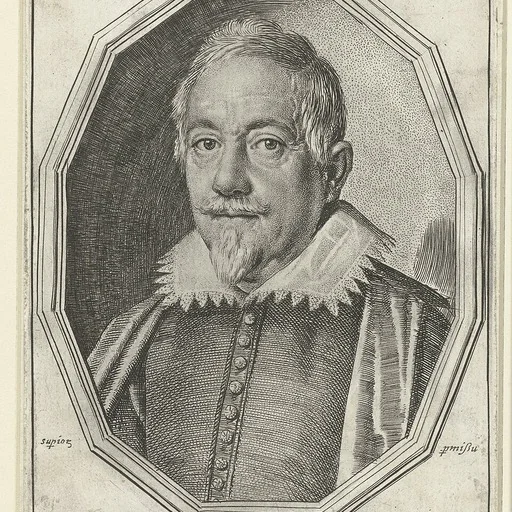
Antonio Tempesta, also called il Tempestino (1555 – 5 August 1630), was an Italian painter and engraver, whose art acted as a point of connection between Baroque Rome and the culture of Antwerp.

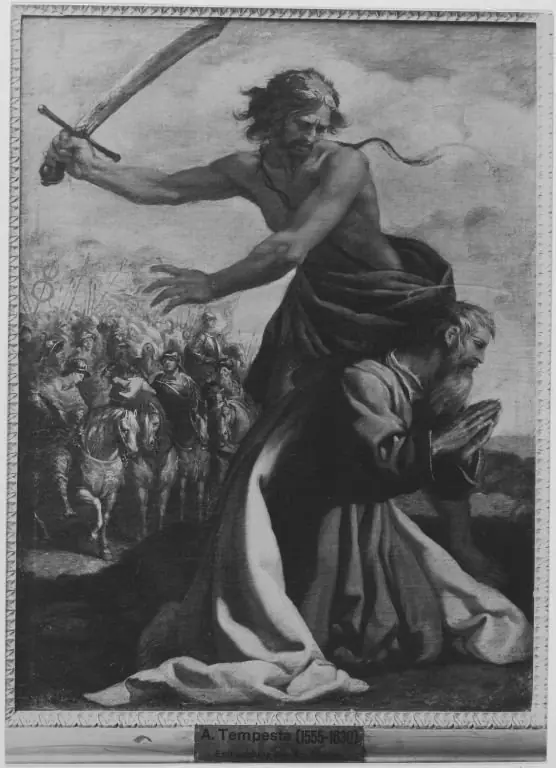
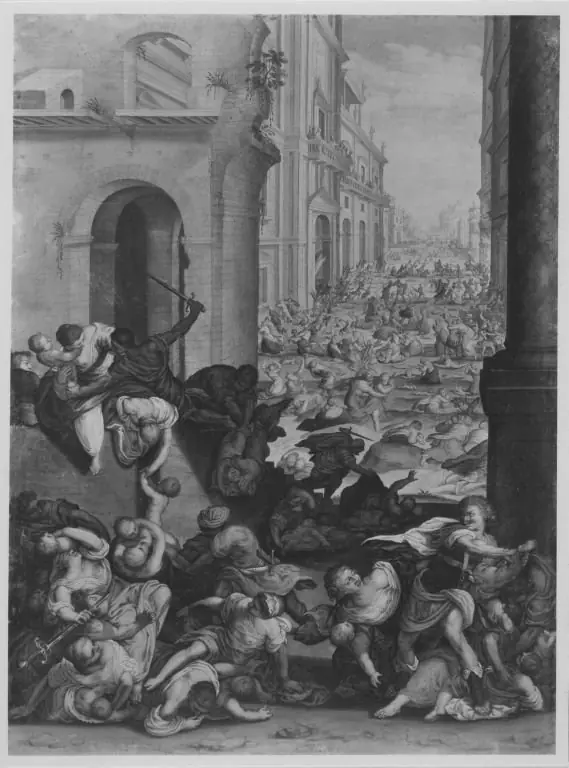
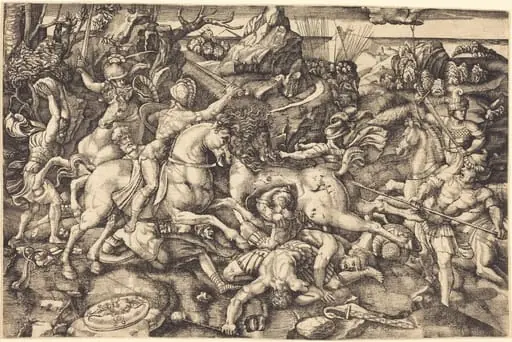 Combat between Horsemen and Foot Soldiers
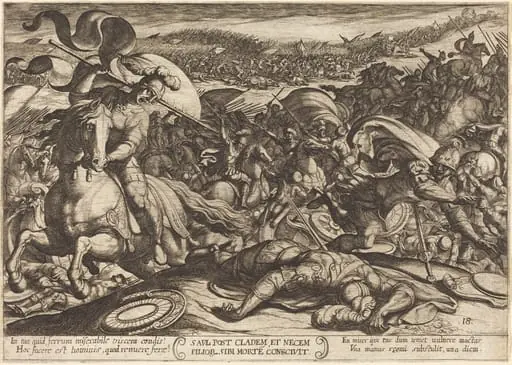 Saul Kills Himself after the Defeat of his Army by the Philistines
 Capricci di varie battaglie
 Capricci di varie battaglie
 La bataille au coutelas
 Suleiman the Magnificent Forced to Raise the Siege of Vienna
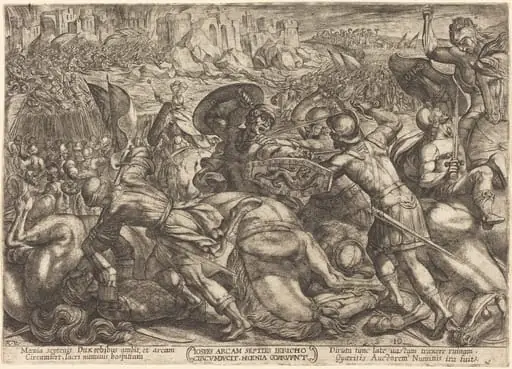 The Taking of the City of Jericho
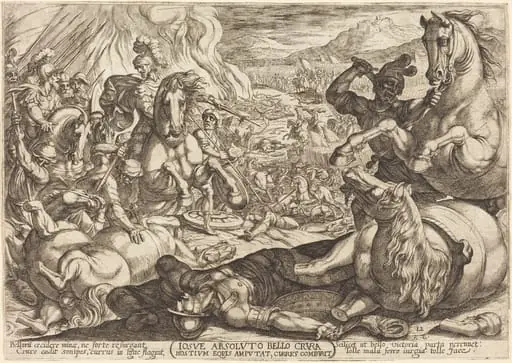 Joshua has the Chariots Burned and Cuts the Legs off His Enemies
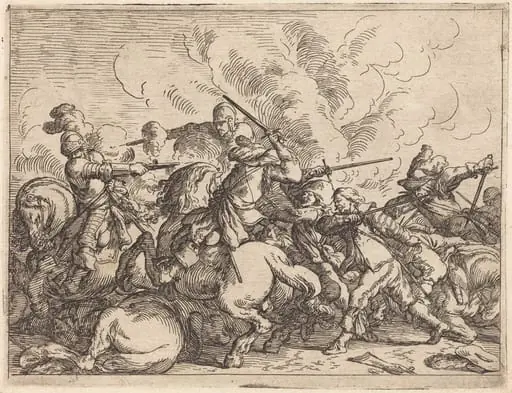 Capricci di varie battaglie