Artwork
Building the Great Turret
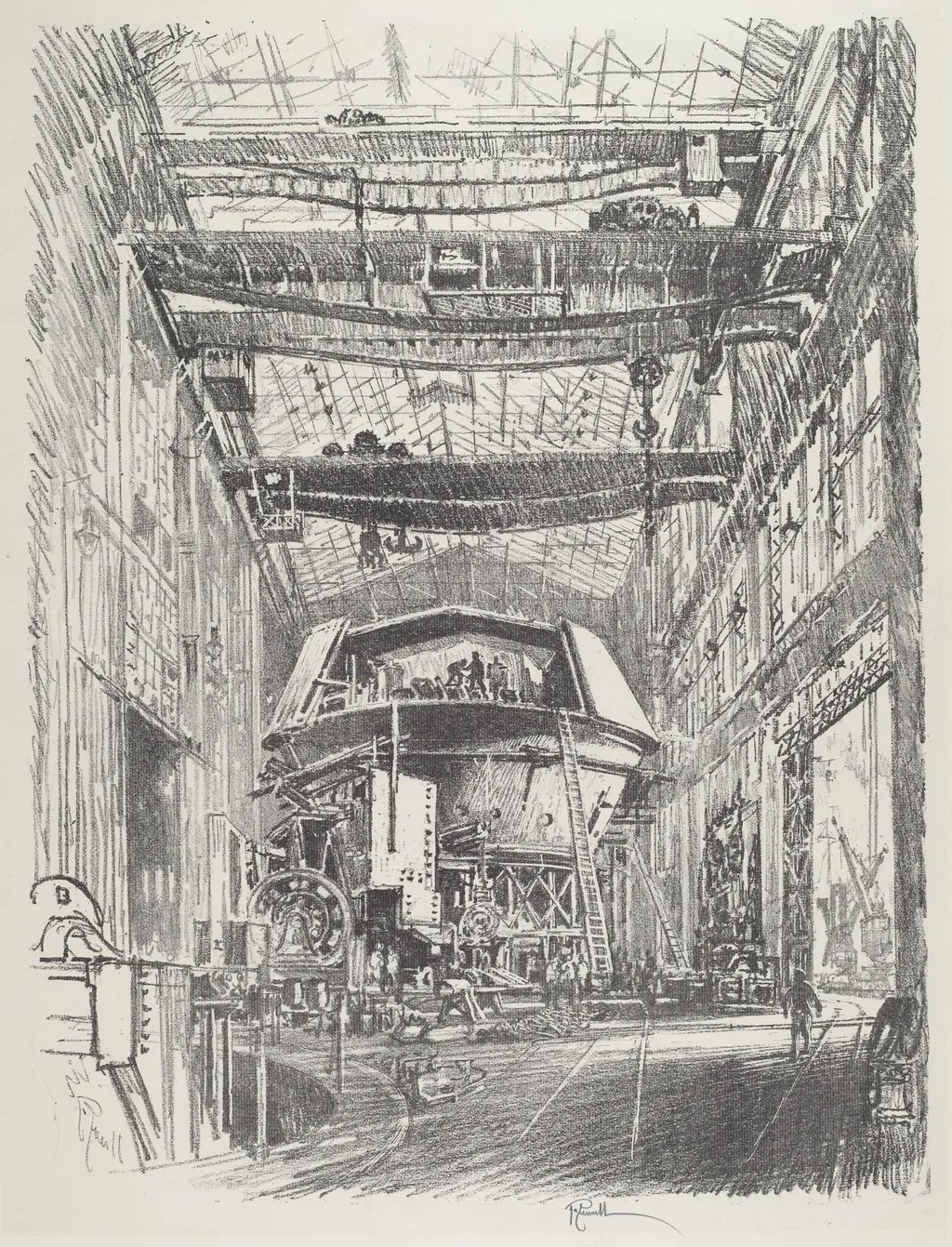
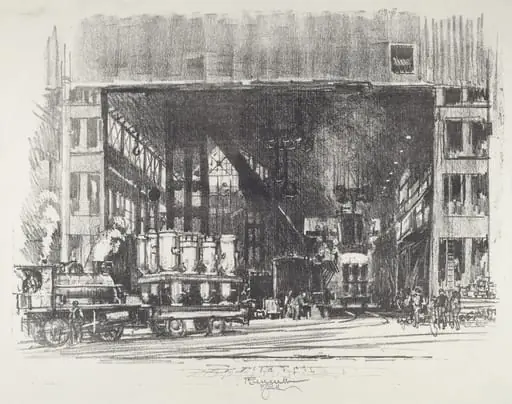
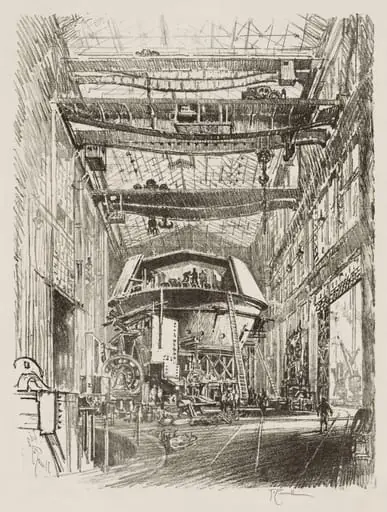
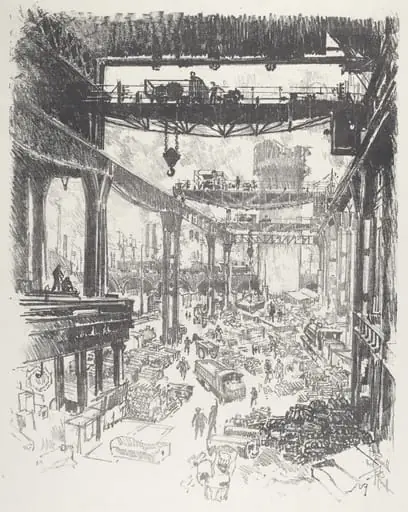
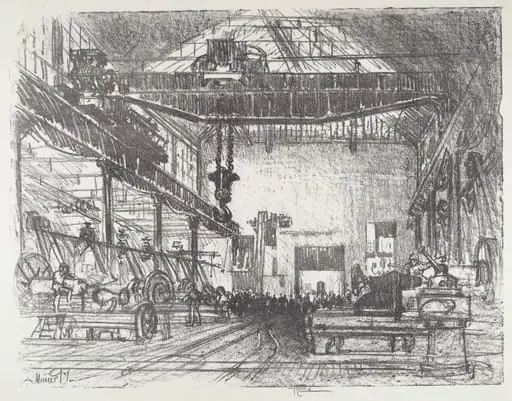
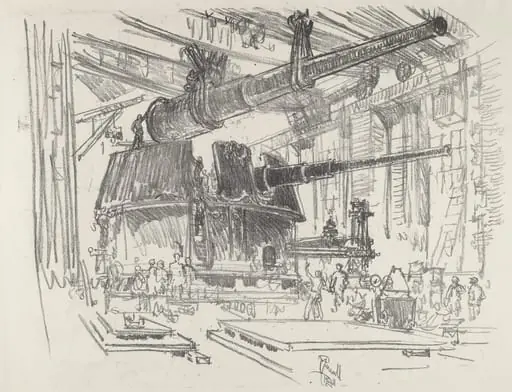
Building the Great Turret is an ink print by Joseph Pennell. It dates from 1916 and is held in the collection of the National Gallery of Art.
About this work
Overview
Joseph Pennell’s 1916 lithograph *Building the Great Turret* captures the dynamic labor of industrial construction during World War I.
Joseph Pennell’s 1916 lithograph *Building the Great Turret* captures the dynamic labor of industrial construction during World War I. As an American artist based largely in Europe, Pennell was drawn to monumental engineering projects and the human effort behind them. This print, part of a series documenting wartime infrastructure, emphasizes movement and scale over polished detail, reflecting his interest in the raw reality of modern labor.
Subject & Meaning
The image portrays the assembly of a massive turret structure, likely for a naval vessel, with workers suspended on scaffolding and machinery in active use. The central wheel-like device suggests heavy mechanical operation, while ropes and pulleys convey the physical strain of the work. Pennell presents construction not as a triumphal spectacle but as a complex, chaotic process, honoring the unseen labor that underpins industrial progress.
Technique & Style
Pennell employed rapid, expressive lithographic lines to convey motion and spatial depth. The sketchy, unfinished quality of the drawing mimics on-site observation, with overlapping forms and minimal shading suggesting urgency and improvisation. His technique avoids idealization, favoring energetic strokes that echo the physicality of the scene, a style shaped by his training under Eakins and Whistler, who valued direct observation over academic refinement.
History & Provenance
Created during Pennell’s commission by the U.S. government to document wartime industry, the print was produced as part of a broader effort to record American industrial mobilization. It was likely printed in limited editions for institutional and public distribution. Pennell often worked with his wife, Elizabeth Robins, who contributed contextual commentary, though this piece stands as a standalone visual record of the era’s engineering efforts.
Context
Made during World War I, the image reflects a national focus on industrial capacity and technological advancement. Shipbuilding, particularly for naval warfare, was a priority, and Pennell’s work aligned with government efforts to document and legitimize wartime production. His choice to depict the interior of a construction site—rather than the finished vessel—highlights the labor-intensive nature of modern warfare infrastructure.
Legacy
Pennell’s lithographs, including this one, contributed to the recognition of industrial subjects as legitimate themes in American printmaking. His unidealized approach influenced later documentary artists and photographers who sought to capture the realities of labor and machinery. Though less celebrated than his European contemporaries, his work remains a significant record of early 20th-century industrial life.
Own this work as a print
Artist & collection
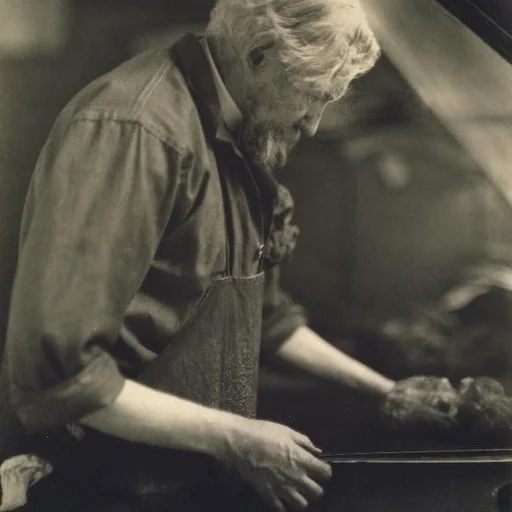
Artist
Joseph Pennell (July 4, 1857 – April 23, 1926) was an American draftsman, etcher, lithographer, and illustrator for books and magazines.