Artwork
The Great Tower: Pig-Iron
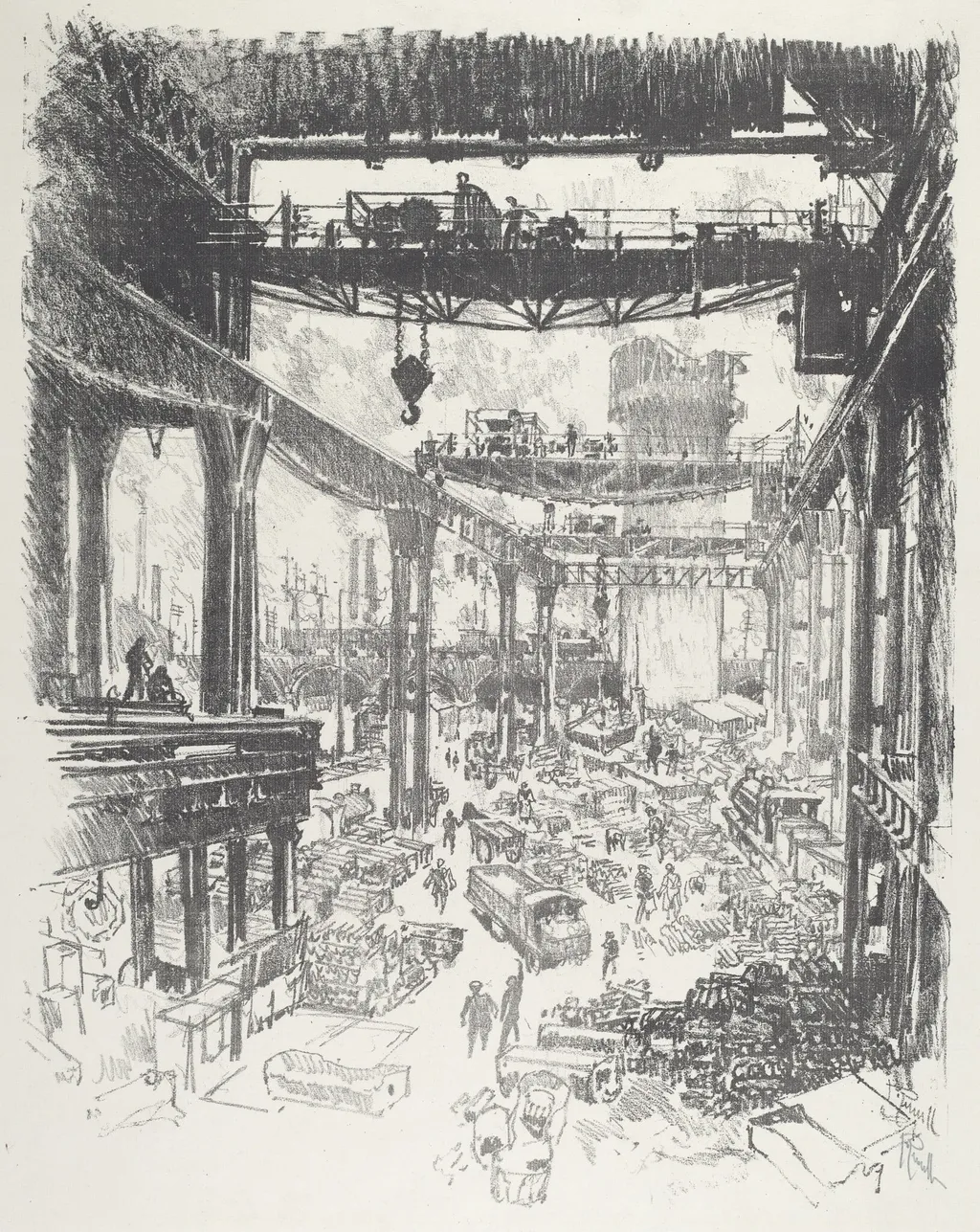
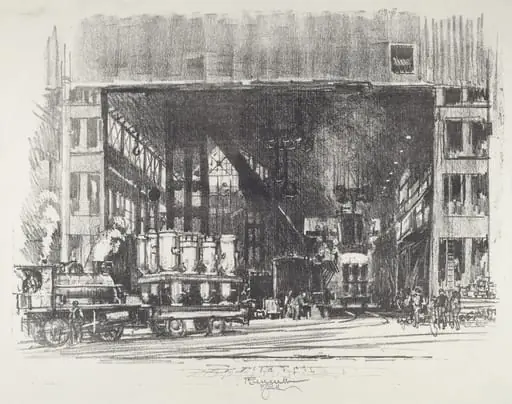
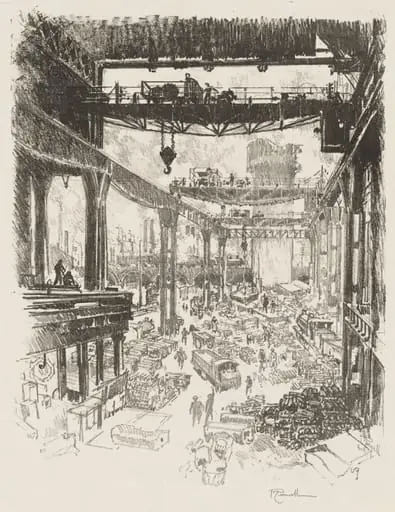
The Great Tower: Pig-Iron is an ink print by Joseph Pennell. It dates from 1916 and is held in the collection of the National Gallery of Art.
About this work
Overview
Though trained in traditional drawing and influenced by academic artists like Eakins and Lambdin, Pennell turned his focus to modern labor environments.
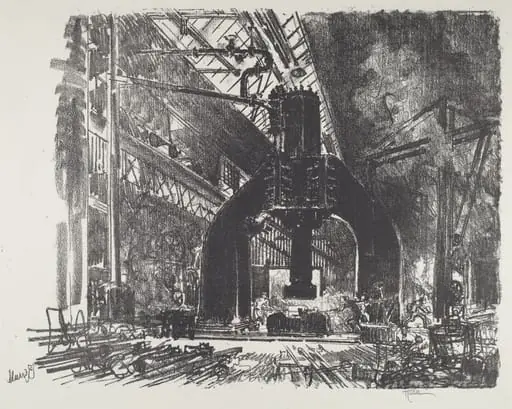
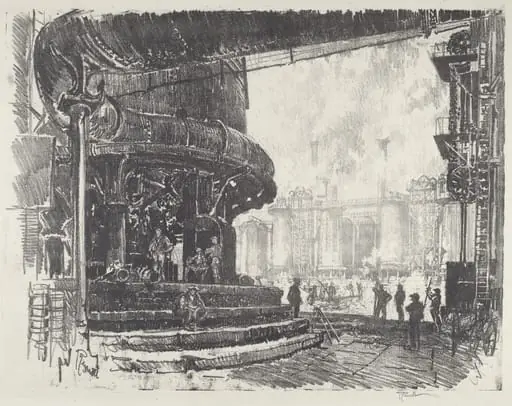
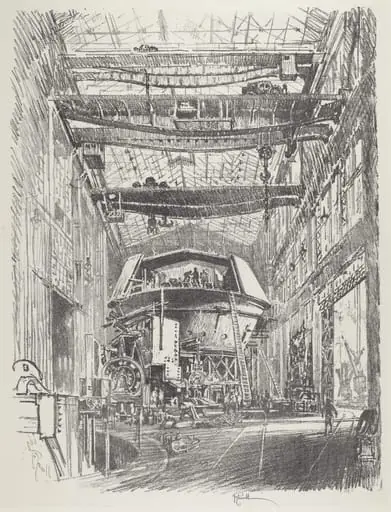
Joseph Pennell produced *The Great Tower: Pig-Iron* in 1916 as a lithograph, capturing the intensity of an American industrial site. Though trained in traditional drawing and influenced by academic artists like Eakins and Lambdin, Pennell turned his focus to modern labor environments. This print reflects his sustained interest in the visual rhythm of factories and infrastructure, rendered with the immediacy of sketching on site.
Subject & Meaning
The image portrays a bustling ironworks floor, where workers navigate heavy machinery and stacked metal sheets beneath a towering crane. The title references pig-iron production, but the emphasis lies in the kinetic energy of the space—not the product itself. Pennell conveys the scale and tempo of industrial labor through overlapping figures and dynamic movement, suggesting the human presence within mechanized systems.
Technique & Style
Pennell employed lithography to achieve rapid, expressive lines that mimic the spontaneity of a sketch. The composition relies on stark contrasts of black and white, with minimal tonal gradation. Rough, energetic strokes define beams, tools, and figures, avoiding polished detail in favor of atmospheric density. This approach mirrors his admiration for Whistler’s tonal harmony, adapted to the rawness of industrial settings.
History & Provenance
Created during World War I, the print emerged from Pennell’s documented visits to American industrial sites, commissioned to record wartime production. Though he spent much of his career in Europe, this work reflects his return to U.S. factories during a period of heightened national industrial activity. The lithograph was likely distributed through print portfolios or periodicals focused on modern life.
Context
In the early 20th century, artists increasingly turned to industry as a subject, moving beyond pastoral or classical themes. Pennell’s work aligned with broader cultural interest in modernization, though he avoided overt commentary. His focus on process over progress positioned him apart from celebratory industrial imagery, instead emphasizing the physical and spatial realities of labor.
Legacy
Pennell’s industrial prints, including *The Great Tower: Pig-Iron*, contributed to the recognition of lithography as a medium for documenting modernity. His direct, unsentimental approach influenced later documentary artists and photographers. While not widely exhibited in his lifetime, his body of work remains a valuable record of early American industrial aesthetics and the human experience within it.
Artist & collection
Artist
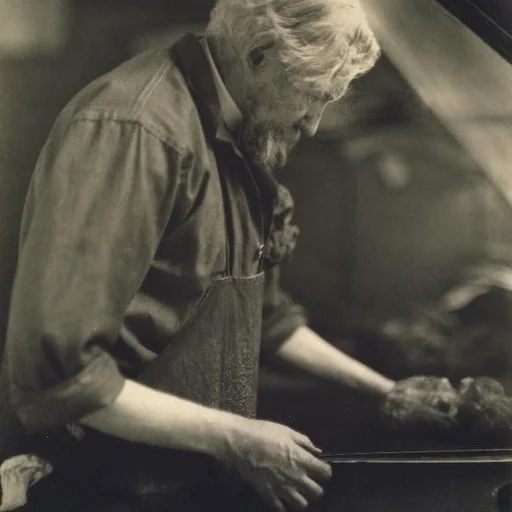
Joseph Pennell (July 4, 1857 – April 23, 1926) was an American draftsman, etcher, lithographer, and illustrator for books and magazines.