Artwork
Planing Big Shells
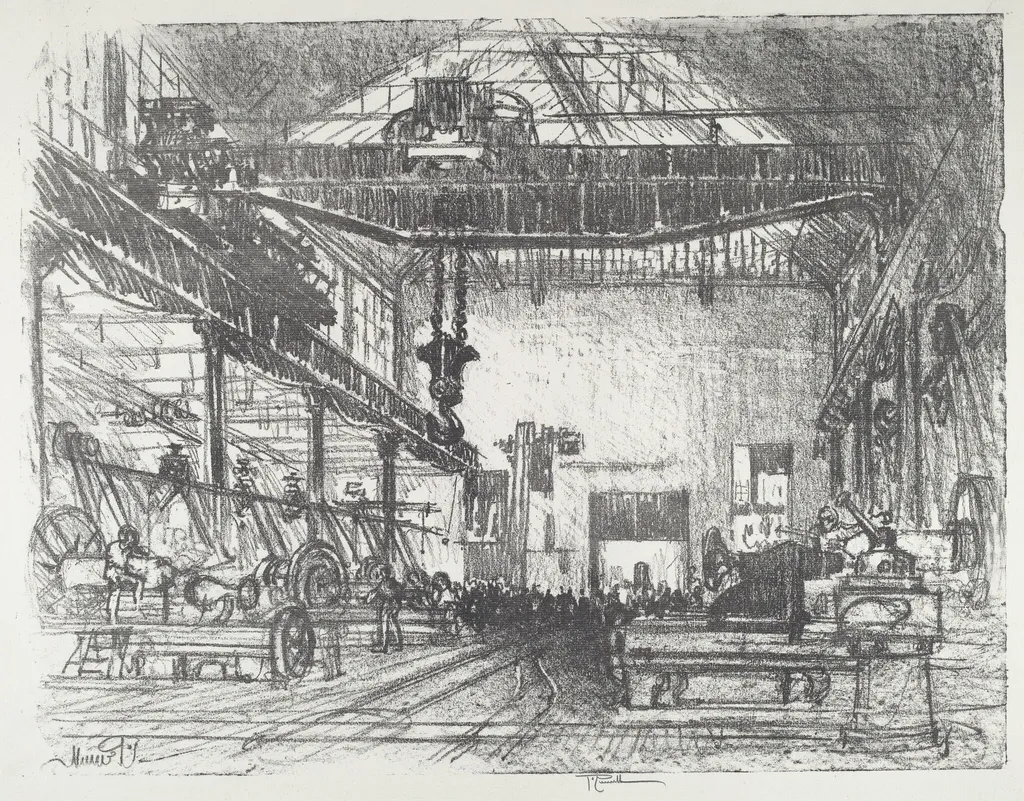
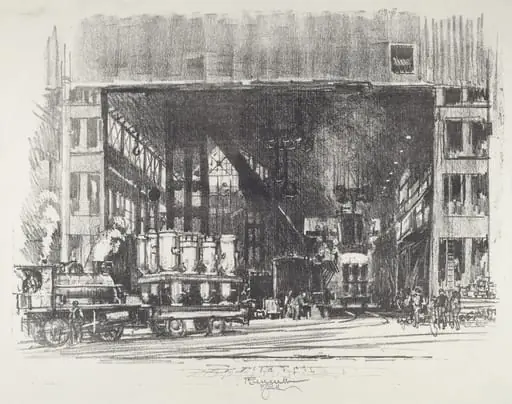
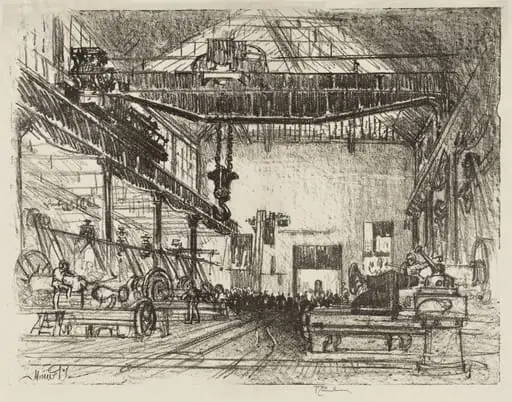
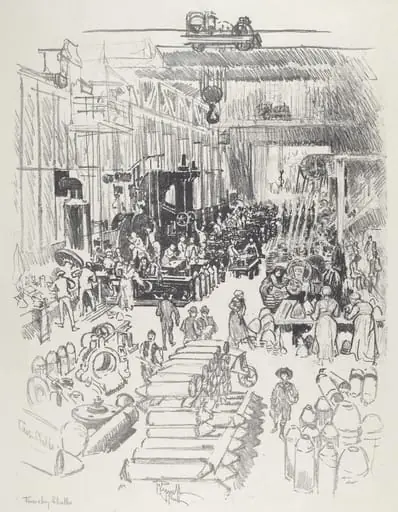
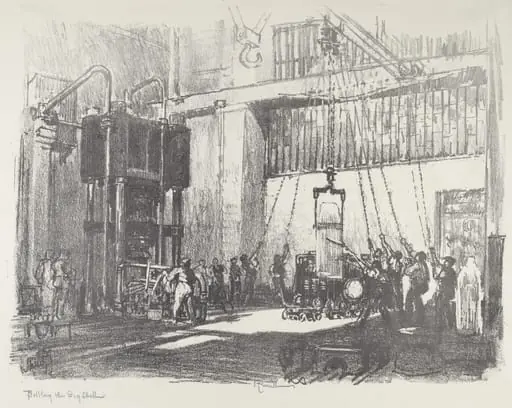
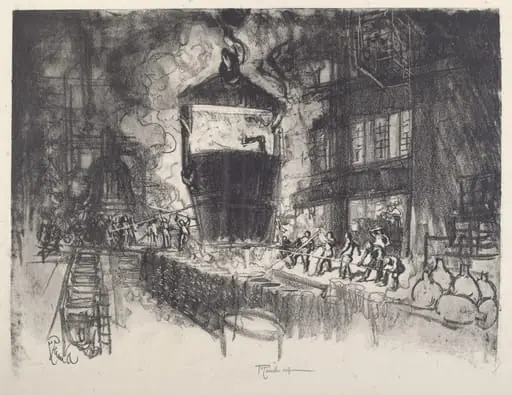
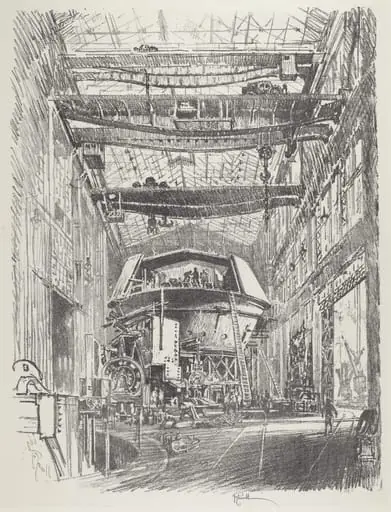
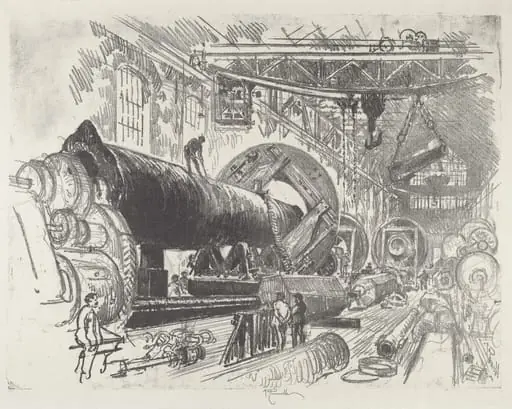
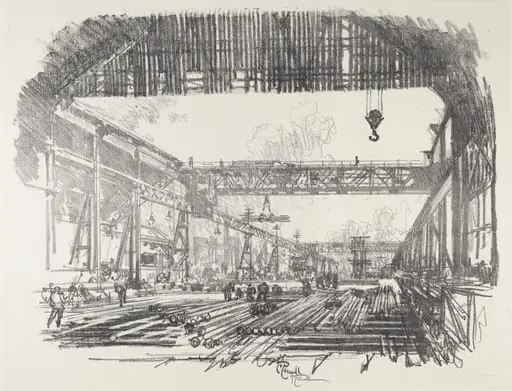
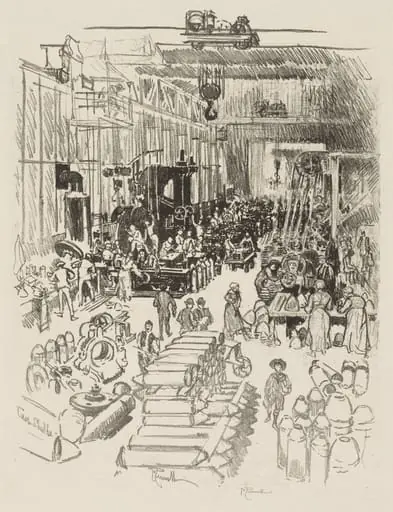
Planing Big Shells is an ink print by Joseph Pennell. It dates from 1916 and is held in the collection of the National Gallery of Art.
About this work
Overview
Created in 1916, *Planing Big Shells* is a lithographic print by American artist Joseph Pennell. The work portrays a bustling shipyard scene, emphasizing the raw, mechanical environment of early twentieth‑century industrial labor.
Subject & Meaning
The image captures the chaotic activity of ship construction: towering cranes, tangled ropes, piles of timber, and workers positioned on platforms and near the water. The title’s reference to “planing” underscores the central role of wood‑working within the larger process of building large vessels.
Technique & Style
Executed in lithography, the print relies on stark contrasts, sharp edges, and deep shadows to convey the gritty atmosphere. Pennell’s line work avoids smooth, decorative forms, instead highlighting the texture of steel, timber, and the dense tangle of equipment.
History & Provenance
Pennell, trained under James Lambdin and Thomas Eakins and later influenced by James McNeill Whistler, was known for prints that documented industrial and architectural subjects. *Planing Big Shells* fits within his broader series of lithographs that record labor and machinery.
Context
The print reflects the heightened industrial output of the United States during World War I, when shipyards expanded rapidly to meet wartime demands. Pennell’s focus on the shipyard’s physicality aligns with contemporary interest in the modern factory landscape.
Own this work as a print
Artist & collection
Artist
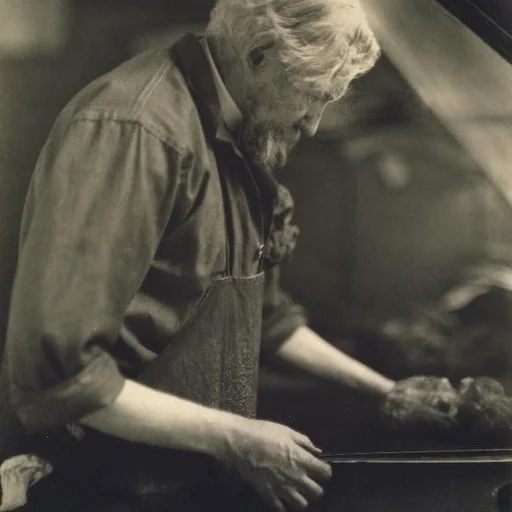
Joseph Pennell (July 4, 1857 – April 23, 1926) was an American draftsman, etcher, lithographer, and illustrator for books and magazines.