Artwork
Clifford's Inn Hall
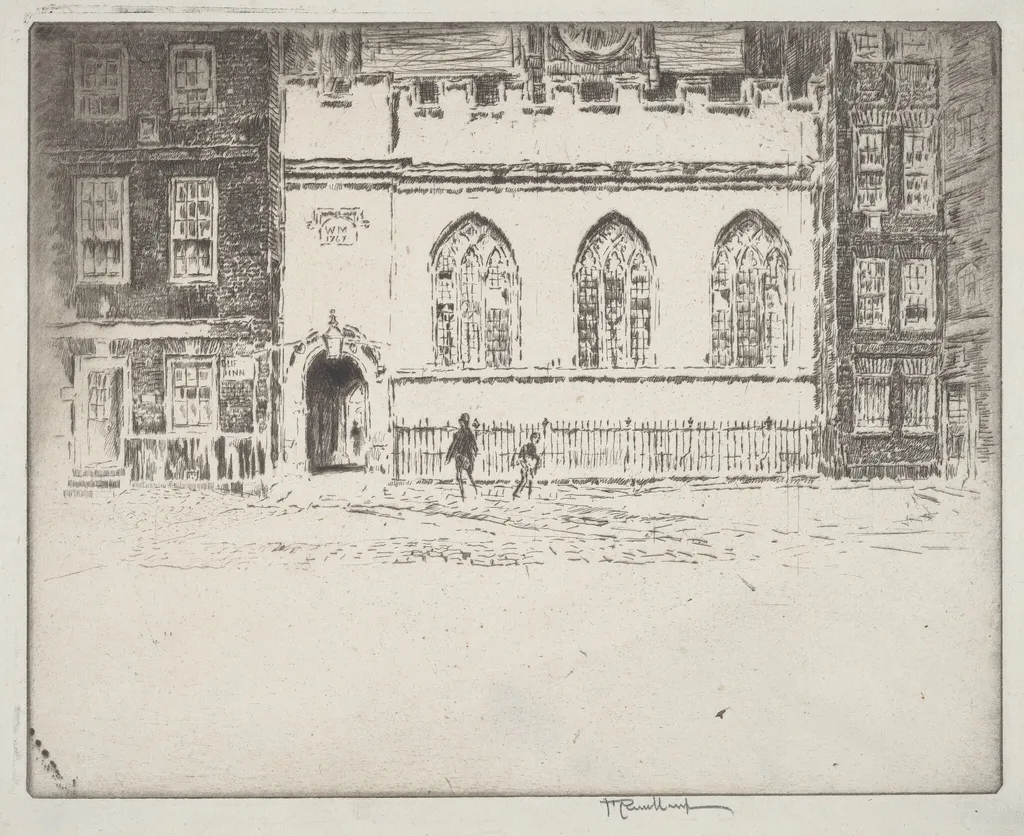
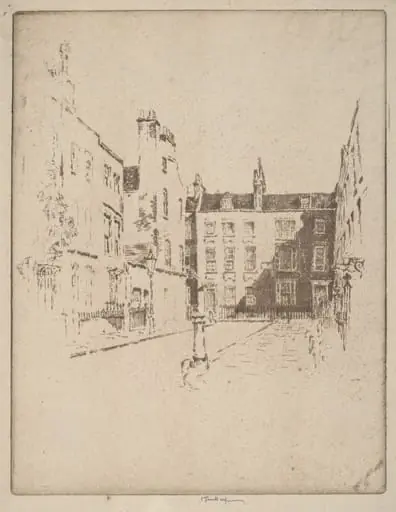
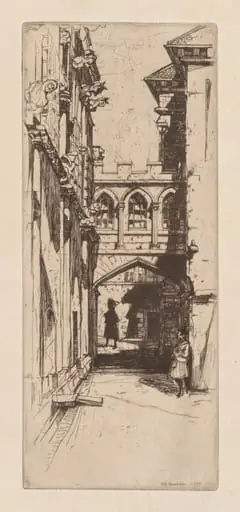
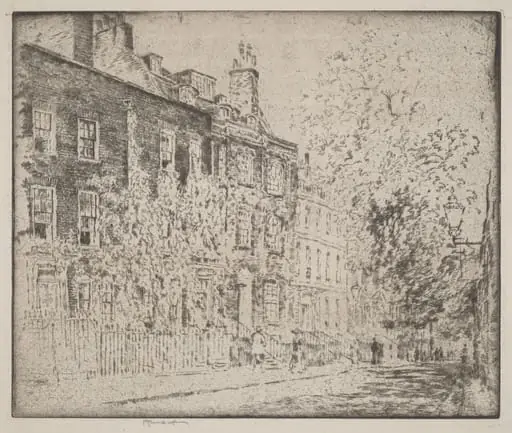
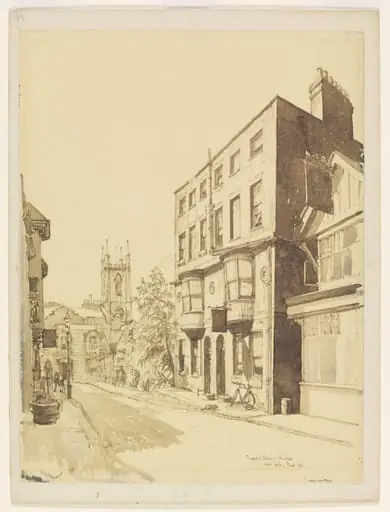
Clifford's Inn Hall is an ink print by Joseph Pennell. It dates from 1907 and is held in the collection of the National Gallery of Art.
About this work
Overview
Joseph Pennell’s 1907 etching *Clifford’s Inn Hall* captures a quiet London alleyway near the historic legal precinct of Clifford’s Inn.
Joseph Pennell’s 1907 etching *Clifford’s Inn Hall* captures a quiet London alleyway near the historic legal precinct of Clifford’s Inn. Executed in intaglio, the print reflects Pennell’s dedication to urban documentation during his European travels. As an American artist based abroad, he favored architectural subjects rendered with precision and atmospheric nuance, using the etching medium to convey both structure and decay.
Subject & Meaning
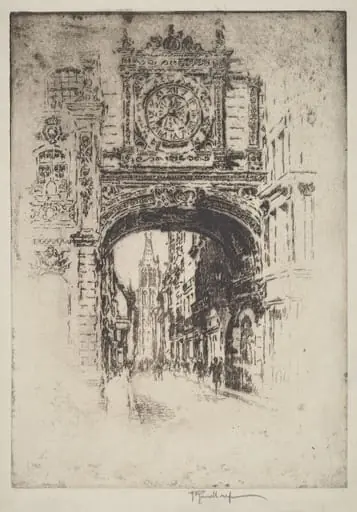
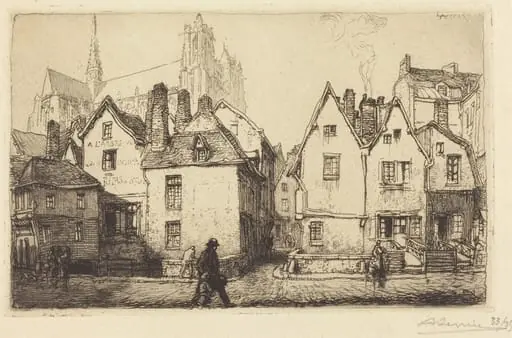
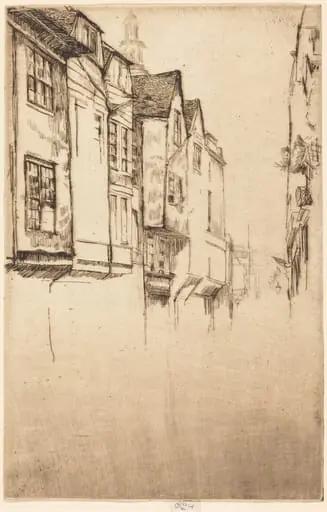
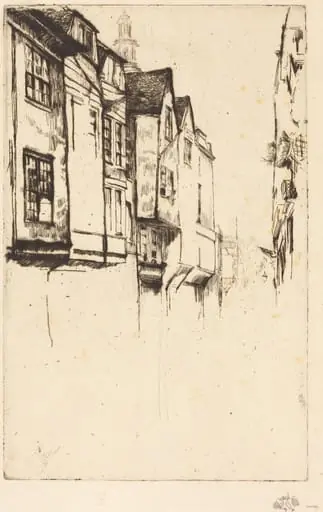
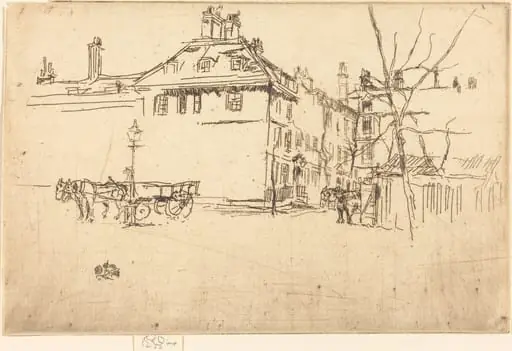
The scene portrays a narrow, lived-in street flanked by aging buildings, with the name 'Clifford's Inn' visible on a wooden sign. A modest arched entrance and worn stone steps suggest centuries of use, while two small figures underscore the space’s everyday function. Pennell avoids grandeur, instead emphasizing the quiet persistence of urban history through ordinary details—faded wood, uneven pavement, and half-drawn curtains.
Technique & Style
Pennell employed etching to achieve fine, controlled lines and subtle tonal gradations. Acid-bitten plates allowed him to render textures—rough timber, cracked stone, and woven fencing—with clarity. His approach, influenced by Whistler’s tonal sensitivity and Eakins’ observational rigor, avoids dramatic contrast in favor of quiet realism. The print’s depth emerges from layered hatching and the natural grain of the paper.
History & Provenance
Created during Pennell’s extensive travels across Europe, this work is part of a broader series documenting historic urban environments before modernization altered them. Clifford’s Inn, a medieval legal community dissolved in the 19th century, retained architectural remnants that Pennell recorded with archival intent. The etching entered public collections soon after its creation, valued for its topographical accuracy and technical finesse.
Context
In early 20th-century London, rapid urban renewal threatened historic structures. Pennell’s etchings responded to this loss, preserving the character of overlooked spaces. His focus on modest alleyways and institutional remnants contrasted with the era’s celebration of progress, positioning his work as a quiet counter-narrative to industrial modernity.
Legacy
Pennell’s *Clifford’s Inn Hall* remains a reference in printmaking circles for its disciplined use of line and texture. Though not widely exhibited today, it exemplifies a generation of artists who treated etching as a tool for historical record rather than ornament. The work continues to inform studies of urban change and the role of print in preserving architectural memory.
Artist & collection
Artist
Joseph Pennell (July 4, 1857 – April 23, 1926) was an American draftsman, etcher, lithographer, and illustrator for books and magazines.