Artwork
Place de la Pucelle in Rouen
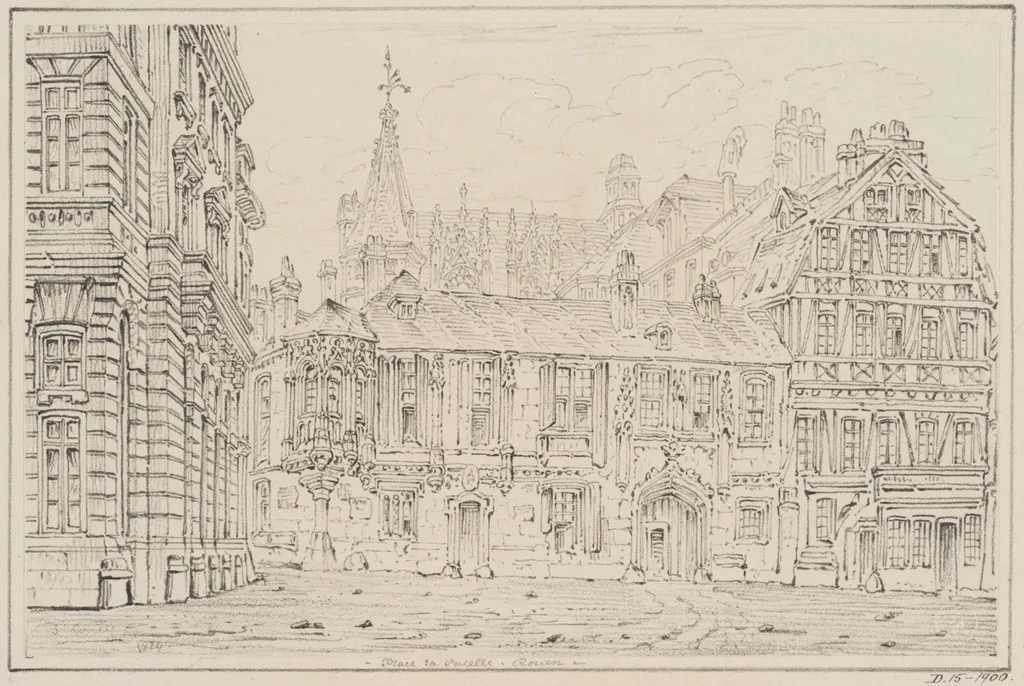
Place de la Pucelle in Rouen is a drawing by the Romanticist artist Coney. It dates from 1824 and is held in the collection of the Victoria and Albert Museum.
About this work
Overview
In 1824, the artist Coney produced a pencil drawing of Place de la Pucelle, a historic square in the French city of Rouen. The work records the urban setting as it appeared in the early nineteenth century, presenting a compact composition that captures the square’s built environment with a focus on architectural detail.
Subject & Meaning
The drawing portrays a row of tall, aged structures characterized by numerous windows and steeply pitched roofs. Central to the scene is a building with a prominent arched entrance, flanked by a spire that rises behind it, suggesting the civic or religious significance of the edifice within the public space.
Technique & Style
Executed entirely in pencil, the image relies on hand‑drawn lines and cross‑hatching to model form and convey texture. The artist emphasizes surface ornamentation—carvings, steps, and window frames—through careful line work, a method typical of 19th‑century architectural studies that sought to document structural detail before the advent of photography.
History & Provenance
Created in the post‑Napoleonic period, the drawing reflects contemporary interest in recording French urban heritage. While specific ownership records are limited, the work has been cited in studies of Rouen’s architectural evolution and remains part of collections that document early nineteenth‑century French cityscapes.
Artist & collection
Artist
English draughtsman active in the early 1800s, Coney filled sketchbooks with detailed ink-and-pencil views of medieval abbeys, parish churches and French squares.

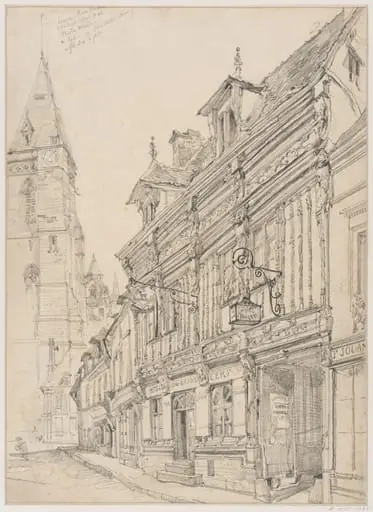 Hôtel du Grand Cerf, Les Andelys
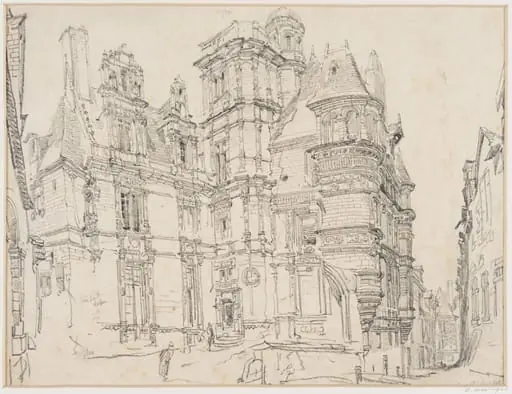 Angers-Maison duc D'Anjou
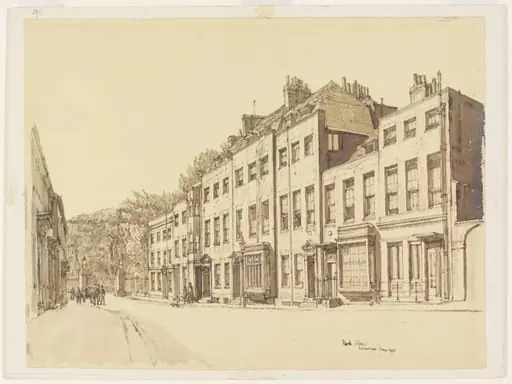 Park Street, Windsor
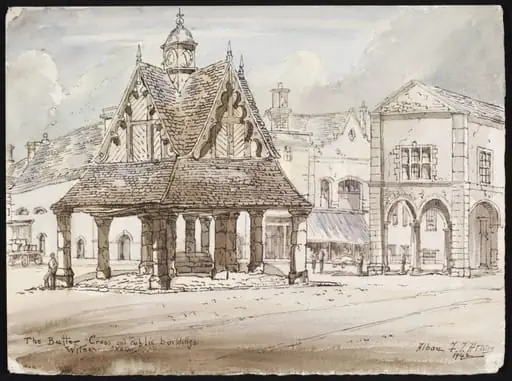 The Butter Cross and Public Buildings, Witney
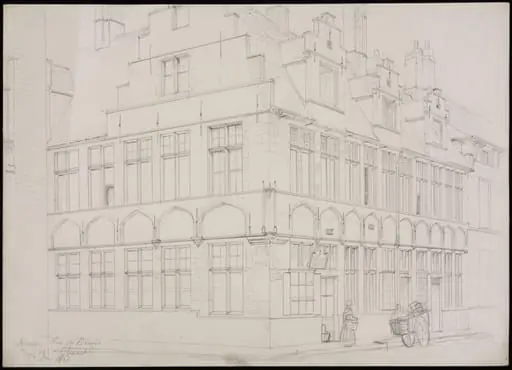 Untitled
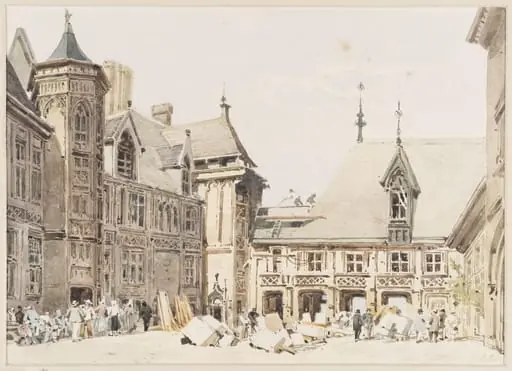 Bourges: House of Jacques Coeur
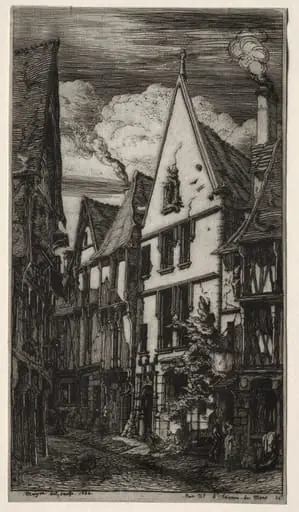 Rue des Toiles, Bourges
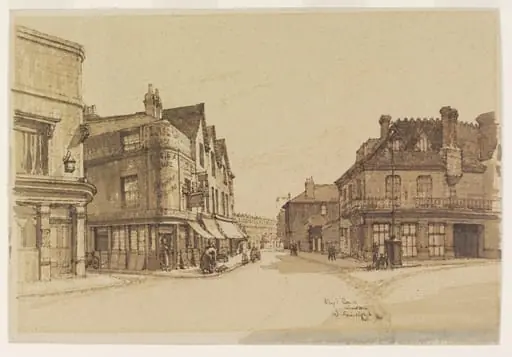 King's Road, Windsor
 The Institute, Piccadilly
 Church Street, (east side) Windsor
 Voyages pittoresques et romantiques dans l'ancienne France, Normandie: Église de Saint Gervais et Saint Protais à Gisors
 The Tribunal, Glastonbury