Artwork
Munition Town
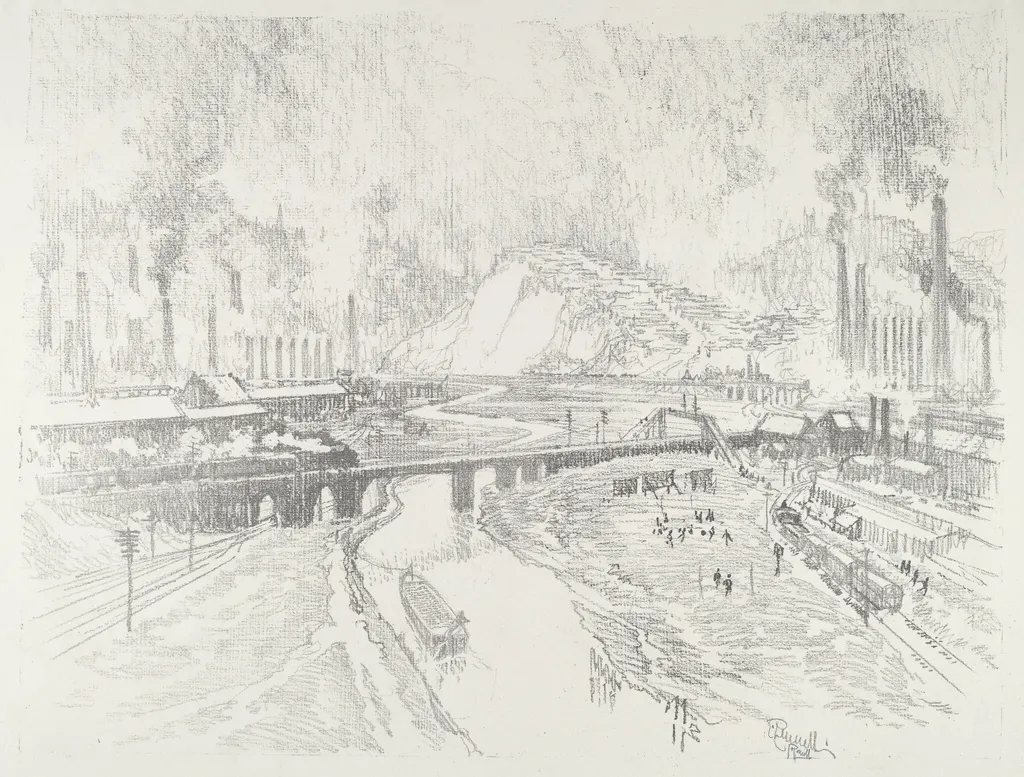
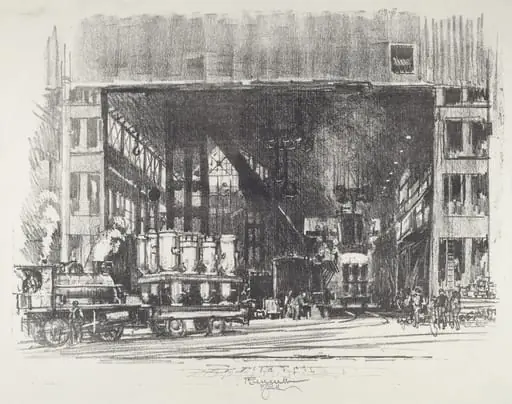
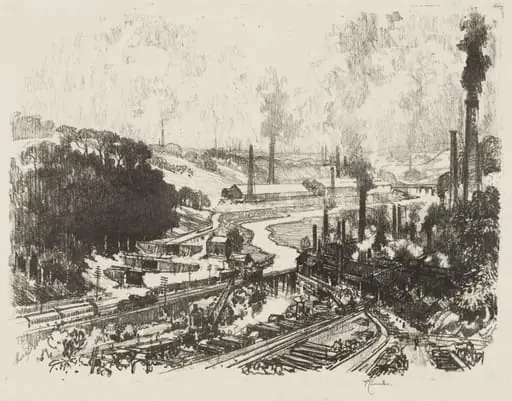
Munition Town is an ink print by Joseph Pennell. It dates from 1916 and is held in the collection of the National Gallery of Art.
About this work
Overview
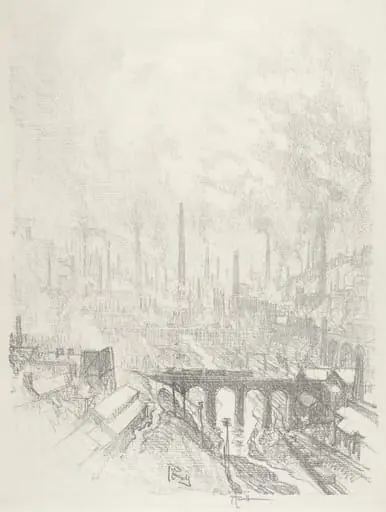
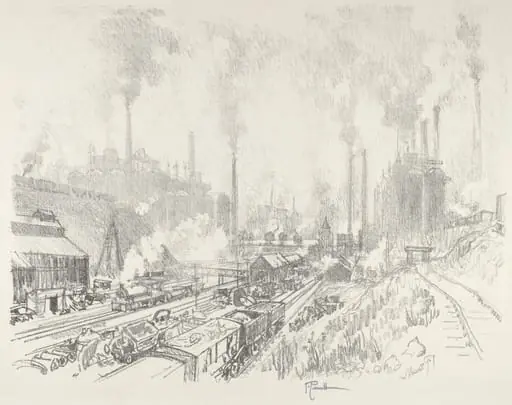
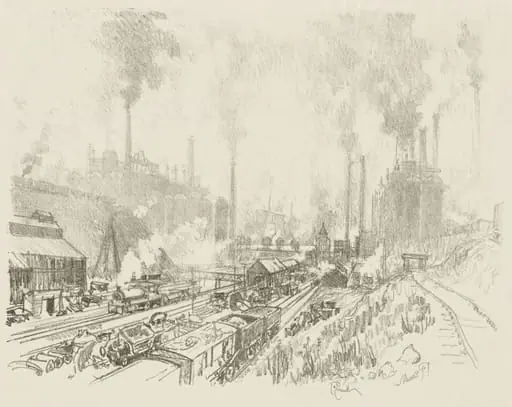
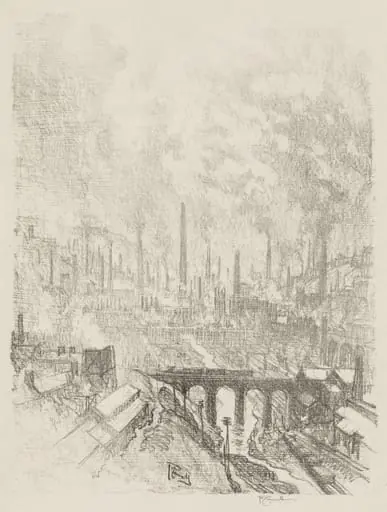
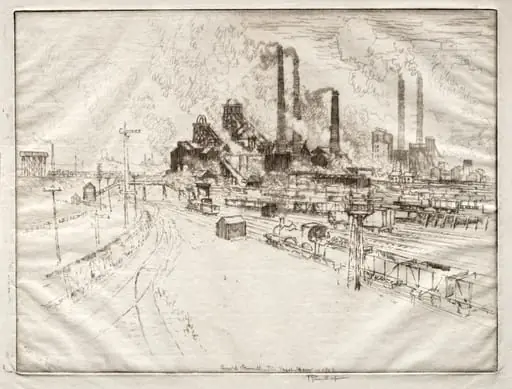
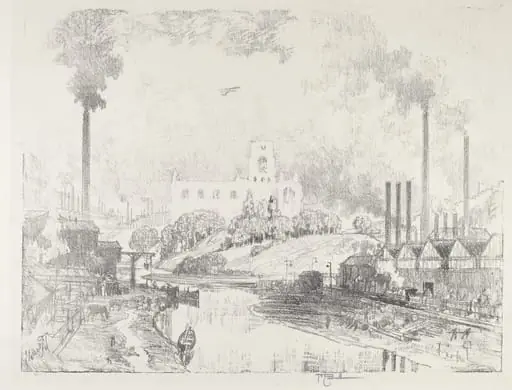
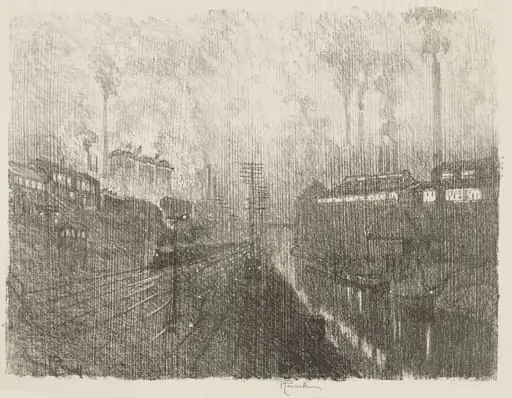
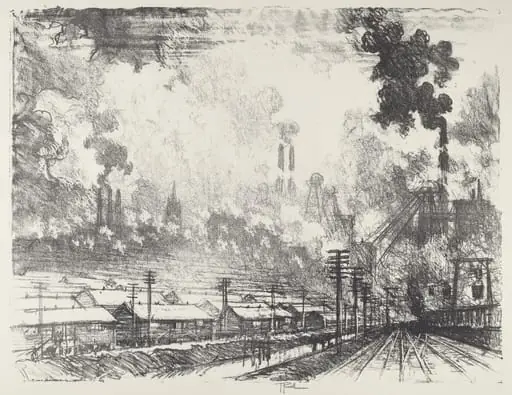
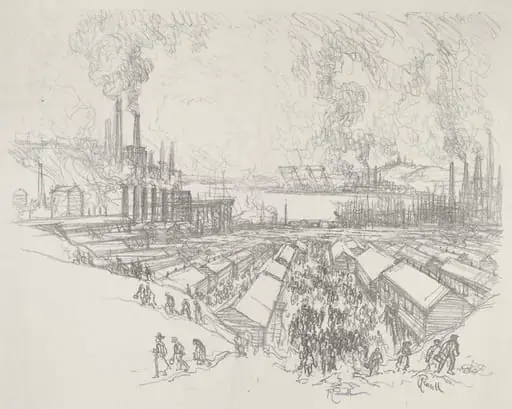
The image captures a valley flanked by low hills, its floor crowded with factories, warehouses and a network of railroad tracks that carry several trains.
Joseph Pennell’s 1916 lithograph titled *Munition Town* presents a broad view of a wartime industrial settlement. The image captures a valley flanked by low hills, its floor crowded with factories, warehouses and a network of railroad tracks that carry several trains. A muted palette of grays and browns dominates, while plumes of smoke rise from the smokestacks, underscoring the site’s manufacturing intensity.
Subject & Meaning
The work records a community organized around munitions production, emphasizing the scale of wartime industry. By foregrounding the rail lines and the dense cluster of buildings, Pennell conveys a sense of relentless activity and the transformation of ordinary towns into engines of war. The pervasive smoke and the subdued tones suggest both the productivity and the somber atmosphere of a landscape devoted to armaments.
Technique & Style
Executed as a lithograph, the image relies on fine line work and tonal washes to render architectural detail and atmospheric effects. Pennell’s background in etching informs the crisp delineation of structures, while his exposure to Whistler’s tonal sensibilities appears in the subtle gradations of gray that unify the scene. The composition balances precise draftsmanship with a broader impression of industrial haze.
History & Provenance
Pennell, an American draftsman born in 1857, spent much of his career abroad, producing prints of European and American urban and industrial sites. *Munition Town* was created during World War I, a period when his focus shifted toward wartime subjects. The lithograph entered several public collections in the mid‑20th century, reflecting its relevance as a documentary record of early‑20th‑century manufacturing.
Context
The print emerges from a broader trend in early 20th‑century art that documented the rise of mechanized production and its impact on the landscape. Pennell’s contemporaries, such as Charles Sheeler and the Precisionists, also explored industrial motifs, but his approach retains a more observational tone, rooted in his training under Thomas Eakins and his later association with James McNeill Whistler.
Own this work as a print
Artist & collection
Artist
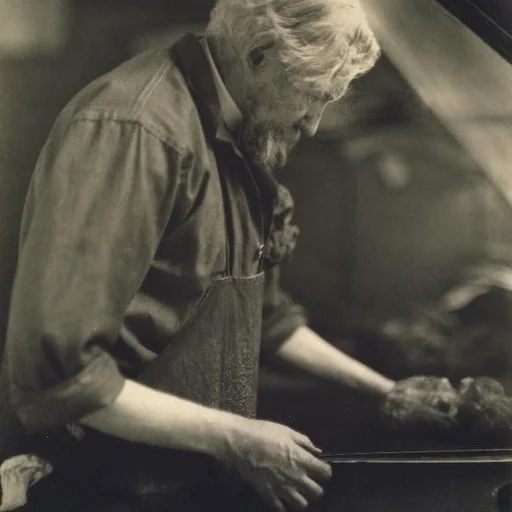
Joseph Pennell (July 4, 1857 – April 23, 1926) was an American draftsman, etcher, lithographer, and illustrator for books and magazines.