Artwork
The Great Gulf
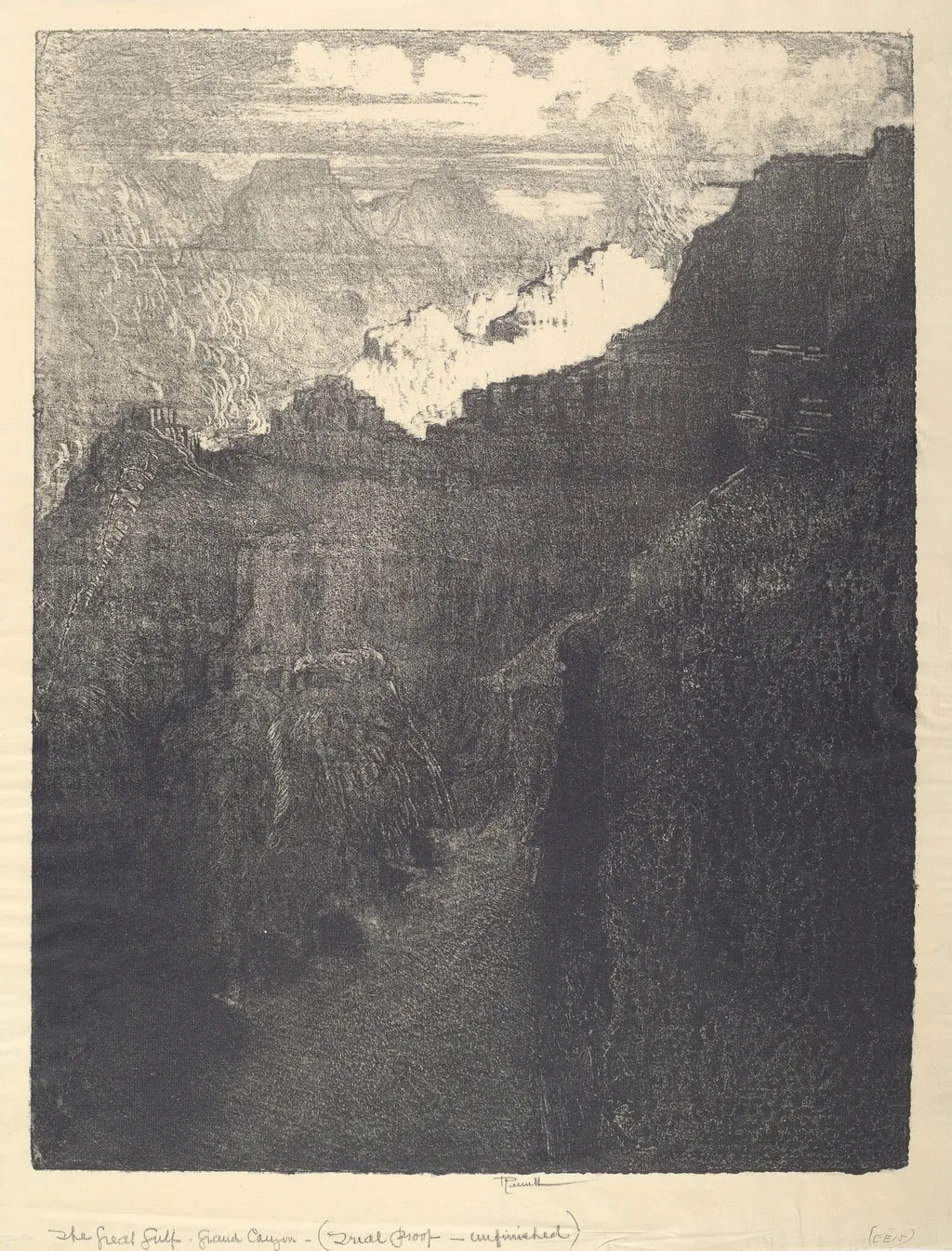
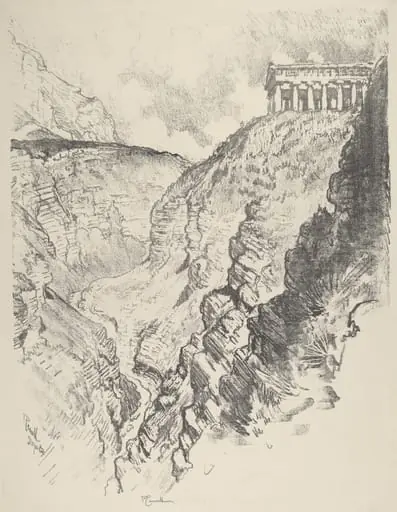
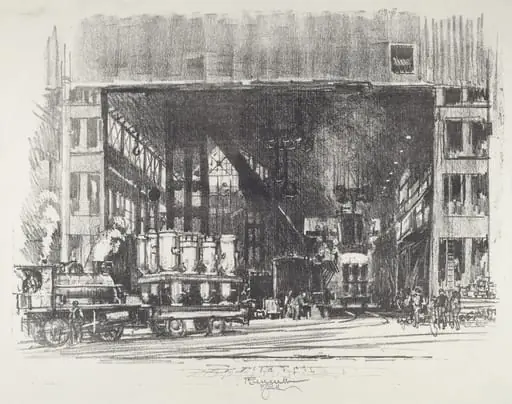
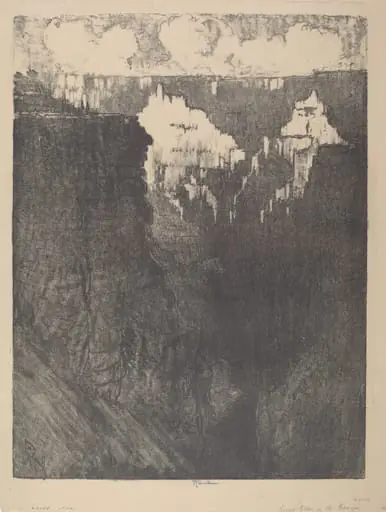
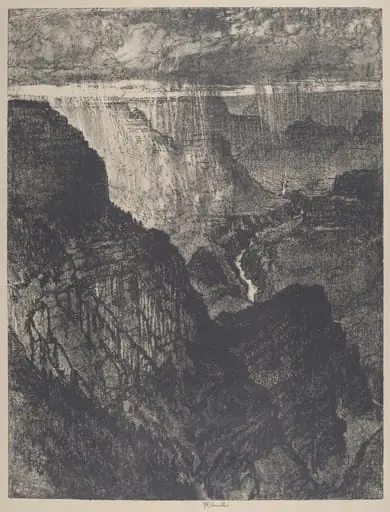
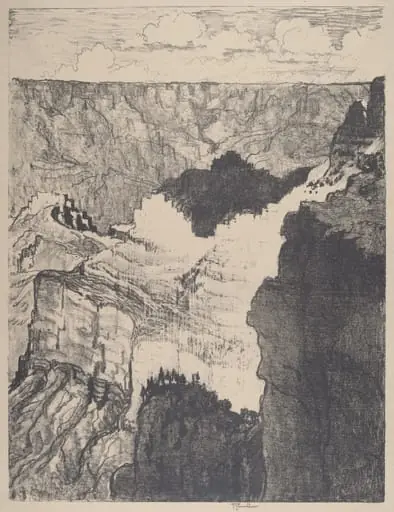
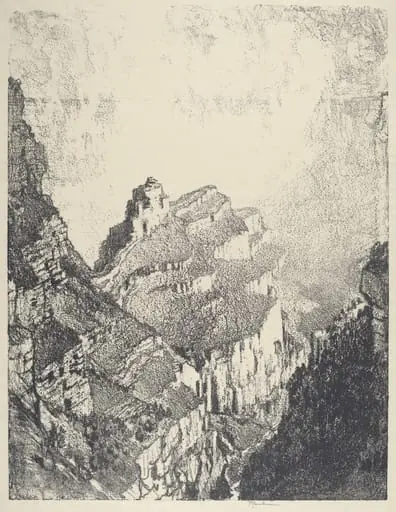
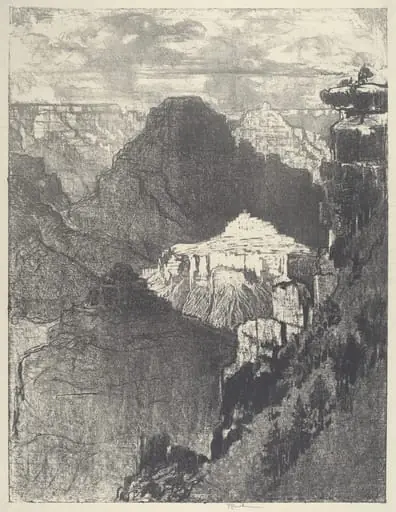
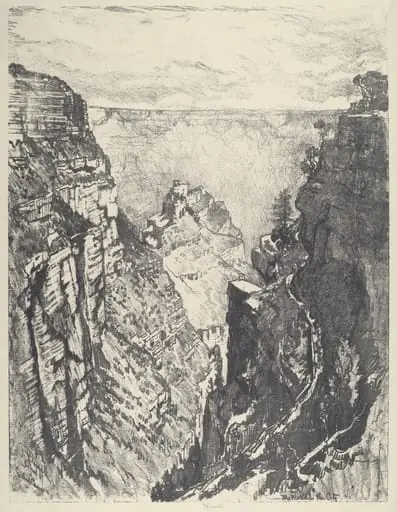
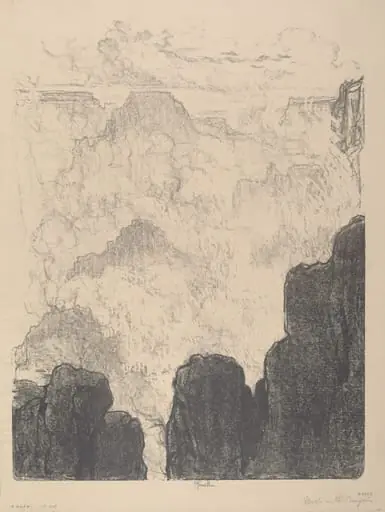
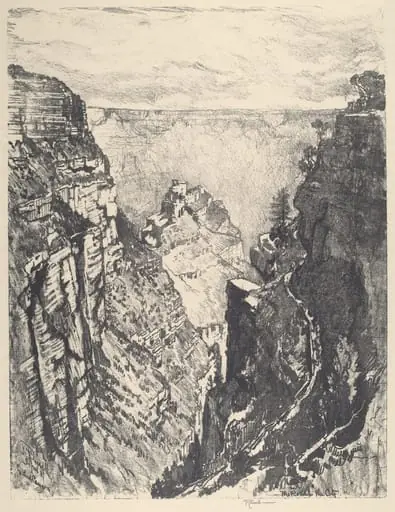
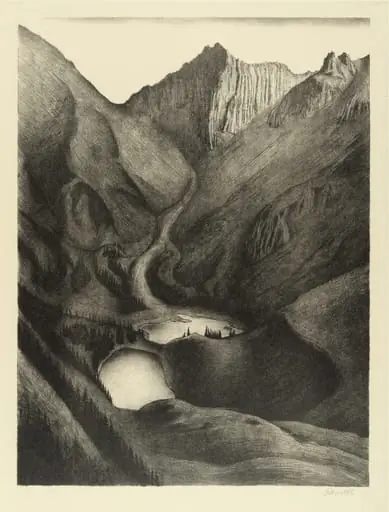
The Great Gulf is an ink print by Joseph Pennell. It dates from 1912 and is held in the collection of the National Gallery of Art.
About this work
Overview
Created in 1912, *The Great Gulf* is a lithographic print by American artist Joseph Pennell. The image presents a stark, deep canyon whose dark, sheer walls descend toward a winding path, while a bright sky breaks through cloud cover, emphasizing the contrast between shadowed rock and illuminated atmosphere.
Subject & Meaning
The composition captures a dramatic natural landmark, focusing on the interplay of light and depth within a canyon landscape. The stark tonal differences and the distant light suggest a sense of awe toward the vastness of the terrain, inviting viewers to contemplate the power of geological formation.
Technique & Style
Pennell employed a limited palette of grays to render the scene, using the lithographic medium to achieve subtle gradations of tone. The careful modulation of dark cliffs against a lighter sky creates atmospheric perspective, a hallmark of his approach to rendering industrial and natural vistas with precision.
History & Provenance
Pennell, trained under James Lambdin and Thomas Eakins and influenced by James McNeill Whistler, produced the print during a period when he was documenting notable landmarks worldwide. The work reflects his broader interest in urban and industrial subjects, though this piece turns to a natural environment.
Context
The print aligns with Pennell’s collaborative endeavors with his wife, author Elizabeth Robins, whose critical writings often accompanied his visual projects. Their partnership helped disseminate his images and commentary, situating *The Great Gulf* within a network of early‑20th‑century artistic and literary exchange.
Own this work as a print
Artist & collection
Artist
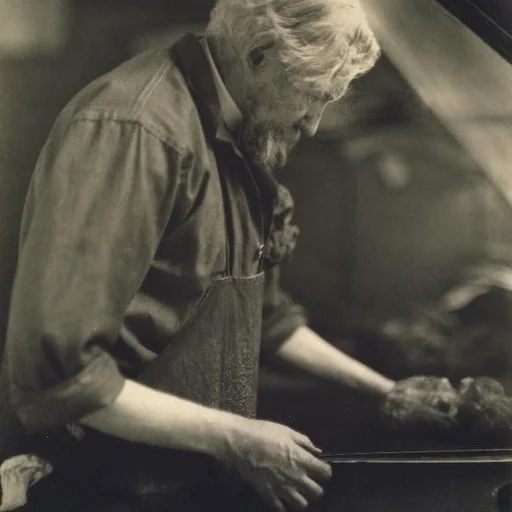
Joseph Pennell (July 4, 1857 – April 23, 1926) was an American draftsman, etcher, lithographer, and illustrator for books and magazines.