Artwork
The Flat Iron New York
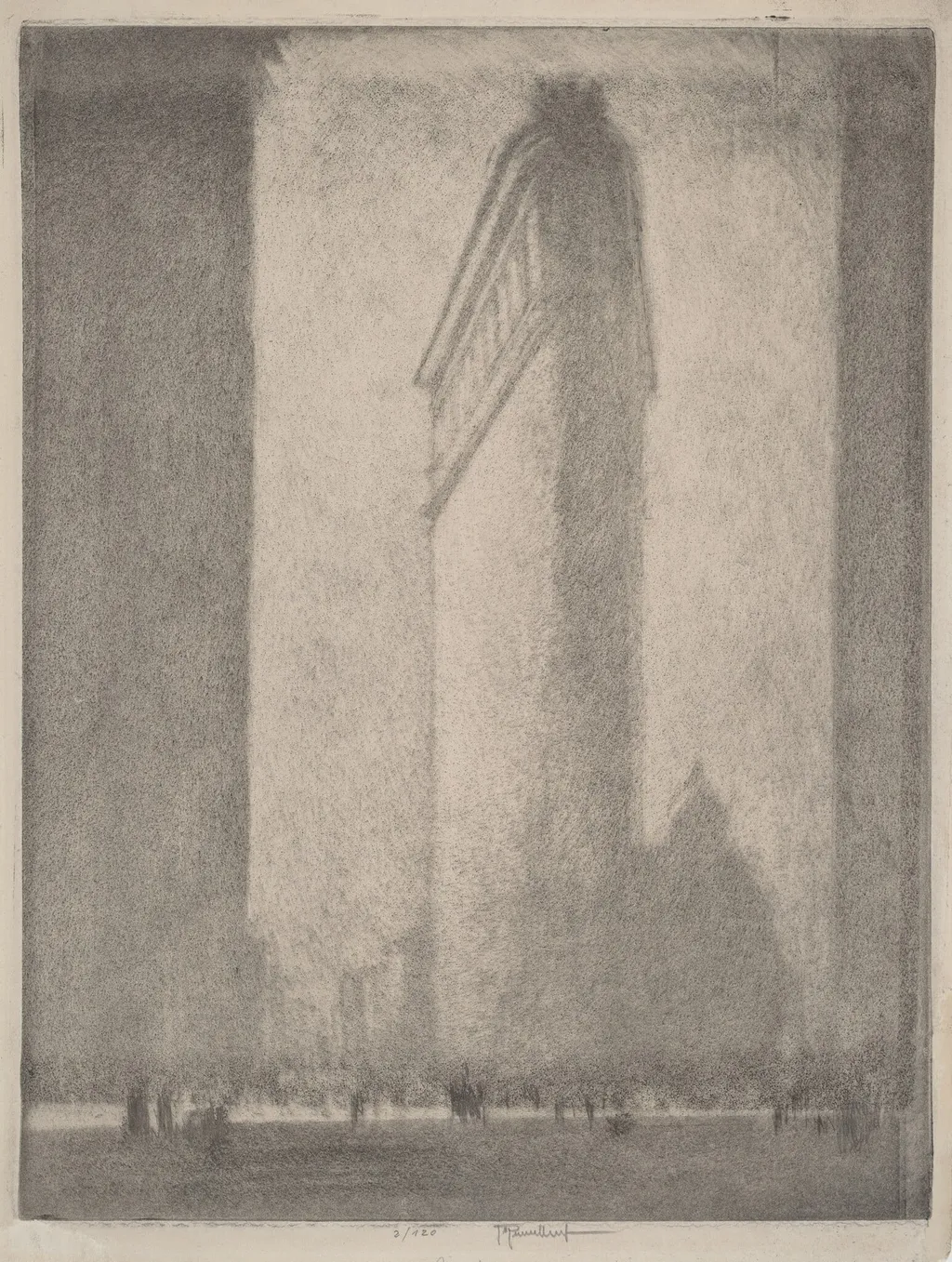
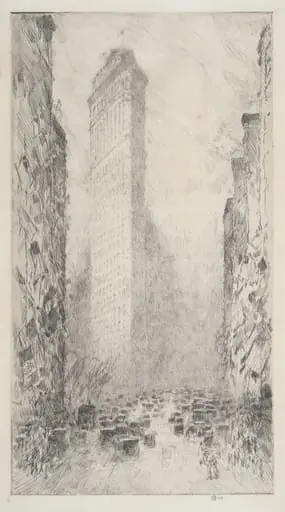
The Flat Iron New York is an ink print by Joseph Pennell. It dates from 1908 and is held in the collection of the National Gallery of Art.
About this work
Overview
As an American artist deeply engaged with urban landscapes, Pennell favored printmaking for its capacity to convey architectural form and atmospheric nuance.
Joseph Pennell produced this mezzotint in 1908, capturing the Flatiron Building in New York City shortly after its completion. As an American artist deeply engaged with urban landscapes, Pennell favored printmaking for its capacity to convey architectural form and atmospheric nuance. The work belongs to a series of city views he developed during a period of transatlantic travel, reflecting his sustained interest in modern infrastructure and the changing face of metropolitan life.
Subject & Meaning
The Flatiron Building, then a novel example of steel-frame architecture, dominates the composition as a slender wedge cutting through the urban grid. Pennell presents it not as a monument but as an integrated element of the city’s rhythm—surrounded by pedestrians, carriages, and shadowed streets. The choice of subject underscores his fascination with how new structures reshaped daily experience, emphasizing scale, geometry, and the interplay of human movement against engineered form.
Technique & Style
Pennell employed mezzotint, a labor-intensive process involving a textured metal plate to achieve rich tonal gradations. By selectively smoothing areas of the plate, he created deep blacks and delicate midtones that model the building’s form and suggest the hazy light of late afternoon. The technique’s capacity for subtle transitions enhances the sense of depth and atmosphere, distinguishing this print from sharper, line-based etchings common in his contemporaries’ work.
History & Provenance
Created during Pennell’s extended stays in Europe, the print was made for American audiences and circulated through art publications and exhibitions. It was likely produced in a small edition, typical of fine-art printmaking at the time. Pennell maintained close ties with American collectors and institutions, ensuring the work’s presence in domestic collections despite his residence abroad. His wife, Elizabeth Robins, contributed critical commentary that contextualized such works within broader cultural debates.
Context
In 1908, New York was rapidly transforming, with skyscrapers redefining its skyline. The Flatiron, completed in 1902, symbolized this shift and became a frequent subject in photography and printmaking. Pennell’s approach aligned with a growing interest among artists in documenting modernity—not through celebration, but through careful observation of light, structure, and urban motion. His training under Eakins and exposure to Whistler’s tonalism informed his restrained, atmospheric style.
Legacy
Pennell’s mezzotint of the Flatiron remains a significant example of early 20th-century American printmaking, valued for its technical precision and quiet observation of urban change. While less widely known than his contemporaries, his body of work contributed to the recognition of printmaking as a legitimate medium for architectural commentary. The image endures as a record of a pivotal moment in New York’s development, seen through the lens of an artist attuned to both form and atmosphere.
Artist & collection
Artist
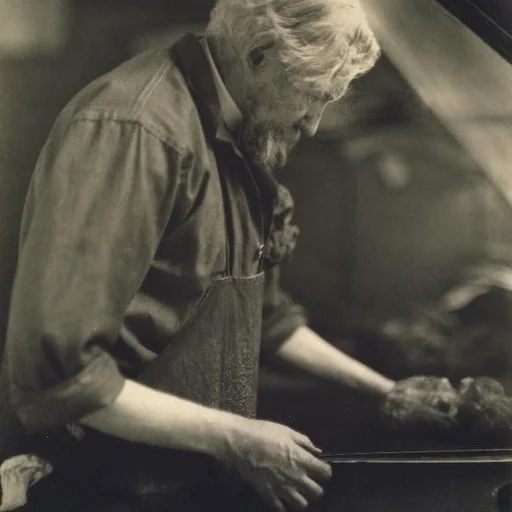
Joseph Pennell (July 4, 1857 – April 23, 1926) was an American draftsman, etcher, lithographer, and illustrator for books and magazines.

 The Battery, New York
 Washington's Birthday—Fifth Avenue & 23rd Street
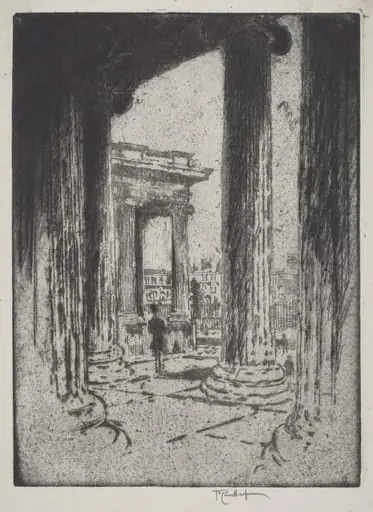 The Portico, British Museum
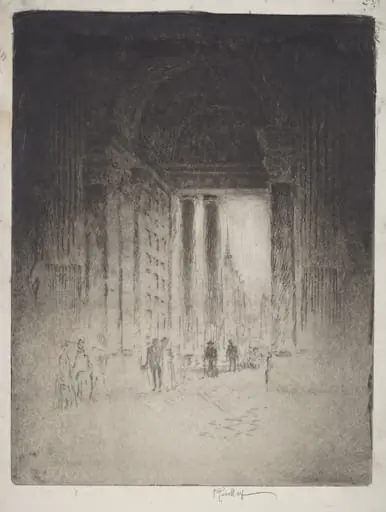 West Door, St. Paul's
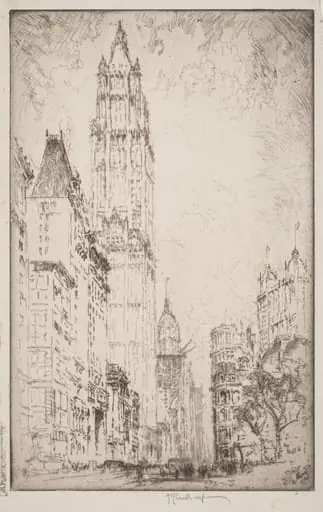 The Woolworth Building
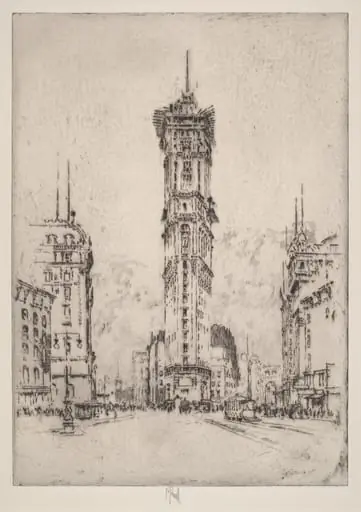 The Times Building
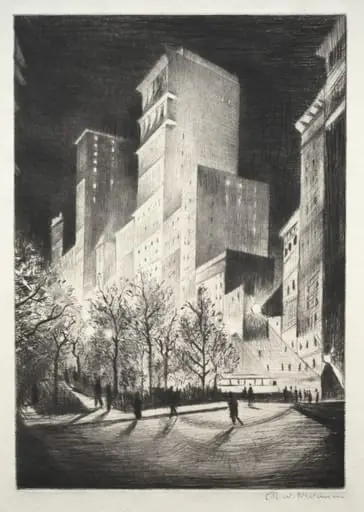 Three AM: A Corner by Madison Avenue (also known as 2 AM New York and Metropolis)
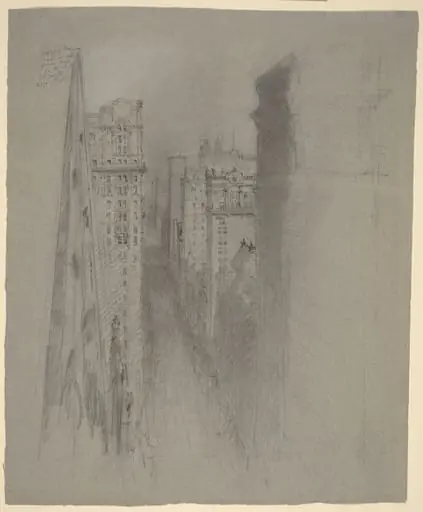 North on Broadway from Trinity Church
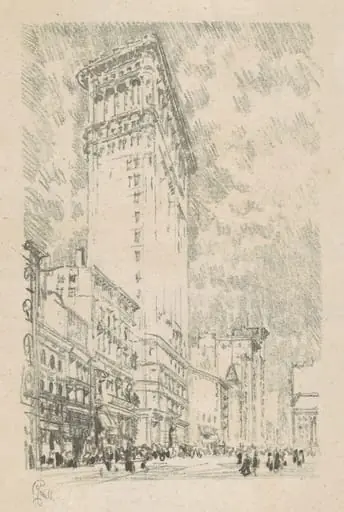 Flatiron Building
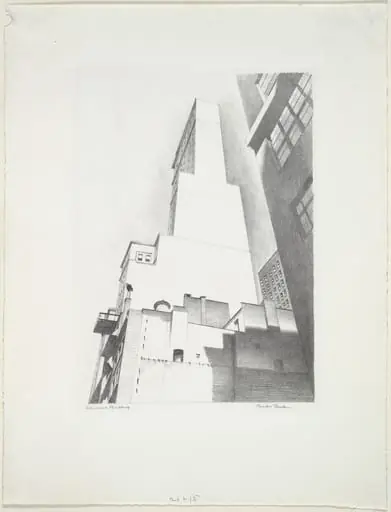 Untitled
 Lodgings for Gents
 The Woolworth Building