Artwork
The Woolworth Building
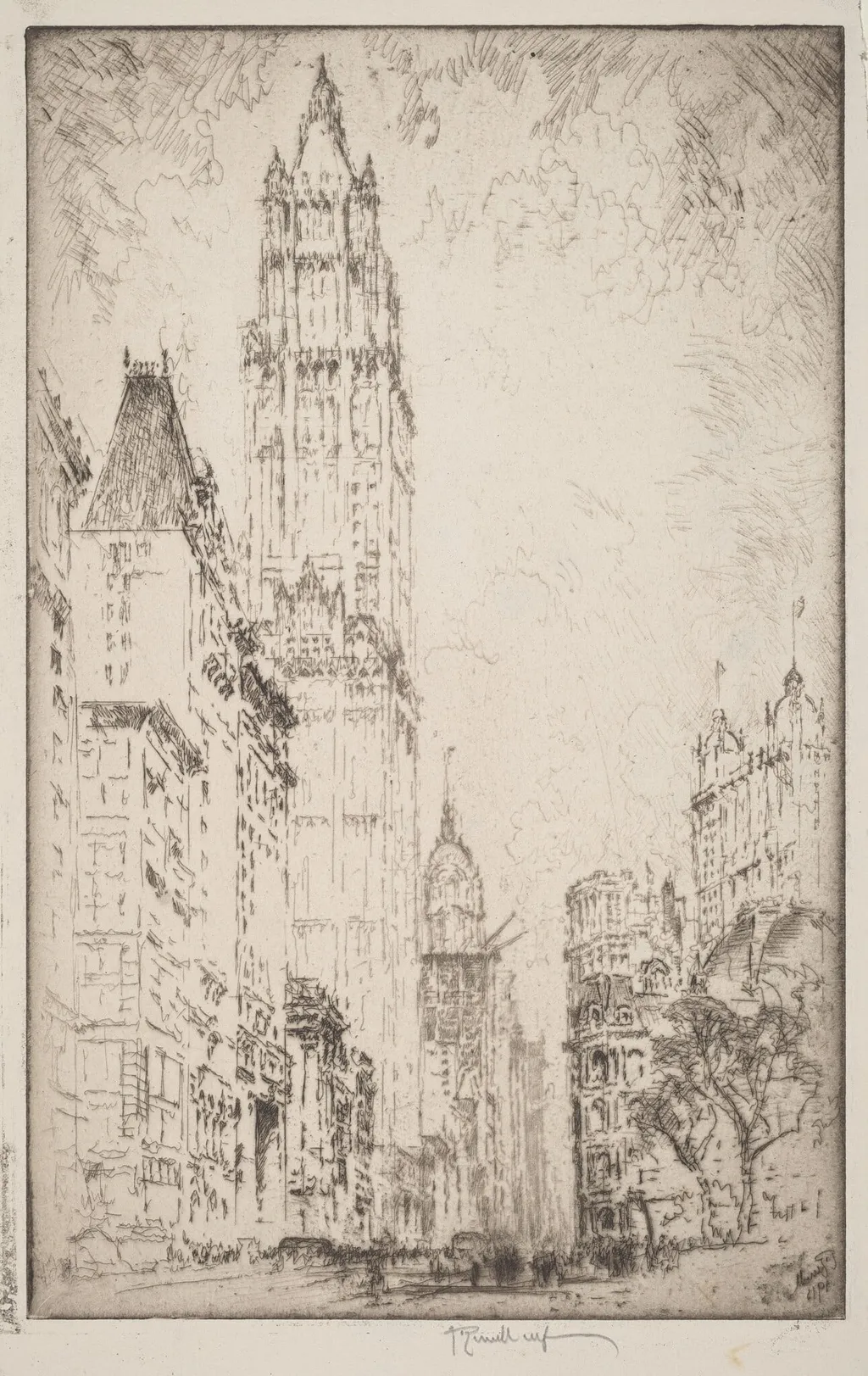
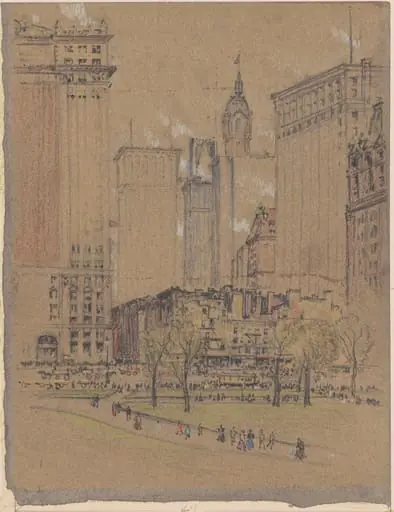
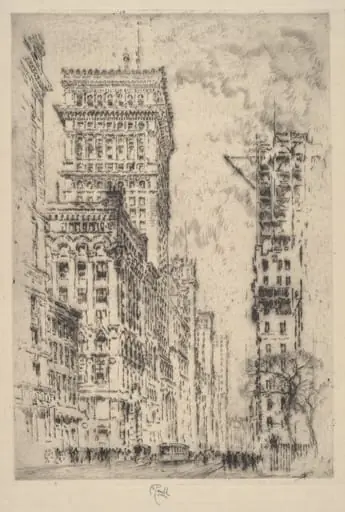
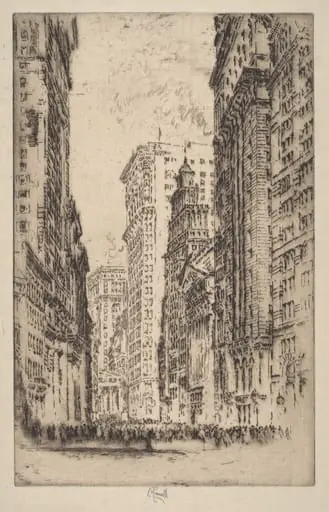
The Woolworth Building is an ink print by Joseph Pennell. It dates from 1915 and is held in the collection of the National Gallery of Art.
About this work
Overview
Though American, Pennell spent much of his career in Europe and brought a European printmaking sensibility to his depictions of modern American architecture.
Joseph Pennell’s 1915 etching captures the Woolworth Building shortly after its completion, portraying it as a dominant vertical form amid the dense urban fabric of lower Manhattan. Executed in drypoint, the print reflects Pennell’s affinity for rapid, tactile mark-making. Though American, Pennell spent much of his career in Europe and brought a European printmaking sensibility to his depictions of modern American architecture.
Subject & Meaning
The Woolworth Building, then the world’s tallest skyscraper, symbolizes the rapid industrialization and vertical expansion of early 20th-century New York. Pennell presents it not as a monument of triumph but as a complex structure emerging from a cluttered, lived-in cityscape. The surrounding buildings, rendered with equal urgency, suggest the building’s integration into, rather than separation from, the urban whole.
Technique & Style
Pennell employed drypoint to carve directly into the copper plate, creating deep, grainy lines that retain ink unevenly and produce a rich, textured surface. The scratchy, energetic strokes convey immediacy and movement, contrasting with the building’s rigid geometry. The paper’s visible grain enhances the tactile quality, reinforcing the sense of a hand working quickly under the pressure of observation.
History & Provenance
Pennell produced this print in 1915, the same year the Woolworth Building opened to the public. He was known for documenting modern infrastructure, and this work belongs to a series of urban prints made during his travels in the United States. The etching was likely issued in small editions and collected by institutions and private patrons interested in contemporary American printmaking.
Context
At the time, etching was undergoing a revival among artists seeking alternatives to photography and mass reproduction. Pennell’s work aligned with a broader interest in capturing the character of modern cities through intimate, hand-crafted imagery. His focus on industrial subjects reflected a shift in artistic attention from pastoral themes to the rhythms of urban life.
Legacy
Pennell’s Woolworth Building etching remains a significant example of early modern American printmaking, illustrating how traditional techniques could be adapted to depict industrial subjects. It influenced later artists interested in the intersection of architecture and print media, and continues to be studied for its technical innovation and nuanced portrayal of urban transformation.
Artist & collection
Artist
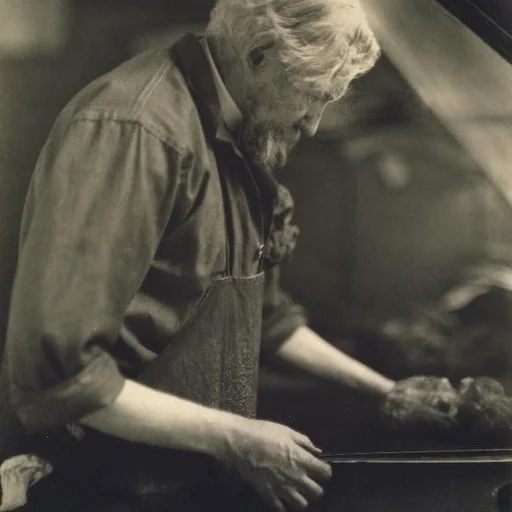
Joseph Pennell (July 4, 1857 – April 23, 1926) was an American draftsman, etcher, lithographer, and illustrator for books and magazines.