Artwork
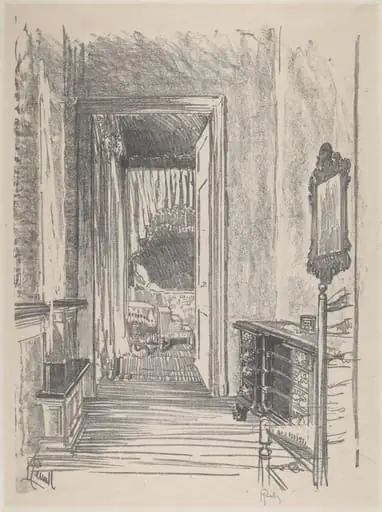
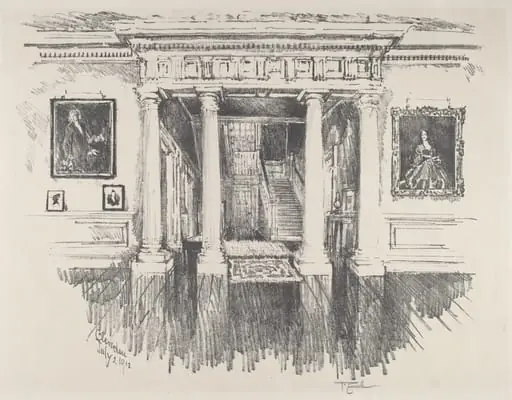
The Hall, Stenton
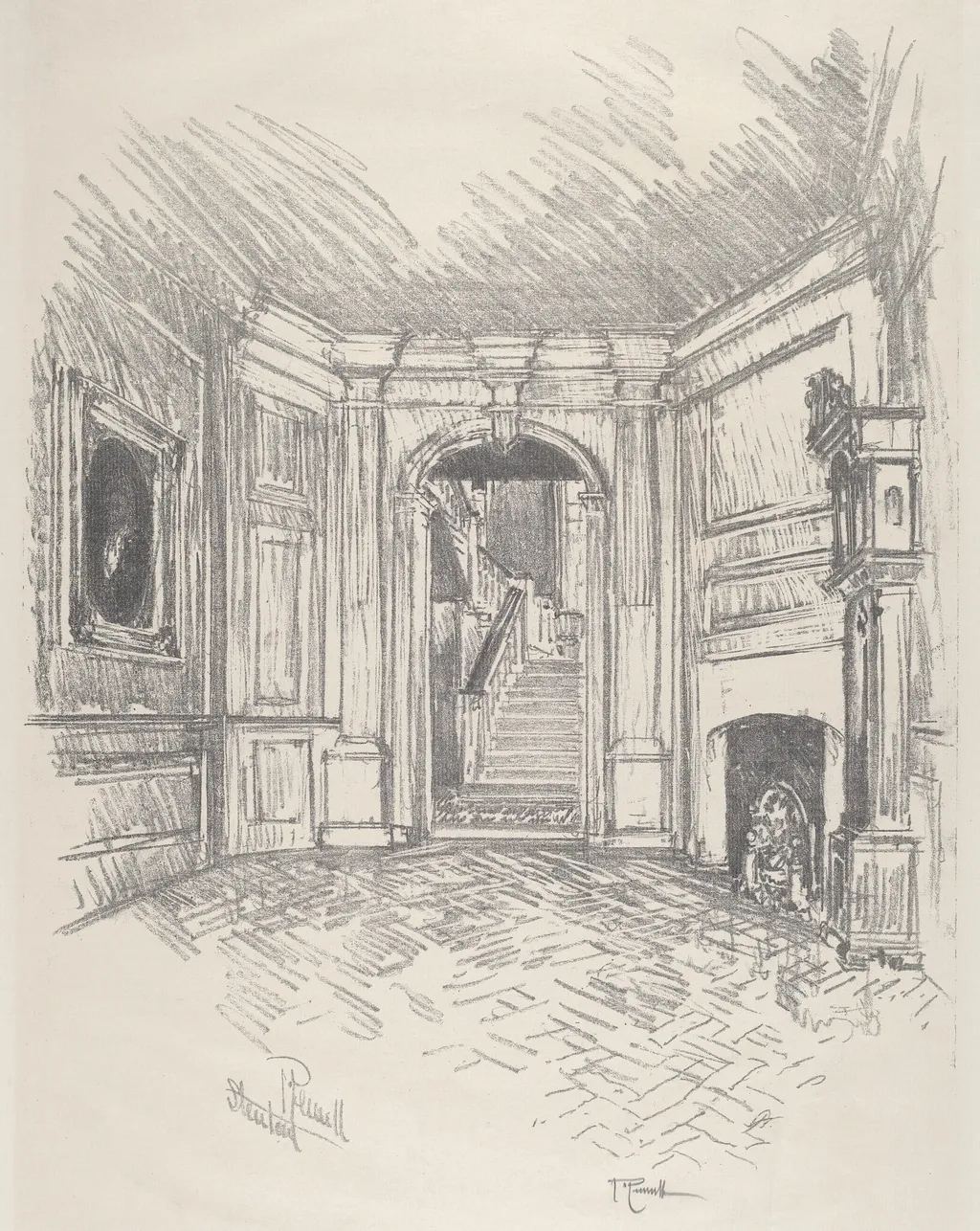
The Hall, Stenton is an ink print by Joseph Pennell. It dates from 1912 and is held in the collection of the National Gallery of Art.
About this work
Overview
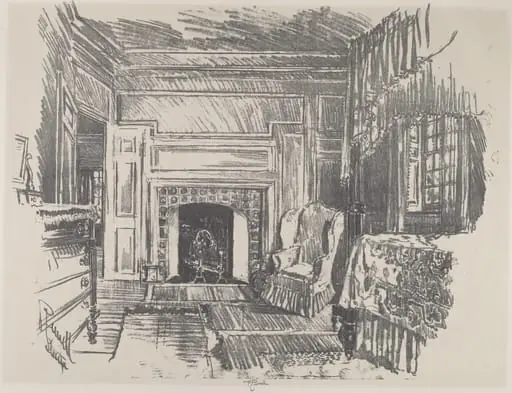
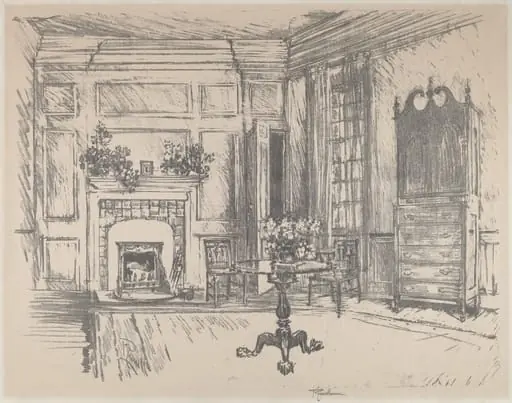
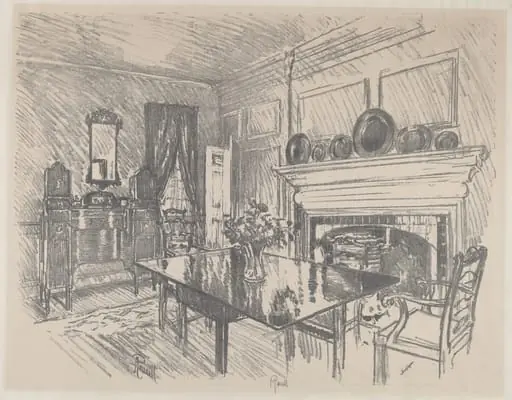
Joseph Pennell’s 1912 lithograph *The Hall, Stenton* captures the interior of an 18th-century Philadelphia mansion, reflecting his sustained interest in architectural spaces. Created during a period when he was deeply engaged with European printmaking traditions, the work exemplifies his shift from illustration to independent artistic expression. Pennell’s training under James Lambdin and Thomas Eakins, alongside exposure to Whistler’s tonal methods, informed his precise yet atmospheric approach to rendering built environments.
Subject & Meaning
The image portrays the central hall of Stenton, a historic Georgian residence once home to the Logan family.
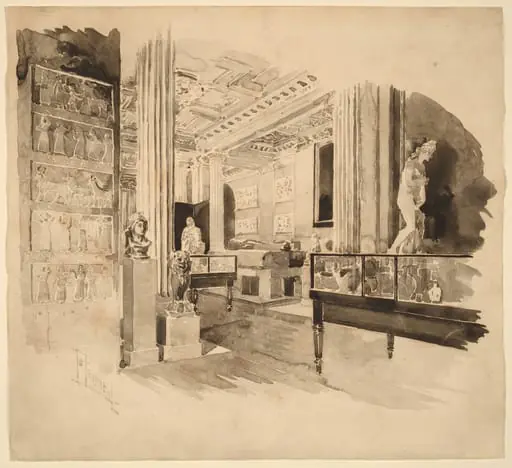
The image portrays the central hall of Stenton, a historic Georgian residence once home to the Logan family. Pennell focuses on the spatial harmony of the room—its staircase, paneling, fireplace, and arched doorway—emphasizing its architectural dignity rather than its historical occupants. The absence of figures underscores the building’s quiet endurance, transforming the space into a contemplative monument to early American domestic design and craftsmanship.
Technique & Style
Pennell employed lithography to achieve subtle gradations of gray, using tonal contrasts to suggest volume and depth without heavy line work. The lithographic process allowed him to capture the texture of stone floors, wood paneling, and ornamental details with a restrained, almost monochromatic palette. His technique reflects Whistler’s influence, prioritizing mood and composition over literal representation, and treating architecture as a study in light and form.
History & Provenance
Stenton, built in the 1730s, was preserved as a historic site by the Logan family’s descendants and later acquired by the Philadelphia Society for the Preservation of Landmarks. Pennell’s lithograph was made during a period of renewed interest in early American architecture, likely commissioned or undertaken as a personal documentation project. The print remains part of institutional collections, valued for its accurate depiction of the house’s interior before modern restoration efforts.
Context
In the early 20th century, American artists and intellectuals increasingly turned to historic buildings as subjects of cultural preservation. Pennell’s work aligned with broader efforts to record vernacular architecture amid rapid urbanization. His focus on interiors—rather than facades—distinguished his approach from contemporaries, offering intimate views of spaces shaped by colonial-era craftsmanship and social hierarchy.
Legacy
Pennell’s *The Hall, Stenton* endures as a precise visual record of a significant historic interior, contributing to architectural documentation in the pre-photographic era. While not widely exhibited today, it remains referenced in studies of American printmaking and early preservation movements. The work exemplifies how lithography could serve both artistic and archival purposes, bridging aesthetic sensitivity with historical fidelity.
Artist & collection
Artist
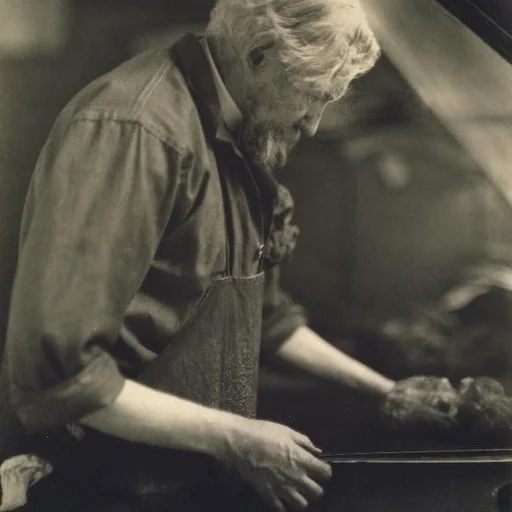
Joseph Pennell (July 4, 1857 – April 23, 1926) was an American draftsman, etcher, lithographer, and illustrator for books and magazines.