Artwork
H Beard Print Collection
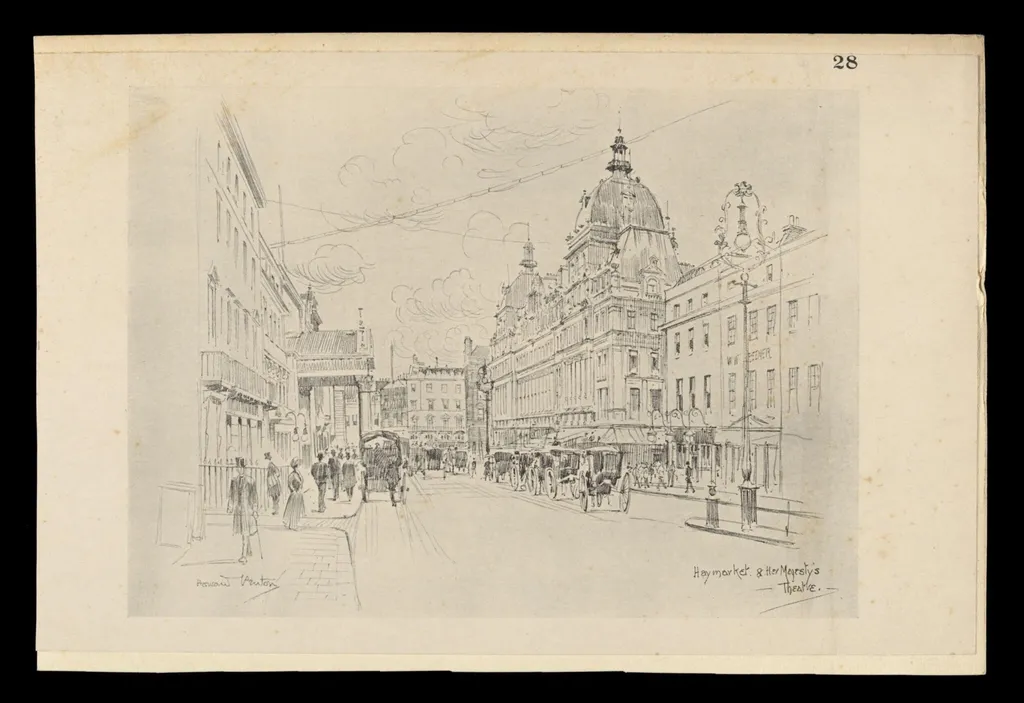
H Beard Print Collection is a print by Howard Penton. It dates from 1950 and is held in the collection of the Victoria and Albert Museum.
About this work
Overview
Created by Howard Penton, the work is a commercial print produced through ink transfer onto paper, typical of period topographical documentation.
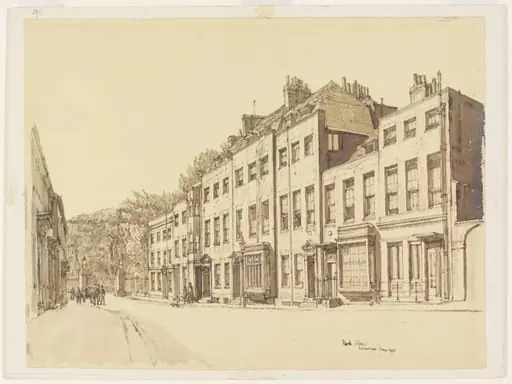
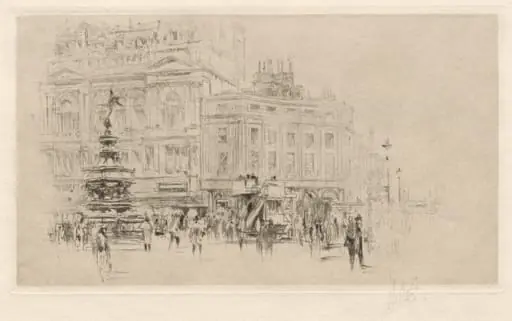
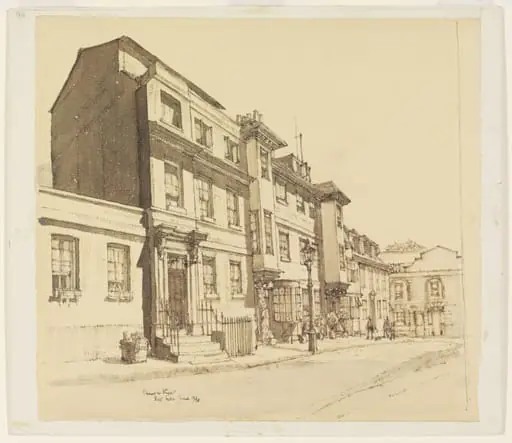
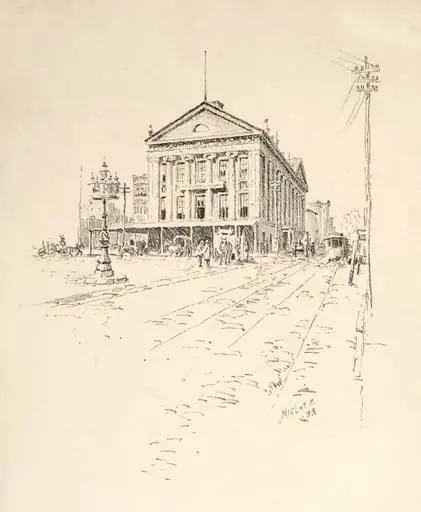
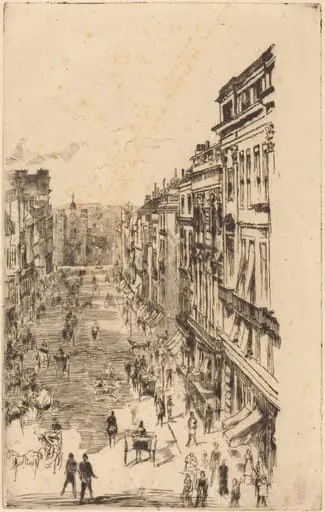
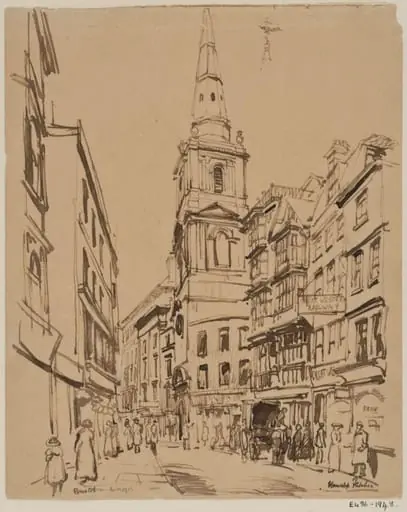
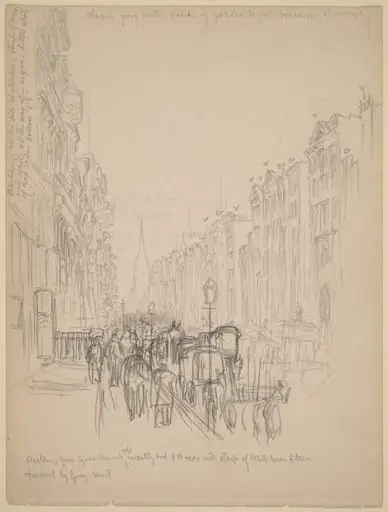
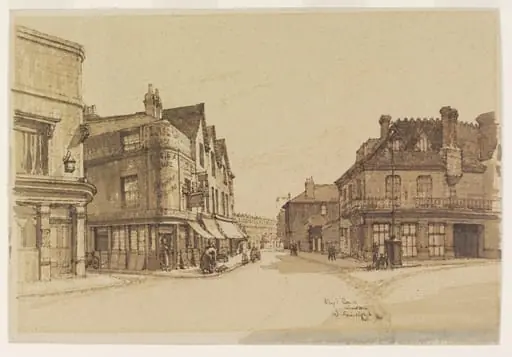
This print depicts London’s Haymarket at night, capturing the architectural presence of Haymarket Theatre and Her Majesty’s Theatre amid the urban rhythm of the early 20th century. Created by Howard Penton, the work is a commercial print produced through ink transfer onto paper, typical of period topographical documentation. Its composition emphasizes street life and illuminated facades, offering a quiet record of a bustling London thoroughfare.
Subject & Meaning
The scene centers on two prominent theaters flanking a narrow, well-lit street, suggesting the cultural significance of the area. Figures scattered along the pavement imply evening foot traffic—patrons, workers, or passersby—grounding the image in daily life. The absence of dramatic action invites contemplation of routine urban experience rather than spectacle, reflecting the quiet dignity of metropolitan routine.
Technique & Style
Penton employed a precise, linear approach typical of early 20th-century topographical prints. Ink was applied to a plate and pressed onto paper, yielding crisp outlines and subtle tonal gradations. Architectural details are rendered with clarity, while atmospheric effects like gaslight glow are suggested through selective shading rather than bold contrast, lending the scene a restrained, observational tone.
History & Provenance
Howard Penton, active in the early 1900s, produced numerous prints documenting London’s streets and landmarks. This work likely originated as part of a series intended for public sale or institutional use. The Victoria and Albert Museum holds a collection of his prints, indicating official recognition of his work as a record of urban England during a period of rapid change.
Context
In the early 1900s, London’s West End was a hub of theater-going culture, with Haymarket serving as a key node in the city’s entertainment district. Gas lighting, horse-drawn vehicles, and modest street-level commerce defined the area before electric signage and motor traffic transformed it. Penton’s print preserves this transitional moment, before modernization erased much of its visual character.
Legacy
Penton’s print endures as a documentary artifact, offering insight into the visual texture of early 20th-century London. Though not widely known today, his works contribute to broader archives of urban history held by institutions like the V&A. They serve as quiet witnesses to a cityscape now altered beyond recognition, valued for their factual clarity rather than artistic innovation.
Artist & collection
Artist
Howard Penton made prints in the early 20th century, following the style of the time.