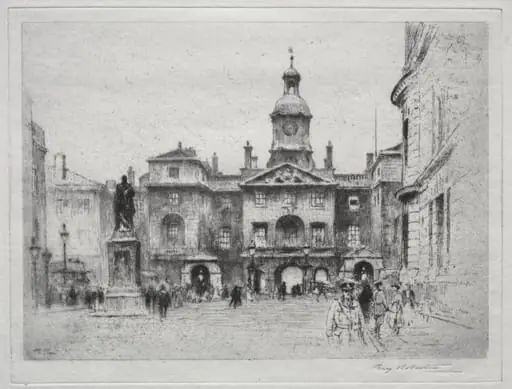
Artwork
Picadilly Circus
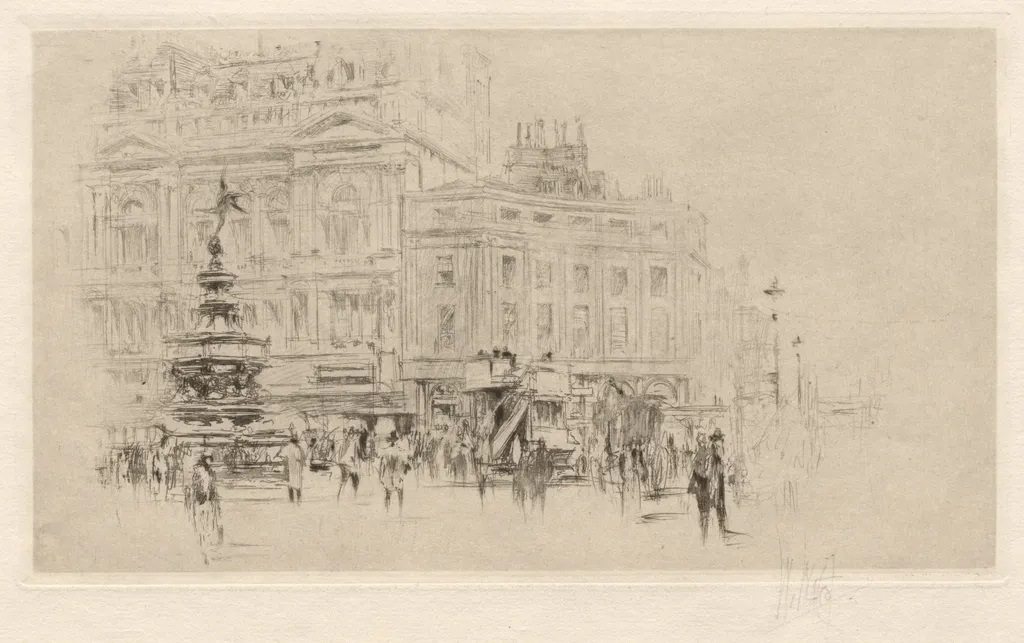
Picadilly Circus is a print by William Walcot. It dates from 1913 and is held in the collection of the Cleveland Museum of Art.
About this work
Overview
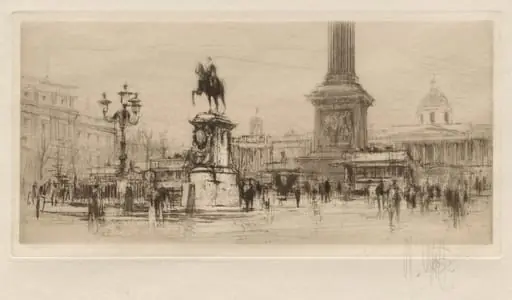
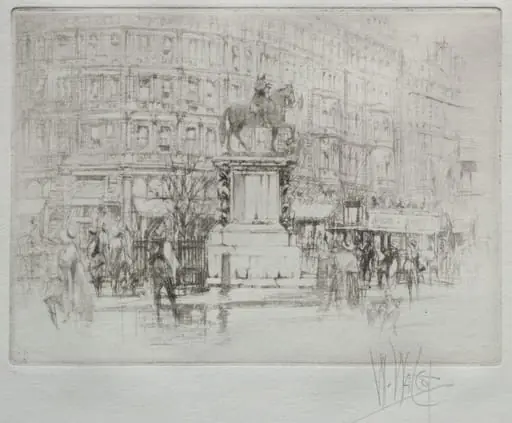
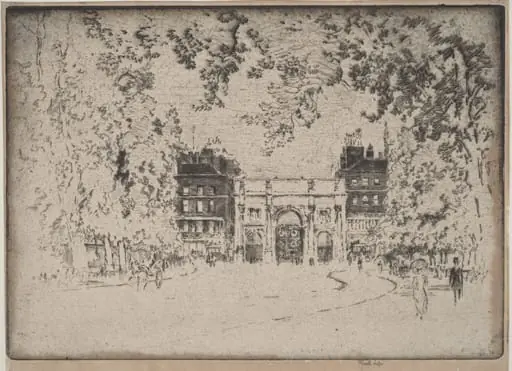
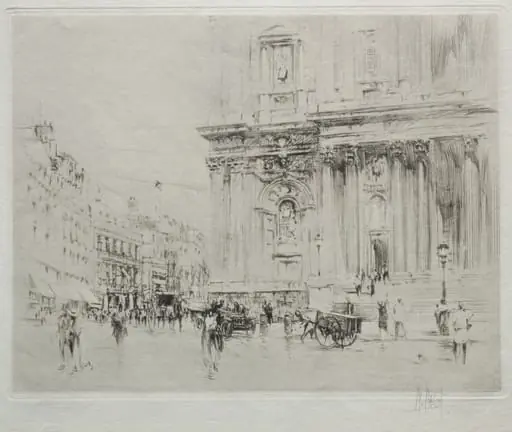
Created in 1913 by William Walcot, this ink and wash drawing captures the energy of Piccadilly Circus in London.
Created in 1913 by William Walcot, this ink and wash drawing captures the energy of Piccadilly Circus in London. Executed with rapid, expressive strokes, the work conveys movement and urban density without polished finish. It resides in the collection of The Cleveland Museum of Art, where it stands as an example of early 20th-century architectural sketching rooted in observational immediacy rather than formal completion.
Subject & Meaning
The scene depicts a bustling intersection dominated by two prominent structures: a columned building with a clock tower and a grand hall-like edifice. Figures move in all directions, and a horse-drawn carriage anchors the foreground. The composition suggests the rhythm of city life—transient, layered, and chaotic—without romanticizing or idealizing the environment, instead emphasizing its organic, unscripted character.
Technique & Style
Walcot employed loose ink lines and layered washes to suggest form and depth with minimal detail. The clock tower, though more defined than surrounding elements, retains a sketchlike quality, while figures and distant buildings dissolve into shadowy masses. This method prioritizes atmosphere over precision, reflecting a tradition of architectural studies that valued spontaneity and spatial intuition over finished rendering.
History & Provenance
The drawing entered The Cleveland Museum of Art’s collection as part of a broader acquisition of Walcot’s architectural sketches. Its provenance traces back to the artist’s personal archive, where it was likely kept as a working study rather than a final piece. No record indicates public exhibition prior to its institutional acquisition, suggesting its primary function was personal or professional documentation.
Context
In 1913, London’s Piccadilly Circus was a hub of modern transit and commerce, transitioning from horse-drawn vehicles to early automobiles. Walcot’s sketch aligns with a growing interest among architects and artists in documenting urban transformation. Unlike formal architectural renderings, this work captures the lived experience of the space—its noise, motion, and fleeting moments—offering a counterpoint to official city imagery.
Legacy
Walcot’s sketch contributes to a body of work that redefined architectural drawing as a tool for capturing urban vitality rather than static monumentality. Though not widely exhibited in his lifetime, such drawings have since informed scholarly understanding of early modernist approaches to cityscape representation, influencing how architects and historians interpret the visual culture of early 20th-century metropolises.
Artist & collection

Artist
William Walcot RE was a Russian-Scottish architect, graphic artist and etcher, notable as a architect of refined Art Nouveau in Moscow, Russia.

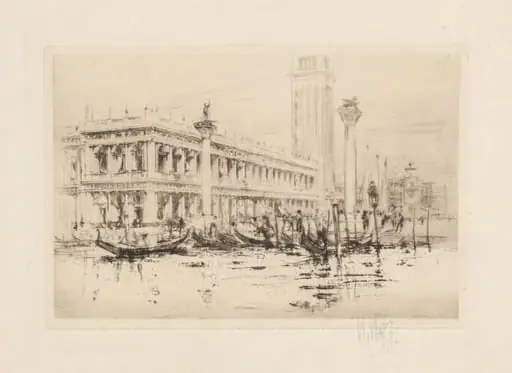 The Venice Set: The Library of St. Mark’s
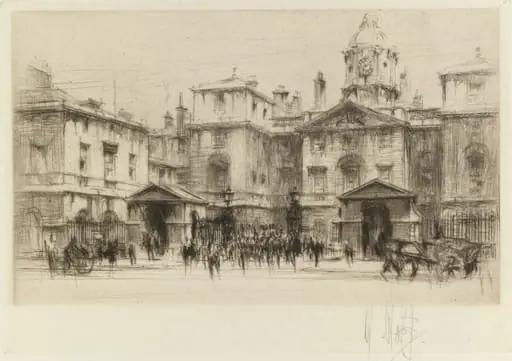 London Set: Horseguards
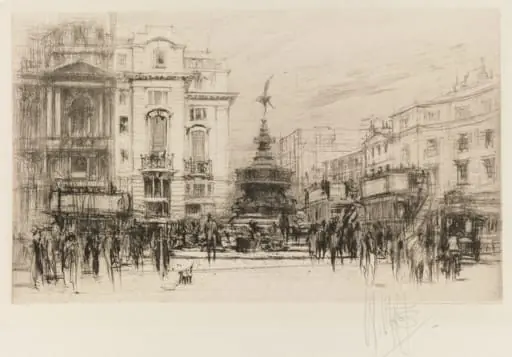 London Set: Piccadilly Circus (with Criterion Theatre)
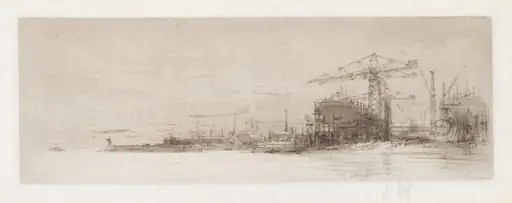 The Clyde from the series The Arteries of Great Britain
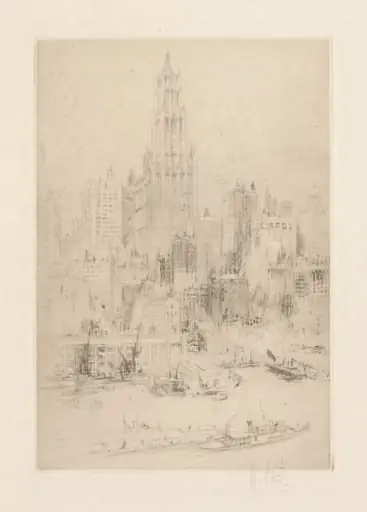 Downtown Manhattan from the East River, with the Woolworth Building
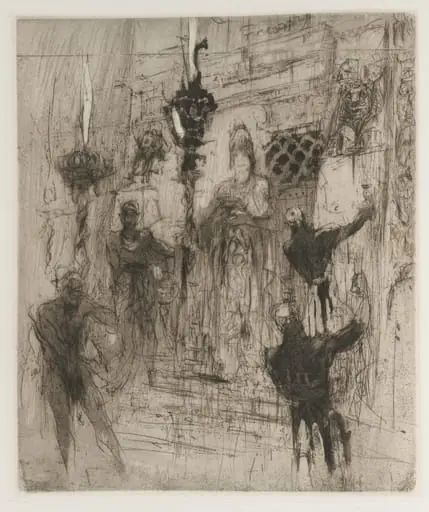 Herodias
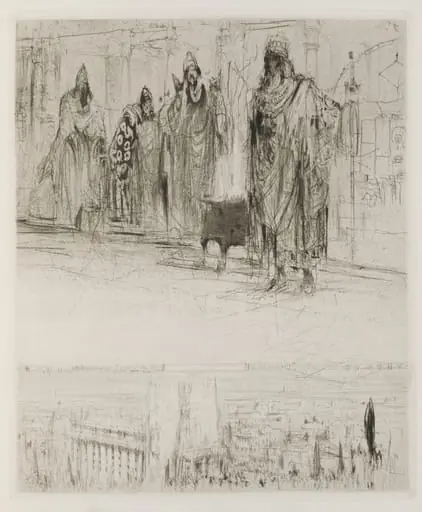 Herodias: Page 13, The tetrarch was awaited by several Galileans, the master of scribes, the chief of the land steward, the manager of the salt mines, and a Jew from Babylon commanding his troops on horse
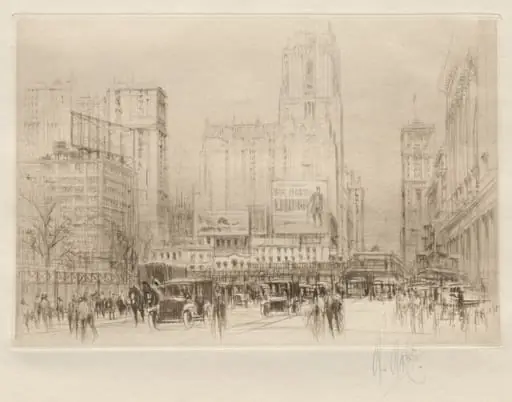 Forty-second Street NY