Artwork
Χωρίς τίτλο
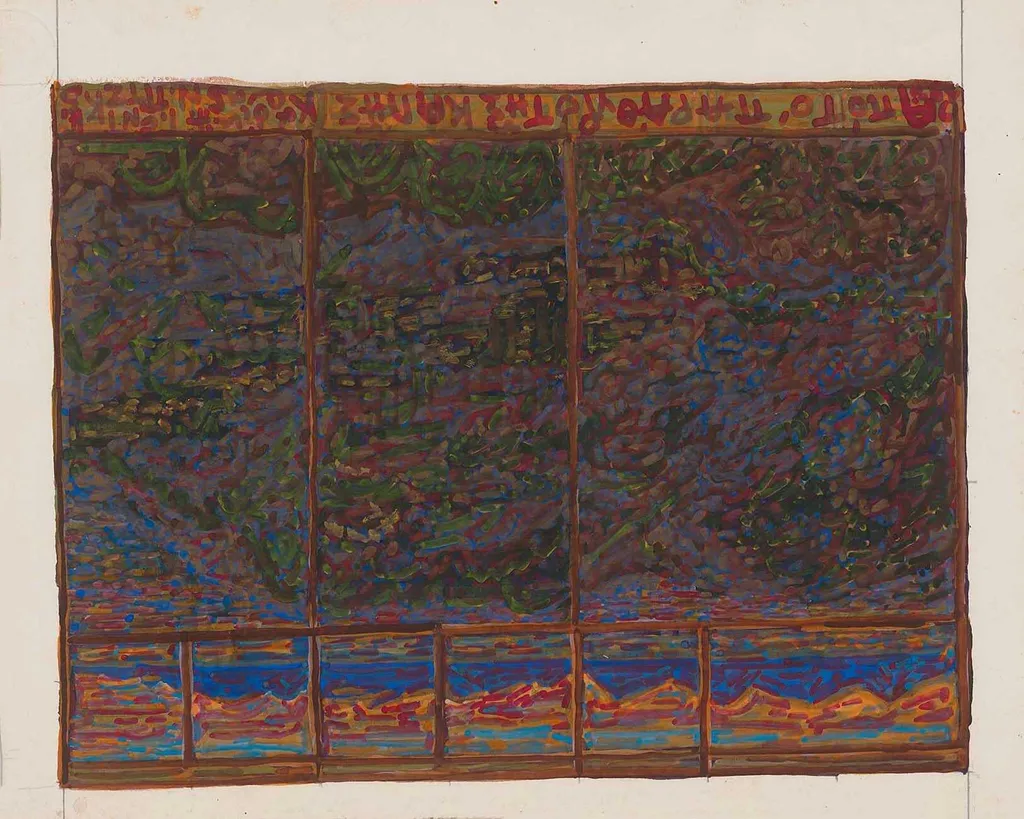
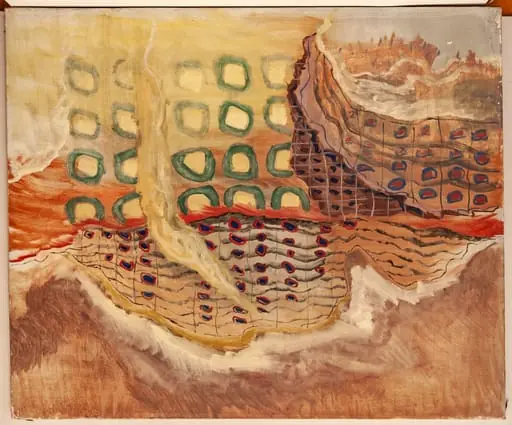
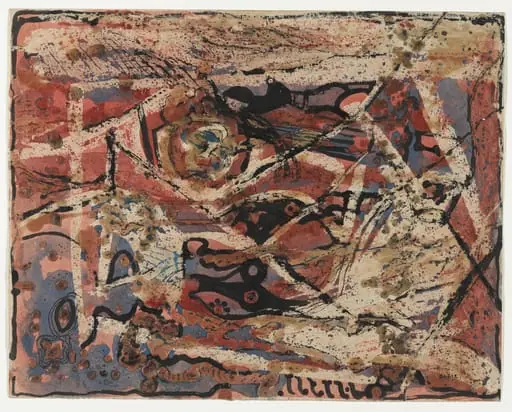
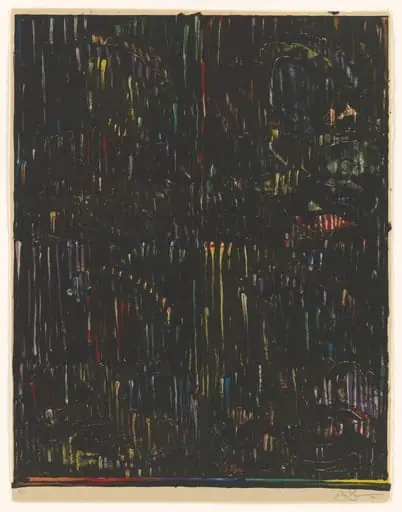
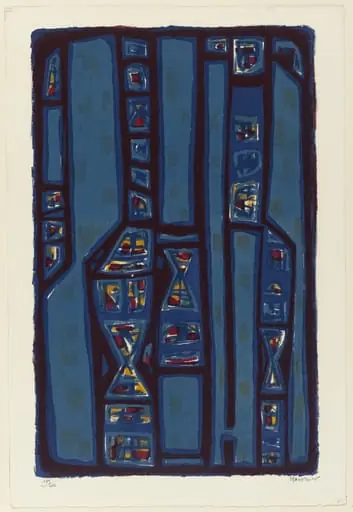
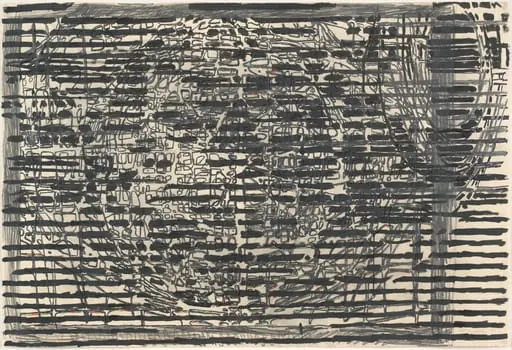
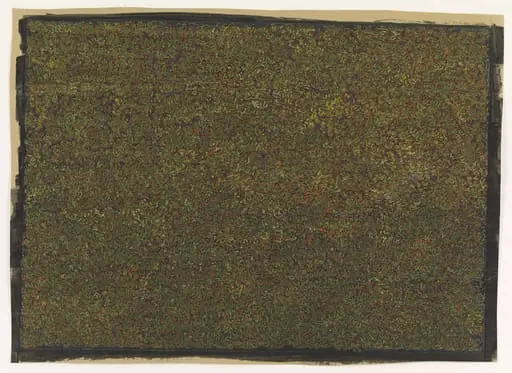
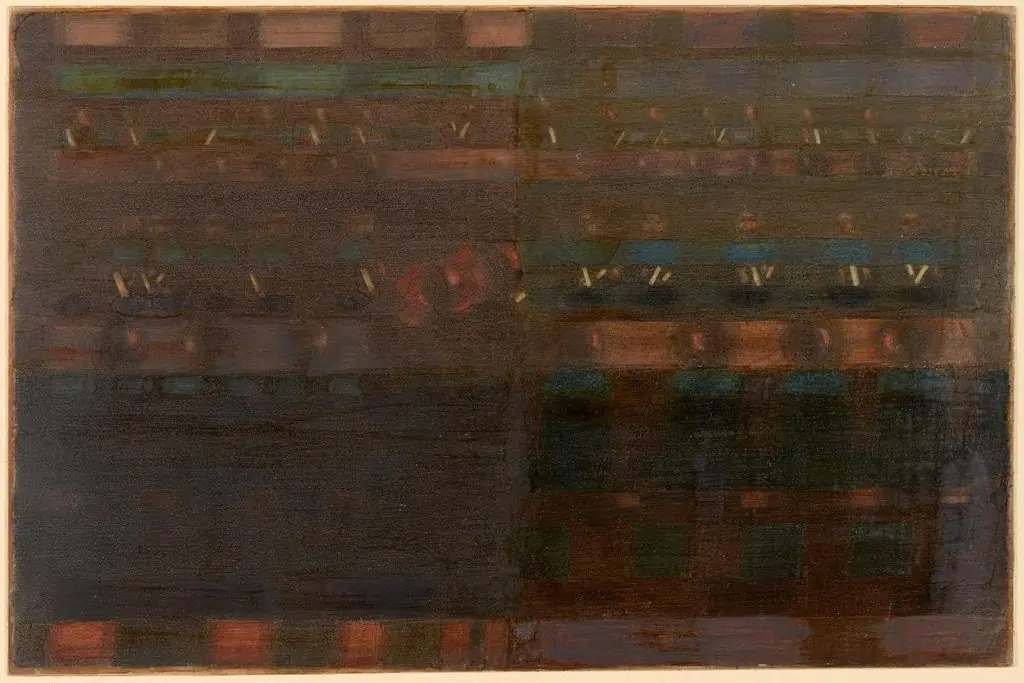
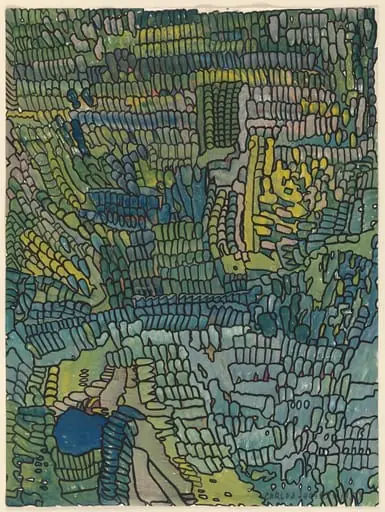
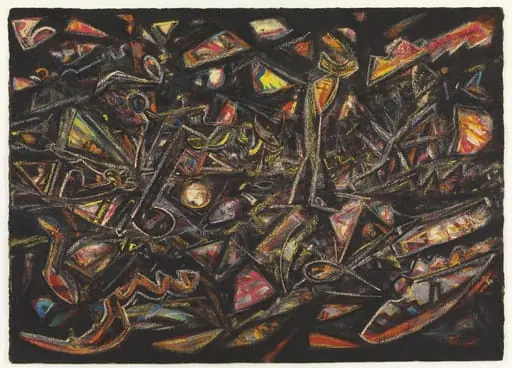
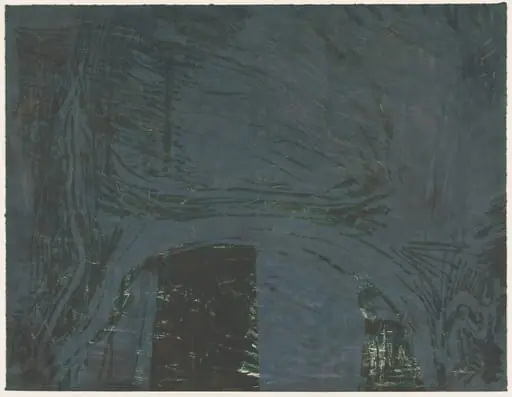
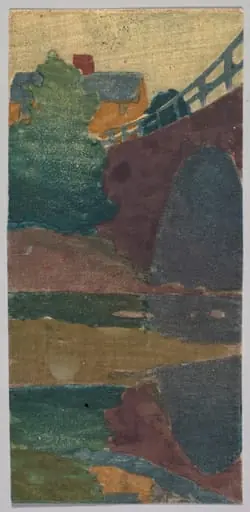
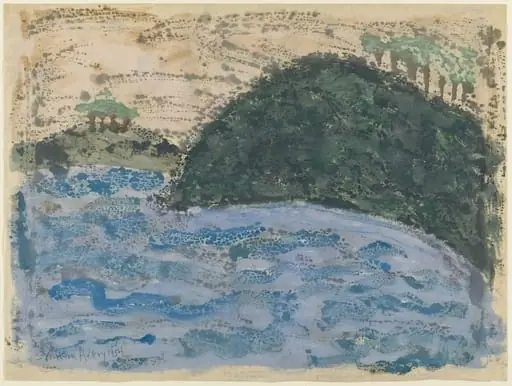
Χωρίς τίτλο is a drawing by Nikos Gabriel Pentzikes. It dates from 1958 and is held in the collection of the Metropolitan Organisation of Museums of Visual Arts of Thessaloniki – MOMus. This untitled work belongs to the artist’s second creative phase, where linguistic structures became the foundation for visual composition.
About this work
Overview
Rather than depicting recognizable forms, the piece translates textual elements into abstract visual patterns through a systematic, rule-based process.
This untitled work belongs to the artist’s second creative phase, where linguistic structures became the foundation for visual composition. Rather than depicting recognizable forms, the piece translates textual elements into abstract visual patterns through a systematic, rule-based process. The surface is densely layered with intersecting lines, suggesting a decomposition of language into its constituent parts.
Subject & Meaning
The work derives from sacred texts, not as narrative illustrations but as sources of phonetic and semantic structure. The artist sought to express the hidden rhythmic harmony of words by breaking them into letters, assigning numerical values, and mapping those values to color and form. Meaning emerges not from content but from the mathematical and syntactic architecture underlying language.
Technique & Style
Each letter was converted into a number, and the sum of these values determined chromatic and linear patterns. The artist categorized words by grammatical function—nouns, verbs, adjectives—to influence tonal dominance. Lines were built through cross-hatching, arranged according to calculated sequences. The composition, confined to a fixed 25 x 30 cm format, was transferred from rice paper underdrawings, preserving precision in execution.
History & Provenance
This piece emerged during a period when the artist increasingly turned away from figurative representation toward systems-based abstraction. It reflects his engagement with esoteric linguistic traditions and numerology, likely influenced by mystical interpretations of sacred writings. The work was produced in series, with consistent dimensions and methodology, suggesting a deliberate, repetitive practice rather than spontaneous creation.
Context
The artist’s method aligns with mid-20th-century explorations of language as material—paralleling concrete poetry and conceptual art. His use of numerology and grammatical analysis echoes occult and hermetic traditions, while his structured approach resonates with systems art and early algorithmic practices. The work exists at the intersection of spiritual inquiry and formalist experimentation.
Legacy
This body of work contributed to a broader shift in abstract art toward rule-bound, non-representational systems. Though not widely exhibited during his lifetime, the method influenced later artists interested in the intersection of language, mathematics, and visual form. Its legacy lies in demonstrating how textual logic can generate autonomous visual structures without reliance on traditional iconography.
Artist & collection
Museum
Metropolitan Organisation of Museums of Visual Arts of Thessaloniki – MOMus
Continue through works from the same source collection.