Artwork
Leonidas Androutsos
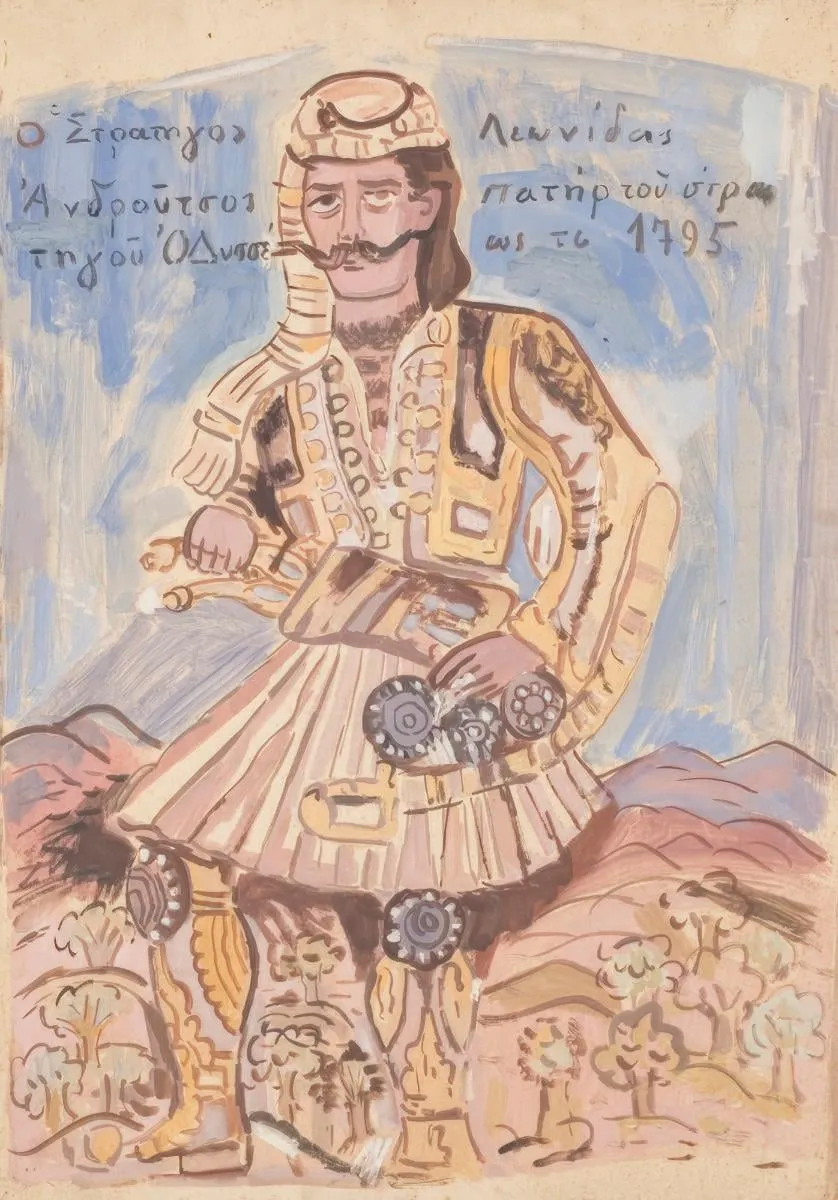
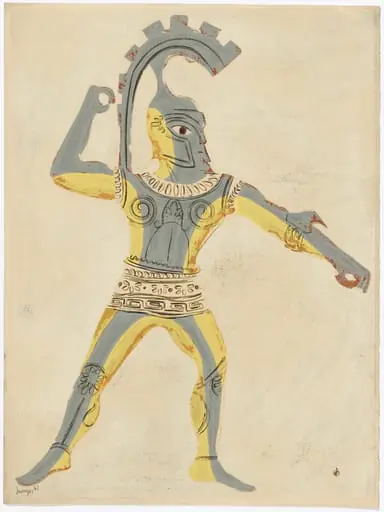
Leonidas Androutsos is an unspecified painting by Pepi (Kalliopi) Svoronou-Kokkinidou. It dates from 1958 and is held in the collection of the Athens School of Fine Arts.
About this work
Overview
Created in 1958 by Greek artist Pepi Svoronou-Kokkinidou, this painting depicts Leonidas Androutsos, a figure associated with the Greek War of Independence.
Created in 1958 by Greek artist Pepi Svoronou-Kokkinidou, this painting depicts Leonidas Androutsos, a figure associated with the Greek War of Independence. Rendered in a folk-art idiom, the work uses flat planes of color and strong outlines to present a stylized portrait. It resides in the collection of the Museum of Ethnography, where it functions as a cultural representation rather than a historical portrait.
Subject & Meaning
The figure portrayed is Leonidas Androutsos, a revolutionary leader from the early 19th century. Dressed in traditional regional attire — including a tall hat, embroidered vest, and fustanella — he holds a sword, signaling his martial role. The Greek text on the background likely references his name or deeds, anchoring the image in national memory. The composition avoids realism, instead emphasizing symbolic identity over individual likeness.
Technique & Style
The painting employs a simplified, decorative approach typical of modern Greek folk-inspired art. Bold contours define forms, while unmodulated hues — vivid blues, reds, and whites — create visual clarity. The background, devoid of depth, features abstracted rocks and trees alongside inscribed text. Brushwork is deliberate and flat, rejecting chiaroscuro in favor of pattern and clarity suited to communal symbolism.
History & Provenance
Pepi Svoronou-Kokkinidou, an artist active in mid-20th-century Greece, produced this work during a period of renewed interest in national heritage. The painting entered the Museum of Ethnography’s collection shortly after its creation, where it was preserved as an example of contemporary folk art engaging with historical memory. Its provenance remains tied to Greek cultural institutions since its completion.
Context
In post-war Greece, artists like Svoronou-Kokkinidou revisited revolutionary figures to reinforce national identity. This painting reflects a broader trend of blending folk aesthetics with historical narratives, distinct from academic traditions. The use of traditional dress and symbolic props aligns with state-sponsored efforts to cultivate a unified cultural image during a time of political reconstruction.
Legacy
The work remains a representative example of how modern Greek artists interpreted historical figures through vernacular styles. While not widely exhibited beyond ethnographic contexts, it contributes to understanding how 20th-century Greece visually negotiated its revolutionary past. Its enduring presence in the Museum of Ethnography underscores its role as a cultural artifact rather than a fine art object.
Artist & collection
Artist
Pepi (Kalliopi) Svoronou-Kokkinidou
Greek artist Pepi Svoronou-Kokkinidou made metalwork and paintings in the 1950s. You’ll recognize her 1958 metal piece Paradise and the painting Leonidas Androutsos in this bundle. Her work blends traditional Greek…
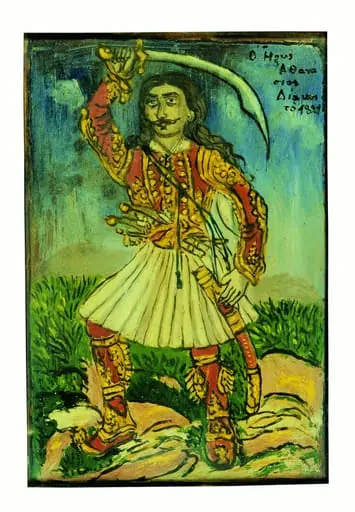 Ο Ήρως Αθανάσιος Διάκος το 1821
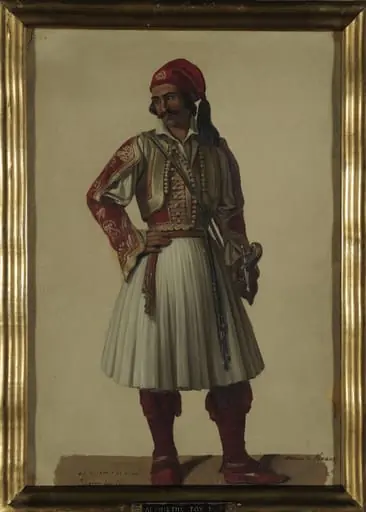 Υδατογραφία αγωνιστή του 1821
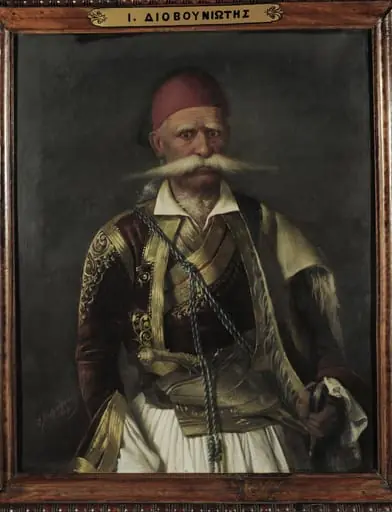 Προσωπογραφία του Ιωάννη Διοβουνιώτη
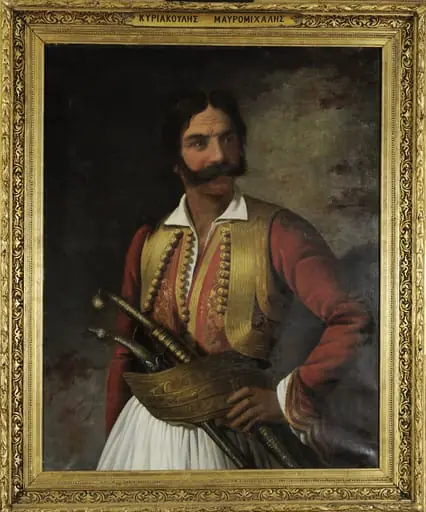 Προσωπογραφία του Κυριακούλη Μαυρομιχάλη
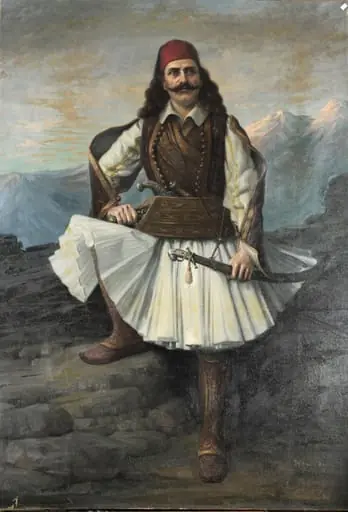 Προσωπογραφία του Γιάννη Μπουκουβάλα
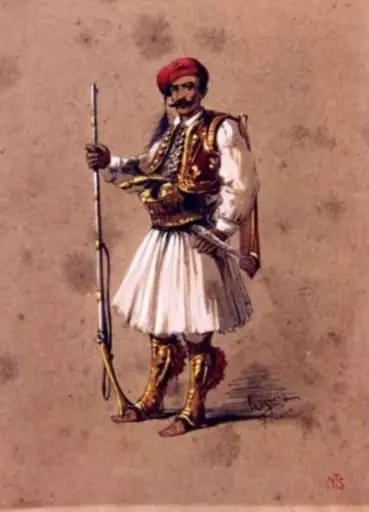 Albanez
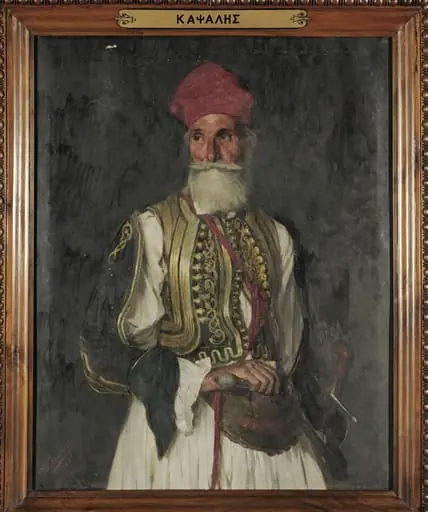 Προσωπογραφία του Χρήστου Καψάλη
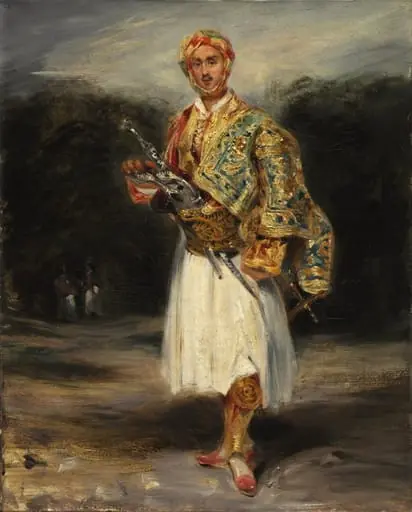 Count Demetrius de Palatiano in Suliot Costume
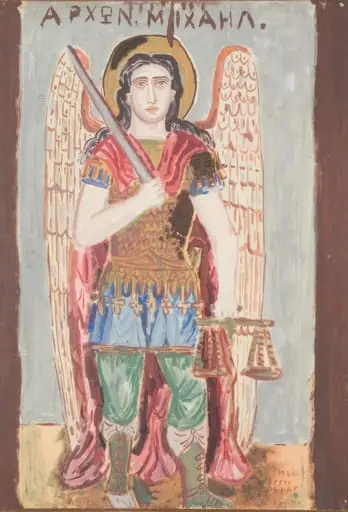 Archangel Michael
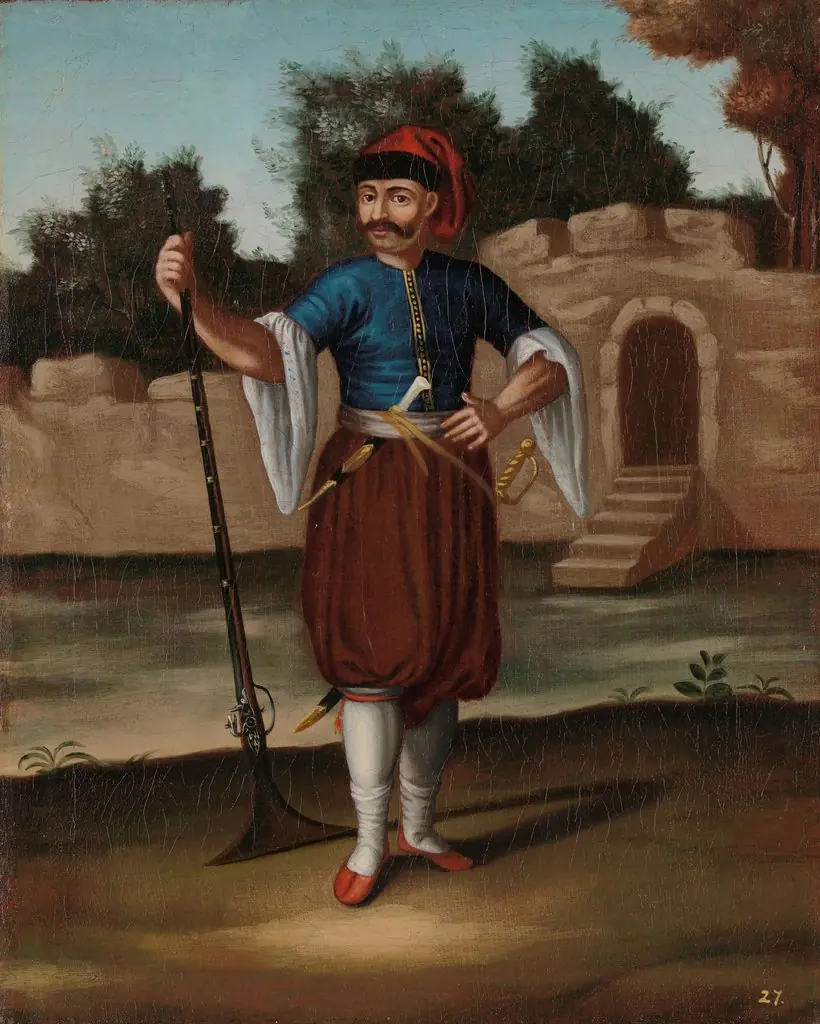 Albanian Soldier
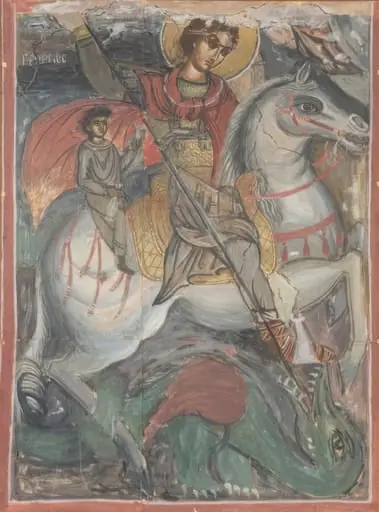 Saint George
 Untitled