Artwork
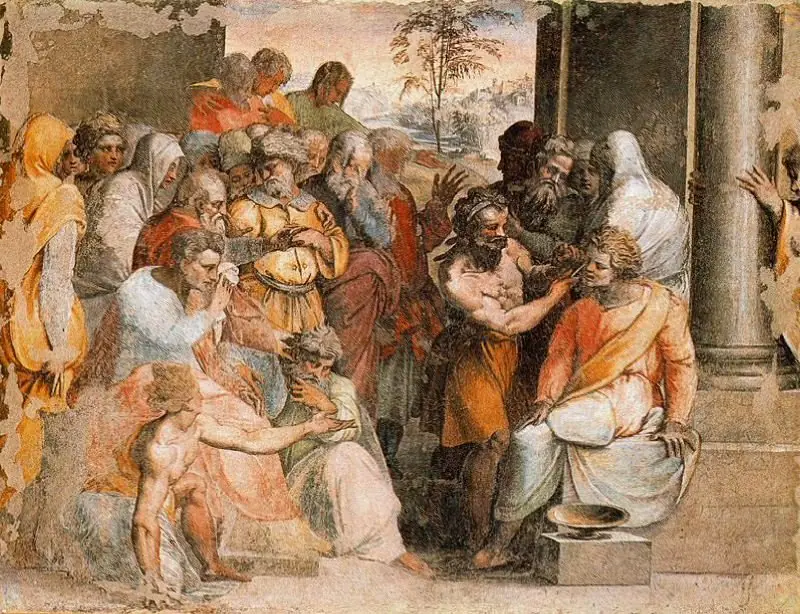
Tarquinius Priscus founds the Temple of Jupiter on the Campidoglio
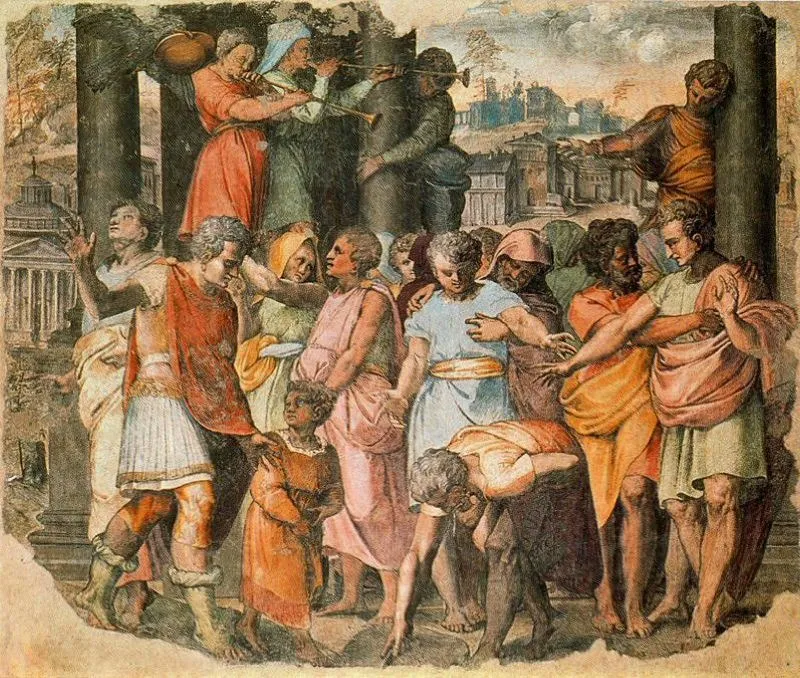
Tarquinius Priscus founds the Temple of Jupiter on the Campidoglio is a fresco painting by the Early Baroque Italian artist Perino del Vaga. It dates from 1521 and is held in the collection of the Uffizi Gallery.
About this work
Overview
Painted in 1521 by Perino del Vaga, this fresco illustrates the legendary founding of the Temple of Jupiter Optimus Maximus on Rome’s Capitoline Hill.
Painted in 1521 by Perino del Vaga, this fresco illustrates the legendary founding of the Temple of Jupiter Optimus Maximus on Rome’s Capitoline Hill. Executed during the High Renaissance, it belongs to a series of historical scenes commissioned for Roman palaces. Though often associated with Mannerism, its composition retains classical balance and narrative clarity. The work is now held in the Uffizi Gallery’s collection, where it represents early 16th-century Roman fresco practice.
Subject & Meaning
The scene depicts Lucius Tarquinius Priscus, Rome’s fifth king, directing the construction of the temple dedicated to Jupiter, the chief deity of the Roman pantheon. Surrounding figures include architects, laborers, and officials, emphasizing civic and religious unity. The act of founding the temple symbolizes divine sanction of royal authority and the city’s emerging political identity. The narrative draws from Livy’s histories, blending myth with early Roman state formation.
Technique & Style
Perino employed tempera and fresco techniques to render architectural detail and human figures with precise linework and restrained modeling. The palette favors earthy ochres, umbers, and muted blues, avoiding theatrical contrast. Figures are arranged in dynamic yet orderly groupings, their gestures guiding the viewer’s eye toward the temple’s columns. The composition reflects Renaissance ideals of harmony, while subtle elongations and spatial ambiguity hint at emerging Mannerist tendencies.
History & Provenance
Commissioned for the Palazzo Massimo in Rome, the fresco was part of a larger decorative program celebrating Roman antiquity. After the palace’s decline, it was transferred to the Uffizi in the 18th century, where it remains today. Its survival is notable, as many contemporary frescoes were lost to decay or renovation. Documentation links it to Perino’s workshop during his tenure under Pope Clement VII, a period of intense mural production.
Context
Created amid the political instability following the Sack of Rome (1527), the fresco reflects a cultural desire to reaffirm Roman grandeur through mythic history. Artists like Perino drew from classical texts and archaeological remains to reconstruct imagined pasts. The emphasis on civic architecture aligned with humanist interests in Rome’s republican and monarchical origins, offering a visual counterpoint to contemporary chaos.
Legacy
Though less celebrated than contemporaries like Raphael, Perino’s fresco influenced later decorative cycles in papal and noble residences. Its integration of historical narrative with architectural precision became a model for Baroque ceiling paintings. The work survives as a testament to the enduring appeal of Roman foundational myths in Renaissance visual culture, bridging classical antiquity and early modern identity.
Artist & collection

Artist
Piero Bonaccorsi (1501 – October 19, 1547), known as Perino (or Perin) del Vaga, was an Italian painter and draughtsman of the Late Renaissance/Mannerism.

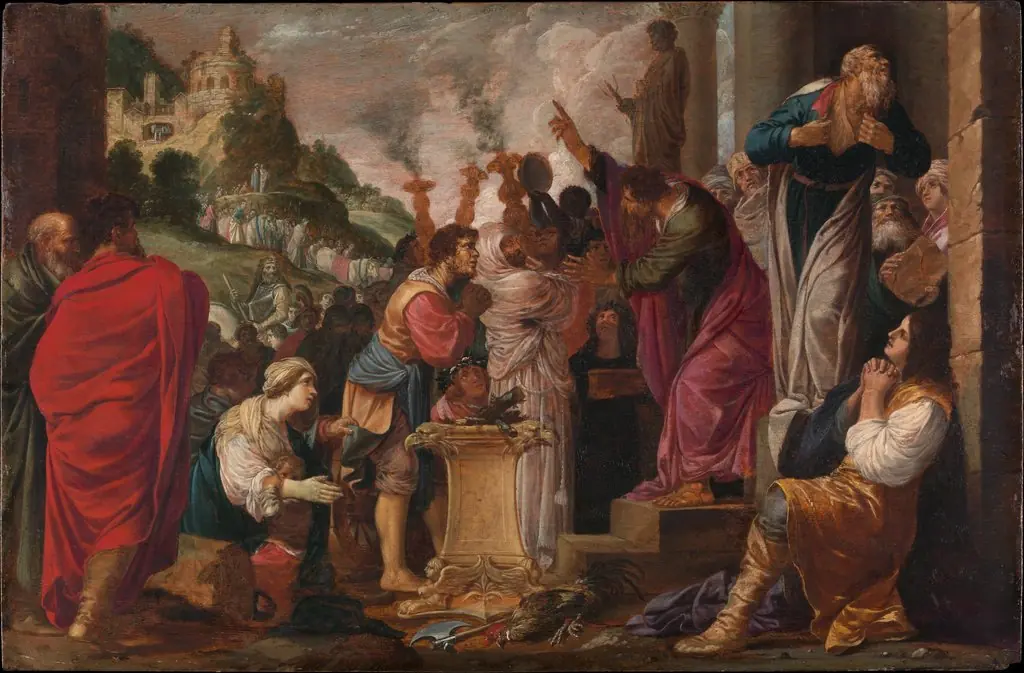 Paul and Barnabas at Lystra
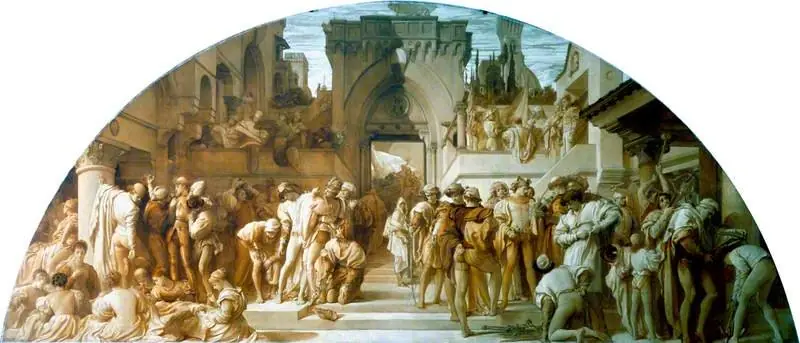 The Arts of Industry as Applied to War (cartoon for a wall painting in the Victoria and Albert Museum)
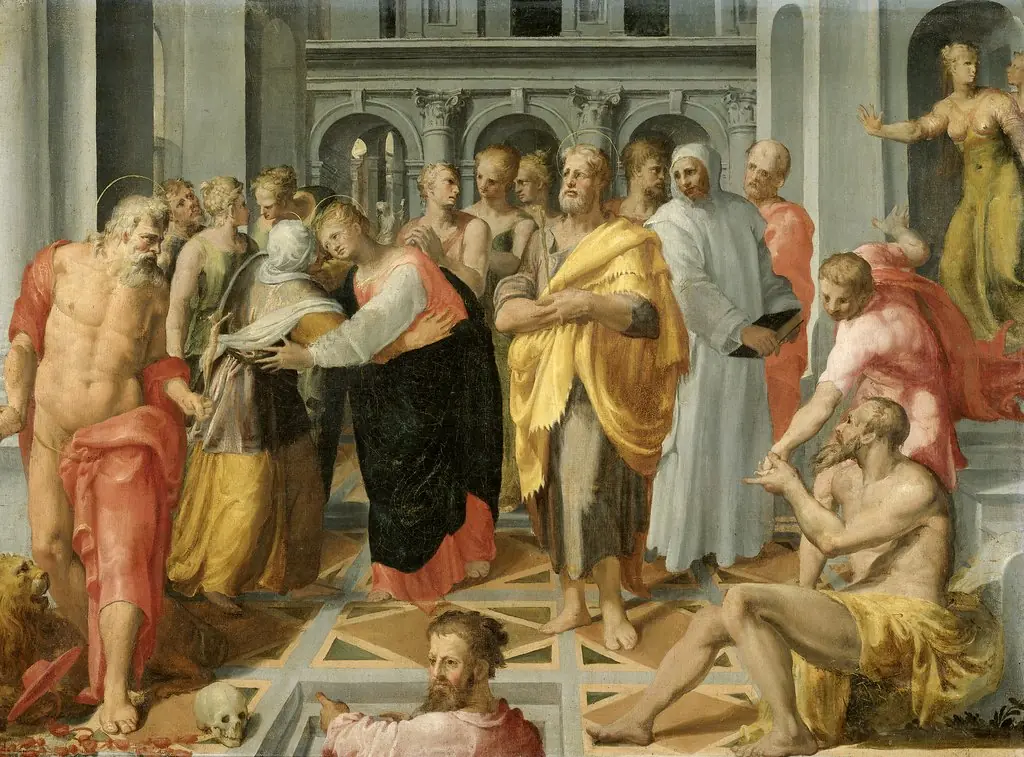 Visitation (Meeting of Mary and Elizabeth in the Presence of Saints Joseph and Jerome)
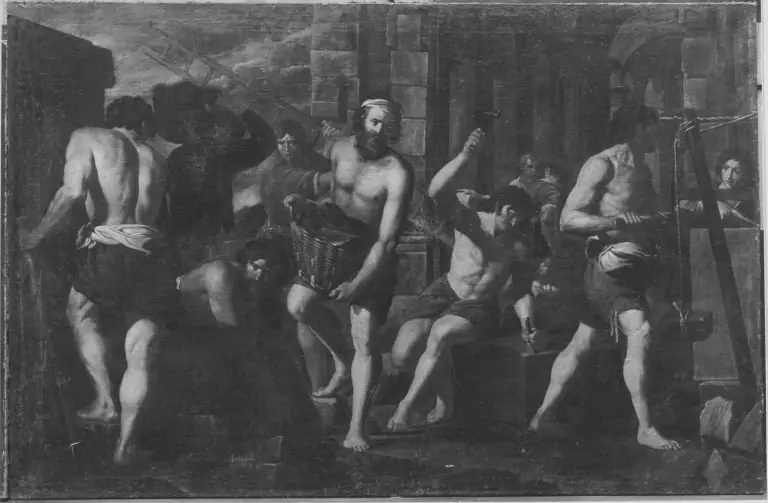 Bauleute am Werk
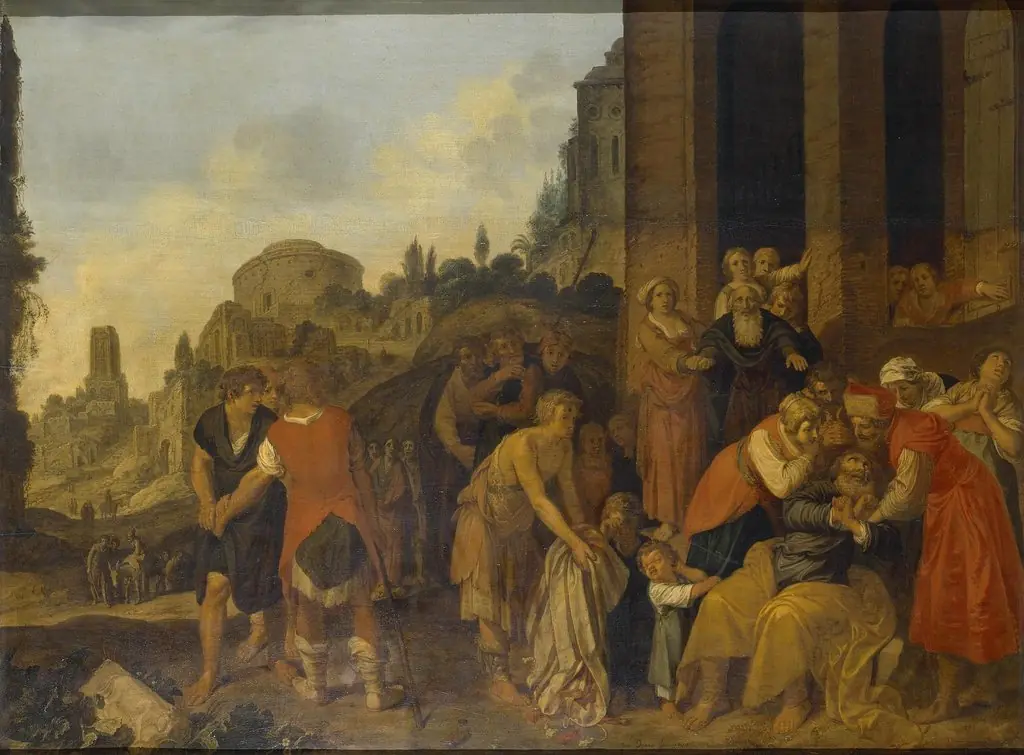 Jacob's Sons Show Him Joseph's Blood-Stained Robe
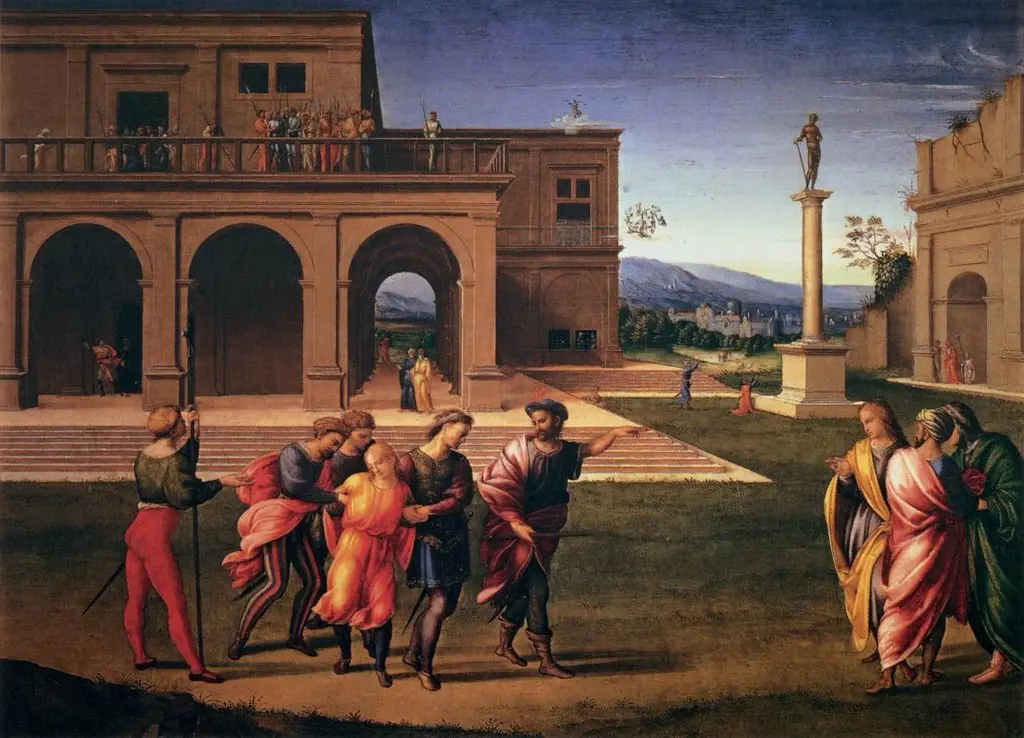 Joseph going to prison
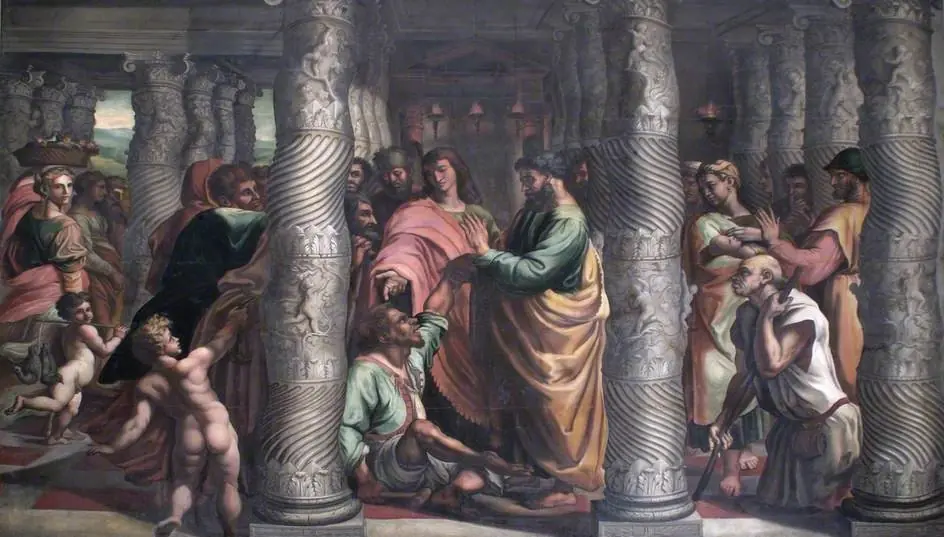 Sts Peter and John at the beautiful Gate
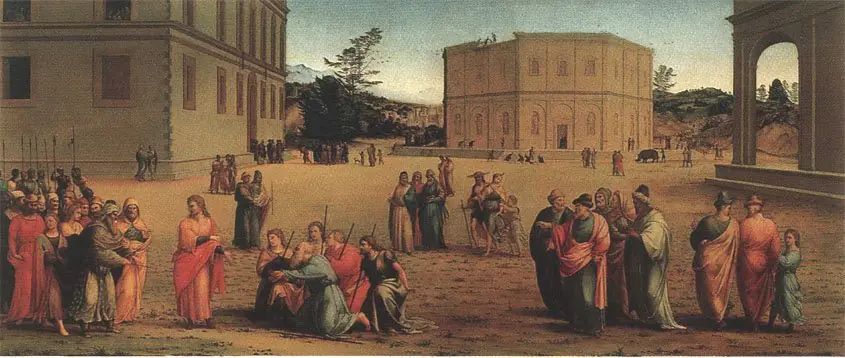 Joseph presents his father and brothers to the Pharaoh
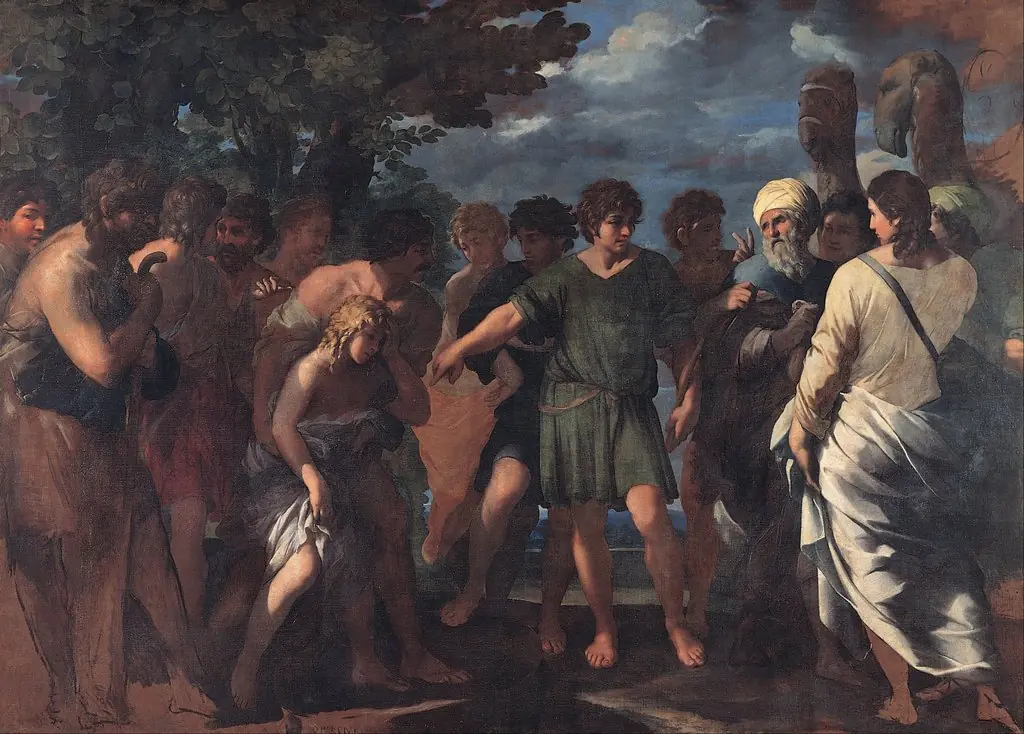 Joseph sold by his brothers
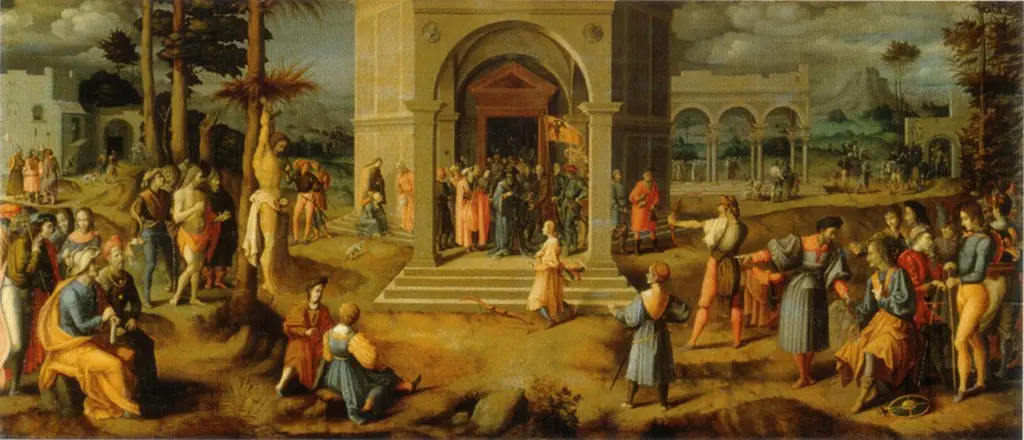 The Legend of the King's Sons
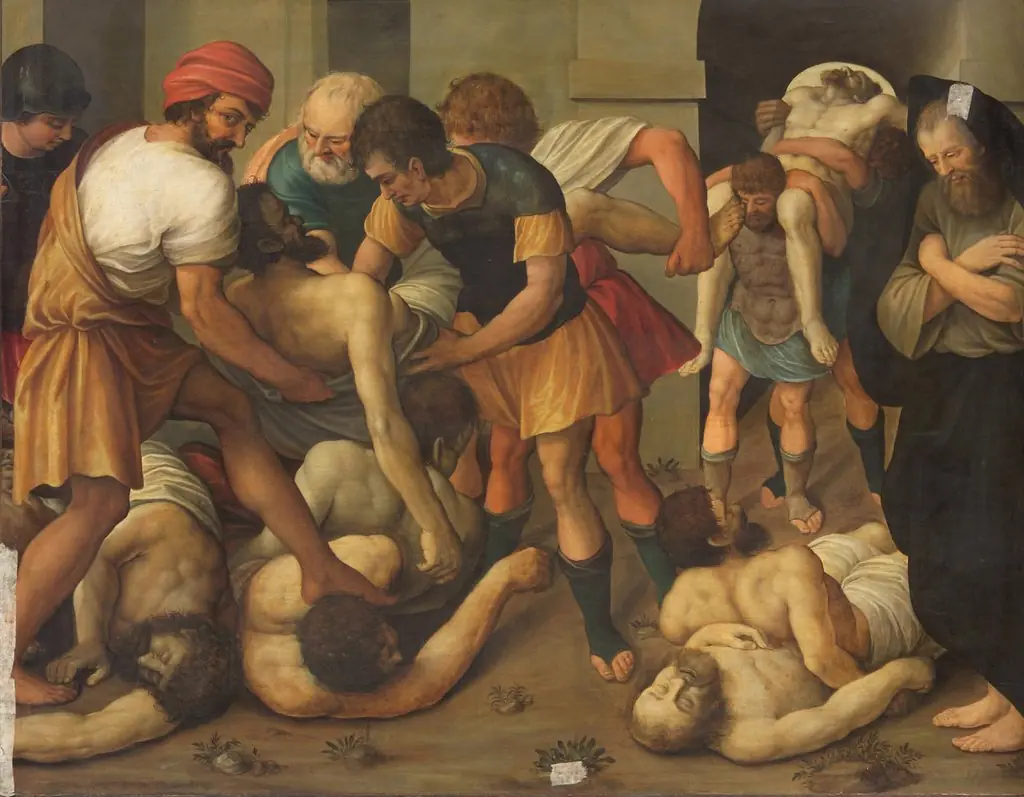 Tobias buries the Dead in Nineveh