Artwork
A village in Lincolnshire
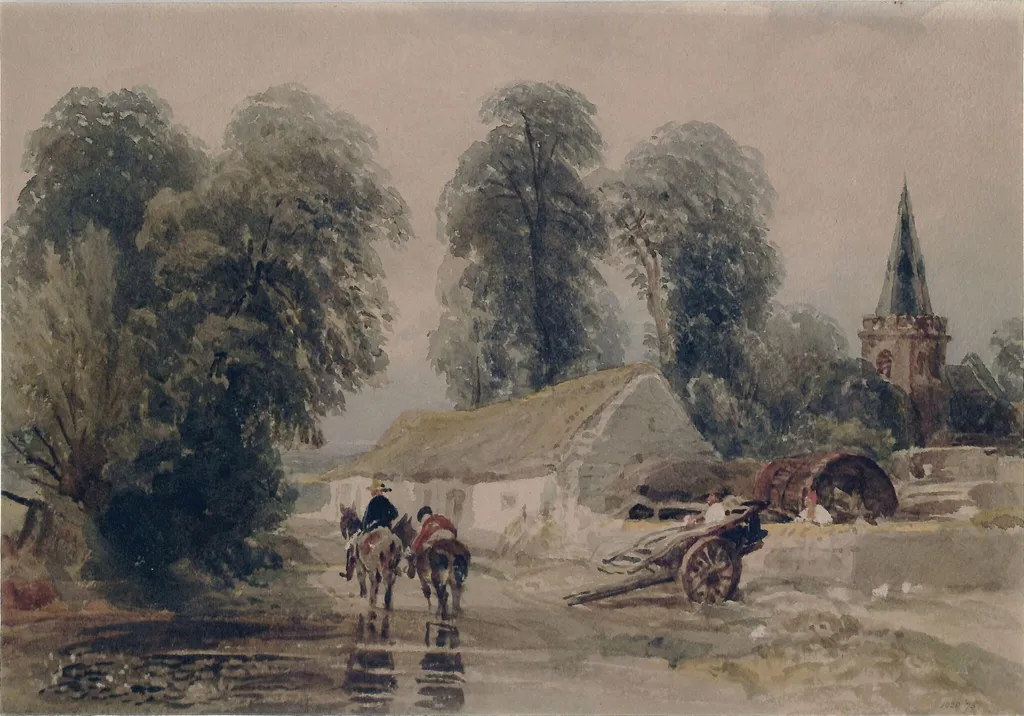
A village in Lincolnshire is a watercolor work on paper by the Romanticist artist Peter De Wint. It dates from 1810 and is held in the collection of the Victoria and Albert Museum.
About this work
Overview
Peter De Wint’s 1810 watercolour depicts a modest Lincolnshire village. A thatched cottage, a distant church spire, and scattered trees frame a foreground scene where a horse‑drawn cart and a rider traverse a narrow lane. The composition is rendered in muted greens and browns, conveying a quiet, rural atmosphere typical of early‑19th‑century English countryside studies.
Subject & Meaning
The work captures everyday rural life, emphasizing the relationship between human activity and the landscape. The presence of the cart and its occupants suggests a moment of travel or trade, while the thatched roof and church spire anchor the scene in a specific, recognizable English setting, reflecting De Wint’s interest in the simplicity of provincial existence.
Technique & Style
De Wint employs the watercolour medium to achieve a soft, atmospheric quality. Loose, expressive brushstrokes blend the foliage and sky, creating a sense of movement and fleeting light. The restrained palette of greens and earth tones enhances the dreamy ambience, while the delicate washes allow the architectural forms to emerge without sharp definition.
Context
Created during the early Romantic period, the painting aligns with contemporary trends that valued natural scenery and the emotional resonance of ordinary locales. De Wint, a noted English landscape painter, often explored the English countryside, and this piece exemplifies his approach to rendering the subtle moods of rural environments.
Own this work as a print
Artist & collection
Artist
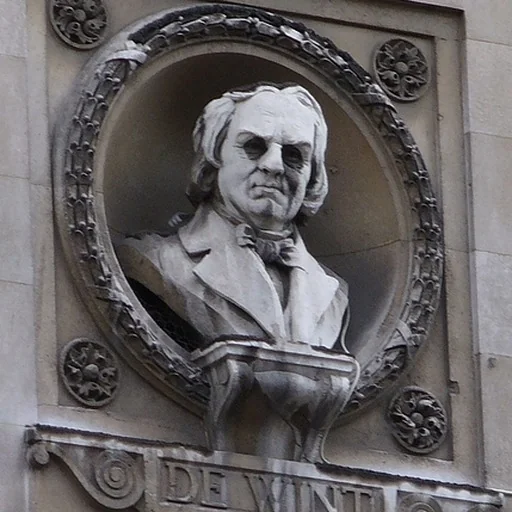
Peter De Wint was a prolific English painter, mostly in landscape painting in oils and watercolour. A number of his pictures are in Tate Britain, the Victoria and Albert Museum and The Collection, Lincoln. He died in London.

 Mill at Droxford, Hampshire
 Landscape with a pond and country folk outside a cottage
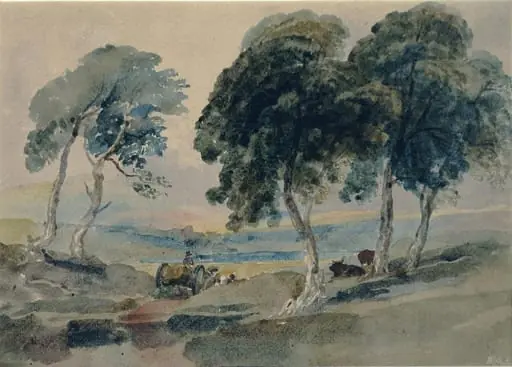 Landscape with wagon and cattle
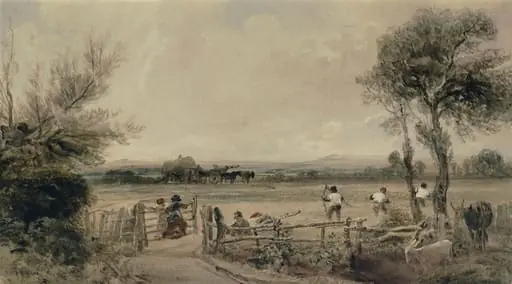 The Hay Harvest
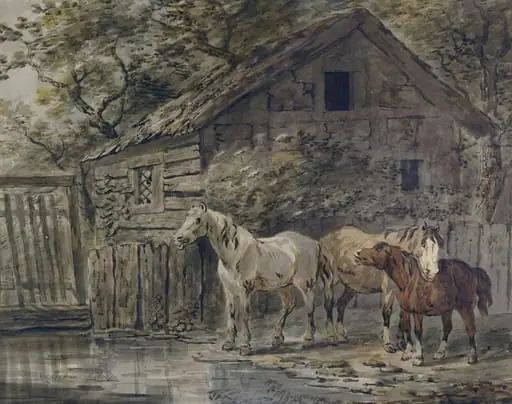 Horses at a Pool
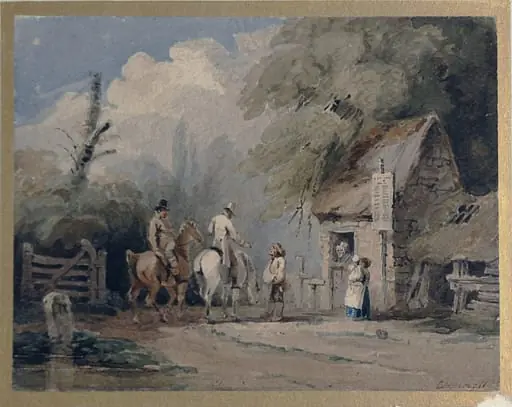 A country toll bar
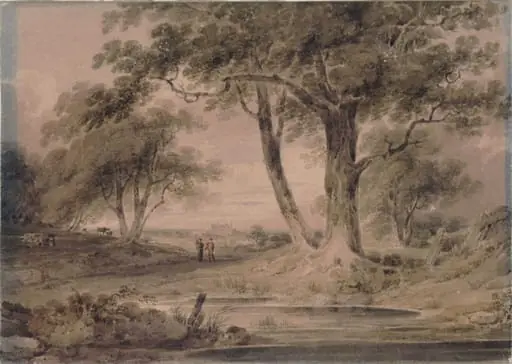 Landscape: Ripon Cathedral in the distance
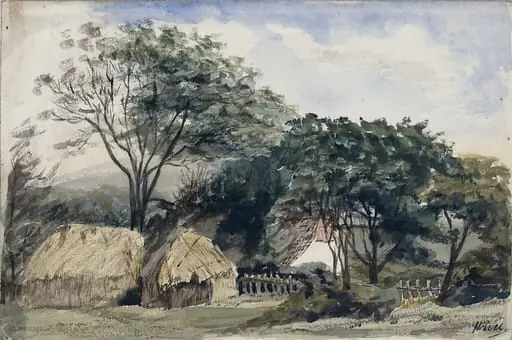 Hayrick and cottage under trees
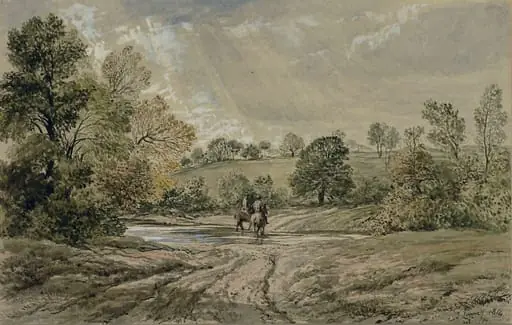 Landscape with horsemen fording a stream
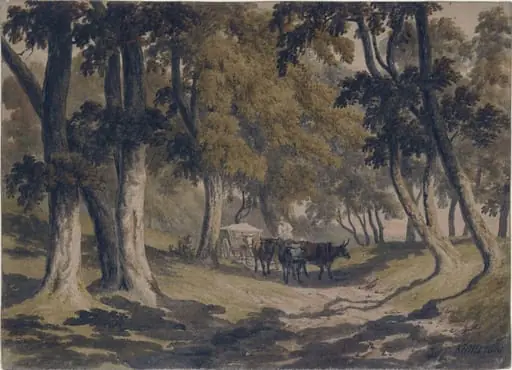 Woodland Road with Ox-waggon
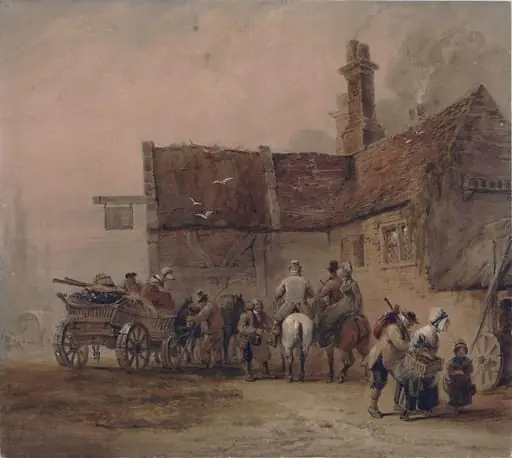 A Wayside Inn
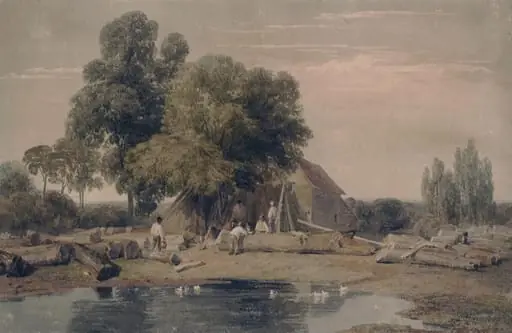 The Timber Yard