Artwork
Landscape with wagon and cattle
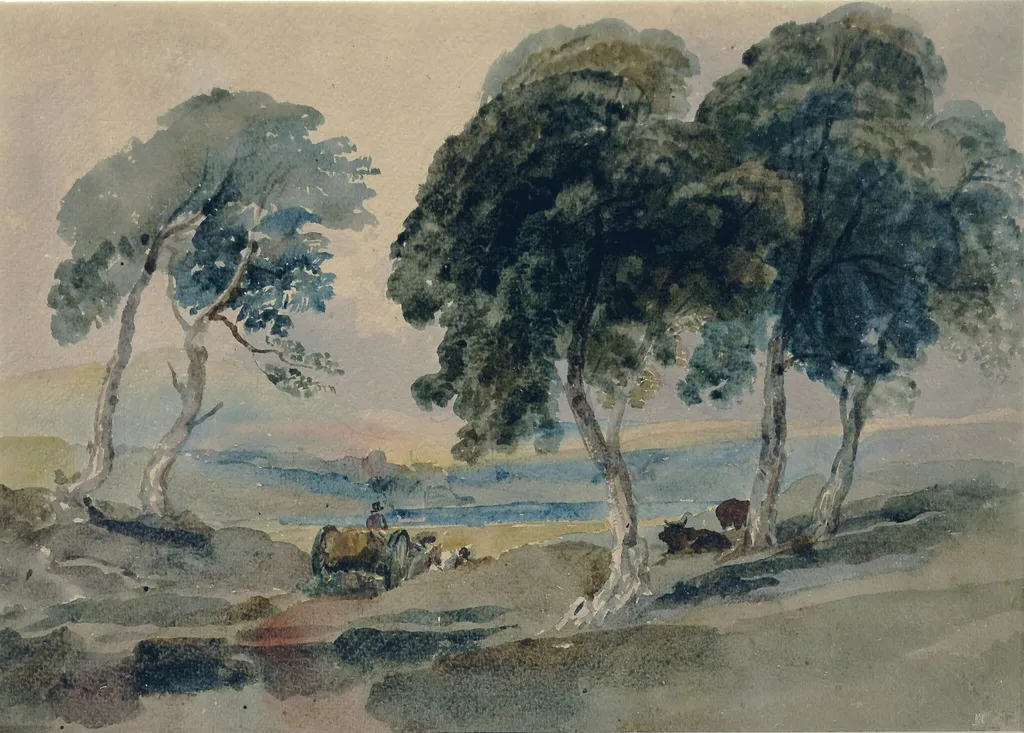
Landscape with wagon and cattle is a watercolor work on paper by the Romanticist artist Peter De Wint. It dates from 1805 and is held in the collection of the Victoria and Albert Museum.
About this work
Overview
Painted in 1805, this watercolour by Peter de Wint captures a tranquil English countryside moment. The composition centers on a single wagon drawn by a horse, moving along a winding path, while two cattle rest near a group of trees. Delicate washes of pigment create a sense of openness, with muted tones and soft edges contributing to the scene’s quiet atmosphere.
Subject & Meaning
The scene presents an unremarkable rural activity—transport and grazing—elevated through attentive observation. There is no narrative drama; instead, the focus lies in the harmony between human labor and natural elements. The wagon’s modest presence and the cattle’s stillness suggest a rhythm of daily life, grounded in the land rather than dramatized by it.
Technique & Style
De Wint employed loose, transparent watercolour washes to suggest form without rigid definition. The foliage and grass appear lightly brushed, with edges blurred to evoke atmosphere rather than detail. The sky and distant hills are rendered in pale, diluted tones, allowing the paper’s white to contribute to the luminosity. The effect is sketch-like, emphasizing immediacy over finish.
History & Provenance
Created during de Wint’s early career, this work reflects his growing mastery of watercolour as a medium for landscape. It likely originated in his personal studies of the English countryside, possibly made during travels in the Midlands or Southeast. The painting remained in private hands until entering institutional collections, where it is now preserved as part of his documented oeuvre.
Context
In early 19th-century Britain, watercolour was gaining recognition as a serious medium for topographical and pastoral subjects. De Wint’s work aligns with a broader interest in recording the rural landscape amid industrial change. His approach, less ornate than contemporaries, emphasized observation over idealization, reflecting a shift toward naturalism in British art.
Legacy
This watercolour exemplifies de Wint’s contribution to the development of British watercolour landscape. His restrained technique and focus on everyday rural scenes influenced later artists who valued sincerity over spectacle. While not widely exhibited during his lifetime, such works now form a quiet but significant part of the national collection of watercolours.
Own this work as a print
Artist & collection
Artist
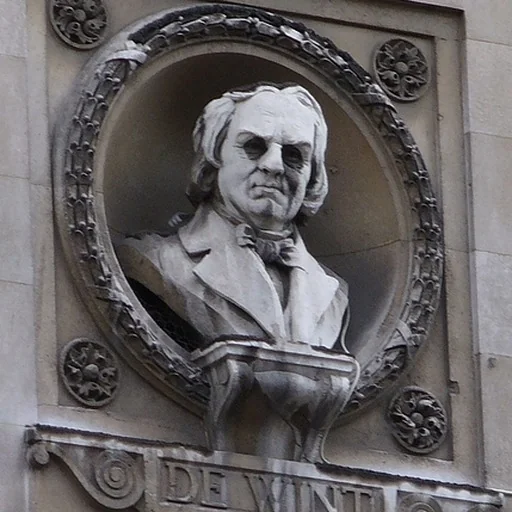
Peter De Wint was a prolific English painter, mostly in landscape painting in oils and watercolour. A number of his pictures are in Tate Britain, the Victoria and Albert Museum and The Collection, Lincoln. He died in London.

 Landscape with trees and water
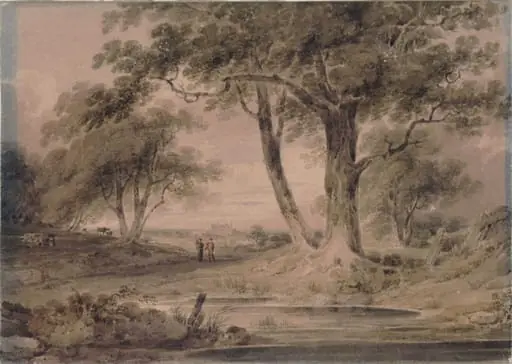 Landscape: Ripon Cathedral in the distance
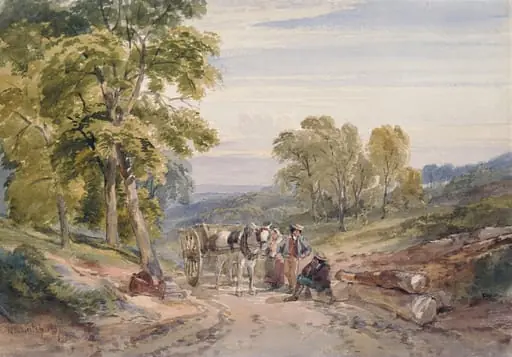 Untitled
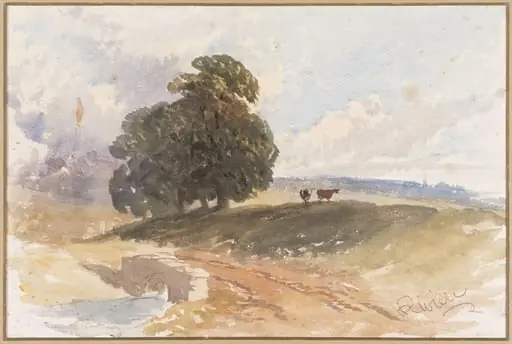 Trees, Rustic Bridge, etc
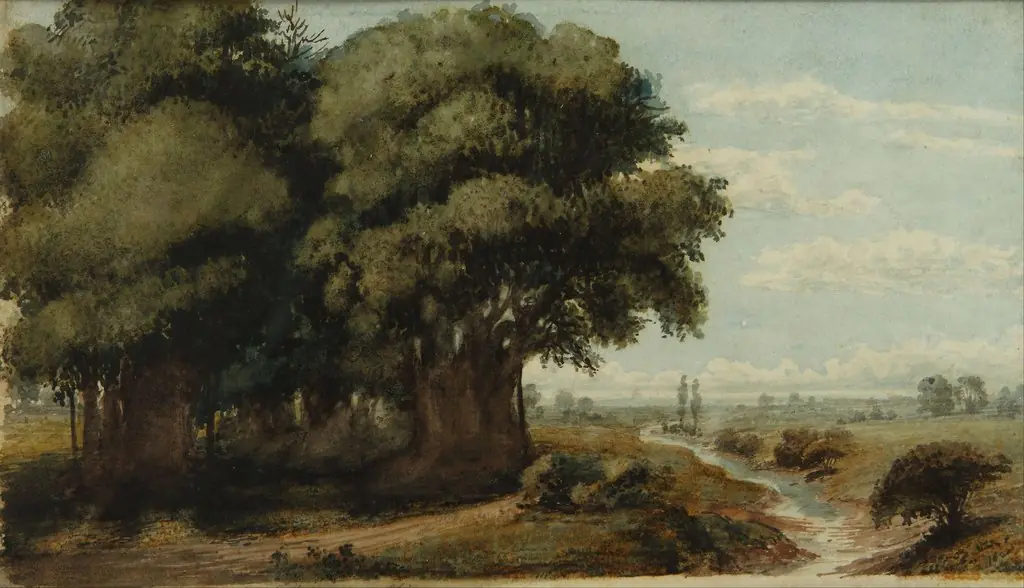 Capricho (Olivos 13 Nov. 1858)
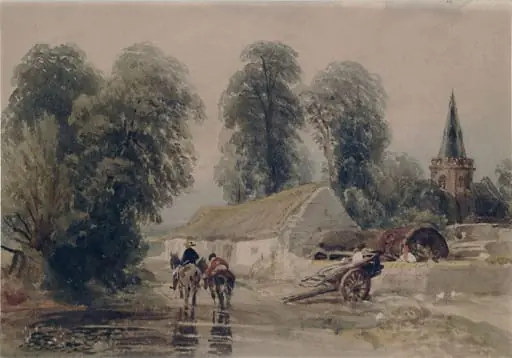 A village in Lincolnshire
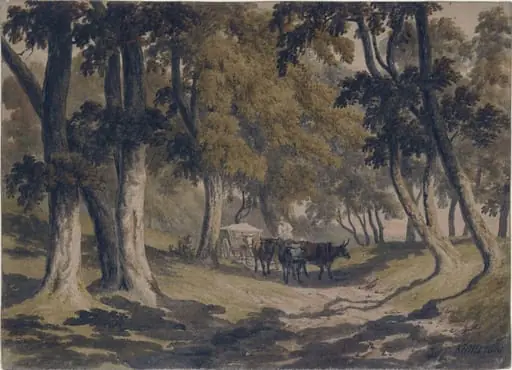 Woodland Road with Ox-waggon
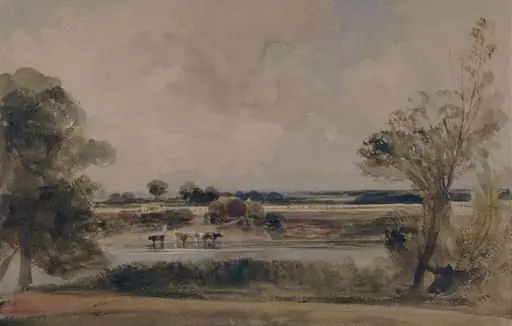 View near Salt Hill
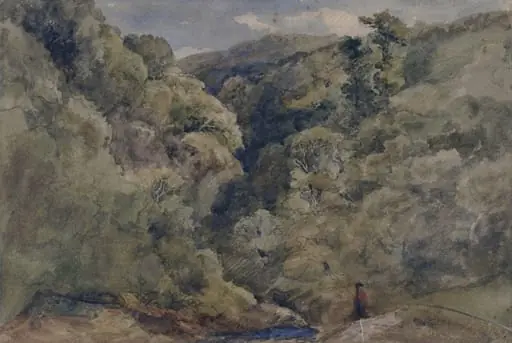 A Mountain Glen
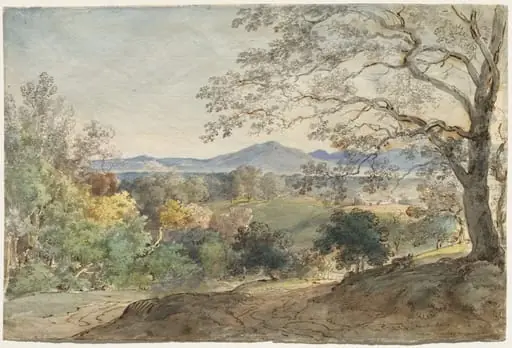 A View across the Inn Valley to the Alps and Neubeuern
 Landscape with river and mountain
 Cottages on high ground.