Artwork
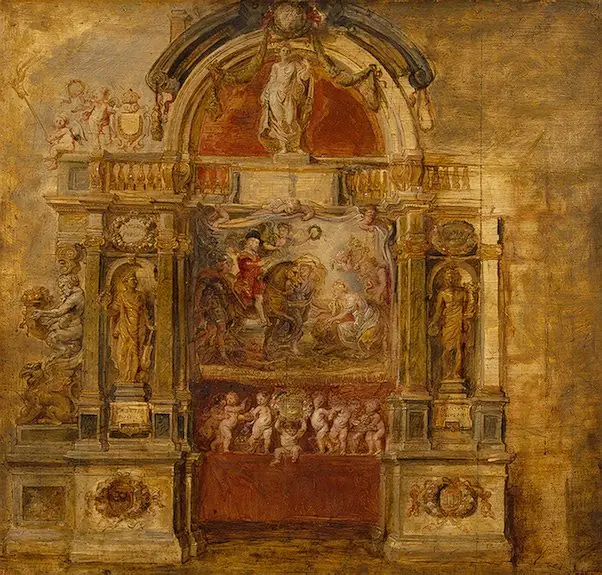
Arch of Ferdinand, the Reverse Side (Arcus Ferdinandi, pars posterior)
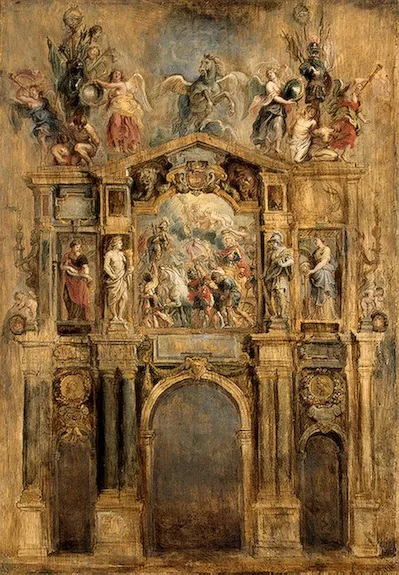
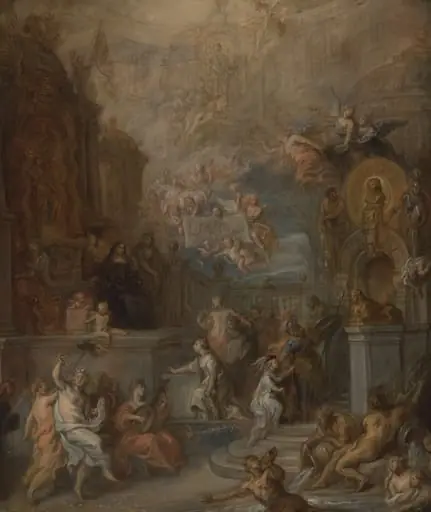
Arch of Ferdinand, the Reverse Side (Arcus Ferdinandi, pars posterior) is an unspecified painting by the Flemish Baroque painting artist Peter Paul Rubens. It dates from 1634 and is held in the collection of the Hermitage Museum.
About this work
The painting is titled Arch of Ferdinand, the Reverse Side.
It's an allegory, which means it uses symbols to convey a message.
The artist, Peter Paul Rubens, created this work in 1634, and it's now held at the State Hermitage Museum.
To learn more about the style and techniques used in this painting, look up the artist: Peter Paul Rubens.
Overview
Arch of Ferdinand, the Reverse Side is a 1634 painting by Peter Paul Rubens, a prominent Flemish artist. The work is now held in the State Hermitage Museum.
Subject & Meaning
The painting is an allegory, depicting the lesser-known reverse side of a triumphal arch erected in honor of Ferdinand of Austria. It employs symbolic imagery to convey a message, drawing on classical and historical themes characteristic of Rubens's compositions.
Technique & Style
Executed in a dramatic style typical of the Flemish Baroque movement, the painting showcases Rubens's skill in blending erudite themes with dynamic visual expression. The work reflects the Counter-Reformation's emphasis on movement and color.
History & Provenance
Commissioned as part of a triumphal arch for Ferdinand of Austria, the painting demonstrates Rubens's role in history painting and his ability to capture complex themes in a visually compelling manner.
Artist & collection
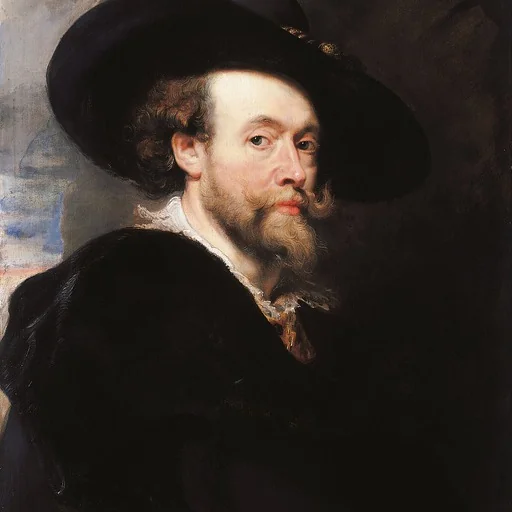
Artist
Sir Peter Paul Rubens ( ROO-bənz; Dutch: ; 28 June 1577 – 30 May 1640) was a Flemish artist and diplomat.

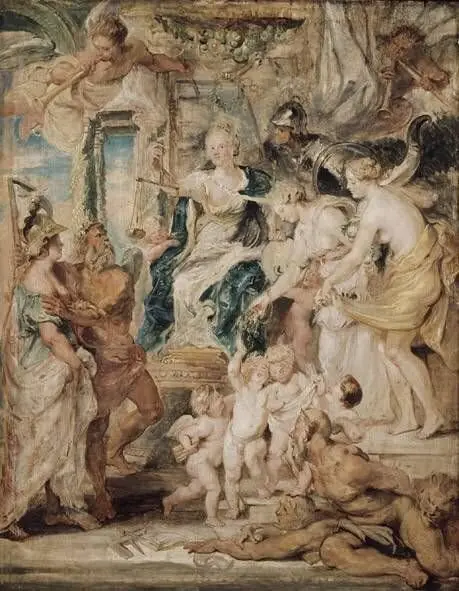 The Felicity of the Regency
 Congratulations on the Arrival of Prince Ferdinand (Adventus Seren. Princ. Gratulatio)
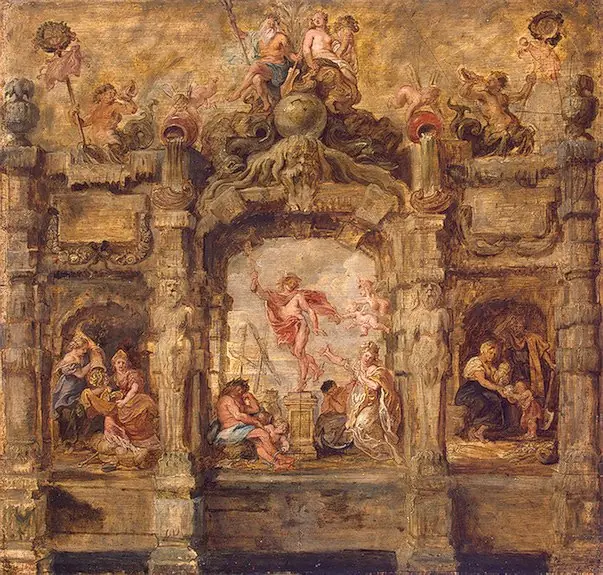 Mercury Moving away (Mercurius Abituriens)
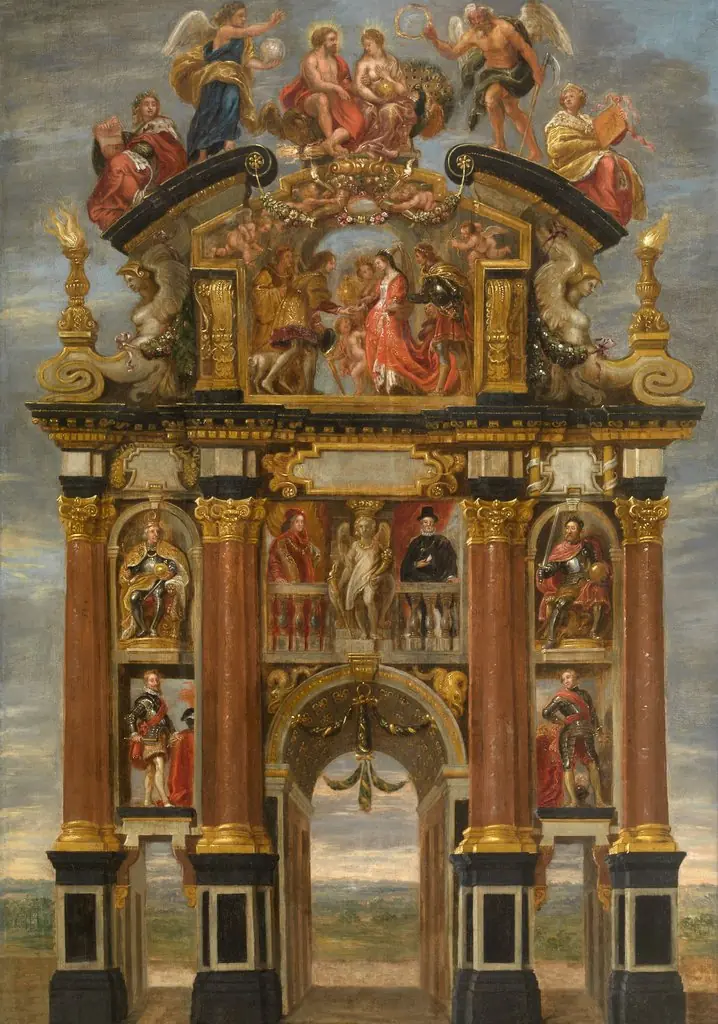 Triumphal Arch of Philip IV of Spain, front
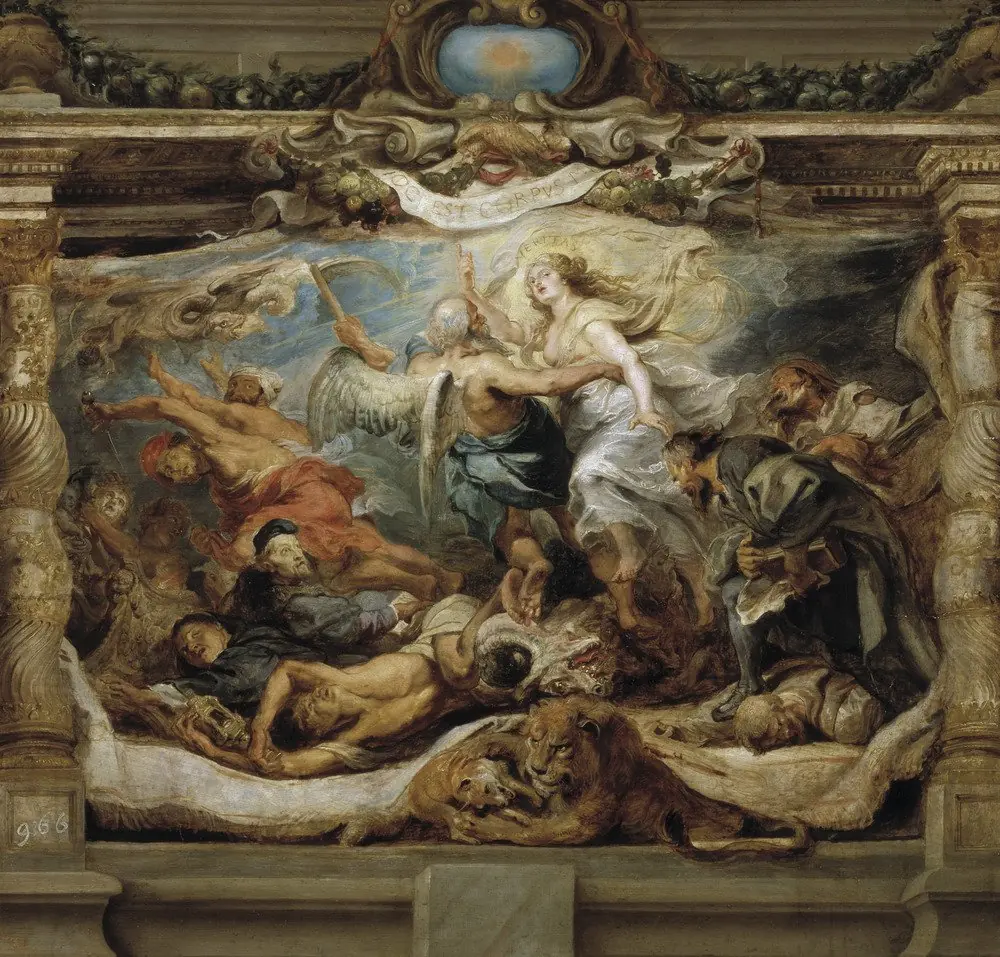 The Victory of Truth over Heresy
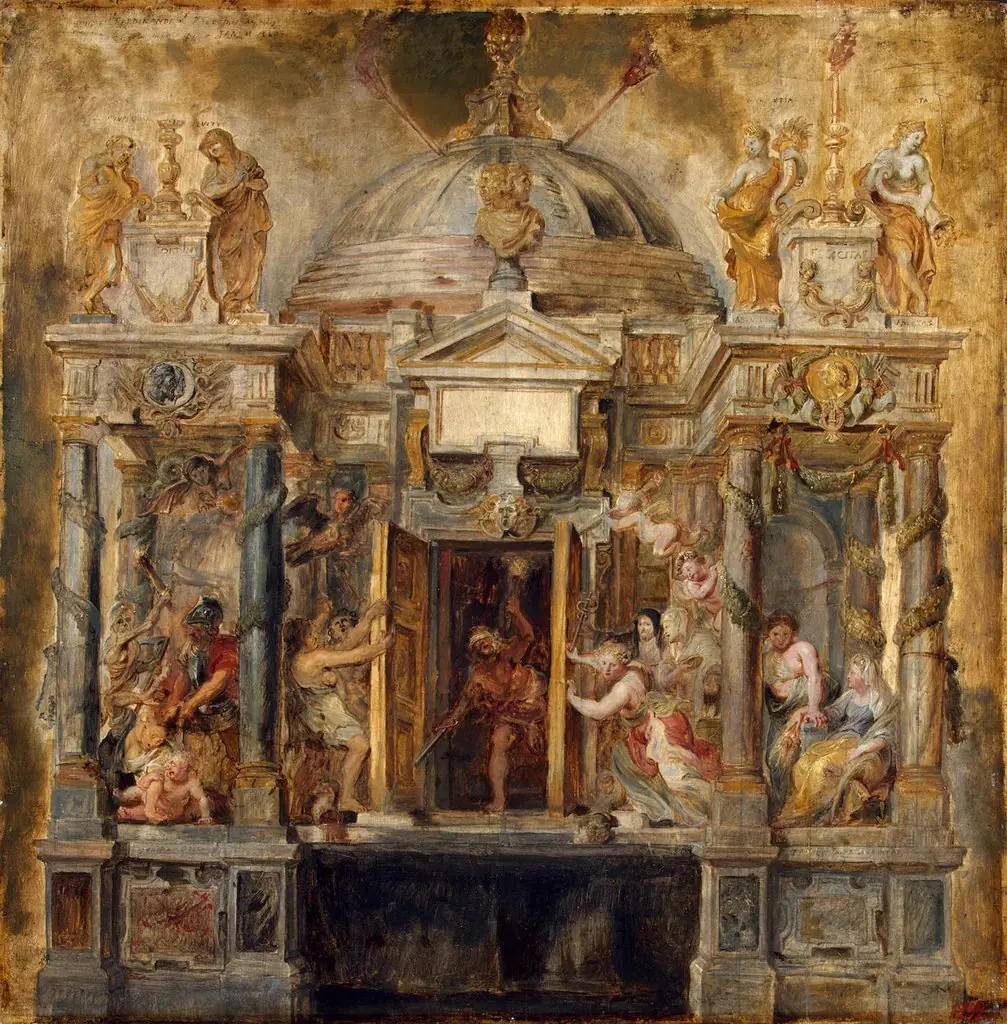 Temple of Janus (Templum Jani)
 Allegory of the Farewell of William III from Amalia van Solms following the transfer of Regency to the States General