Artwork
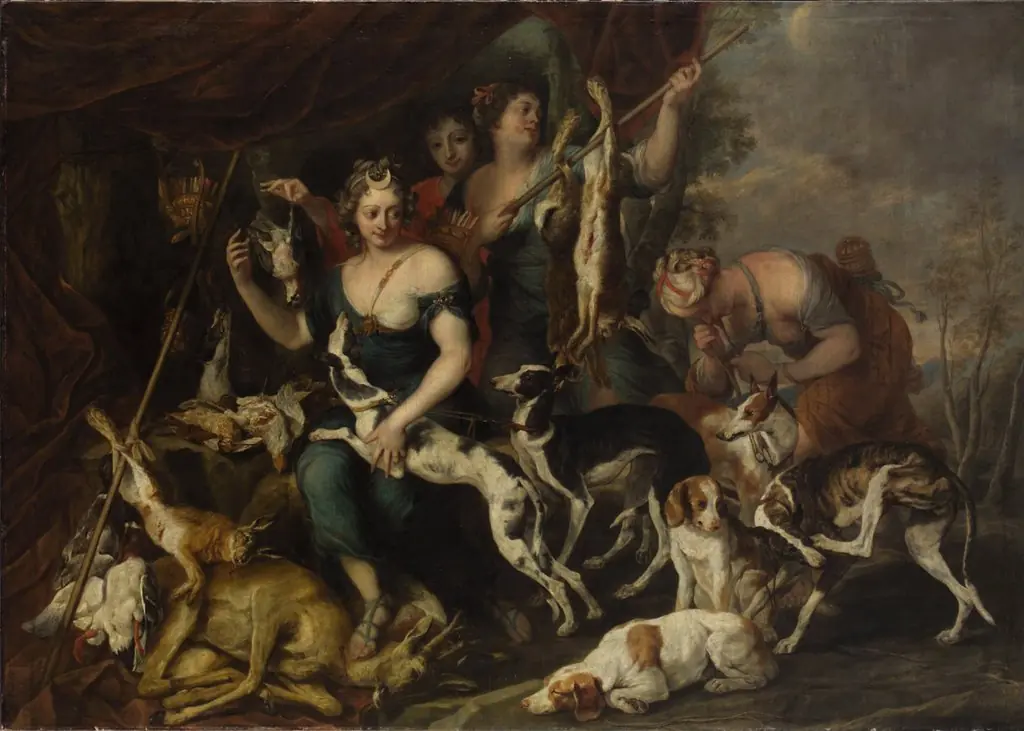
Diana and Her Nymphs Departing for the Hunt
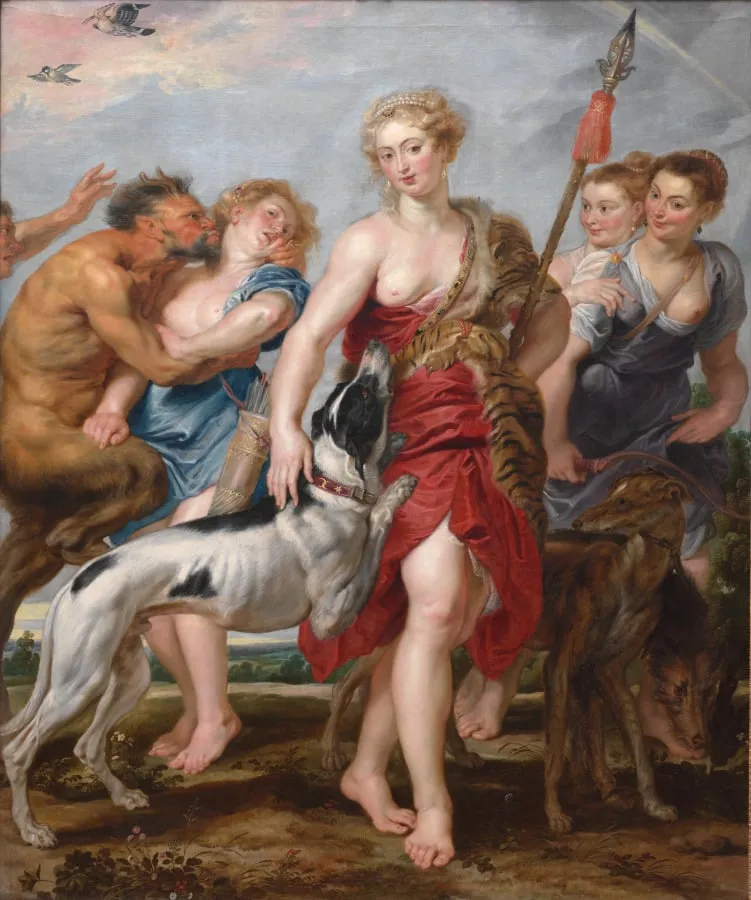
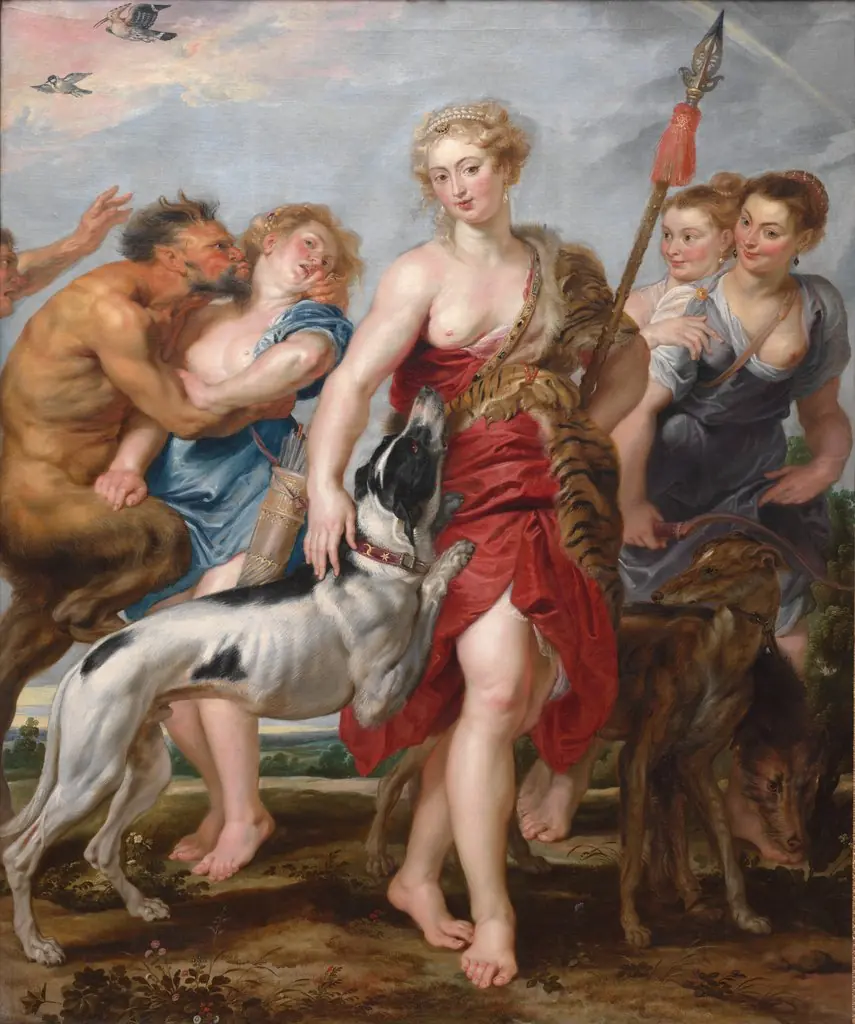
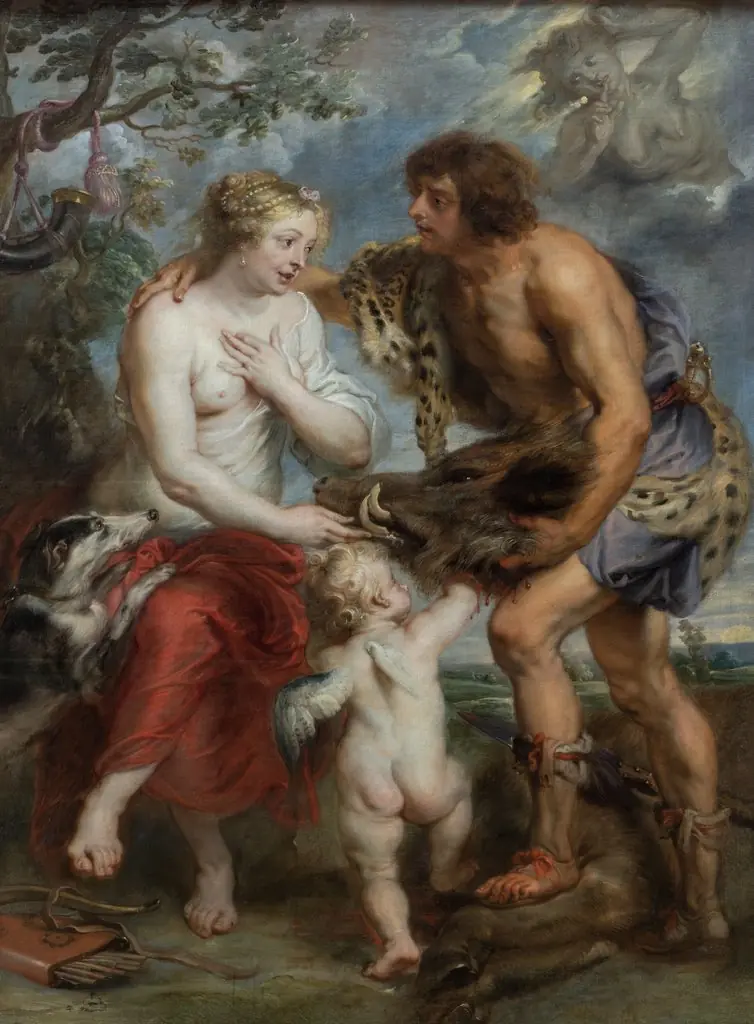
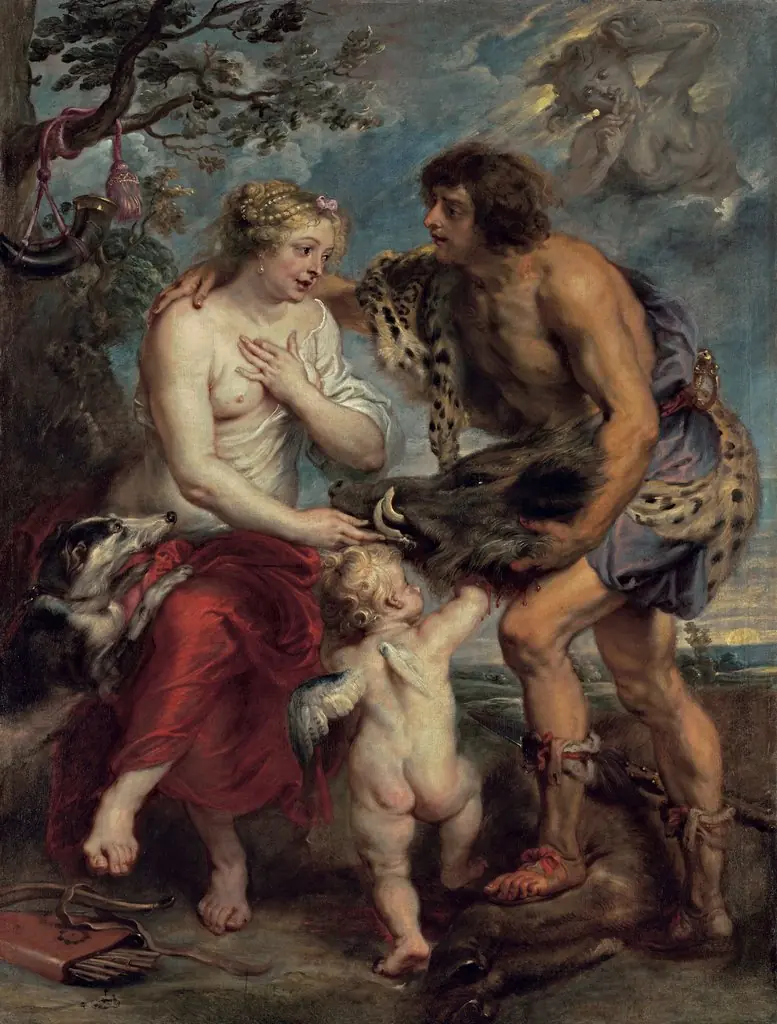
Diana and Her Nymphs Departing for the Hunt is an unspecified painting by the Baroque artist Peter Paul Rubens. It dates from 1615 and is held in the collection of the Cleveland Museum of Art.
About this work
Overview
The canvas presents the Roman goddess Diana, identifiable by a crescent moon placed on her forehead, leading a small retinue of nymphs through a wooded landscape. Accompanied by hunting dogs, the group is poised to embark on a hunt, while a concealed male figure lurks among the trees, introducing an element of narrative tension.
Subject & Meaning
Diana, traditionally associated with chastity and the untamed wilderness, is shown alongside a nymph who repels an approaching satyr, a symbol of unchecked desire. This juxtaposition underscores a moral contrast between virtue, embodied by the goddess and her companions, and vice, represented by the lurking male presence.
Technique & Style
Rubens renders the figures with a luminous flesh tone and robust, sculptural bodies, employing a soft chiaroscuro that models the forms against the forest backdrop. The composition pushes the principal characters forward, collapsing the pictorial space so that the viewer feels drawn into the scene.
Context
Created in the early 17th century, the work reflects the Baroque fascination with mythological subjects as vehicles for moral allegory. The inclusion of a nymph bearing the facial features of Isabella Brant, Rubens’ wife, links the painting to his personal portraiture, a practice common among artists of the period.
Legacy
The painting resides in the museum’s collection alongside a portrait of Isabella Brant, allowing comparative study of Rubens’ treatment of the same sitter in mythological and portrait contexts. It continues to serve as an example of how Baroque artists blended sensuality with ethical narrative.
Artist & collection
Artist
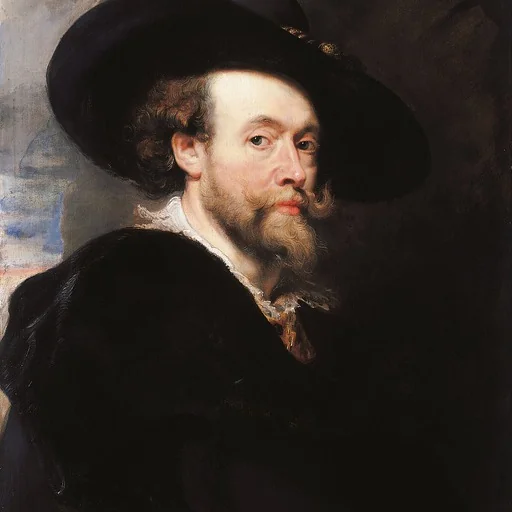
Sir Peter Paul Rubens ( ROO-bənz; Dutch: ; 28 June 1577 – 30 May 1640) was a Flemish artist and diplomat.