Artwork
Reconciliation of the Romans and the Sabines (recto) Venus Disarming Mars, Drapery Study (verso)
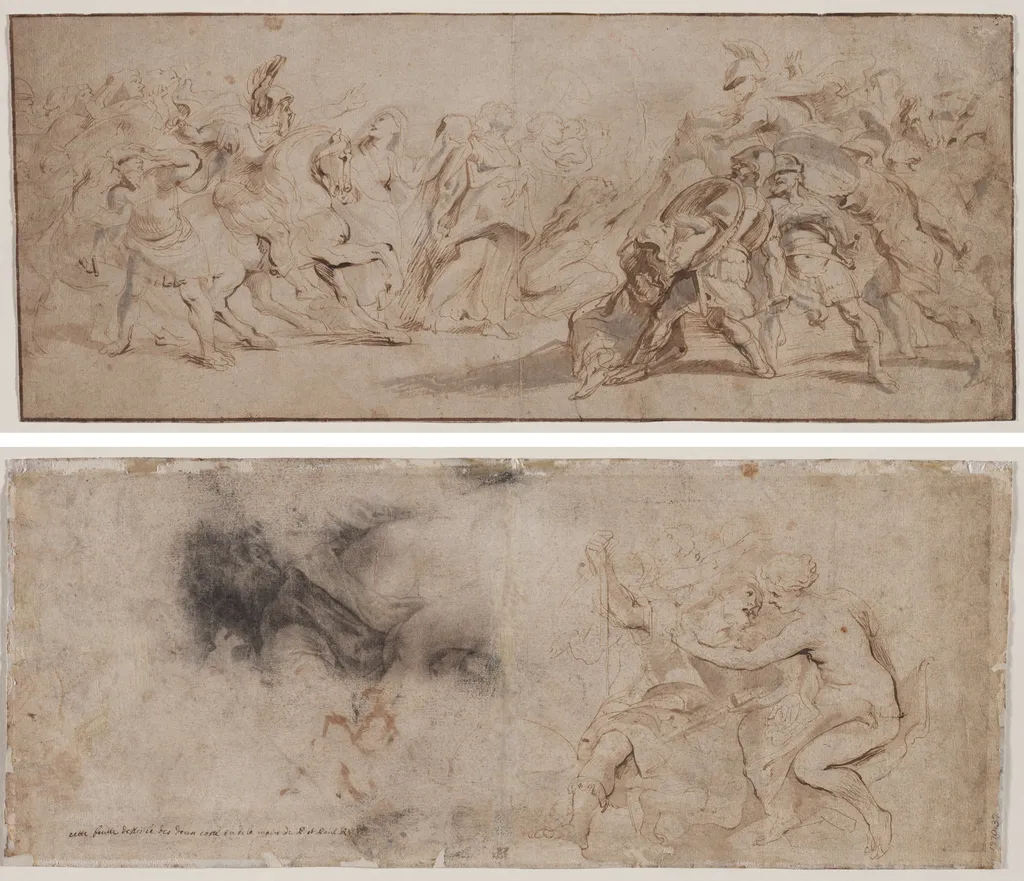
Reconciliation of the Romans and the Sabines (recto) Venus Disarming Mars, Drapery Study (verso) is a drawing by the Baroque artist Peter Paul Rubens. It dates from 1634 and is held in the collection of the Cleveland Museum of Art.
About this work
Overview
The recto, titled Reconciliation of the Romans and the Sabines, presents a bustling scene of Roman and Sabine figures, some mounted, in the act of making peace.
Around 1634 Peter Paul Rubens produced a double-sided drawing that pairs a crowded mythological tableau on the front with a more intimate study on the back. The recto, titled Reconciliation of the Romans and the Sabines, presents a bustling scene of Roman and Sabine figures, some mounted, in the act of making peace. The verso combines a sketch of Venus intervening to disarm Mars with a separate examination of drapery, revealing Rubens’ preparatory process.
Subject & Meaning
The front composition visualizes the legendary moment when the Romans, after abducting Sabine women, negotiate a truce, a narrative drawn from early Roman myth. Rubens emphasizes the tension and movement of the encounter, highlighting both conflict and the prospect of harmony. On the reverse, the figure of Venus is shown calming the martial Mars, a symbolic gesture of love pacifying war, while the drapery study underscores the artist’s interest in the tactile qualities of clothing.
Technique & Style
Executed in ink and wash, the drawing showcases Rubens’ characteristic vigor: bold, gestural lines on the recto convey rapid action, whereas the verso features finer, smoother strokes that map the folds of fabric. The contrast between the energetic, densely populated front and the restrained, lyrical back reflects the Baroque preoccupation with drama, chiaroscuro, and the interplay of motion and stillness within a single work.
History & Provenance
The drawing originates from Rubens’ workshop in Antwerp during his mature period, when he was simultaneously serving as a diplomat and a prolific painter. It remained in private collections for centuries before entering a museum holding in the early twentieth century, where it has been catalogued as a rare example of Rubens’ dual-sided studies that combine narrative planning with technical experimentation.
Context
Rubens created the piece amid the Counter‑Reformation’s call for art that could convey clear, emotionally compelling stories. By juxtaposing a grand historical scene with a private study, he illustrates the Baroque artist’s method of developing large compositions through intimate sketches. The drawing continues to inform scholars about Rubens’ workflow and his synthesis of classical mythology with the dramatic visual language of his age.
Artist & collection
Artist
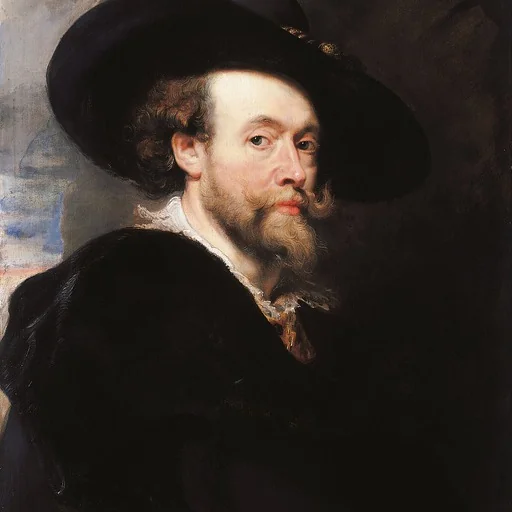
Sir Peter Paul Rubens ( ROO-bənz; Dutch: ; 28 June 1577 – 30 May 1640) was a Flemish artist and diplomat.

![Figure Studies [recto], by Perino del Vaga](https://artifactworldgallery.com/img/perino-del-vaga--figure-studies-recto--c7d34665e14a7057-w320.webp) Figure Studies [recto]
Figure Studies [recto]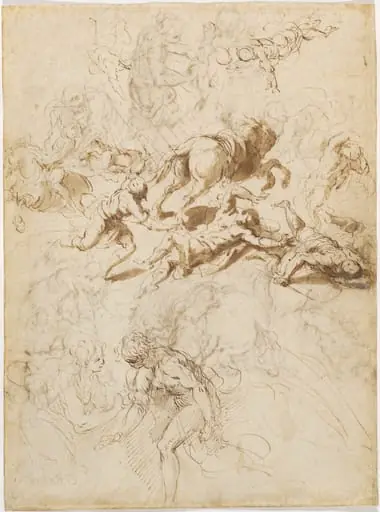 The Conversion of Saint Paul; Adam and Eve
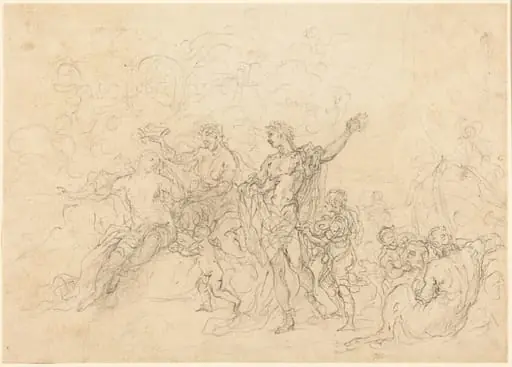 The Marriage of Bacchus and Ariadne
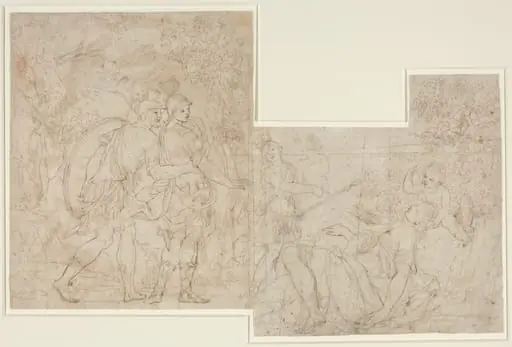 Three Soldiers Discovering a Sleeping Woman
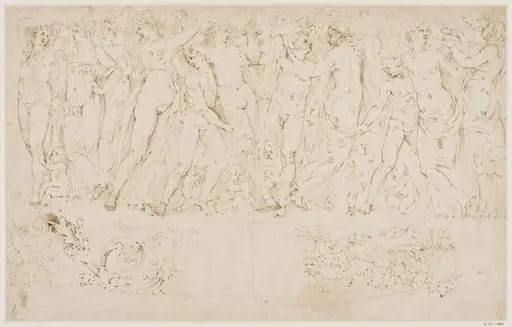 A Bacchic frieze; below, two studies of classical ornament
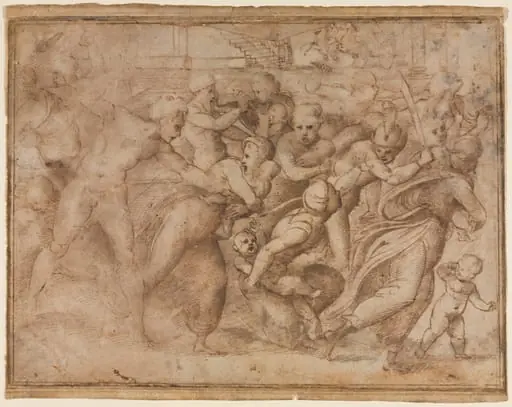 Copy of Raphael's Massacre of the Innocents
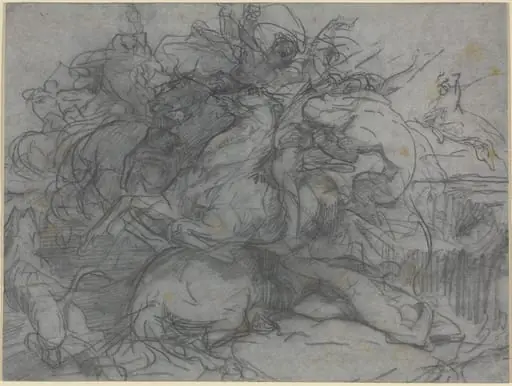 Study for "Surprise" (Battle of the Tigers)
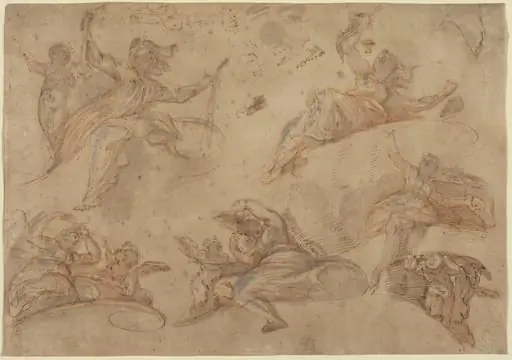 Allegorical Figures Seen from Below
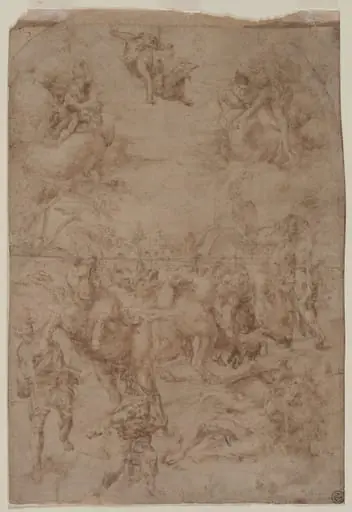 The Conversion of St. Paul