Artwork
The Conversion of Saint Paul; Adam and Eve
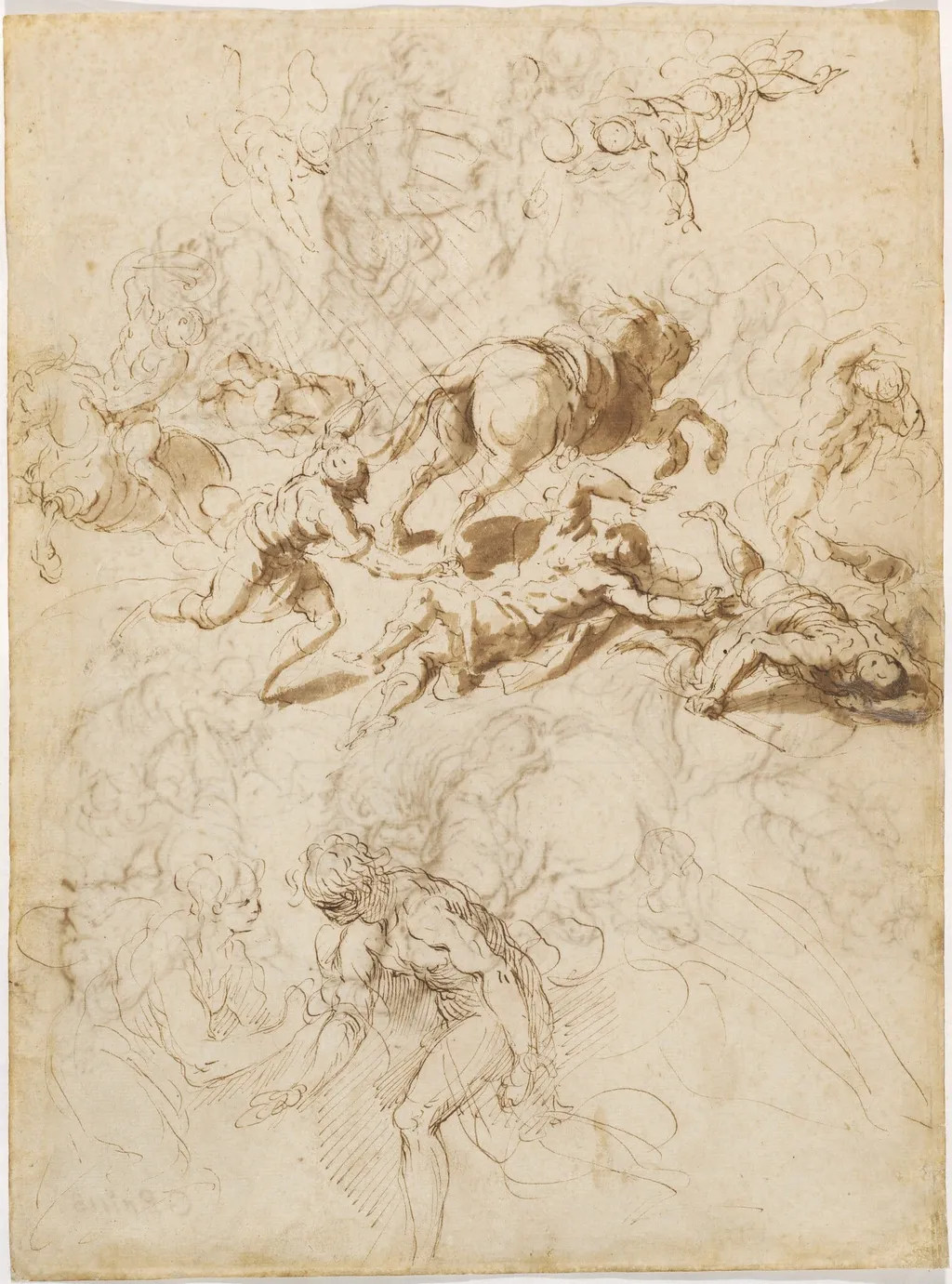
The Conversion of Saint Paul; Adam and Eve is an ink drawing by the Renaissance artist Jacopo Palma il Giovane. It dates from 1592 and is held in the collection of the National Gallery of Art.
About this work
Overview
This drawing, executed in pen and brown ink with wash, combines two biblical scenes: the moment of Saint Paul’s conversion on the road to Damascus and the expulsion of Adam and Eve from Eden. Created in 1592, it reflects the artist’s engagement with religious narrative through intimate graphic means rather than large-scale painting.
Subject & Meaning
The two scenes juxtapose divine revelation and human fall. Paul’s dramatic transformation from persecutor to apostle contrasts with Adam and Eve’s loss of innocence, both moments marked by divine intervention. The pairing suggests a theological arc: from original sin to redemption through grace, a common theme in Counter-Reformation visual culture.
Technique & Style
The artist employed fluid pen lines and layered brown washes to model form and suggest depth with minimal means. The figures are rendered with expressive gestures, emphasizing emotional intensity over detailed anatomy. The restrained palette and linear clarity reflect a focus on narrative clarity suited to devotional contemplation.
History & Provenance
Created during Palma il Giovane’s mature period, the drawing likely served as a preparatory study or independent devotional object. Its survival suggests it was valued within private collections, though its early ownership remains undocumented. It is now held in a public collection, preserved as an example of late 16th-century Venetian draftsmanship.
Context
Produced in Venice during the height of the Counter-Reformation, the drawing aligns with ecclesiastical efforts to reinforce biblical narratives through accessible imagery. While large altarpieces dominated public spaces, smaller works like this catered to personal piety, blending dramatic composition with spiritual instruction.
Legacy
Though not widely exhibited, the drawing exemplifies how Venetian artists used drawing to explore theological themes with economy and emotional precision. It contributes to understanding the role of graphic media in religious practice beyond monumental painting, influencing later generations of draftsmen focused on narrative clarity.
Artist & collection


![Nude Man Seen from Behind [verso], by Jacopo Palma il Giovane](https://artifactworldgallery.com/img/jacopo-palma-il-giovane--nude-man-seen-from-behind-verso--2de266ff199c839b-w320.webp)
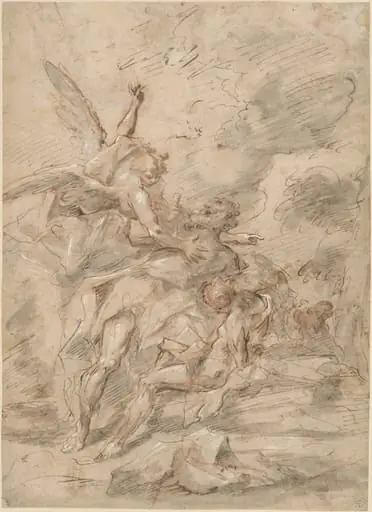 The Sacrifice of Isaac
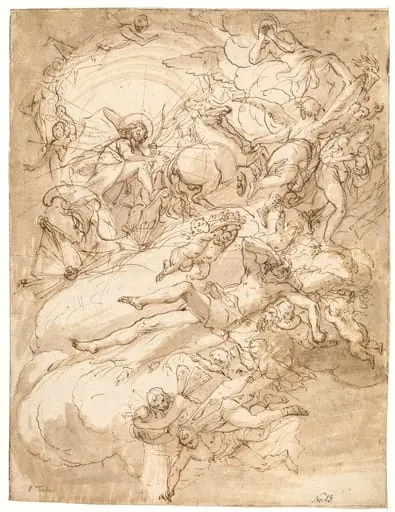 Apollo in his chariot, design for a ceiling painting
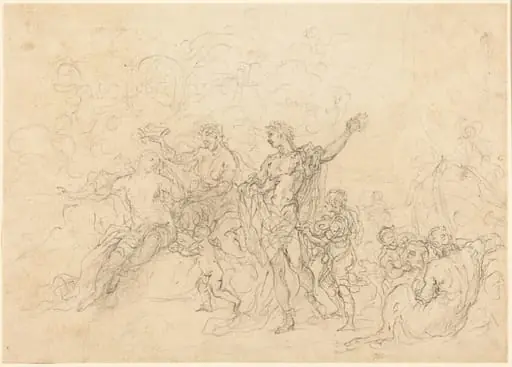 The Marriage of Bacchus and Ariadne
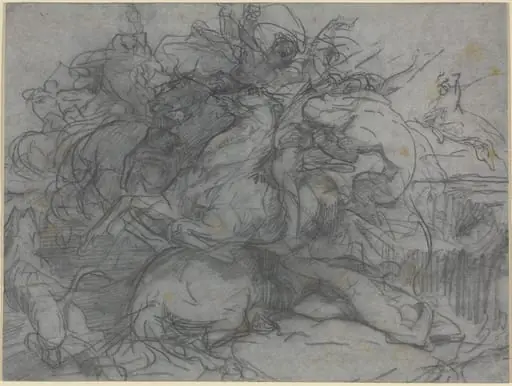 Study for "Surprise" (Battle of the Tigers)
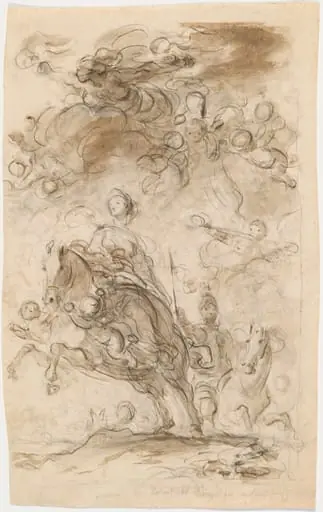 Orlando and Angelica Arrive at Charlemagne's Camp
![Bradamante Tries to Catch Hold of the Hippogryph [recto], by Jean Honoré Fragonard](https://artifactworldgallery.com/img/jean-honore-fragonard--bradamante-tries-to-catch-hold-of-the-hippogryph-recto--f9c9ee68fd17e997-w320.webp) Bradamante Tries to Catch Hold of the Hippogryph [recto]
Bradamante Tries to Catch Hold of the Hippogryph [recto]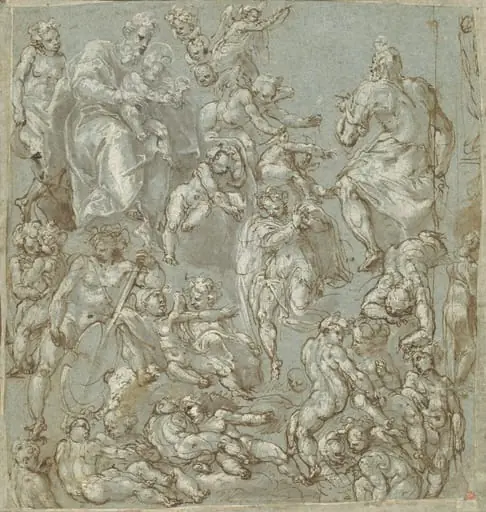 Saint Joseph and the Christ Child with Angels and Putti
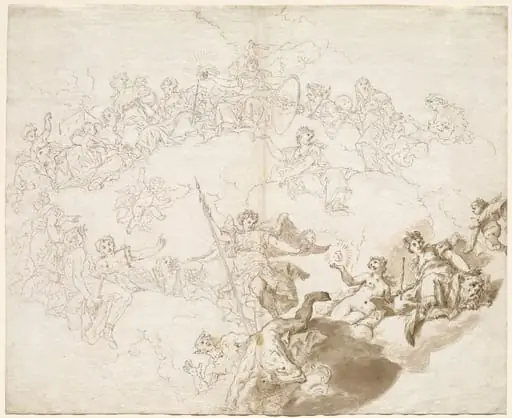 The Triumph of Virtue and Divine Wisdom
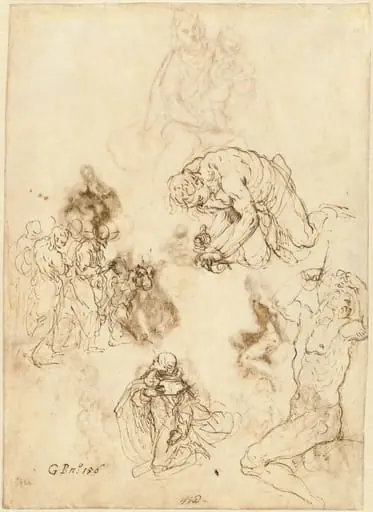 Studies of Christ Healing the Blind Man, Saint Philip Benizzi, and Saint Sebastian
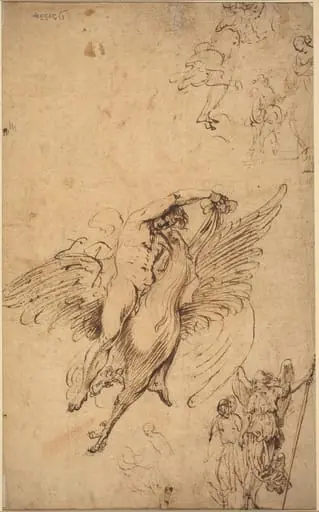 Ganymede