Artwork
The Conversion of St. Paul
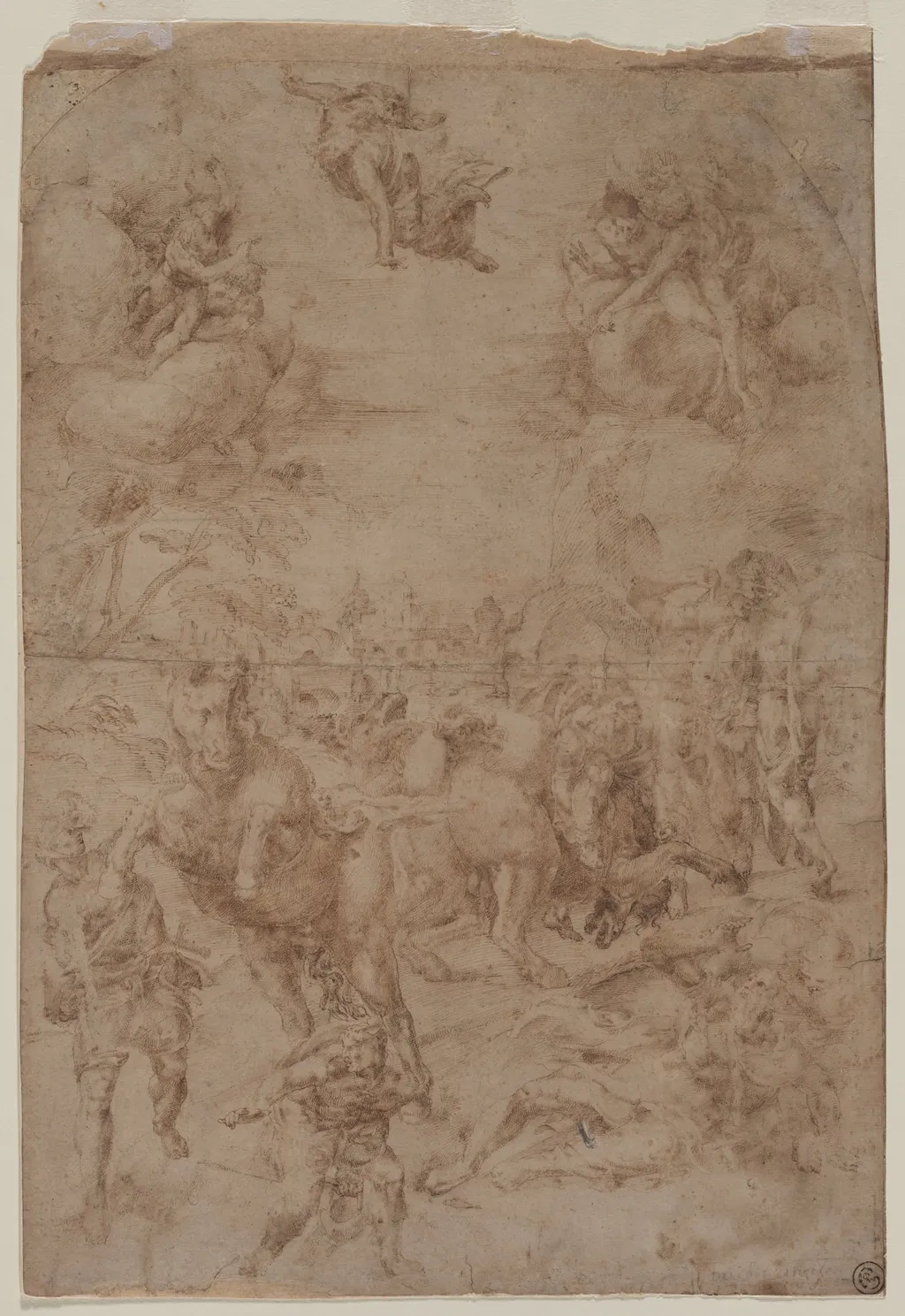
The Conversion of St. Paul is a drawing by the Renaissance artist Lelio Orsi. It dates from 1575 and is held in the collection of the Cleveland Museum of Art.
About this work
Overview
Created in 1575 by Lelio Orsi, this drawing captures the biblical moment of Saul’s transformation into the Apostle Paul. Executed in pen and ink, it reflects Orsi’s training in the Reggio Emilia tradition and his exposure to Roman Mannerist styles. The work is a preparatory study, notable for its energetic linework and compositional intensity, now held in the Cleveland Museum of Art’s collection.
Subject & Meaning
Orsi emphasizes spiritual upheaval through chaotic motion: figures tumble, recoil, or reach skyward, embodying the shock of revelation.
The scene illustrates the moment Saul, on the road to Damascus, is struck down by divine light and hears the voice of Christ. Orsi emphasizes spiritual upheaval through chaotic motion: figures tumble, recoil, or reach skyward, embodying the shock of revelation. The absence of a detailed setting focuses attention on the psychological and physical rupture of conversion, aligning with Counter-Reformation themes of divine intervention.
Technique & Style
Orsi employed rapid, scratchy pen strokes to convey movement and emotional tension. The figures are rendered with loose, expressive lines, avoiding polished finish in favor of immediacy. This sketch-like approach was typical of Renaissance preparatory drawings, where artists prioritized gesture and composition over detail. The stark, empty background heightens the drama, isolating the figures in their moment of crisis.
History & Provenance
Lelio Orsi, active in Reggio Emilia and trained under Giovanni Giarola, spent time in Rome during the 1540s–50s, absorbing the styles of Giulio Romano and Michelangelo. This drawing, dated to 1575, likely served as a study for a larger commission. It entered the Cleveland Museum of Art’s collection in the 20th century, where it remains a key example of late Mannerist draftsmanship from northern Italy.
Context
In mid-to-late 16th-century Italy, religious subjects were frequently explored through dynamic, emotionally charged compositions. Orsi’s drawing reflects the Mannerist tendency to distort proportion and amplify movement to convey spiritual intensity. While Florence and Rome dominated artistic discourse, regional centers like Reggio Emilia maintained active drawing traditions, often blending local sensibilities with Roman innovations.
Legacy
Though less known than his contemporaries, Orsi’s work exemplifies the vitality of provincial Mannerism. This drawing survives as a testament to the role of preparatory sketches in Renaissance practice—where fleeting ideas were captured with immediacy before being translated into finished works. Its preservation in Cleveland offers insight into how artists outside major courts sustained expressive draftsmanship during a period of stylistic transition.
Artist & collection
Artist
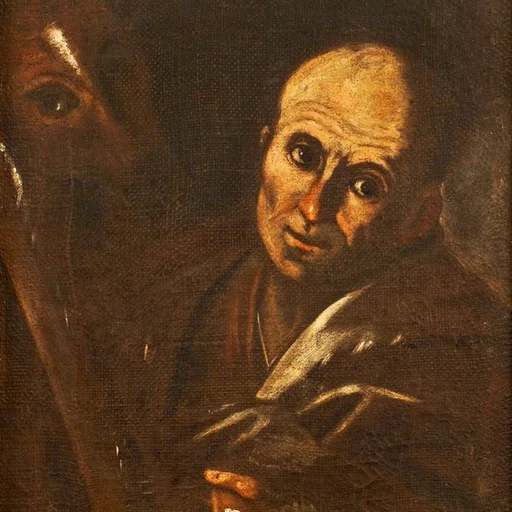
Lelio Orsi (1508/1511 – 1587), also known as Lelio da Novellara, was a Mannerist painter and architect of the Reggio Emilia school in northern Italy.

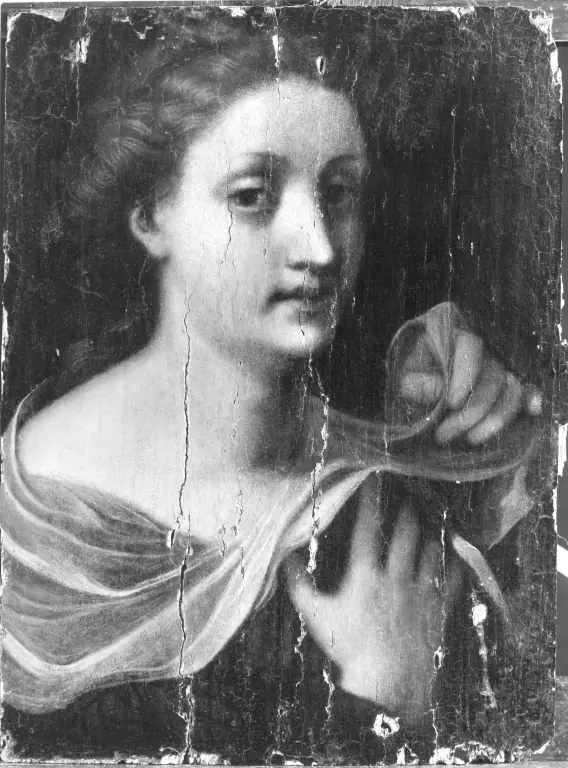
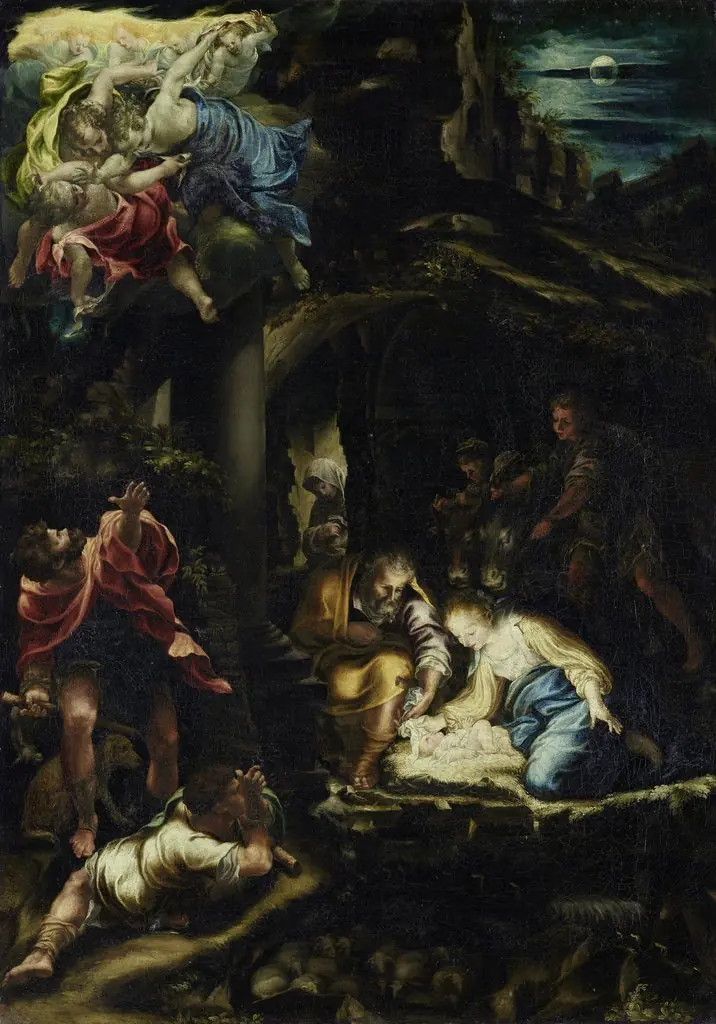
 Saint Joseph and the Christ Child with Angels and Putti
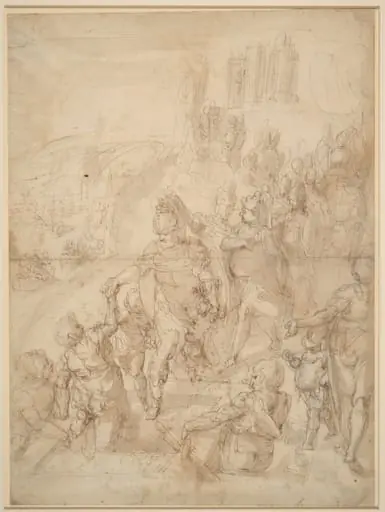 The Embarkation of Aeneas from the Ceraunian Headland
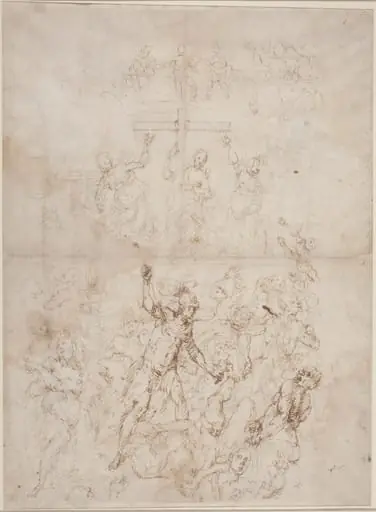 The Last Judgment
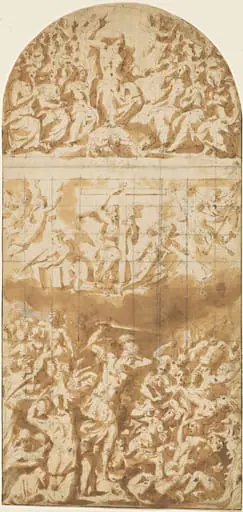 The Last Judgment
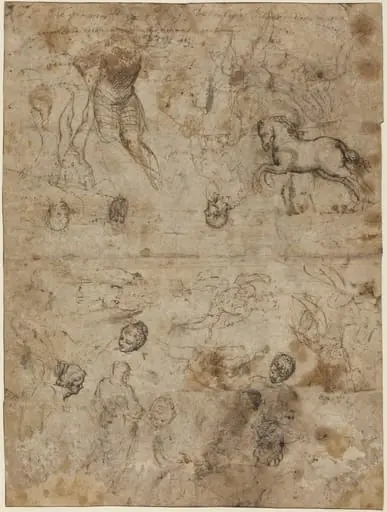 Sheet of Studies
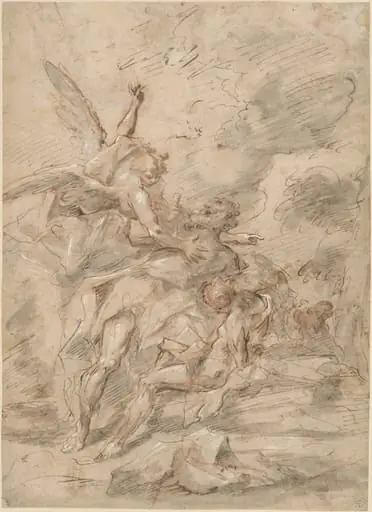 The Sacrifice of Isaac
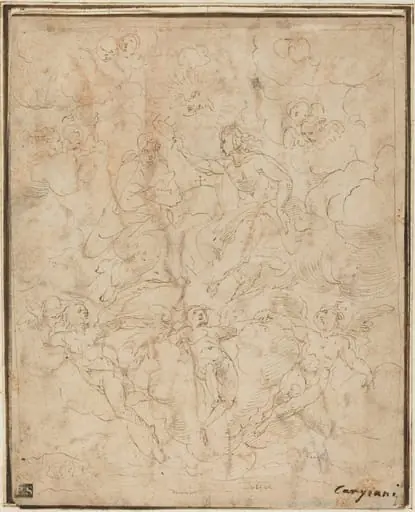 Coronation of the Virgin
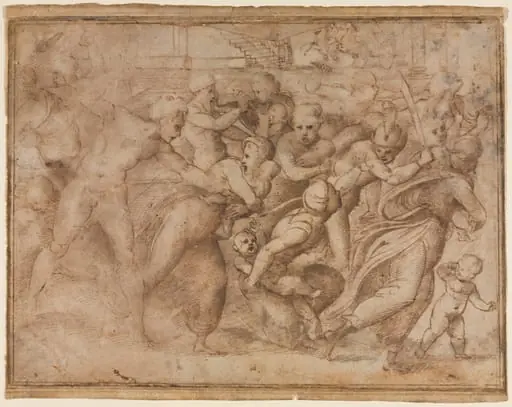 Copy of Raphael's Massacre of the Innocents
![Studies for the Rape of the Sabine Women [verso], by Pirro Ligorio](https://artifactworldgallery.com/img/pirro-ligorio--studies-for-the-rape-of-the-sabine-women-verso--b2205f5ea056eb54-w320.webp) Studies for the Rape of the Sabine Women [verso]
Studies for the Rape of the Sabine Women [verso]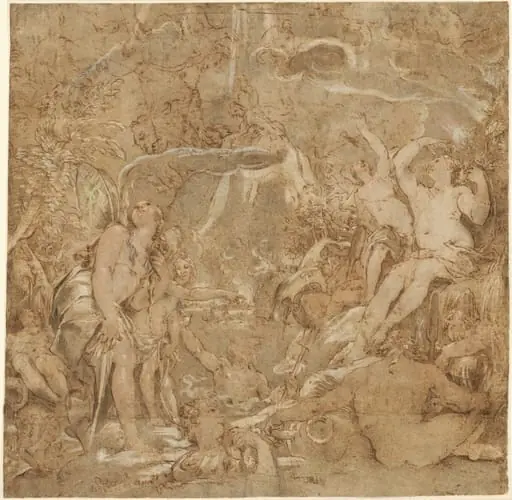 The Daughters of the Po with River Gods