Artwork
Statue of Frederick III in a niche
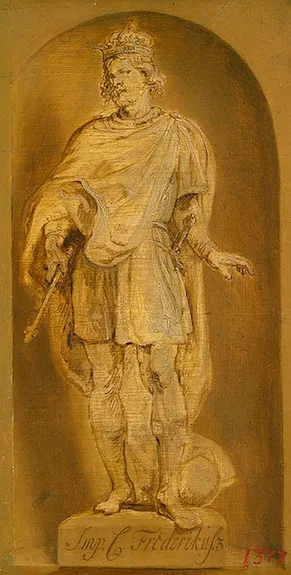
Statue of Frederick III in a niche is an oil painting by the Flemish Baroque painting artist Peter Paul Rubens. It dates from 1634 and is held in the collection of the Hermitage Museum.
About this work
He’s dressed in old-fashioned armor and robes, holding a sword in one hand and a staff in the other.
This painting shows a tall man in a golden-brown frame shaped like an arch. He’s dressed in old-fashioned armor and robes, holding a sword in one hand and a staff in the other. His face looks serious, with a crown on his head and a fur draped over his shoulder.
The artist signed it in the corner—*P.P. Rubens*—and added the year 1634. The colors are warm and earthy, with shadows making his clothes look textured.
Next, check out chiaroscuro to see how light and dark create depth like this.
Overview
Created in 1634 by the Flemish painter Peter Paul Rubens, this oil on canvas presents a portrait of Frederick III, Holy Roman Emperor. The figure stands within a shallow architectural niche, rendered in the warm, earthy palette typical of Rubens’s mature Baroque style. The work is held in the collection of the State Hermitage Museum in St. Petersburg.
Subject & Meaning
The composition depicts the emperor in ceremonial dress, clutching a sword in one hand and a scepter in the other, symbols of his military and sovereign authority. A crown rests upon his head and a fur mantle drapes his shoulder, underscoring his regal status. The solemn expression conveys the gravitas associated with imperial power.
Technique & Style
Rubens employs the Baroque emphasis on movement and contrast, using chiaroscuro to model the figure’s form and give depth to the surrounding niche. The brushwork balances smooth flesh tones with textured armor and fabric, while the warm, golden‑brown hues unify the scene and enhance its dramatic impact.
History & Provenance
Signed by Rubens with his initials and the date 1634, the painting entered the State Hermitage Museum’s holdings in the 19th century, where it remains part of the museum’s European painting collection. Its provenance reflects the broader acquisition of Rubens’s works by Russian imperial collectors.
Context
The work belongs to Rubens’s later period, when he was active as both artist and diplomat, and aligns with the Counter‑Reformation’s visual agenda that favored vivid, emotionally resonant imagery. By portraying a historical ruler with grandeur, Rubens reinforced contemporary ideals of authority and divine right.
Artist & collection
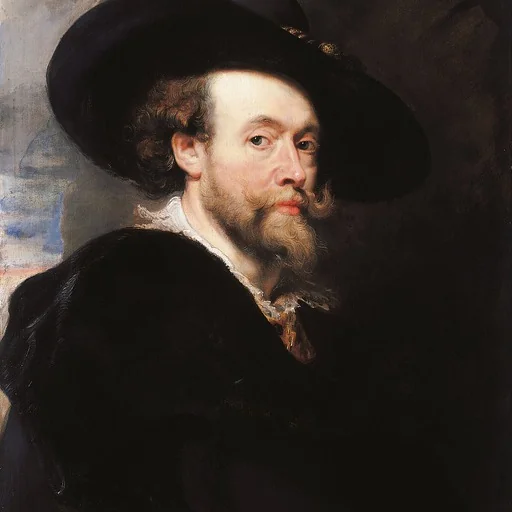
Artist
Sir Peter Paul Rubens ( ROO-bənz; Dutch: ; 28 June 1577 – 30 May 1640) was a Flemish artist and diplomat.