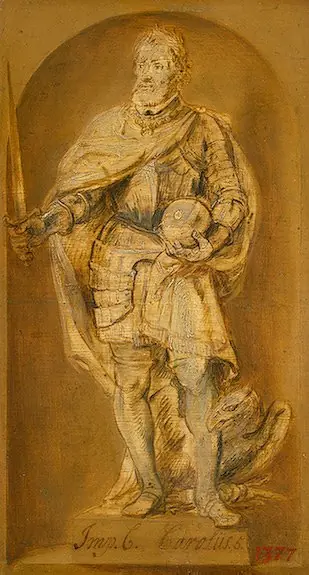
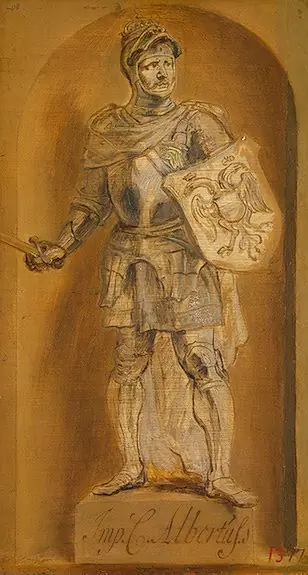
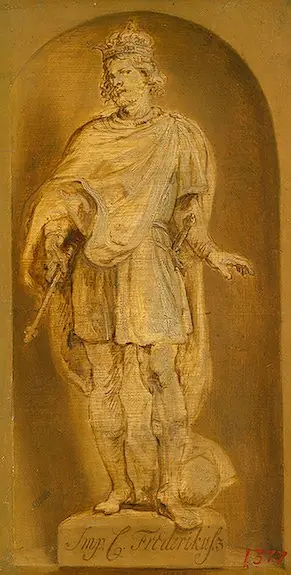
Artwork
Statue of Rudolf II in a niche
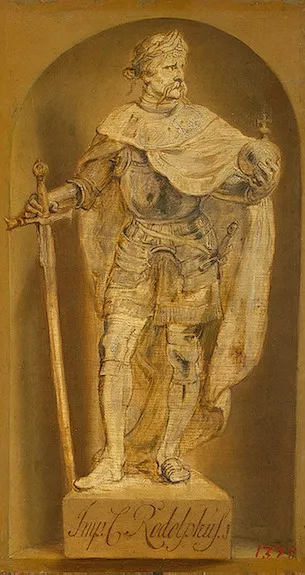
Statue of Rudolf II in a niche is an oil painting by the Flemish Baroque painting artist Peter Paul Rubens. It dates from 1634 and is held in the collection of the Hermitage Museum.
About this work
Overview
Peter Paul Rubens painted the work known as *Statue of Rudolf II in a niche* in 1634. Executed in oil on canvas, the composition presents the Habsburg emperor in a sculptural pose within a shallow, curved recess. The figure is rendered in the dynamic, richly colored manner typical of Flemish Baroque portraiture, emphasizing the ruler’s authority and presence.
Subject & Meaning
The central figure is Emperor Rudolf II, shown in full armor with a white fur‑lined cloak draped over chainmail. He holds a sword in his right hand and a spherical orb in his left, symbols of military power and sovereign jurisdiction. His solemn expression, pointed beard, and crown‑like hat convey the gravitas associated with his imperial status.
Technique & Style
Rubens employs pronounced chiaroscuro, using deep shadows against a dark background to model the metallic surfaces and give the armor a three‑dimensional quality. Thick impasto is evident on the reflective parts of the armor, enhancing texture, while the surrounding niche is softened, directing focus onto the illuminated figure.
History & Provenance
Created during Rubens’s mature period, the painting reflects his role as a court painter and diplomat in the early 17th century. While the original commission details are unclear, the work has been documented in several European collections since the 18th century, illustrating Rubens’s enduring reputation as a leading artist of the Flemish Baroque tradition.
Artist & collection
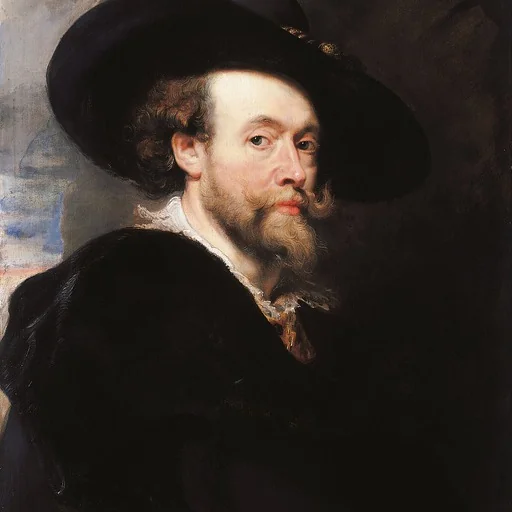
Artist
Sir Peter Paul Rubens ( ROO-bənz; Dutch: ; 28 June 1577 – 30 May 1640) was a Flemish artist and diplomat.