Artwork
The meeting of Abraham and Melchisedek
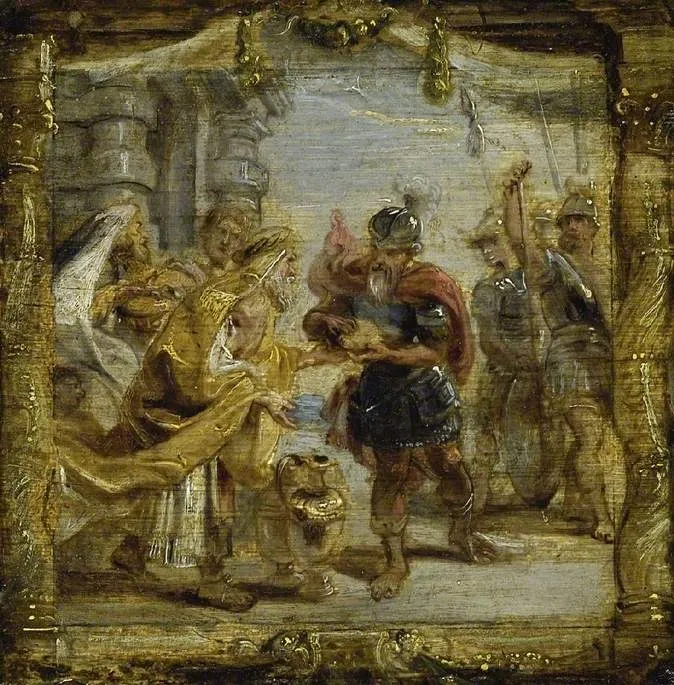
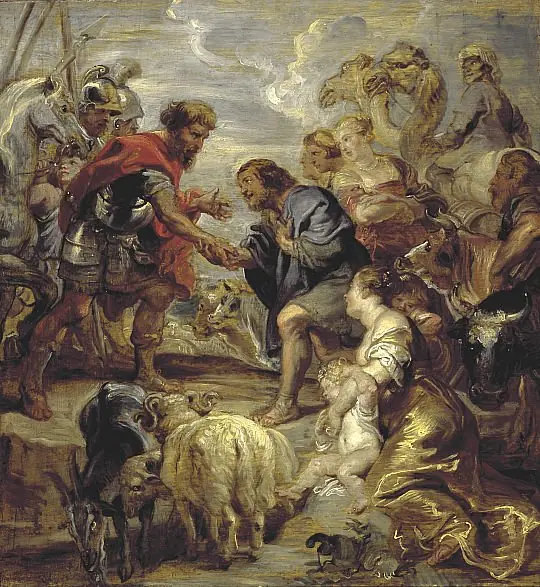
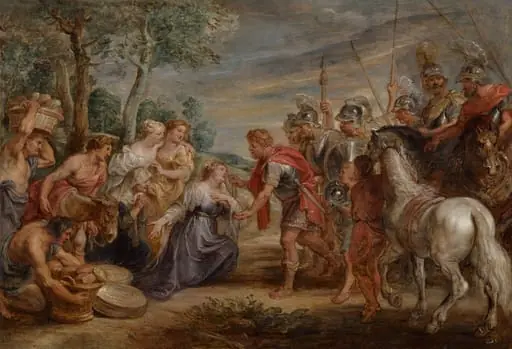
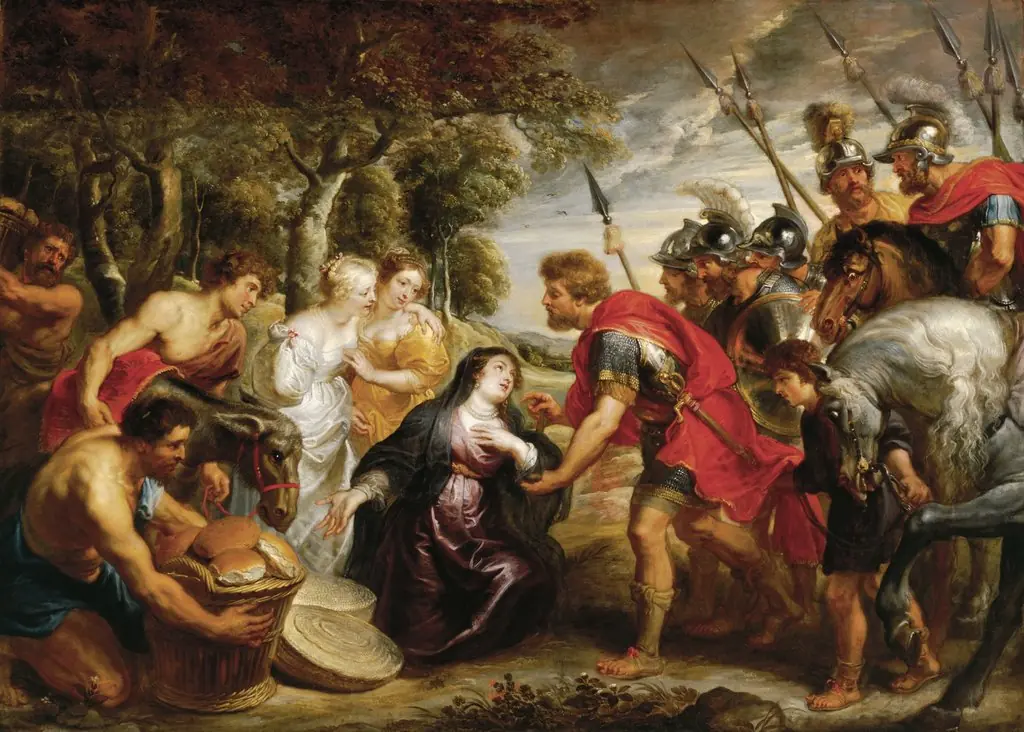
The meeting of Abraham and Melchisedek is an oil painting by Peter Paul Rubens. It is held in the collection of the Fitzwilliam Museum.
About this work
Overview
The meeting of Abraham and Melchisedek is a religious oil painting created by Peter Paul Rubens around 1650. Characteristic of the Flemish Baroque tradition, it features a dynamic scene with rich coloration and dramatic elements, reflecting the Counter-Reformation aesthetic.
Subject & Meaning
The painting depicts a biblical encounter between Abraham and Melchisedek, emphasizing themes of religious significance. Abraham, identifiable by his white beard and robes, interacts with Melchisedek, distinguished by a red cape and helmet, amidst a backdrop of supportive figures, some armed, others gesturing in reverence.
Technique & Style
Rubens employed oil paint to achieve a depth-rich composition, marked by visible brushstrokes and a predominantly earthy palette with accents of red. The style aligns with Flemish Baroque, emphasizing movement and emotional depth through the juxtaposition of light and shadow.
History & Provenance
Created circa 1650, the painting is part of the Fitzwilliam Museum's collection. As a work by Rubens, it reflects his penchant for drawing from classical and Christian narratives, solidifying his influence in the Flemish Baroque tradition.
Context
Produced during the Counter-Reformation, the painting's dramatic and emotionally charged style catered to the Catholic Church's efforts to visually reaffirm its doctrines through art. Rubens's work, including this piece, played a significant role in this movement.
Artist & collection
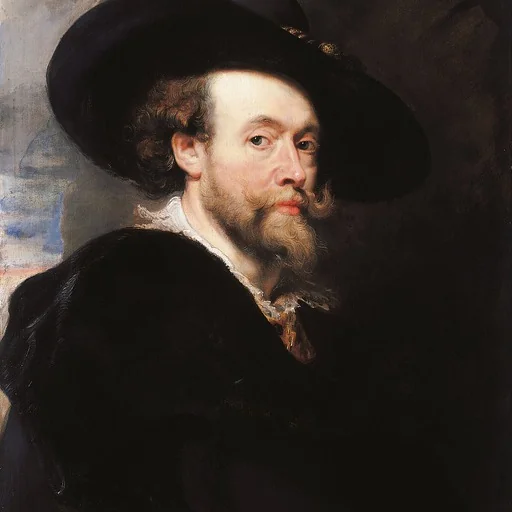
Artist
Sir Peter Paul Rubens ( ROO-bənz; Dutch: ; 28 June 1577 – 30 May 1640) was a Flemish artist and diplomat.