Artwork
The siege of Neuburg, 1641
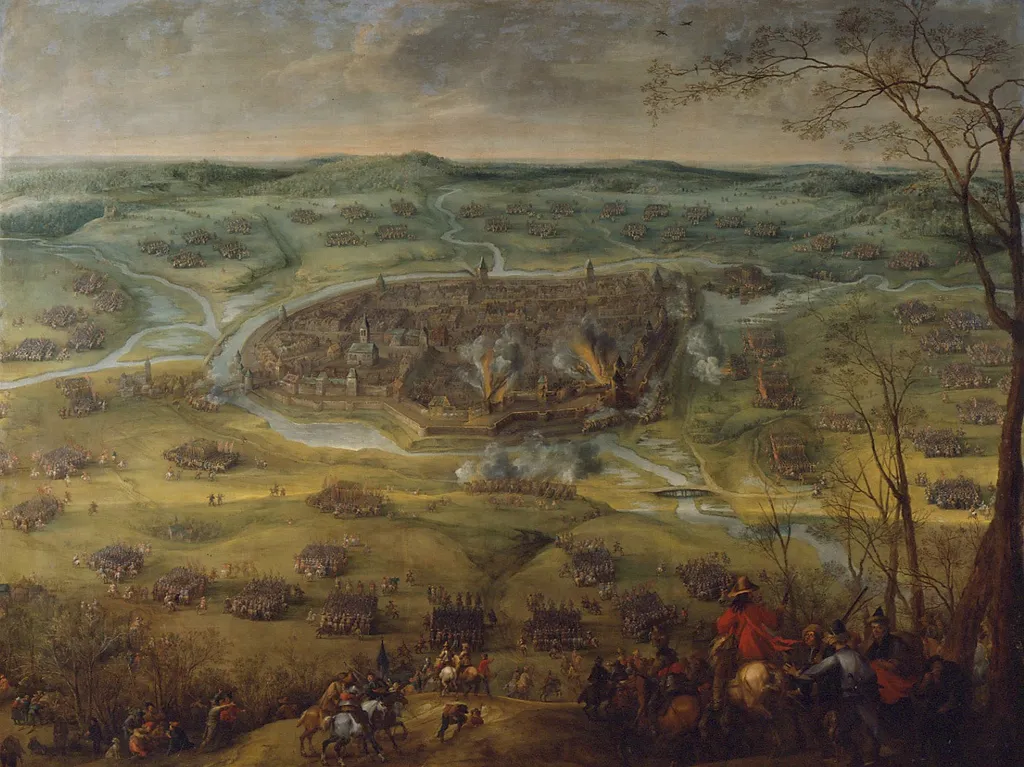
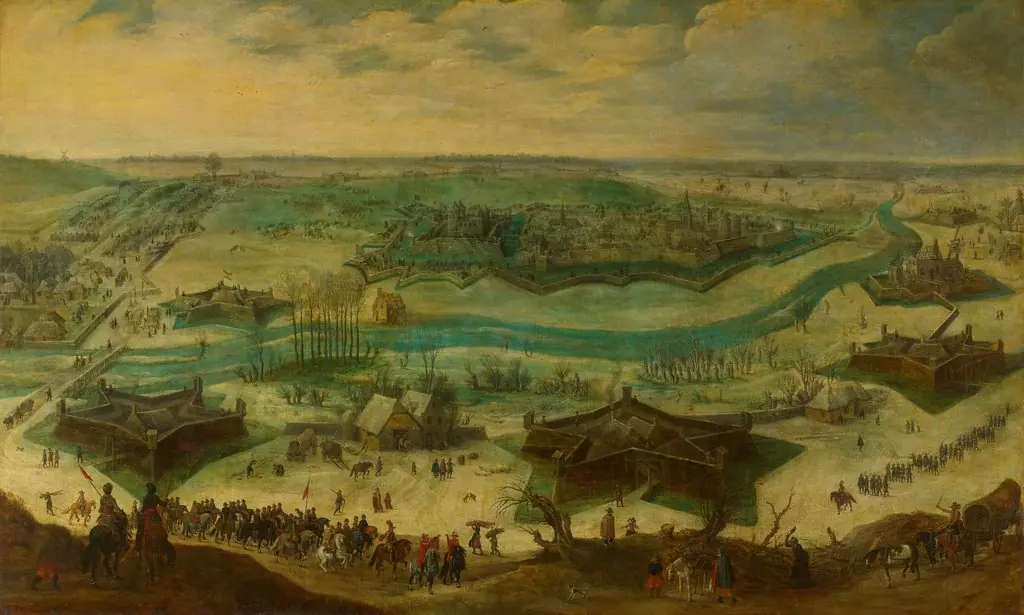
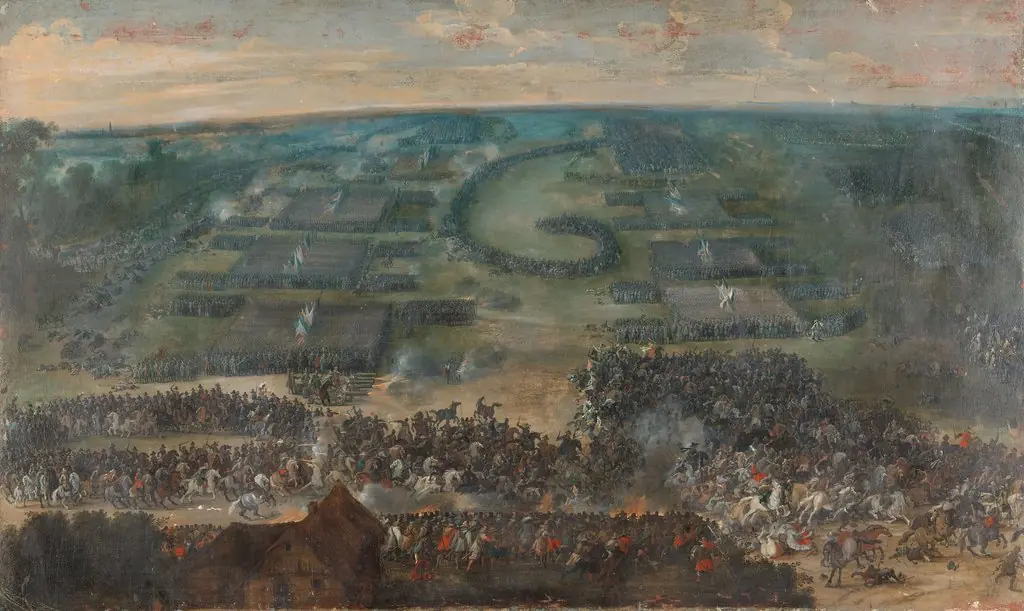
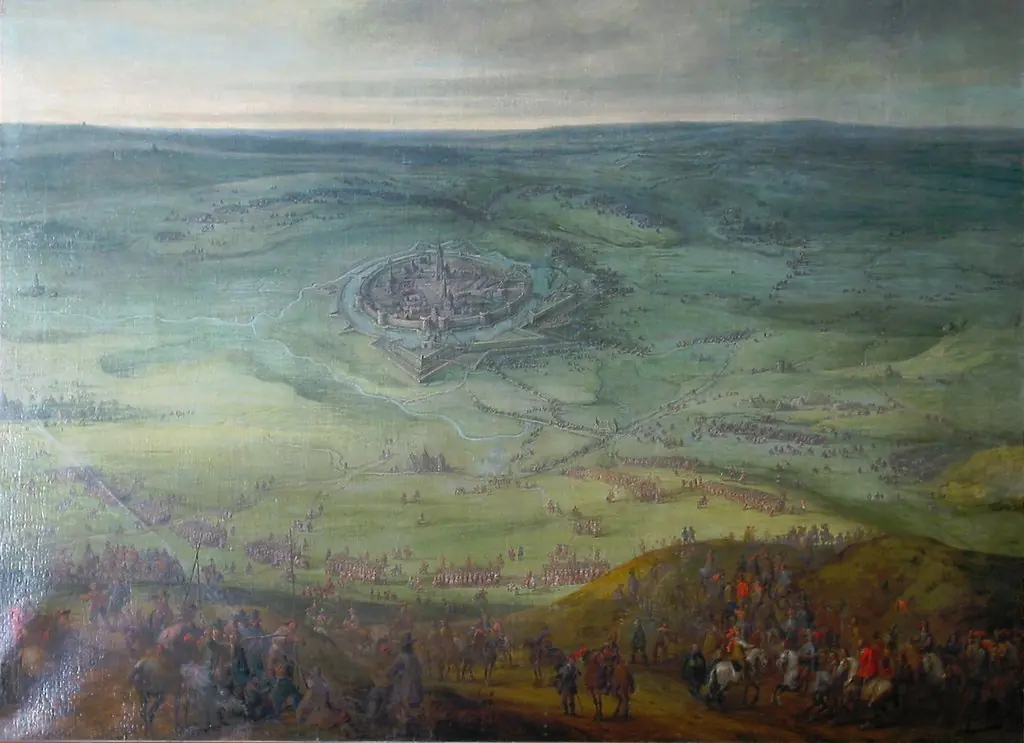
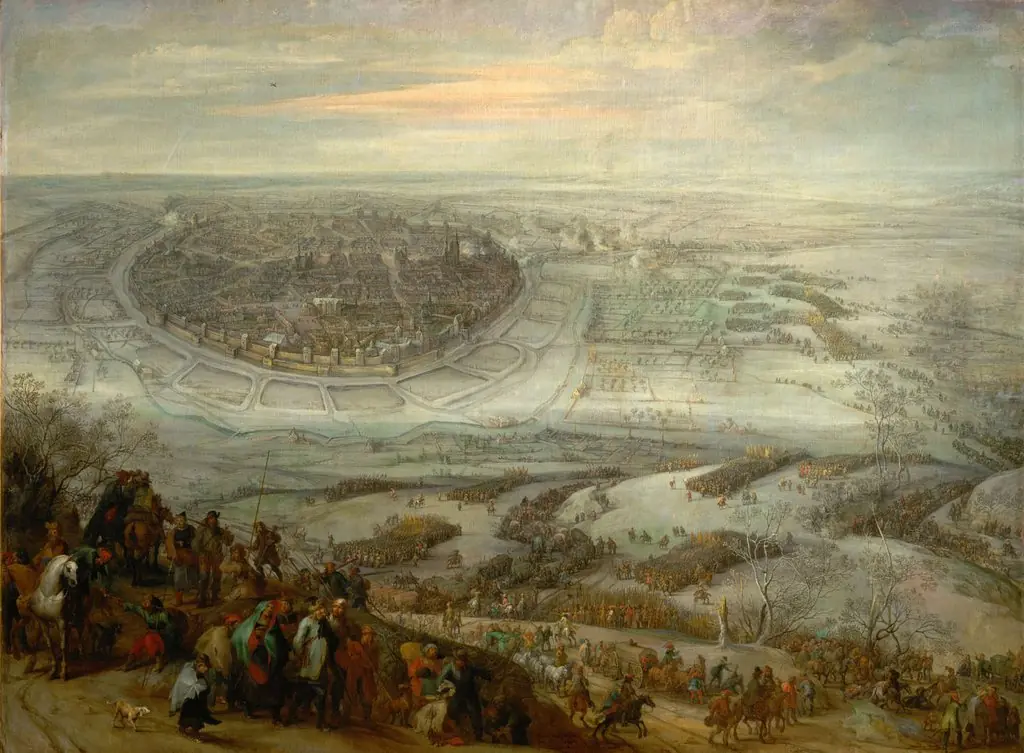
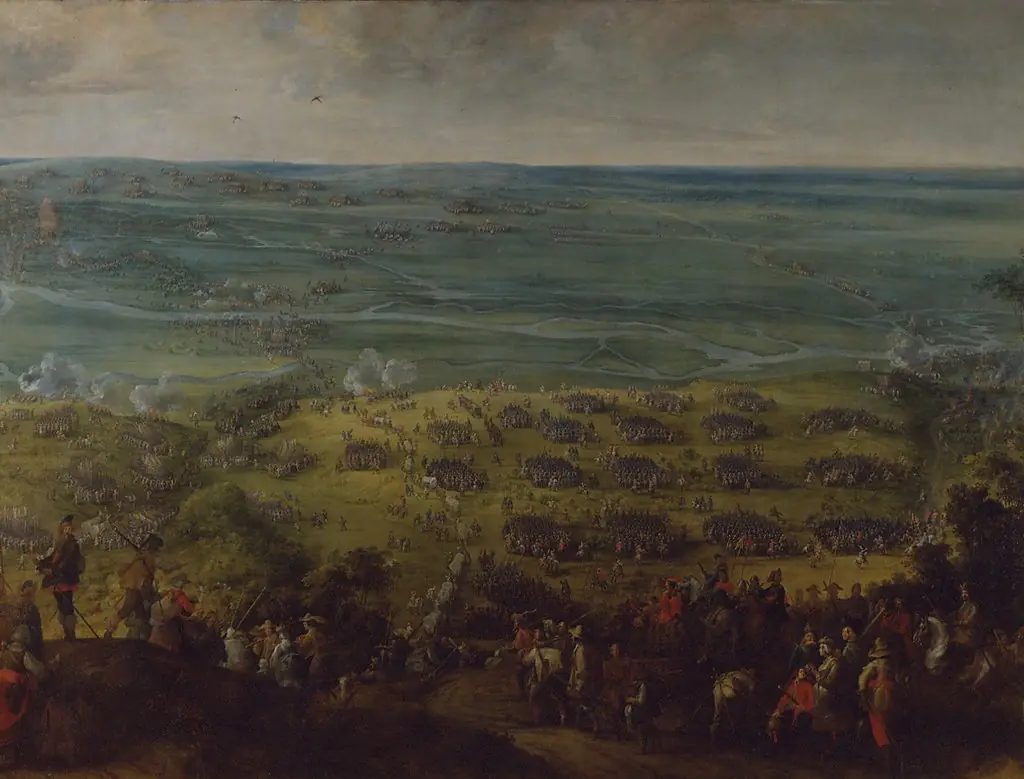
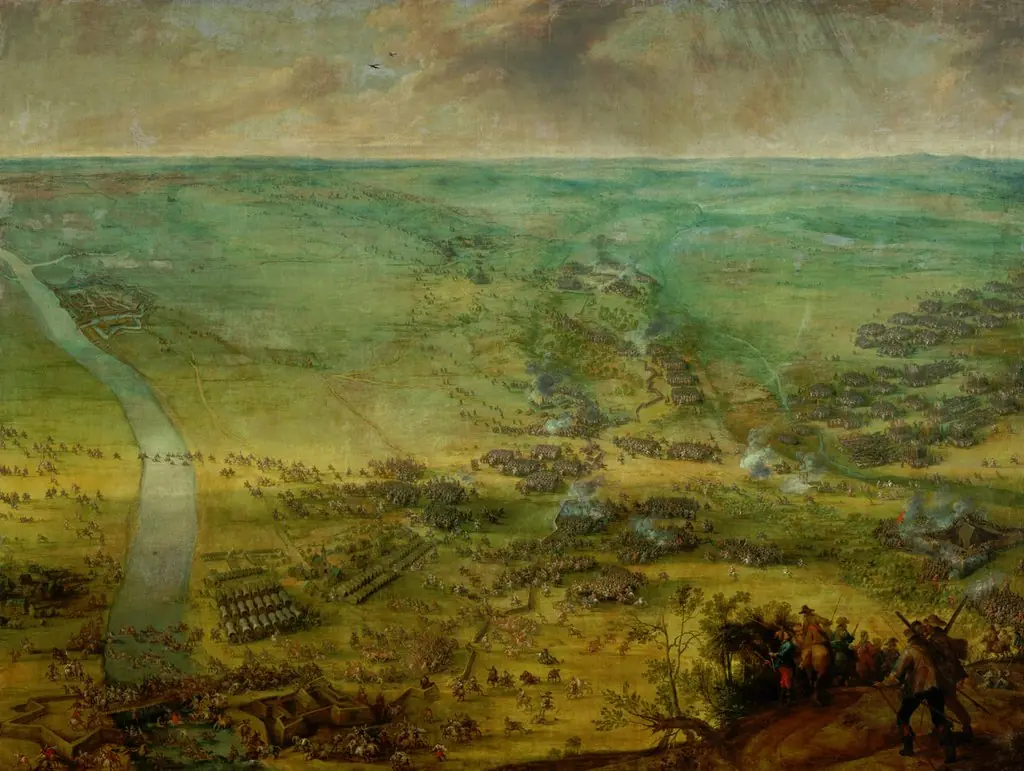
The siege of Neuburg, 1641 is an oil painting by the Flemish Baroque painting artist Peter Snayers. It dates from 1645 and is held in the collection of the Kunsthistorisches Museum.
About this work
Overview
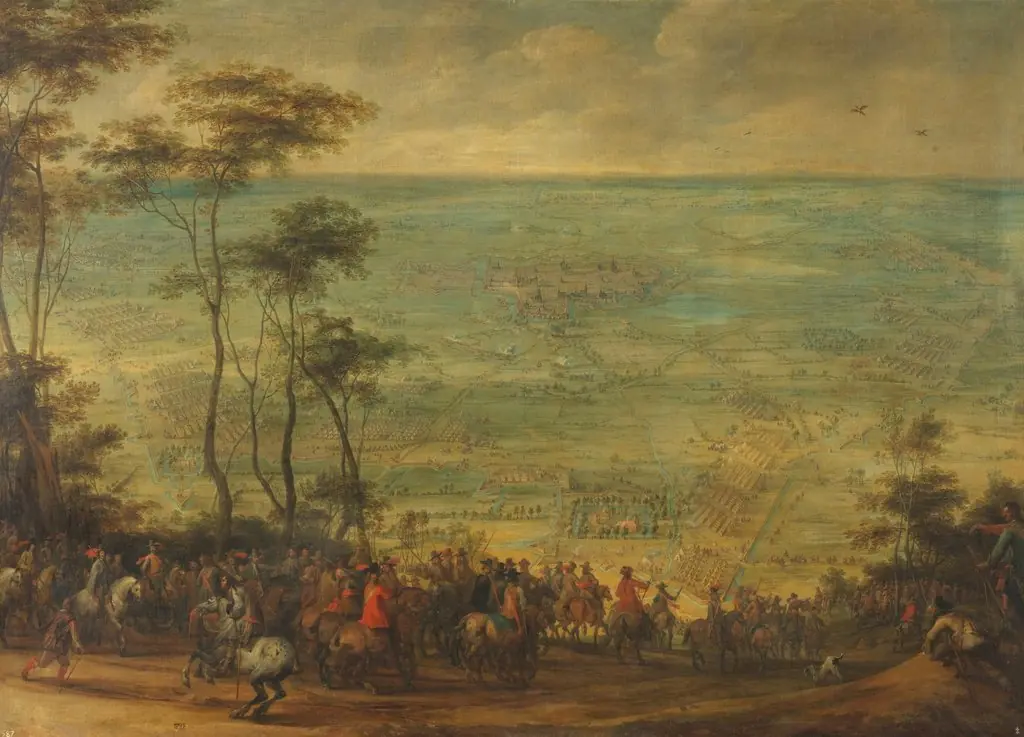
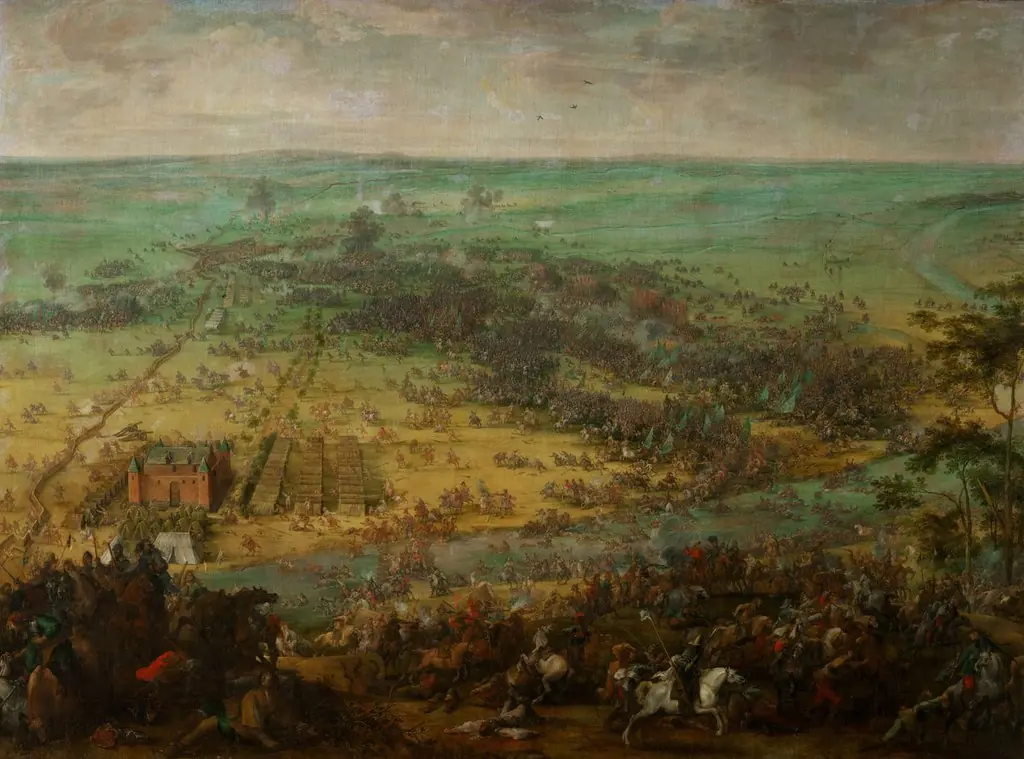
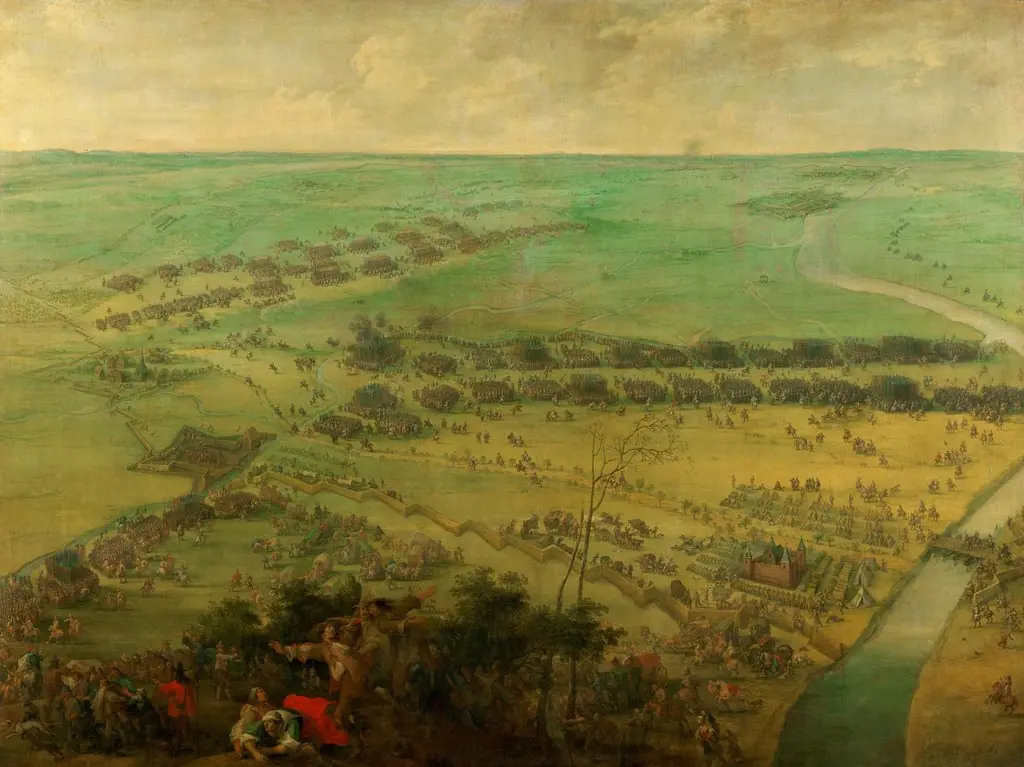
Rendered from an elevated viewpoint, the composition captures the military encirclement of a riverside town with meticulous attention to spatial arrangement.
Painted in 1645 by Flemish artist Peter Snayers, this oil work depicts the 1641 siege of Neuburg during the Thirty Years' War. Rendered from an elevated viewpoint, the composition captures the military encirclement of a riverside town with meticulous attention to spatial arrangement. The painting belongs to a series of war scenes Snayers produced for European patrons, combining topographical accuracy with narrative clarity.
Subject & Meaning
The scene portrays the prolonged military confrontation between Imperial forces and Protestant defenders, with siege engines, troop movements, and burning structures indicating active combat. The river serves as both a natural barrier and a logistical route, while the dense clustering of soldiers and civilians underscores the civilian toll of war. No single hero or decisive moment is highlighted; instead, the chaos of protracted conflict is rendered as an overwhelming, impersonal force.
Technique & Style
Snayers employed fine brushwork to render hundreds of individual figures, horses, and architectural details across a broad horizontal plane. The muted palette of earth tones—olive greens, ochres, and ashen grays—enhances the somber realism. Atmospheric perspective is used to distinguish foreground activity from distant hills, while smoke and dust unify the composition, reinforcing the disorientation of battle.
History & Provenance
Commissioned likely by a Habsburg-aligned patron, the painting entered the Habsburg imperial collection by the mid-17th century. It was later transferred to the Kunsthistorisches Museum in Vienna, where it remains part of the museum’s core holdings of Flemish military art. Its survival through centuries of political upheaval reflects its status as a documented record rather than a decorative piece.
Context
Snayers was among the first Northern European artists to treat warfare as a subject worthy of large-scale, topographically faithful representation. His works responded to the demand from aristocratic patrons for visual chronicles of ongoing conflicts. The siege of Neuburg, though not a decisive battle, was emblematic of the war’s attritional nature, making it a fitting subject for a genre that prioritized observation over heroism.
Legacy
Snayers’ approach influenced later military painters by establishing a template for documenting campaigns through panoramic, detail-rich scenes. His focus on landscape as a stage for human conflict, rather than glorifying individual valor, marked a shift toward documentary realism in war imagery. The painting endures as a reference for historians studying early modern siege tactics and battlefield logistics.
Artist & collection
Artist
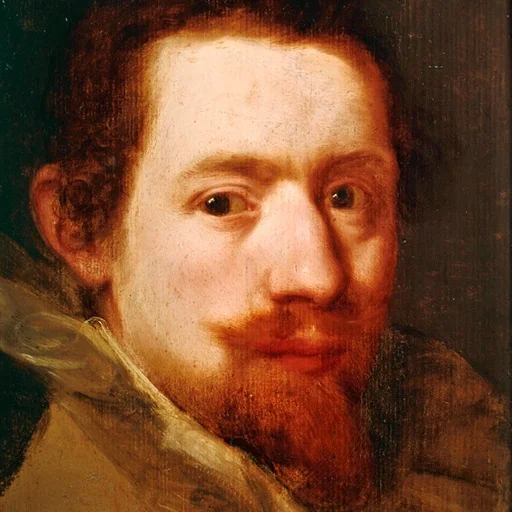
Peter Snayers or Pieter Snayers (1592–1667) was a Flemish painter known for his panoramic battle scenes, depictions of cavalry skirmishes, attacks on villages, coaches and convoys and hunting scenes.