Artwork
Abendlandschaft mit Maultieren
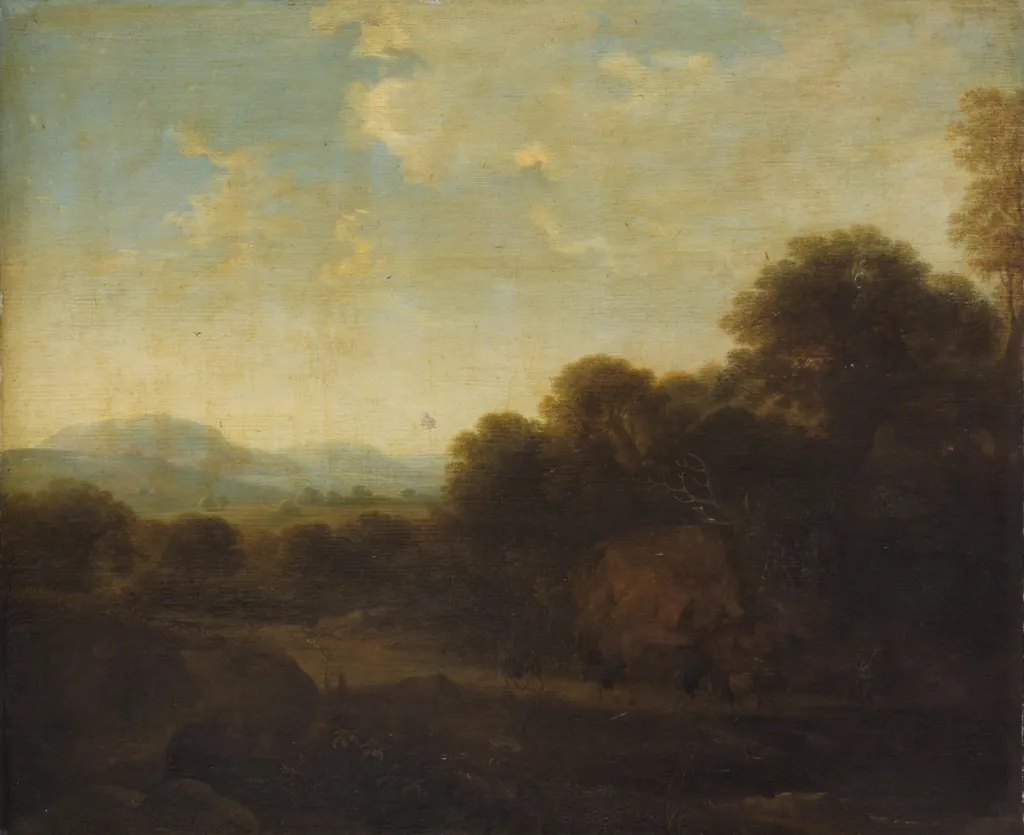
Abendlandschaft mit Maultieren is an unspecified painting by the Dutch Golden Age artist Petrus van Hattich. It dates from 1655 and is held in the collection of the Kunsthistorisches Museum.
About this work
Overview
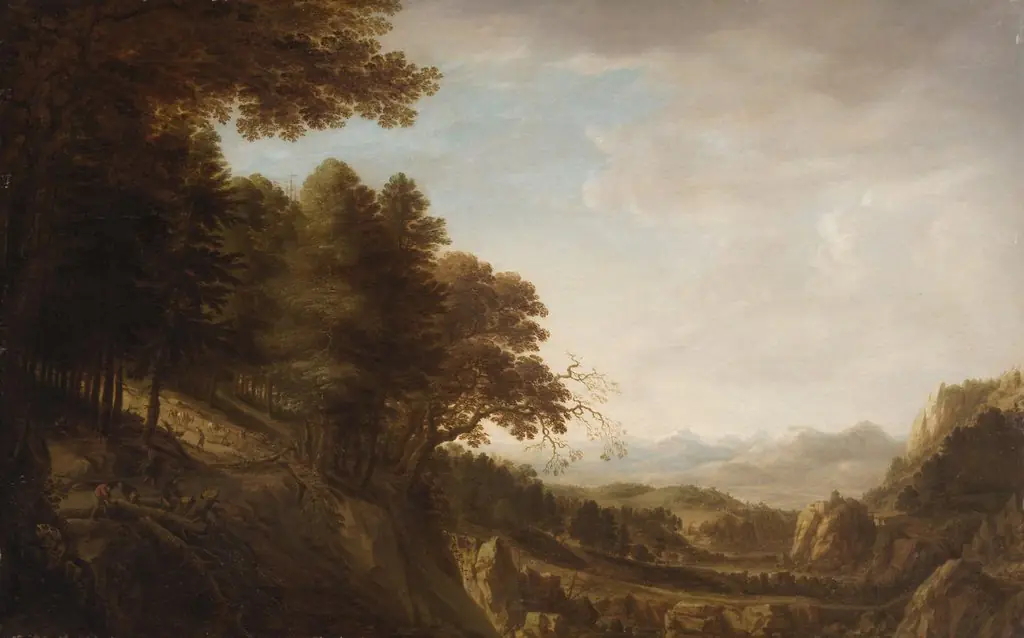
Abendlandschaft mit Maultieren is an oil painting executed in 1655 by the Dutch artist Petrus van Hattich. The work measures a modest scale and is part of the permanent collection of the Kunsthistorisches Museum in Vienna. It presents a tranquil evening scene rendered in muted earth tones, inviting quiet contemplation of the natural world.
Subject & Meaning
The ground transitions from brownish ochres to greener hues before receding into low, distant hills.
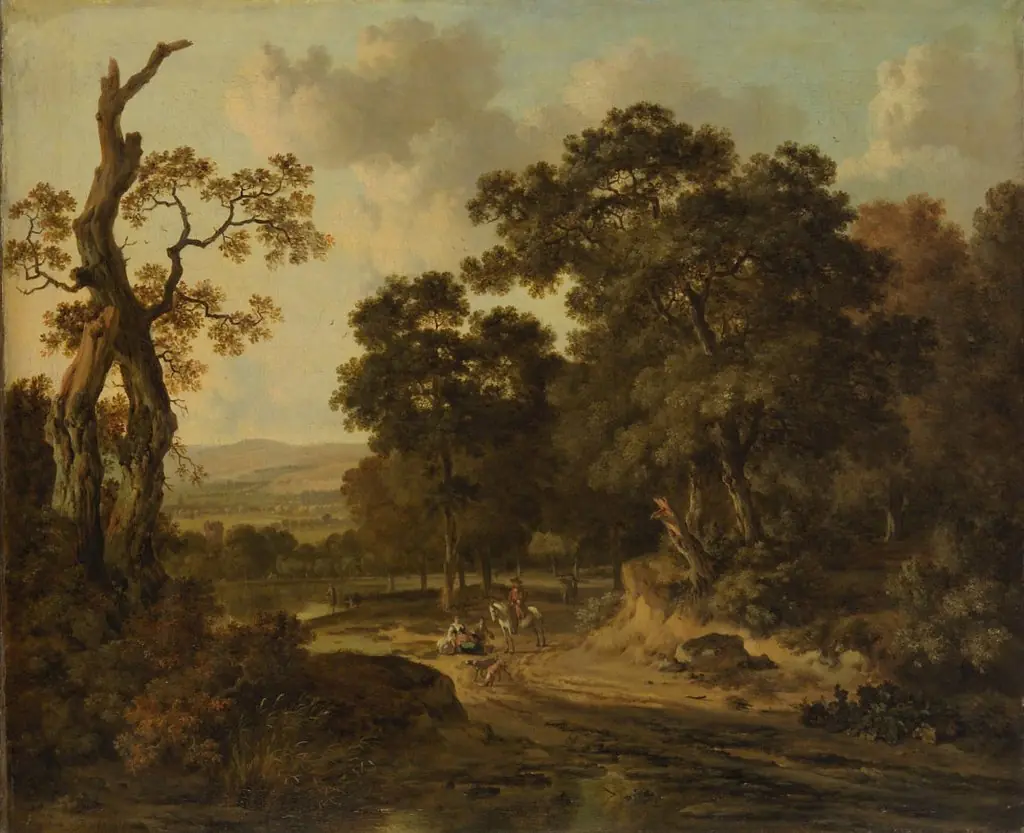
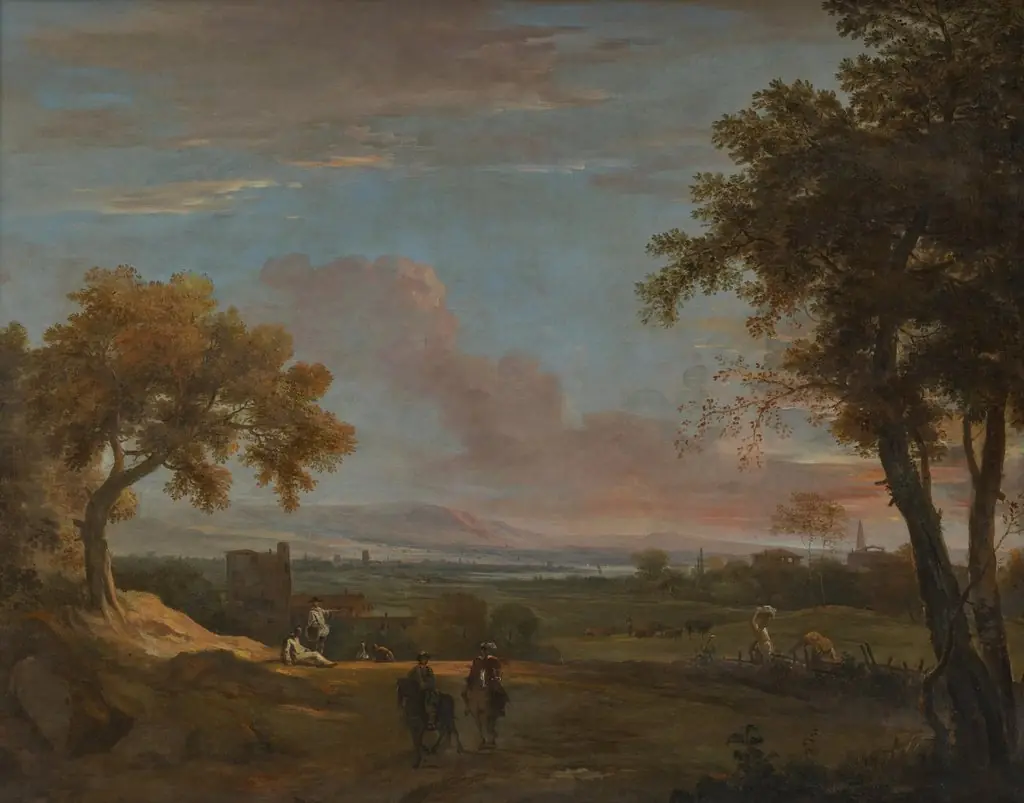
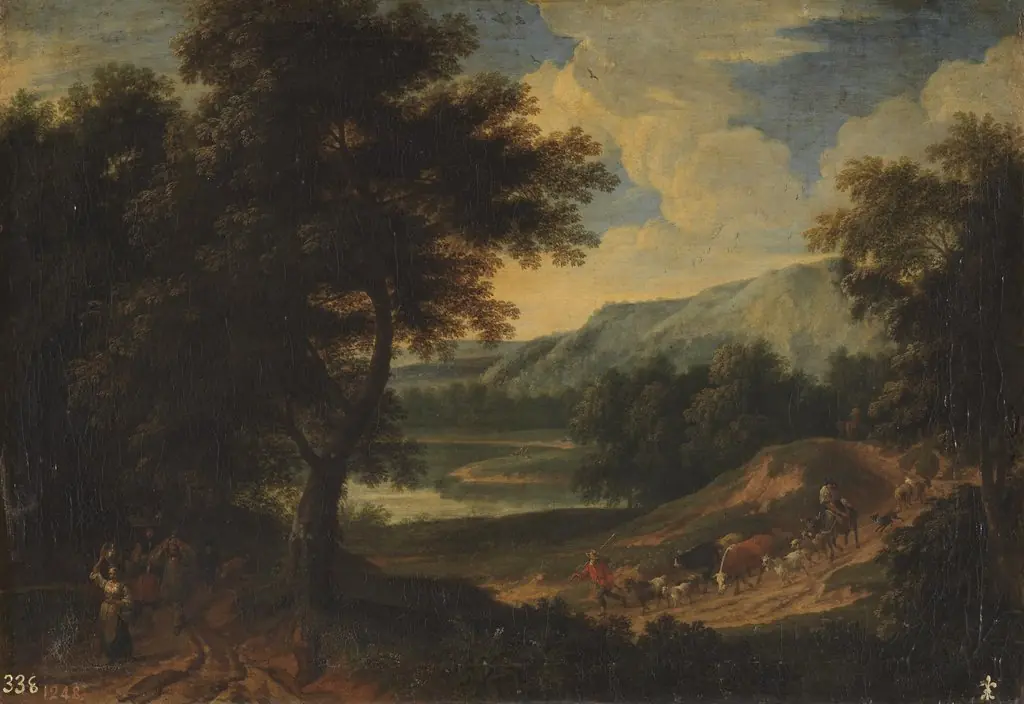
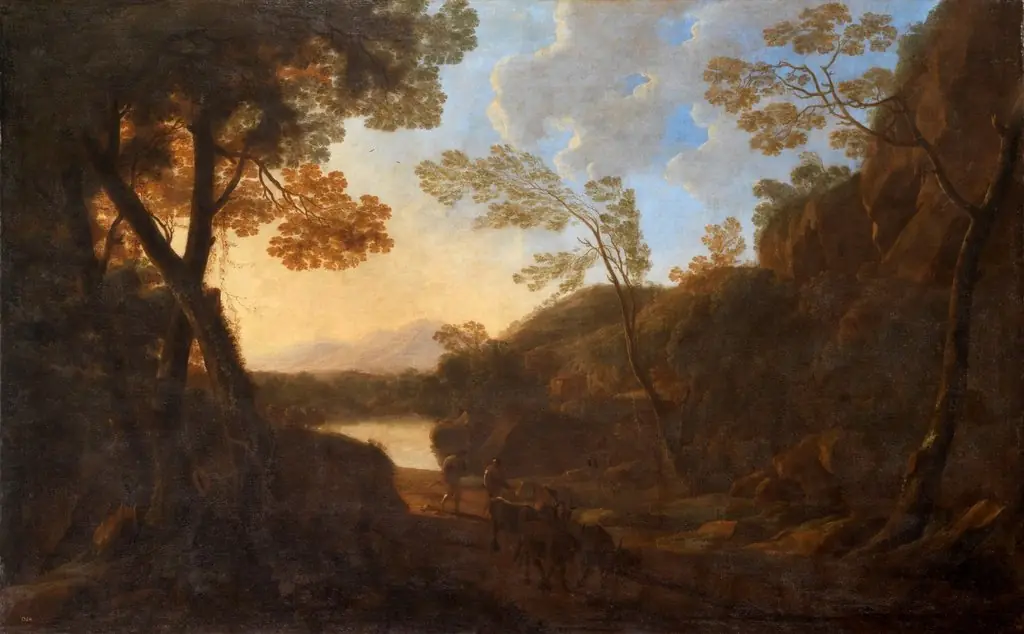
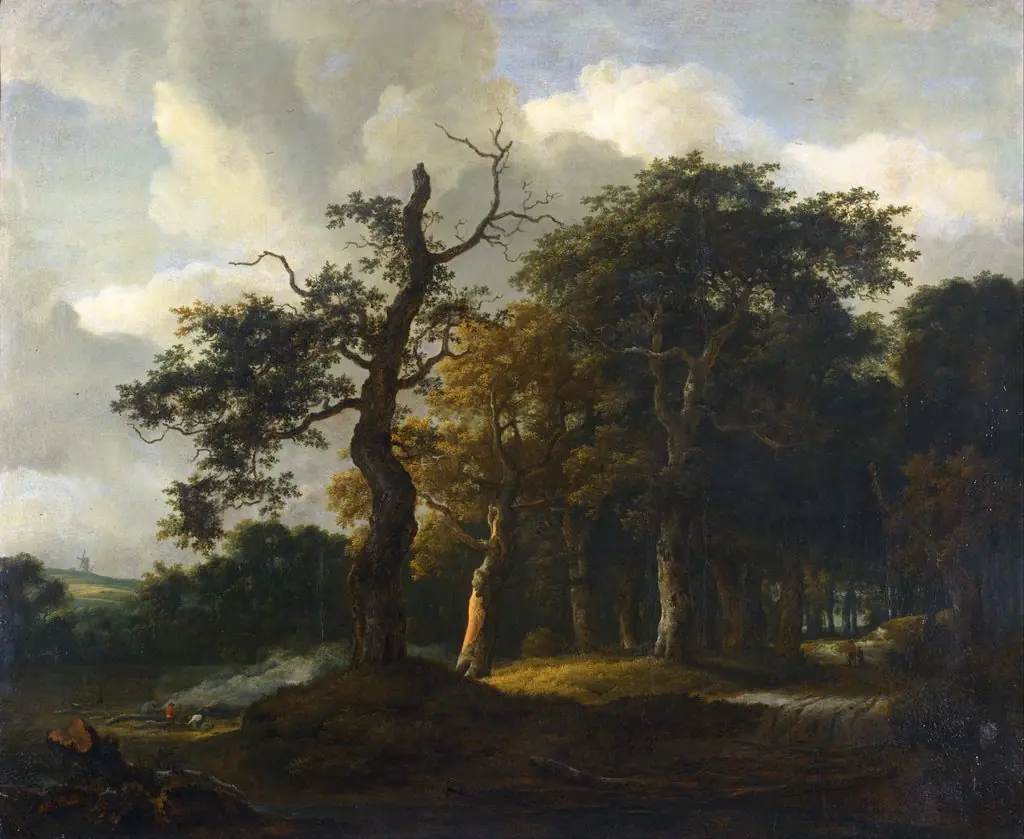
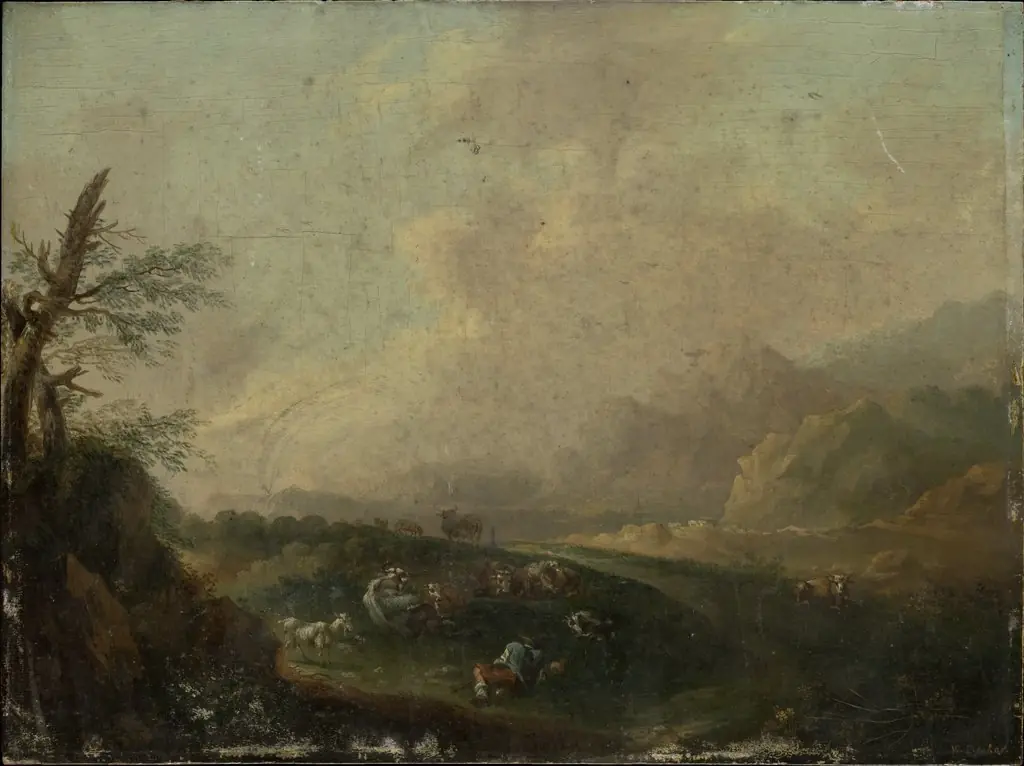
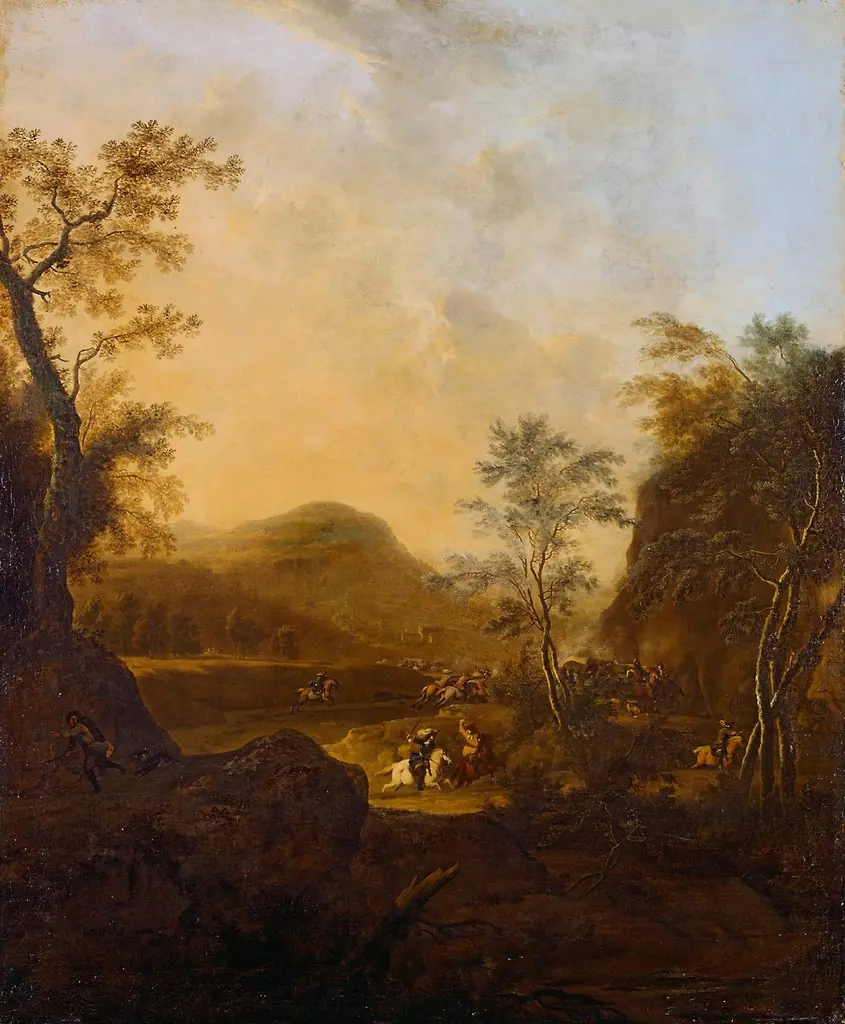
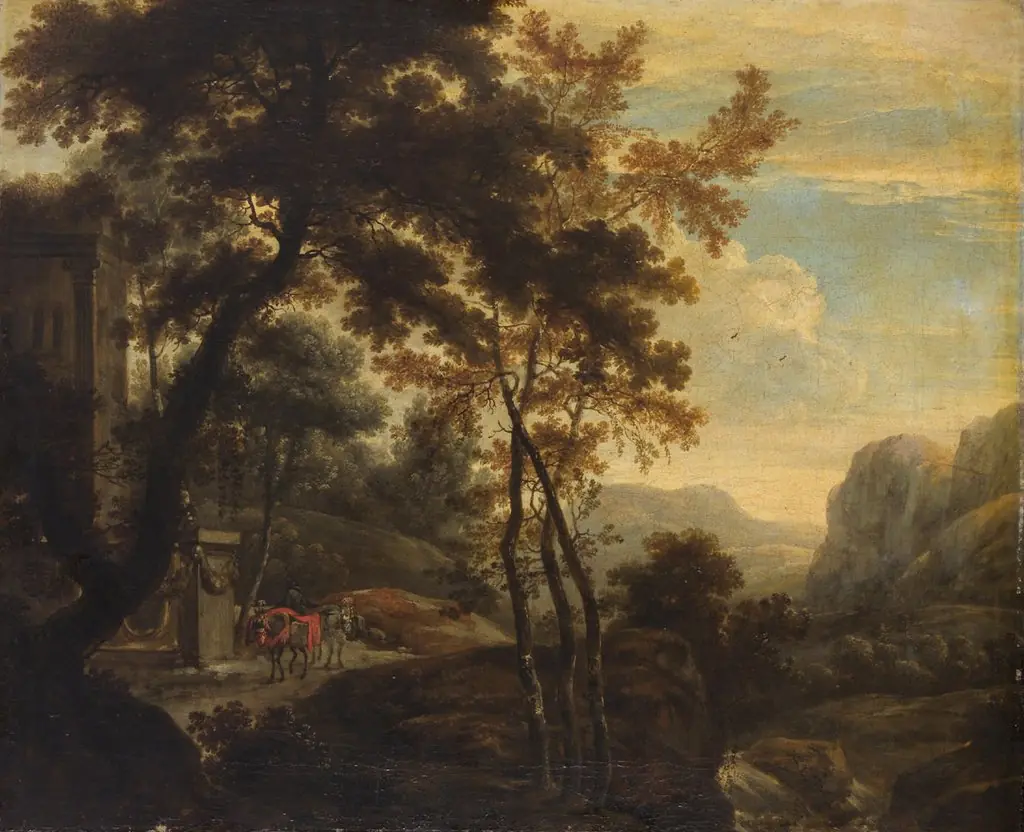
The composition depicts a gentle countryside with a handful of darkened trees occupying the foreground, while a pale yellow sky, streaked with delicate clouds, stretches overhead. The ground transitions from brownish ochres to greener hues before receding into low, distant hills. Though no narrative figures are present, the title’s reference to “Maultieren” (mules) suggests an agrarian setting, emphasizing the everyday landscape of 17th‑century rural life.
Technique & Style
Van Hattich employs a pronounced chiaroscuro, using strong contrasts between illuminated foliage and deep shadows to model form and convey depth. The uneven lighting across the trees creates a sense of three‑dimensionality, while the soft, diffused sky light balances the darker foreground. The brushwork is restrained, favoring smooth transitions that enhance the atmospheric quality of the scene.
History & Provenance
Created in the mid‑17th century, the painting entered the holdings of the Kunsthistorisches Museum, where it has been displayed as part of the museum’s European Baroque collection. Documentation traces its acquisition to the museum’s early 20th‑century purchases of Dutch and Flemish works, though earlier ownership records remain sparse.
Context
The work reflects the broader Dutch and Germanic tradition of landscape painting that flourished during the Baroque period, where artists often combined realistic observation with idealized scenery. Van Hattich’s approach aligns with contemporaries who emphasized natural light effects and the moral undertones of simple, rural environments, situating the piece within the era’s visual discourse on nature and labor.
Artist & collection