Artwork
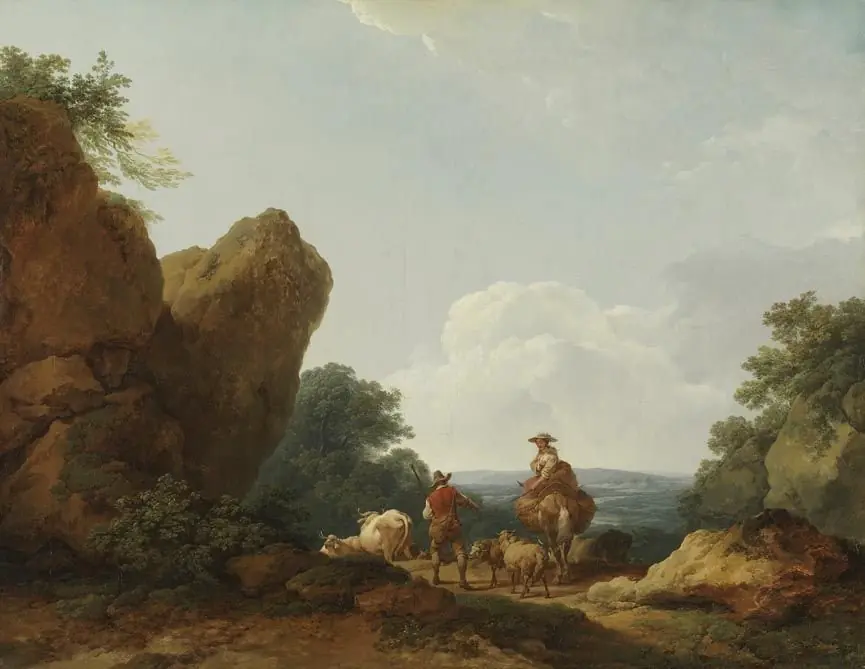
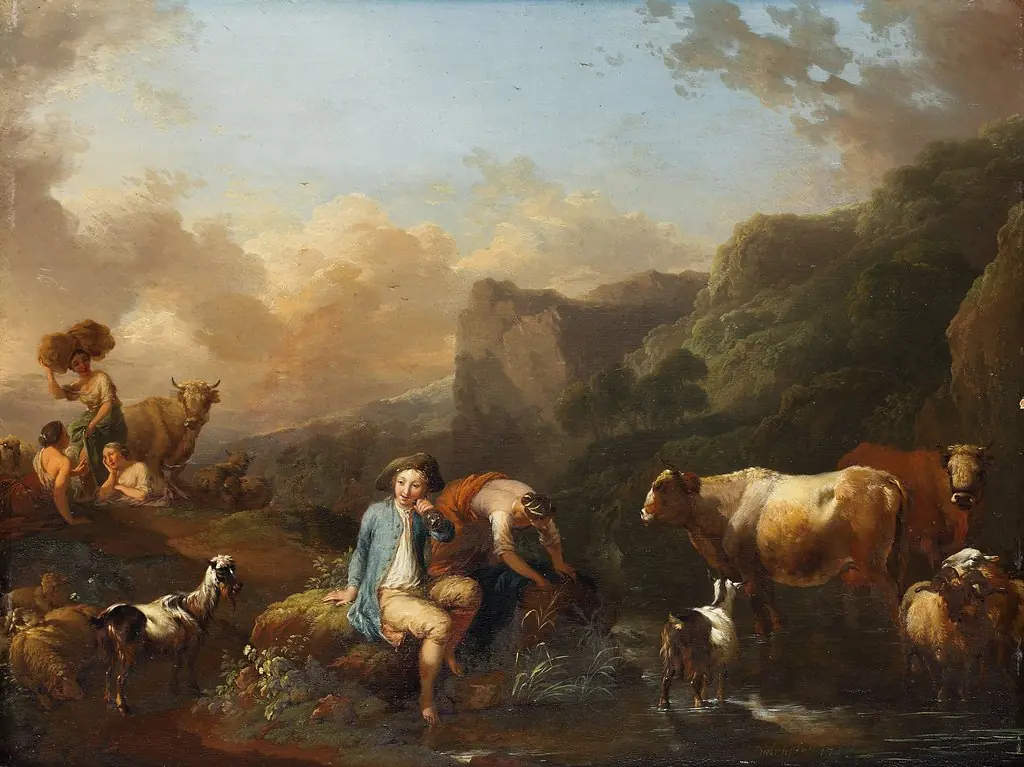
Landscape with Figures and Cattle
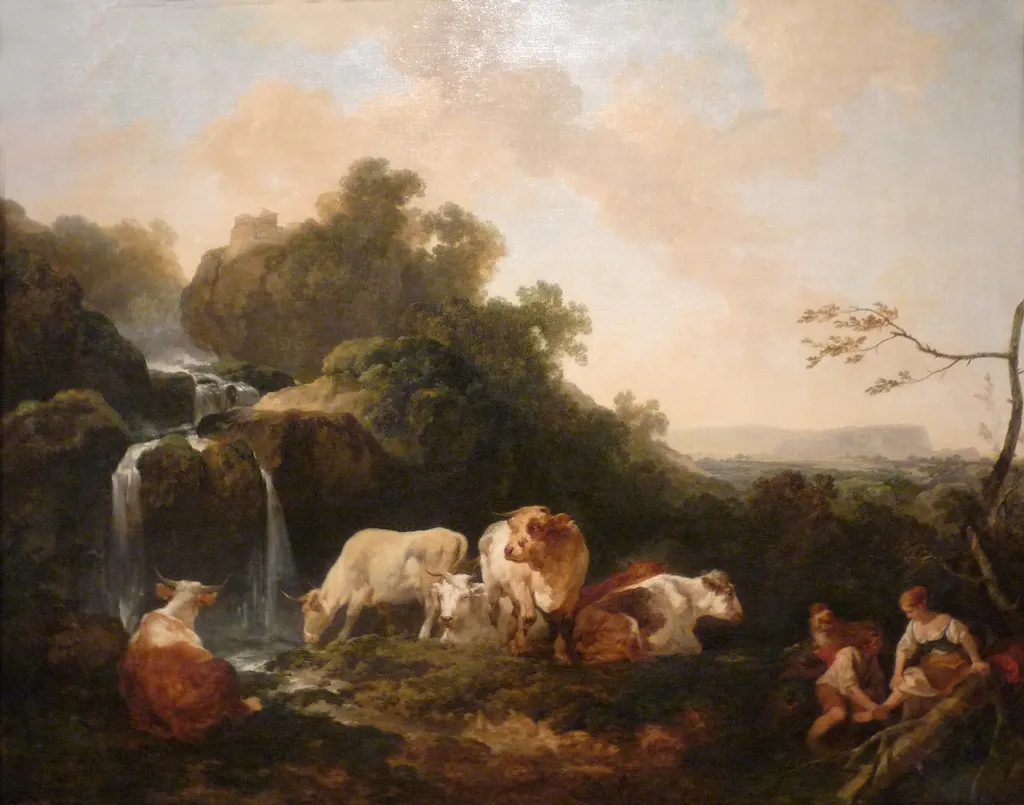
Landscape with Figures and Cattle is an oil painting by Philip James de Loutherbourg. It dates from 1786 and is held in the collection of the Victoria and Albert Museum.
About this work
Overview
Painted around 1786, *Landscape with Figures and Cattle* is an oil on canvas work by Philip James de Loutherbourg, a French-born artist who settled in England.
Painted around 1786, *Landscape with Figures and Cattle* is an oil on canvas work by Philip James de Loutherbourg, a French-born artist who settled in England. Though best known for his stage designs and naval scenes, this piece reflects his quieter engagement with rural naturalism. It resides in the Victoria and Albert Museum’s collection, offering a glimpse into his lesser-known pastoral output.
Subject & Meaning
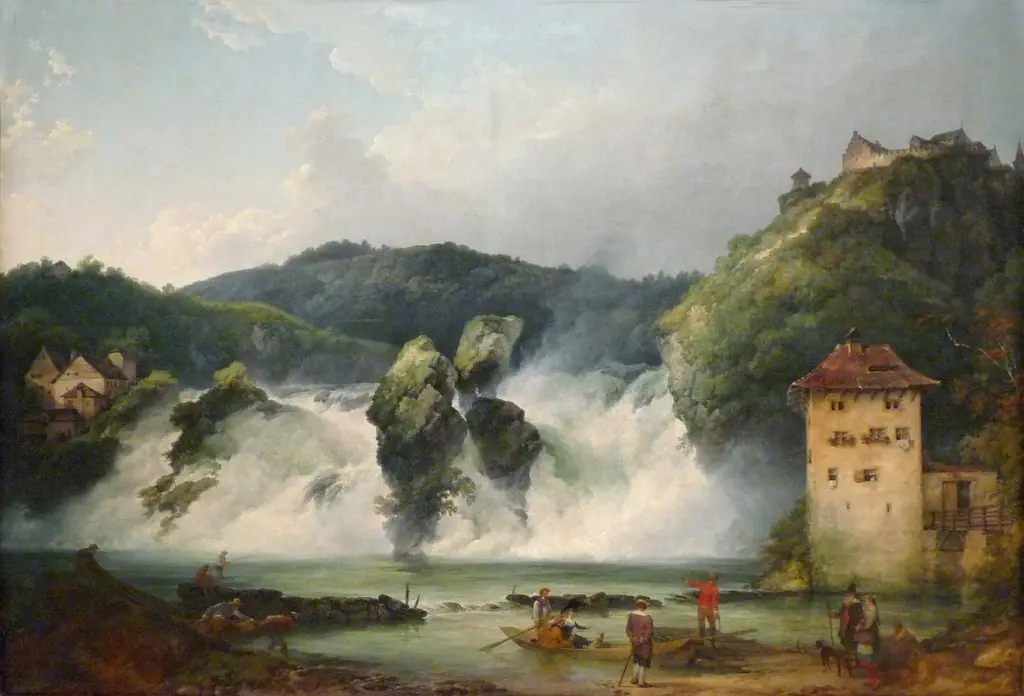
The scene presents a tranquil rural moment: cattle gather near a small waterfall, while two women rest on a low-hanging branch. There is no narrative drama or symbolic allegory; instead, the painting emphasizes quiet coexistence between humans, animals, and nature. The absence of grandeur or conflict suggests an appreciation for everyday pastoral life, grounded in observation rather than idealization.
Technique & Style
De Loutherbourg employs subtle gradations of light and shadow to model form and suggest atmospheric depth. Textures are rendered with precision—rough stone, soft foliage, and the smooth hide of cattle are differentiated through careful brushwork. His background hills recede with soft edges, enhancing spatial recession, while the foreground retains tactile clarity, a hallmark of his detailed observational approach.
History & Provenance
The painting entered the Victoria and Albert Museum’s collection in the 19th century, likely through acquisition or donation. Its provenance prior to museum ownership is not well documented, but its style aligns with de Loutherbourg’s mid-to-late career works, when he increasingly turned from theatrical spectacles to intimate landscape studies.
Context
In the 1780s, British landscape painting was shifting toward naturalism, influenced by Romantic sensibilities and the growing interest in rural life. De Loutherbourg’s work here aligns with this trend, though his background in theatrical design lent his compositions a carefully composed, stage-like balance uncommon among contemporaries focused on pure topography.
Legacy
While de Loutherbourg’s mechanical theatre and naval paintings drew more attention in his time, this landscape exemplifies his versatility and quiet mastery of atmosphere. It remains a modest but significant example of how artists trained in spectacle could turn their skill toward understated naturalism, influencing later generations interested in the emotional resonance of quiet landscapes.
Own this work as a print
Artist & collection
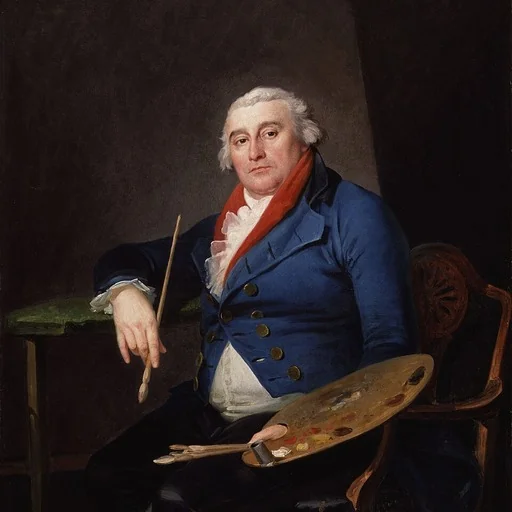
Artist
Philip James de Loutherbourg, RA (born Philippe Jacques de Loutherbourg; 31 October 1740 – 11 March 1812) was a French-born British painter who became known for his large naval works, his elaborate set designs for…

 Landscape with Cattle
 Landscape with cattle
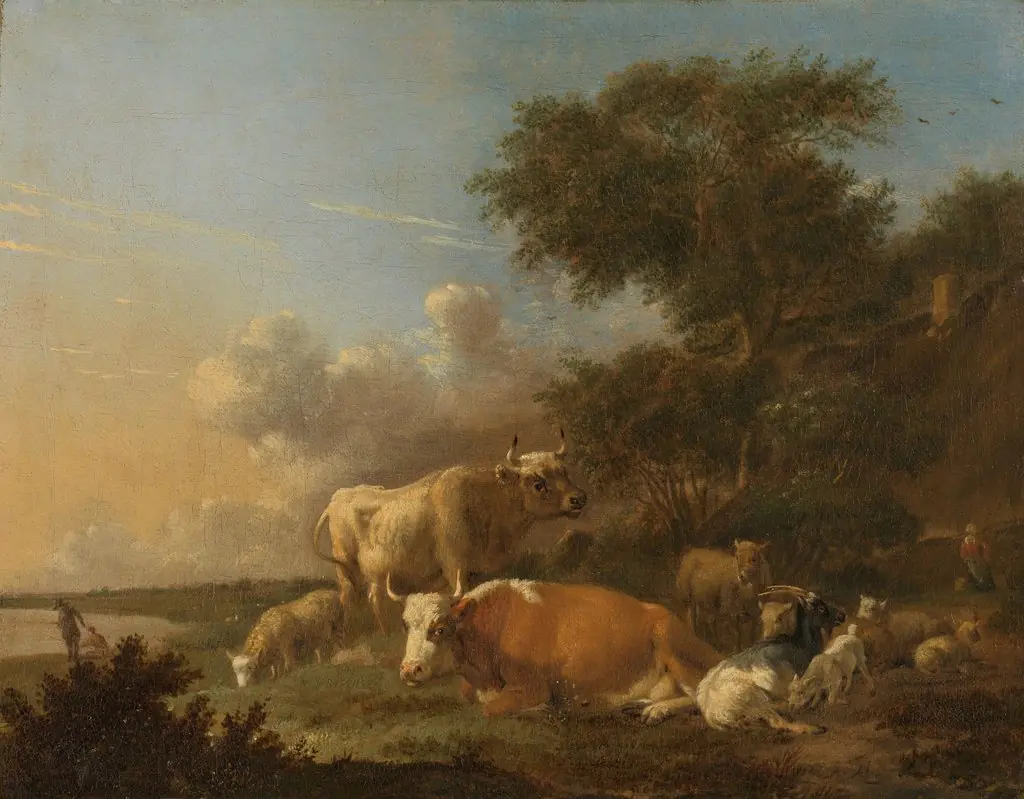 Landscape with cattle
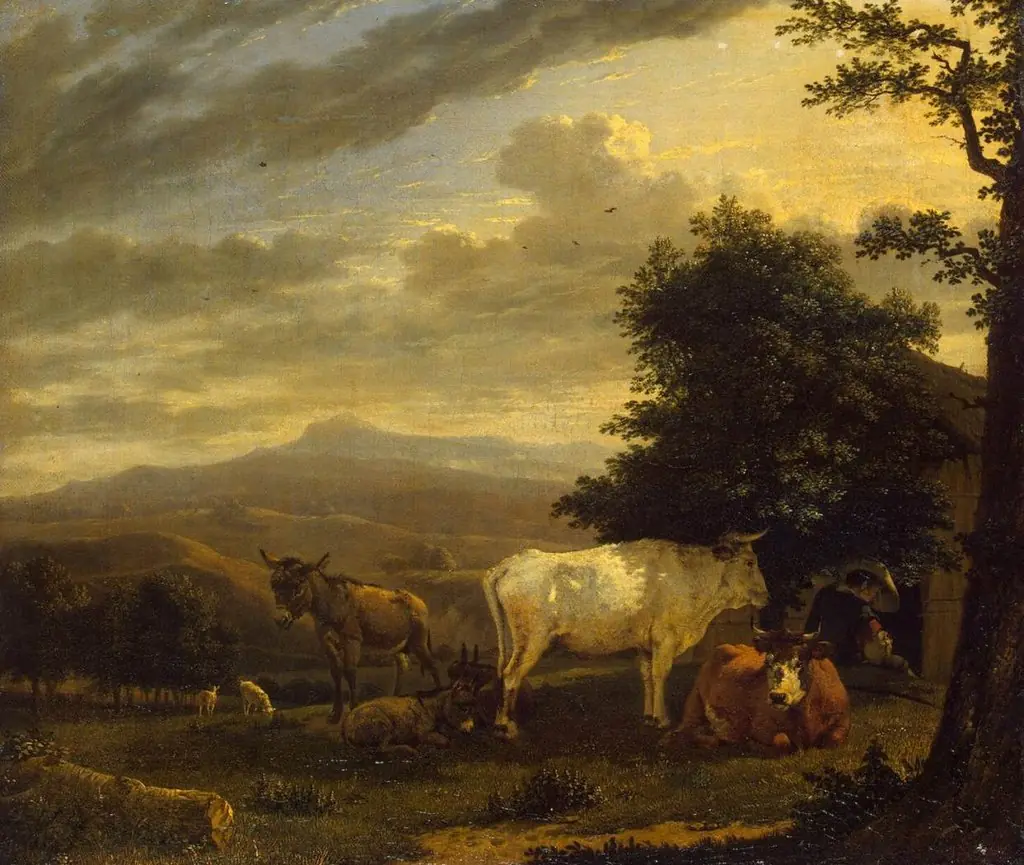 Landscape with Cattle
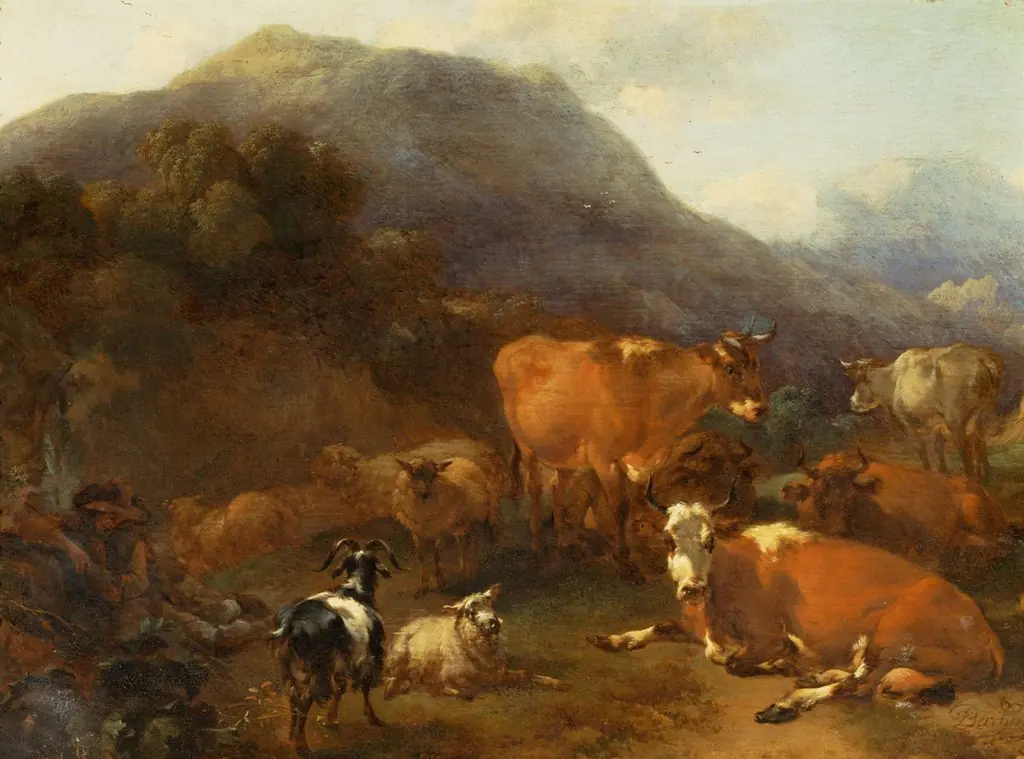 Landscape with cattle and shepherds
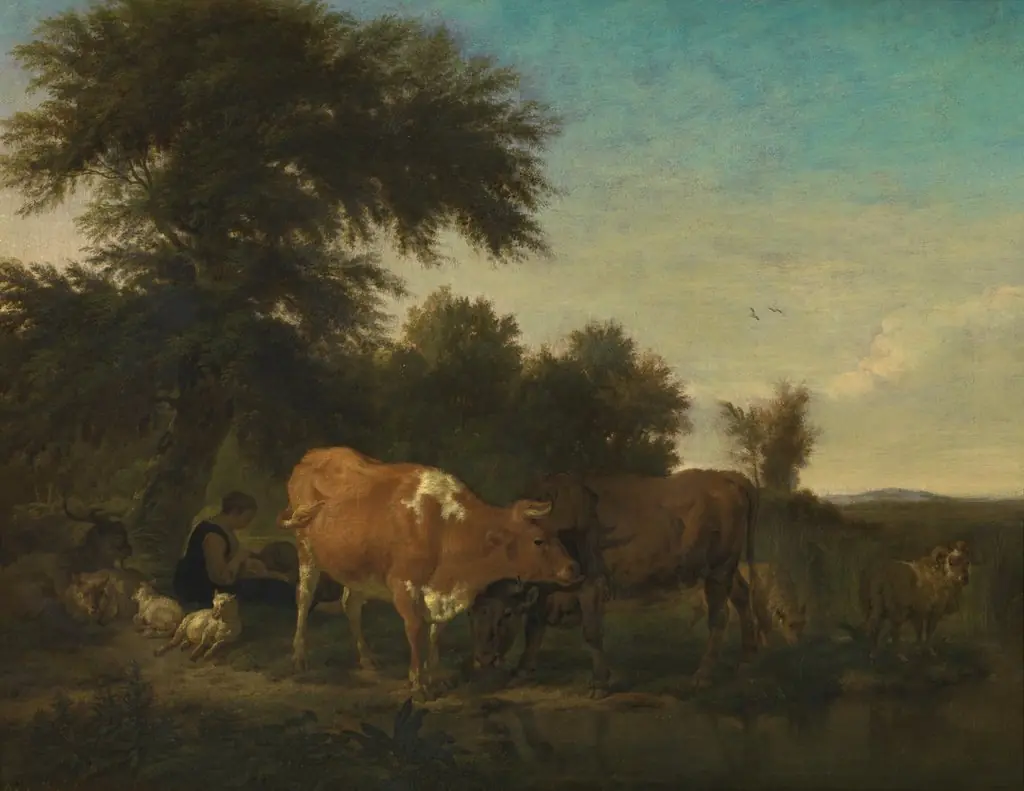 Landscape
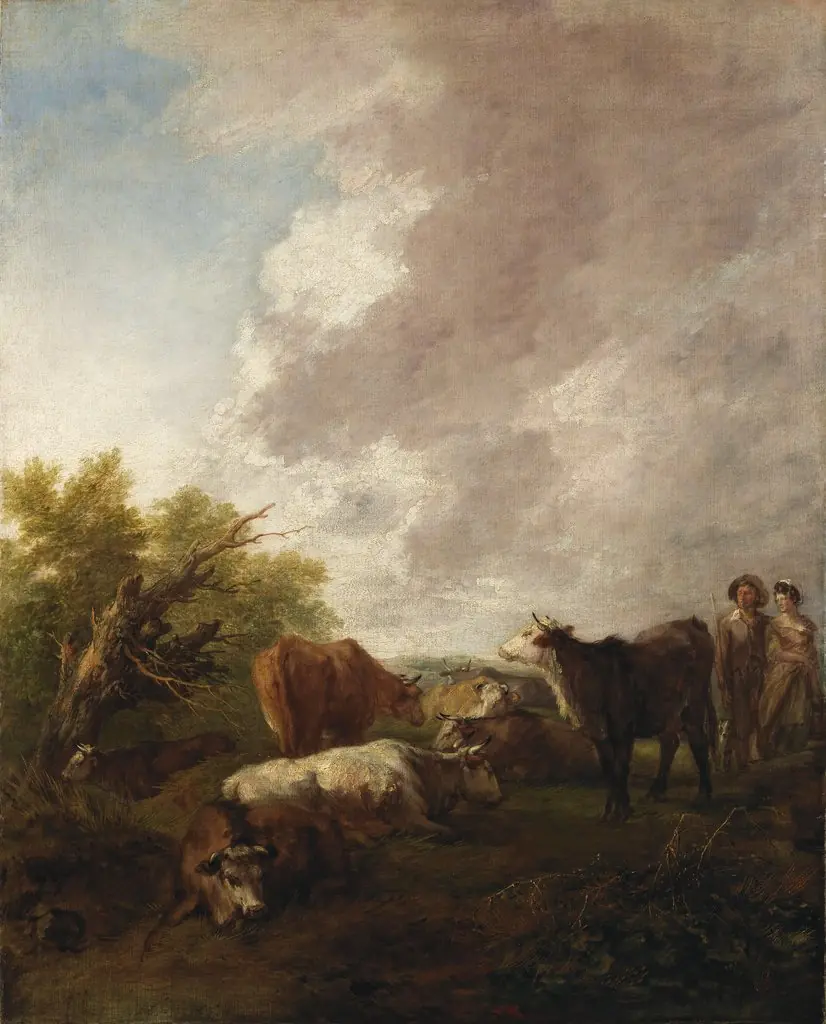 Landscape with Cattle
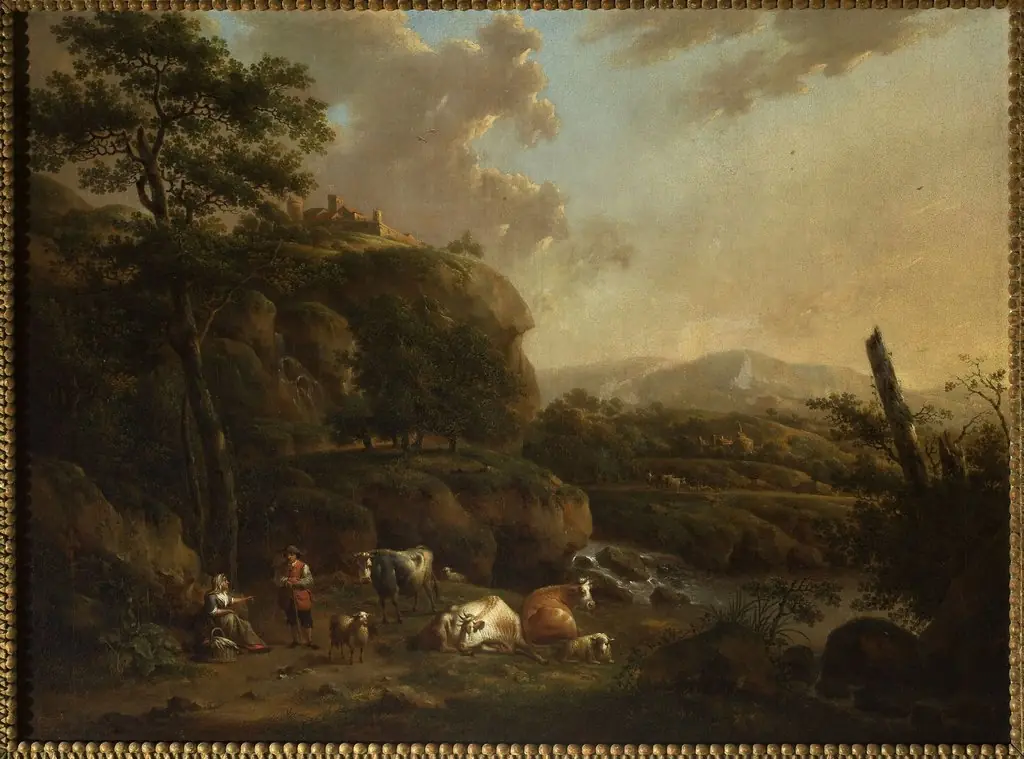 Mountain Landscape with Shepherds
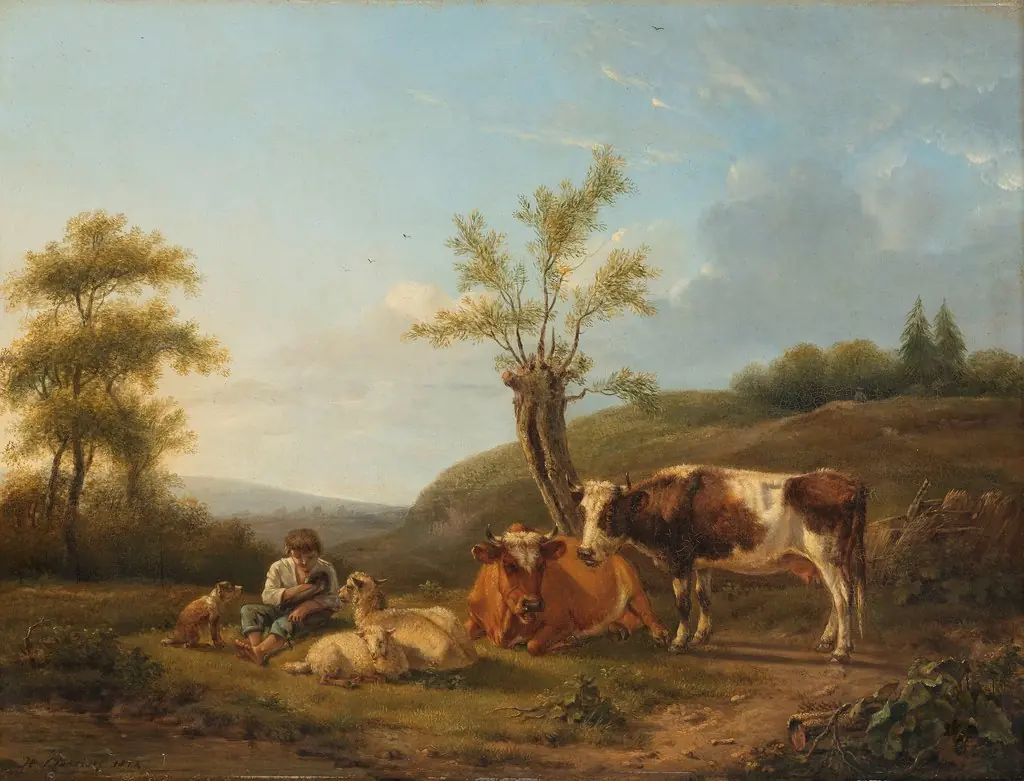 Landscape with Cattle near Darthuizen
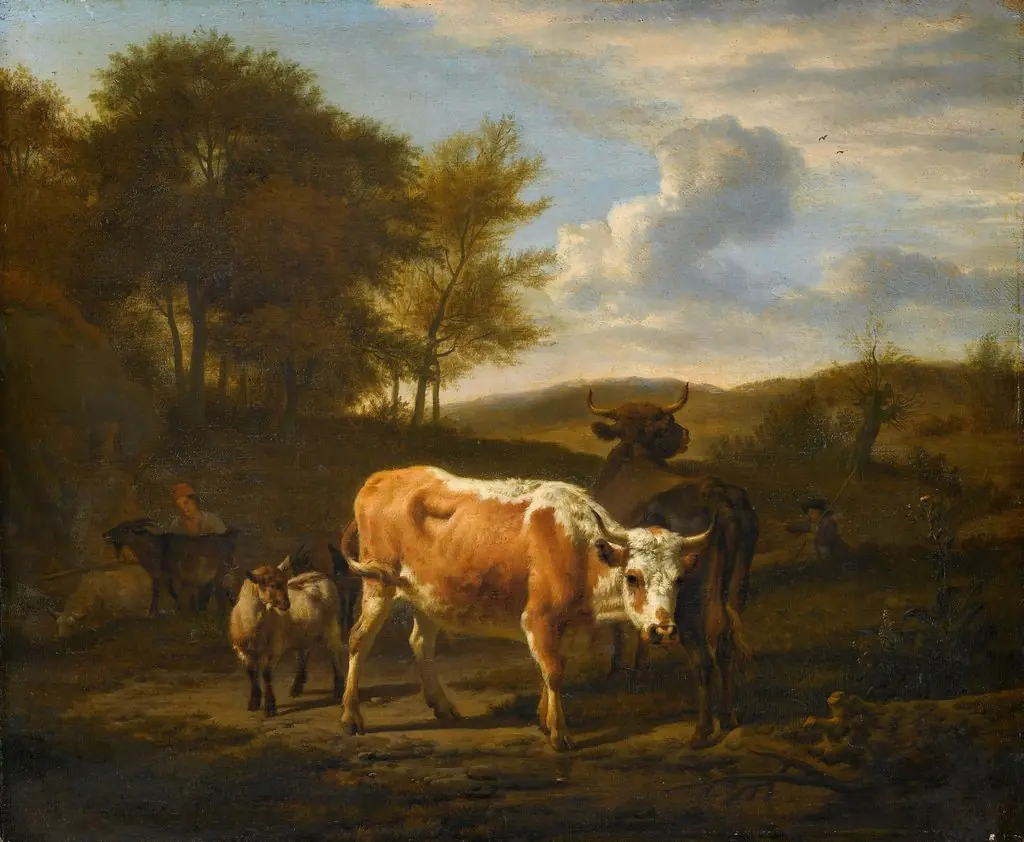 Mountainous landscape with cattle
 Italian Landscape with Shepherds
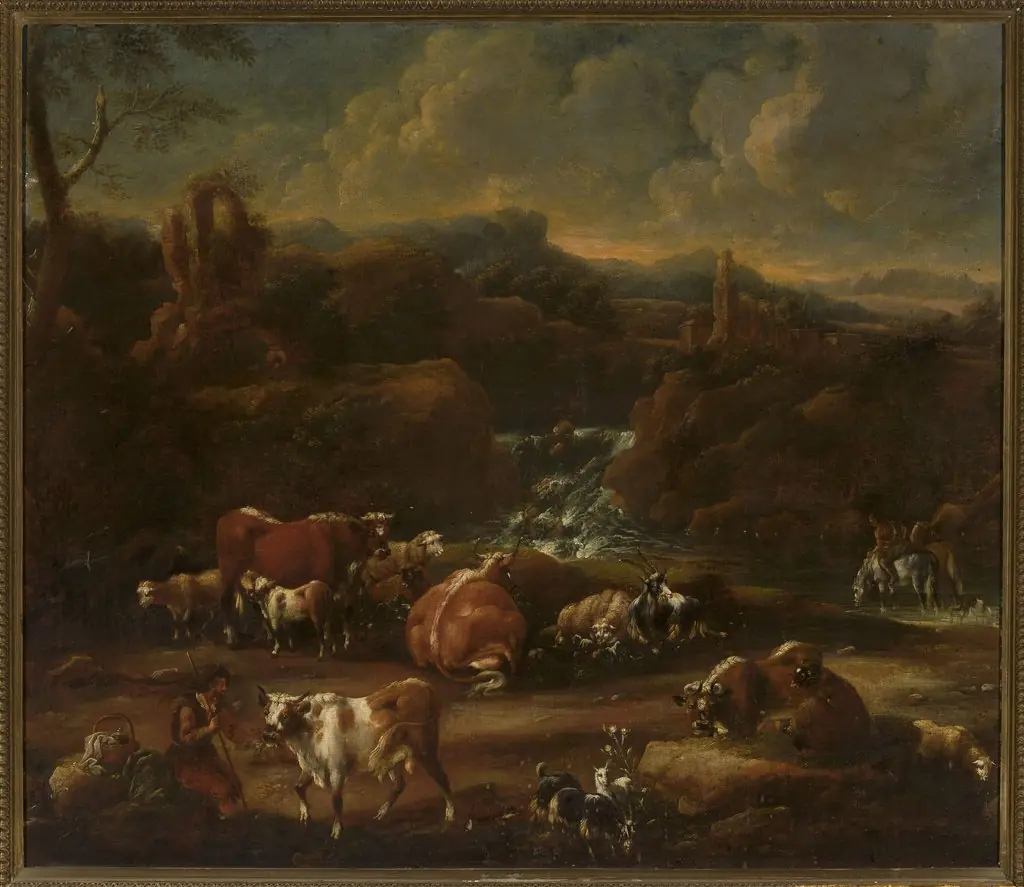 Herd in the mountains