Artwork
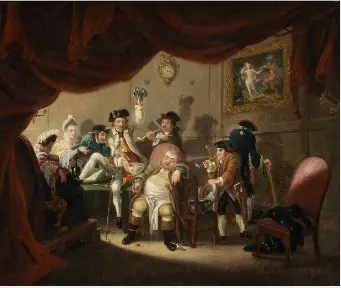
David Garrick (1717-1779), as Don John in 'The Chancers' by John Fletcher, Adapted by George Villiers
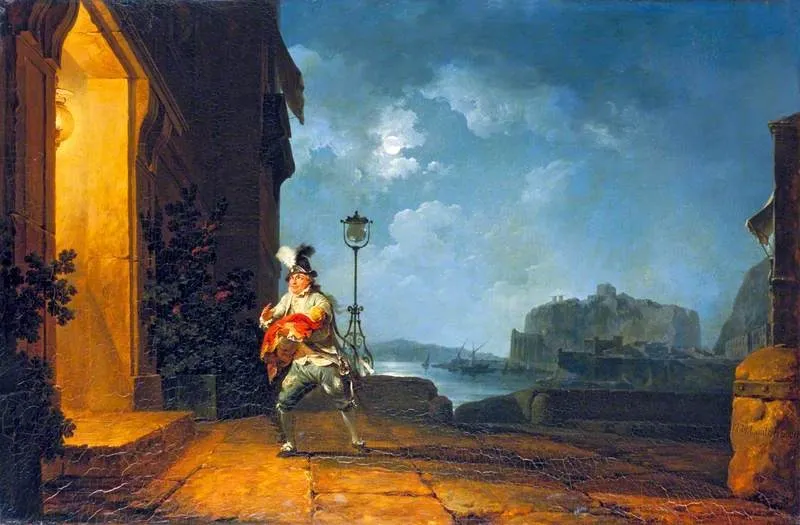
David Garrick (1717-1779), as Don John in 'The Chancers' by John Fletcher, Adapted by George Villiers is an oil painting by the Rococo painting artist Philip James de Loutherbourg. It dates from 1774 and is held in the collection of the Victoria and Albert Museum.
About this work
Overview
De Loutherbourg, known for his stage design expertise, rendered Garrick mid-performance, blending theatricality with portraiture.
Painted in 1774 by Philip James de Loutherbourg, this oil portrait captures the celebrated actor David Garrick in character as Don John from a revised version of John Fletcher’s play. De Loutherbourg, known for his stage design expertise, rendered Garrick mid-performance, blending theatricality with portraiture. The work is part of the Victoria and Albert Museum’s collection, reflecting 18th-century Britain’s fascination with the performing arts and their visual representation.
Subject & Meaning
Garrick portrays Don John, a morally ambiguous figure from Fletcher’s drama, reimagined for contemporary audiences. His pose—dramatic, gestural, and charged with emotional tension—captures the actor’s renowned ability to convey psychological depth. The red cloak, a symbol of passion or danger, enhances the character’s theatrical presence. The image functions not merely as a likeness but as a testament to Garrick’s influence in shaping modern acting style.
Technique & Style
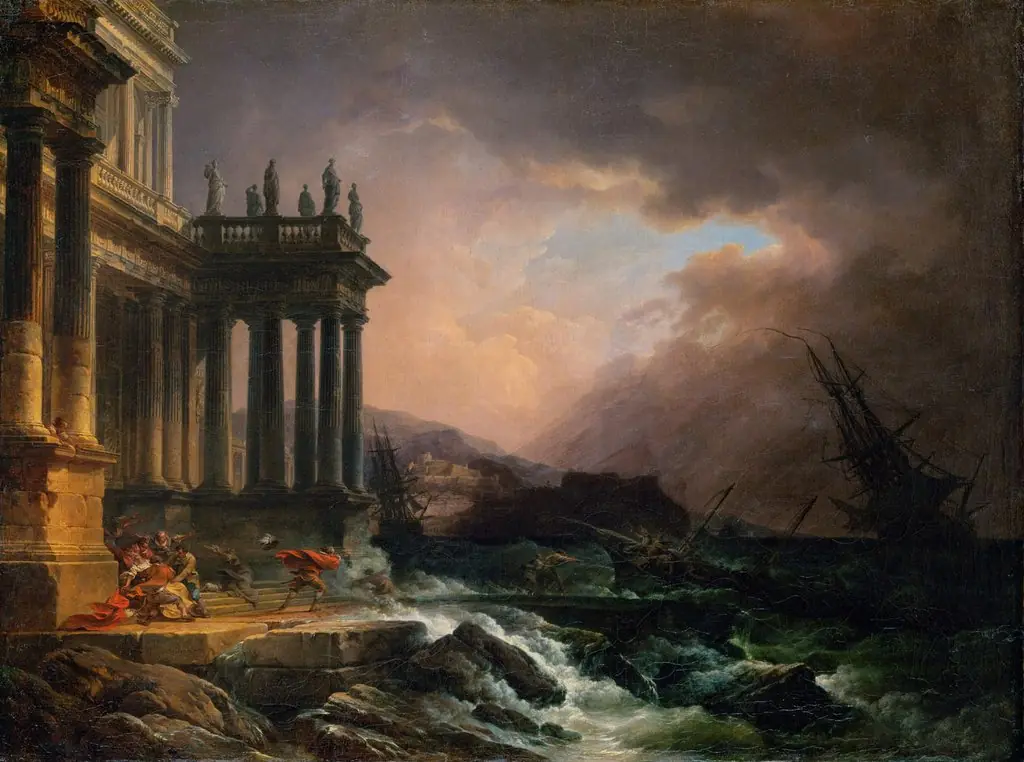
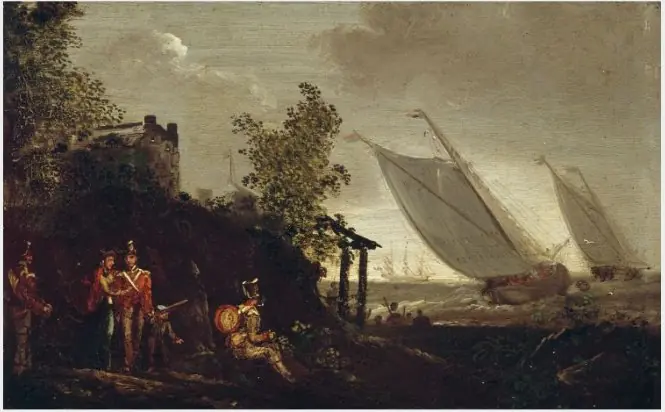
De Loutherbourg employs chiaroscuro to model Garrick’s form, using sharp contrasts between light and shadow to create volume and focus. The background, rendered with looser brushwork, suggests a distant seascape with buildings and a boat, grounding the figure in a staged environment. The ornate details of costume and the atmospheric depth reflect Rococo sensibilities, while the composition prioritizes emotional immediacy over historical accuracy.
History & Provenance
Commissioned during Garrick’s peak fame, the painting was likely intended to celebrate his theatrical legacy. It remained in private hands until entering the Victoria and Albert Museum’s collection, where it now serves as a key document of 18th-century performance culture. Its survival reflects early institutional interest in preserving artifacts of British theater, rather than solely fine art.
Context
In the 1770s, British theater was central to cultural life, and actors like Garrick were national figures. De Loutherbourg, trained in France and active in London’s theatrical circles, uniquely bridged painting and stagecraft. This portrait emerged amid growing public interest in documenting performances, as print culture and visual art began to record ephemeral theatrical moments for posterity.
Legacy
The painting endures as a record of how acting was visually codified in the Enlightenment era. It illustrates the convergence of portraiture and performance, influencing later depictions of actors in theatrical roles. De Loutherbourg’s approach—treating the stage as a pictorial space—helped shape how future artists approached the representation of live drama in static media.
Artist & collection
Artist
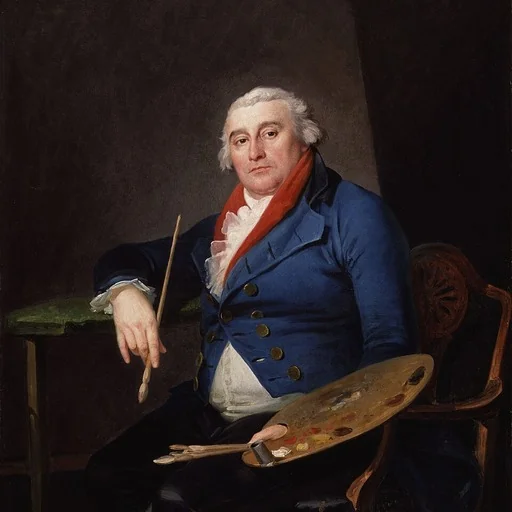
Philip James de Loutherbourg, RA (born Philippe Jacques de Loutherbourg; 31 October 1740 – 11 March 1812) was a French-born British painter who became known for his large naval works, his elaborate set designs for…