Artwork
Pierrot Catching a Fly
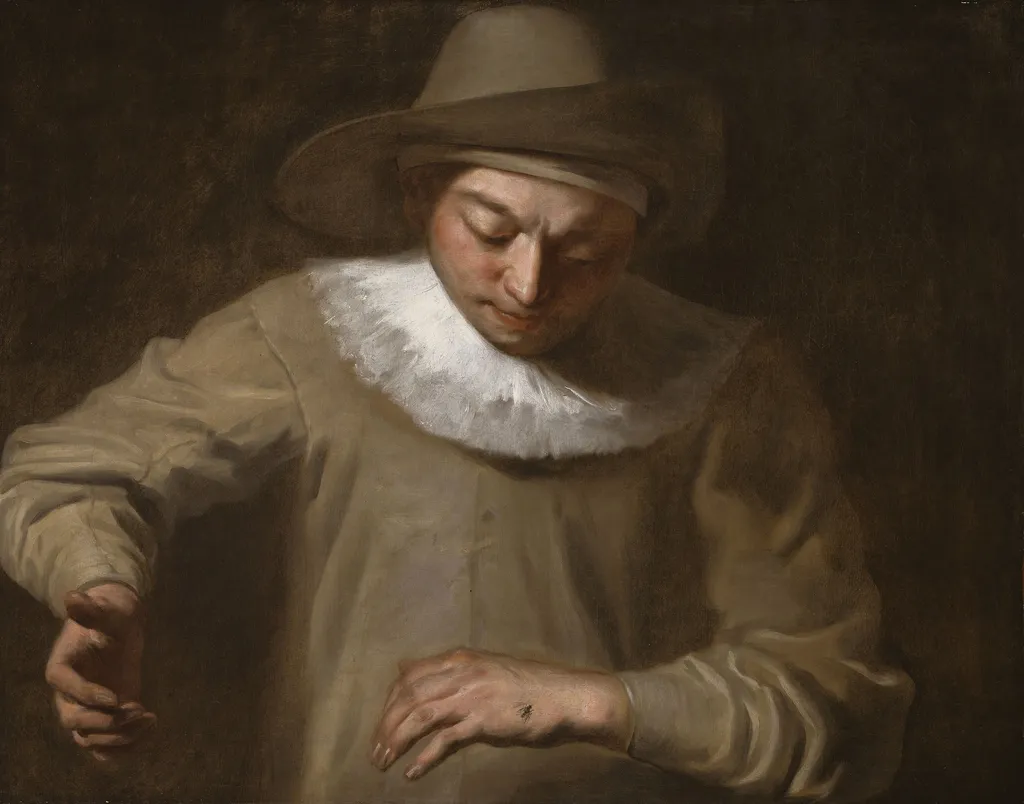
Pierrot Catching a Fly is an oil painting by the Rococo painting artist Philippe Mercier. It dates from 1745 and is held in the collection of the Art Institute of Chicago.
About this work
Overview
Mercier, known for introducing Rococo sensibilities to British art, here shifts from grand portraiture to a subtle, genre-like scene.
Painted in 1745 by Philippe Mercier, a French Huguenot working in England, this oil-on-canvas work captures a quiet, intimate moment involving the commedia dell'arte figure Pierrot. Mercier, known for introducing Rococo sensibilities to British art, here shifts from grand portraiture to a subtle, genre-like scene. The painting’s modest scale and domestic tone reflect a growing interest in everyday human behavior among 18th-century artists.
Subject & Meaning
The figure, dressed in the traditional white costume of Pierrot, is shown in a moment of idle concentration, reaching for a fly. Unlike theatrical depictions of the character, this portrayal emphasizes stillness and introspection. The act of catching a fly—trivial, almost absurd—invites quiet humor without mockery. It suggests a meditation on patience, futility, or the small rituals of solitary life, aligning with Rococo’s fascination with delicate, fleeting moments.
Technique & Style
Mercier employs soft chiaroscuro to model the figure’s form, guiding attention to the face and outstretched hand. Earth-toned pigments—ochres, browns, muted grays—create a warm, subdued palette that enhances the scene’s intimacy. The brushwork is precise yet unobtrusive, avoiding theatrical flourish. The loose collar and textured fabric suggest attention to material realism, while the shallow space confines the viewer’s focus to the figure’s subtle gesture and expression.
History & Provenance
Created during Mercier’s tenure as a painter to the British royal family, the work reflects his role in bridging French and English artistic traditions. Though not documented in early royal inventories, its survival suggests it was kept in private collections, possibly by patrons drawn to its understated charm. Its attribution has remained consistent since the 19th century, with no evidence of significant alteration or reworking.
Context
In mid-18th-century England, Rococo aesthetics were emerging as alternatives to formal portraiture. Mercier’s interest in character studies, drawn from Italian theater, resonated with a public increasingly curious about psychological nuance. While grand narratives dominated public art, works like this one catered to private contemplation, reflecting broader cultural shifts toward domesticity and emotional subtlety in visual culture.
Legacy
Though not widely exhibited today, the painting exemplifies Mercier’s contribution to the evolution of British genre painting. His blending of theatrical archetype with quiet realism influenced later artists who sought to elevate ordinary moments. The work stands as a quiet precursor to 19th-century depictions of solitary figures, demonstrating how Rococo’s lightness could carry psychological depth beyond ornamentation.
Own this work as a print
Artist & collection
Artist
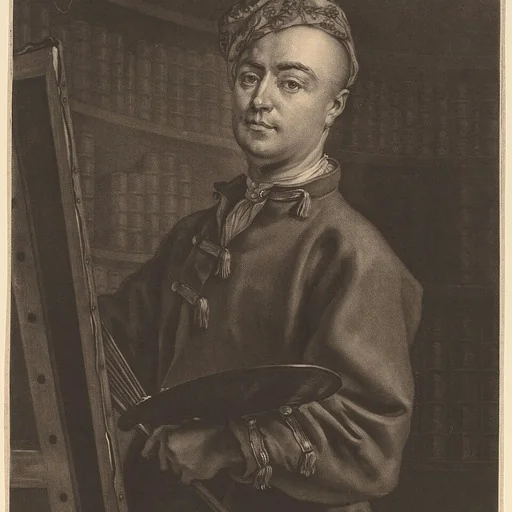
Philippe Mercier (also spelled Philip Mercier; 1689 – 18 July 1760) was an artist of French Huguenot descent from the German realm of Brandenburg-Prussia (later Kingdom of Prussia), usually defined to French school.