Artwork
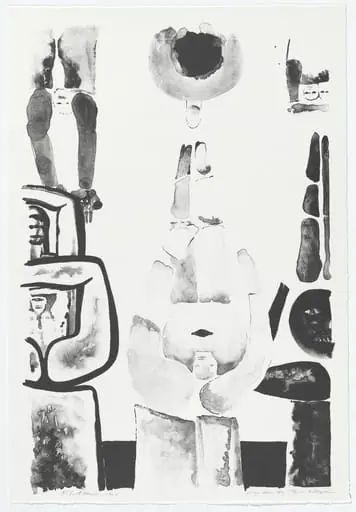
XI. Living Room. Artist's Proof
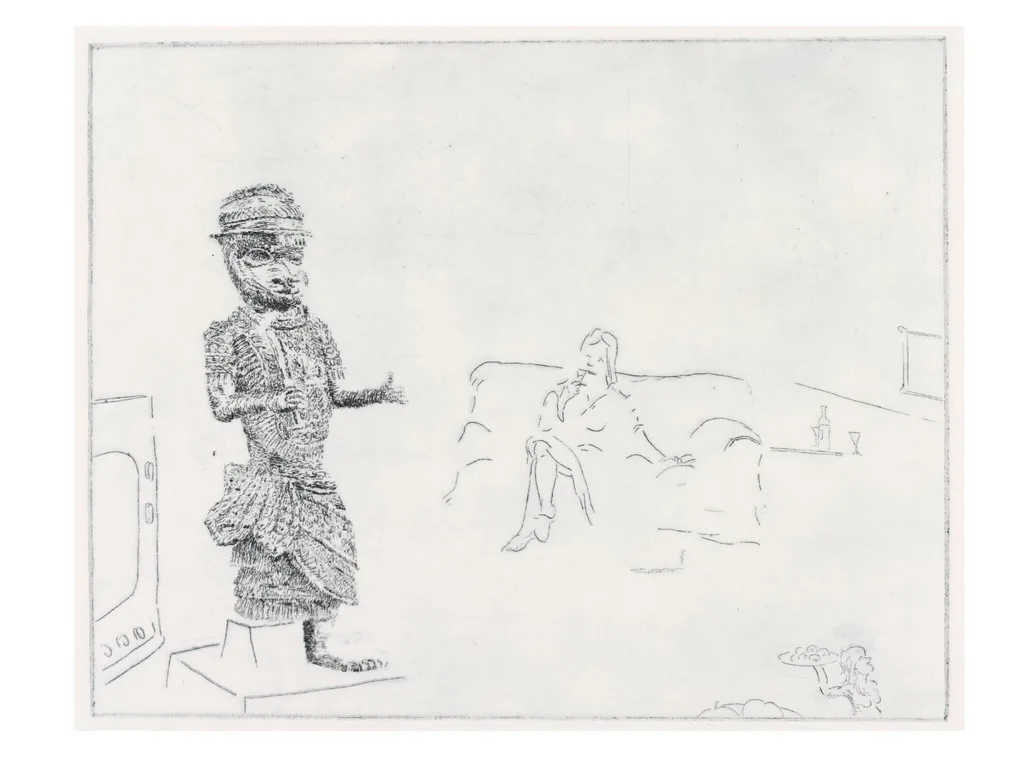
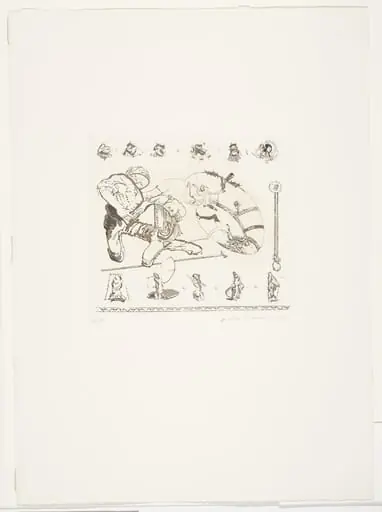
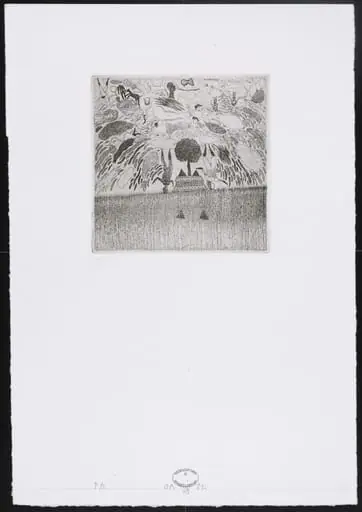
XI. Living Room. Artist's Proof is a print by Tony Phillips. It dates from 1984 and is held in the collection of the Victoria and Albert Museum.
About this work
Newspapers called the Benin people “savages,” but the art they took shows a rich, skilled culture.
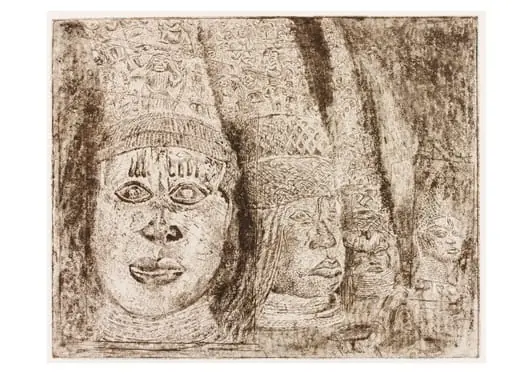
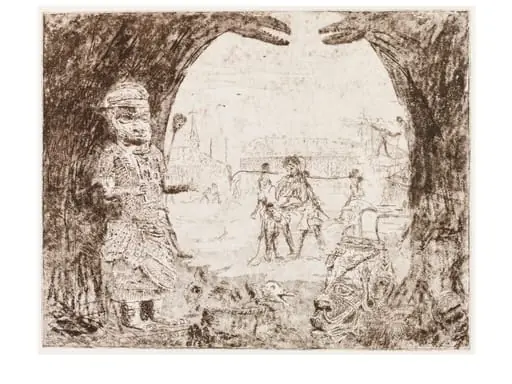
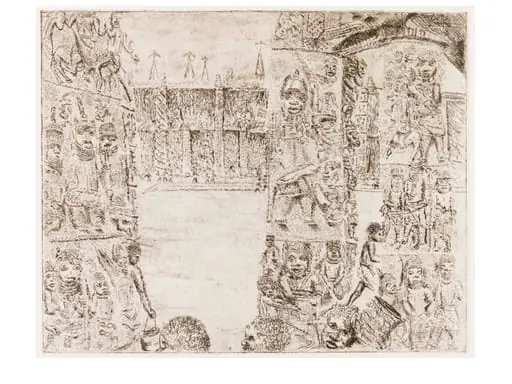
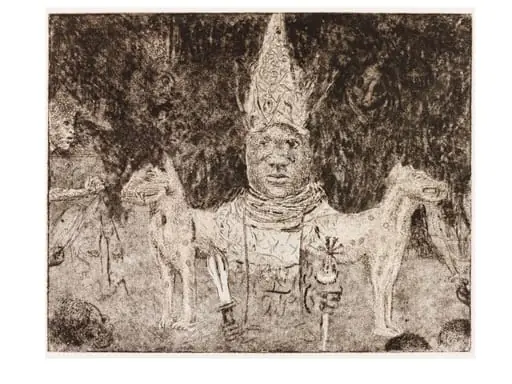
Tony Phillips made a series of etchings in 1984 called *History of the Benin Bronzes*. This print, titled *XI. Living Room. Artist’s Proof*, is part of that set. Phillips used a printing plate in a special way to create layered images.
The series looks back at how British museums got Benin Bronzes in 1897. Newspapers called the Benin people “savages,” but the art they took shows a rich, skilled culture.
Check out other prints by Tony Phillips next.
Overview
Tony Phillips created a series of twelve etchings in 1984 titled *History of the Benin Bronzes*, examining the colonial seizure of Benin artifacts in 1897. This print, the eleventh in the series and an artist’s proof, depicts a Benin bronze figure relocated to a European domestic setting. Phillips employed a layered printing technique, reusing the same plate to superimpose new imagery over the original, creating visual echoes of displacement and historical erasure.
Subject & Meaning
The print shows a Benin bronze figure, originally from a ritual context, now standing on a plinth beside a television in a sterile living room. This juxtaposition critiques the removal of sacred objects from their cultural origins and their reclassification as decorative trophies. The figure’s presence in a mundane Western interior underscores the dislocation and decontextualization imposed by colonial acquisition.
Technique & Style
Phillips reused a single etching plate to print multiple images, allowing traces of the earlier composition to remain visible beneath the new one. This method creates a palimpsest effect, where the original figure from the 'Shrine of Sacrifice' subtly persists beneath its new domestic setting. The schematic rendering of the room—flat, simplified, and devoid of detail—heightens the sense of alienation and artificial placement.
History & Provenance
The Benin Bronzes were taken during the 1897 British punitive expedition against the Kingdom of Benin, following tensions over trade control. Though British media portrayed the event as a civilizing mission, the artifacts themselves revealed a highly developed artistic tradition. Phillips’ series responds to this history by tracing the journey of these objects from royal shrines to European museum shelves and private homes.
Context
In the 1980s, debates over colonial restitution and museum ethics were gaining momentum. Phillips’ work emerged within this climate, challenging the passive acceptance of colonial loot in Western institutions. By placing the bronze in a living room, he draws attention to how such objects were normalized as interior decor, obscuring their violent origins and the cultures they represented.
Legacy
Phillips’ layered technique and conceptual approach influenced later artists addressing colonial legacies in museum collections. His series remains a quiet but potent commentary on the persistence of colonial narratives in cultural display. The work invites viewers to consider not only where these objects came from, but how their new contexts continue to shape their meaning.
Artist & collection
Artist
Tony Phillips made a series of twelve prints in 1984 that blend symbols and everyday scenes.