Artwork
ARCUL LUI GALERIUS
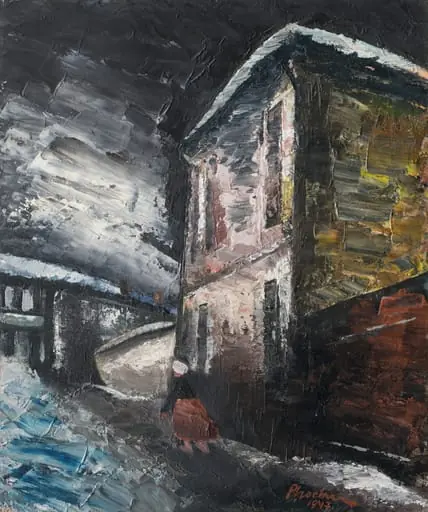
ARCUL LUI GALERIUS is an unspecified painting by Alexandru Phoebus. It dates from 1931 and is held in the collection of the National Museum of Art of Romania.
About this work
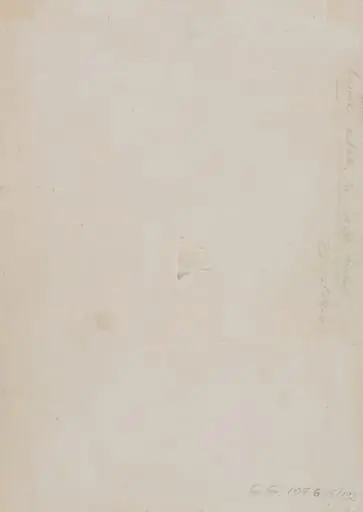
The handwriting suggests it’s from a long time ago, but the words are hard to read clearly.
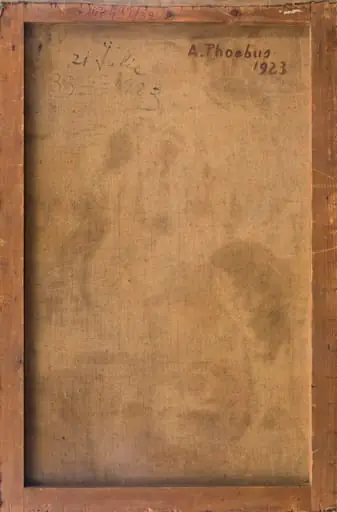
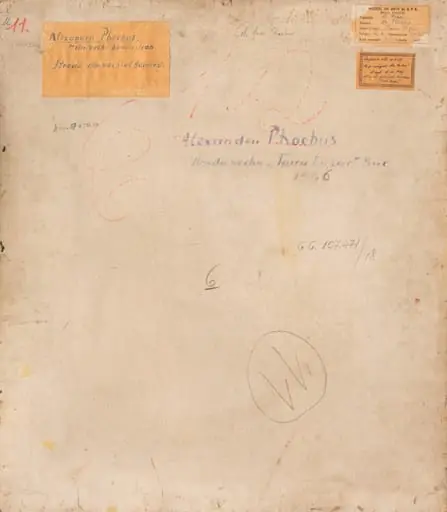
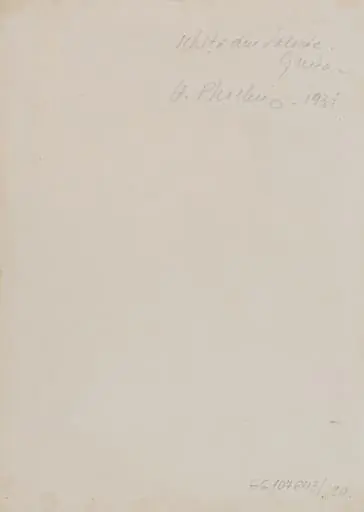
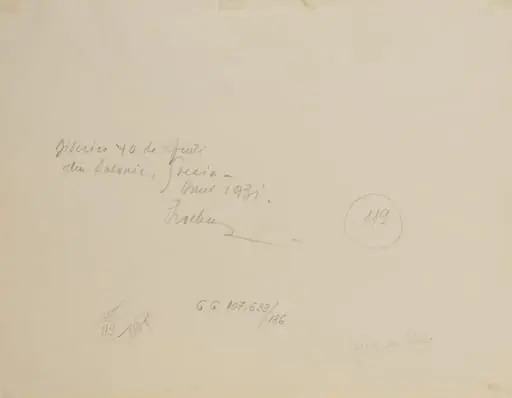
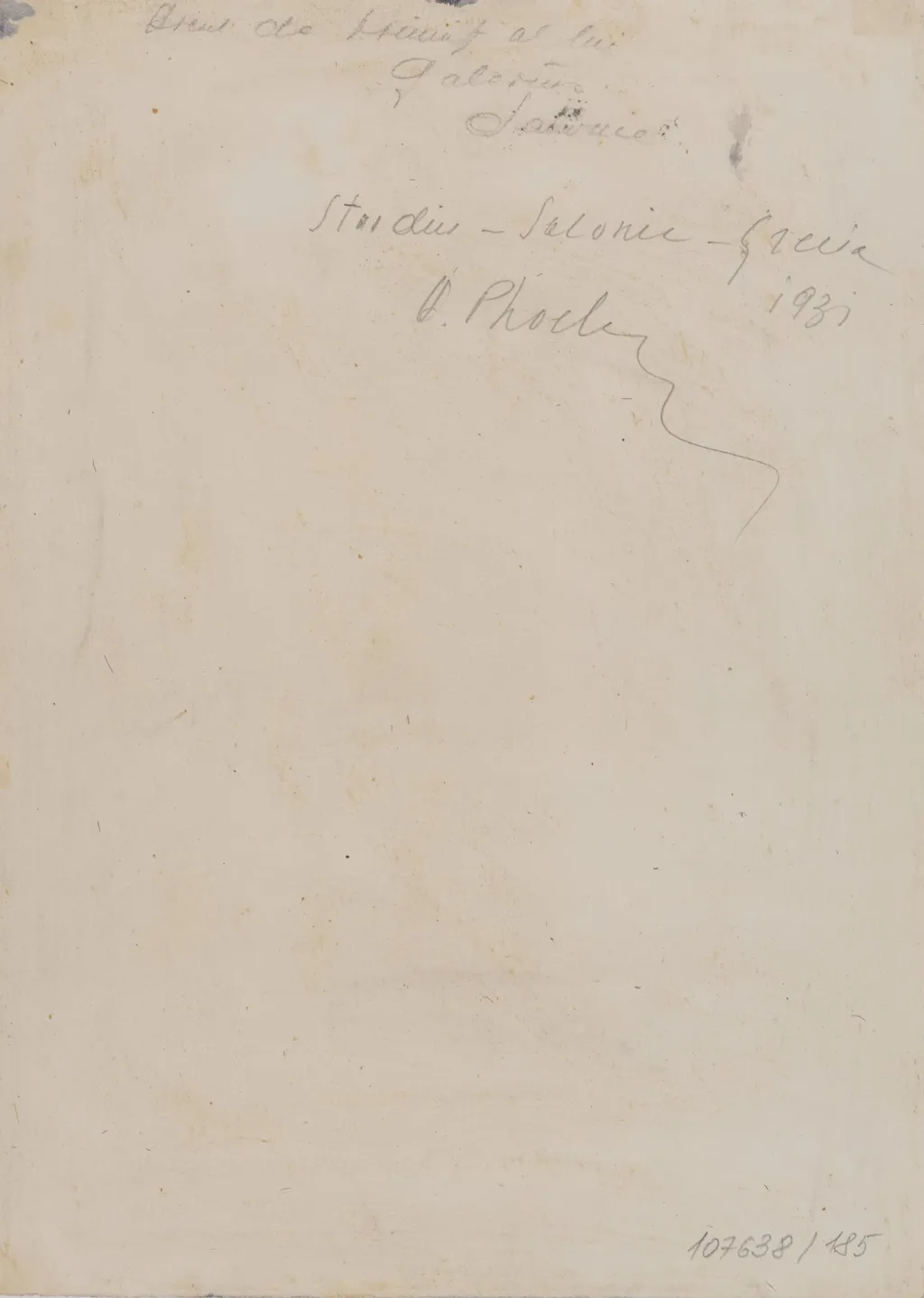
This is a faded, handwritten note on yellowed paper with ink smudges. The words are slanted and uneven, mostly in cursive. Some lines mention "Galeria" and "Salonic," while others say "Phoebus" and the year "1931." A small number, "107638/485," is scrawled in the corner.
The note looks like an old record or label, possibly tied to a painting or exhibit. The handwriting suggests it’s from a long time ago, but the words are hard to read clearly.
If you’re curious about the artist behind this, look up Phoebus, Alexandru.
Overview
ARCUL LUI GALERIUS is an image attributed to Romanian artist Alexandru Phoebus, dated to the year 1931. The work is catalogued under the title that references a gallery, suggesting a possible connection to an exhibition or institutional setting.
Subject & Meaning
The title, translated as "The Gallery’s Arch," hints at an architectural or spatial motif, perhaps depicting an entrance or structural element associated with an art venue. The lack of visual detail in the surviving documentation leaves the precise iconography open to interpretation.
Technique & Style
Identified as an image, the piece likely employs drawing or printmaking methods common to Phoebus’s early twentieth‑century practice. While the original medium is not specified, the period’s stylistic tendencies include linear composition and a restrained palette, aligning with the artist’s broader oeuvre.
History & Provenance
A faded handwritten note on yellowed paper, bearing cursive entries such as “Galeria,” “Salonic,” and the artist’s name, accompanies the image. The note includes the year 1931 and a reference number “107638/485,” suggesting it functioned as an inventory label or exhibition record, possibly from a gallery in Salonika.
Context
Created in the interwar period, the work emerges from a time when Romanian artists were engaging with both national traditions and European modernist currents. Phoebus’s activity during this era reflects a broader cultural exchange, with exhibitions often traveling between cities such as Bucharest and Salonika.
Artist & collection