Artwork
BULEVARDUL FILANTROPIA
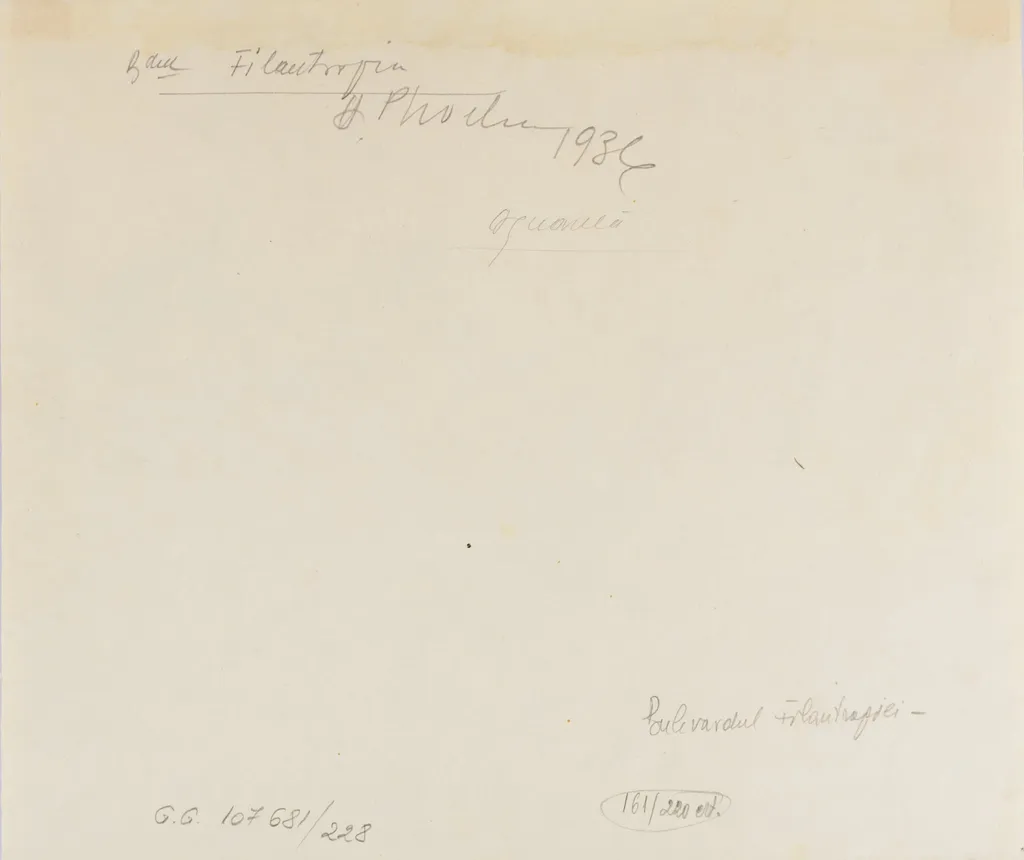
BULEVARDUL FILANTROPIA is an unspecified painting by Alexandru Phoebus. It dates from 1936 and is held in the collection of the National Museum of Art of Romania.
About this work
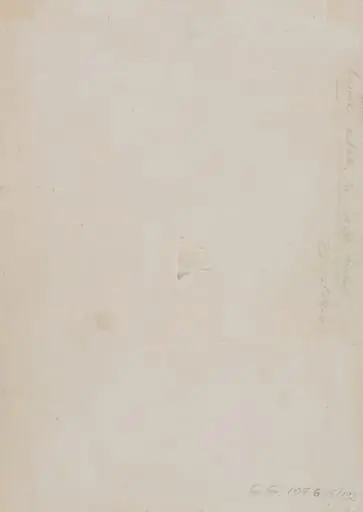
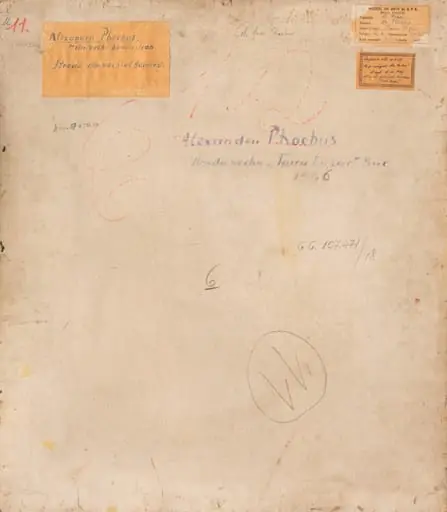
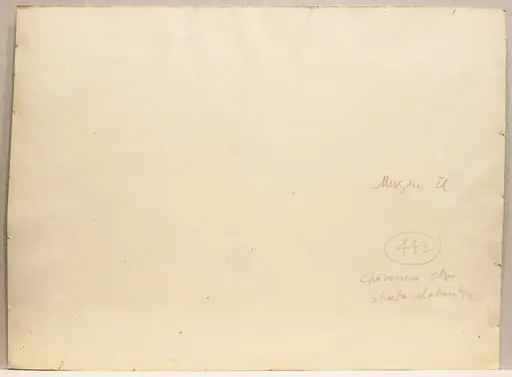
In the top left corner, there’s messy handwriting that looks like a title and a year—maybe 1936.
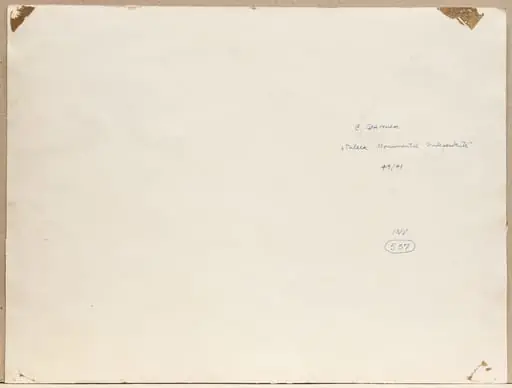
This is a blank canvas with faded, light brown paper. In the top left corner, there’s messy handwriting that looks like a title and a year—maybe 1936. The bottom right has more scribbles, including a circled number and a name that’s hard to read. The edges are slightly torn, and the whole thing looks old and worn.
The handwriting mentions *Bulevardul Filantropia*, which might be the painting’s title. The year 1936 is written clearly, but the rest is just notes—likely from a museum or archive.
If you’re curious about where this might live, check out the Museum of Ethnography.
Overview
BULEVARDUL FILANTROPIA is a 1936 artwork by Alexandru Phoebus, presented as a blank canvas with faded, light brown paper, featuring handwritten annotations and signs of aging.
Subject & Meaning
The subject of the work is ambiguous due to the absence of a depicted image. The title, inferred from handwritten notes, *Bulevardul Filantropia*, suggests a potential reference to a location or concept related to philanthropy, though its connection to the blank canvas is unclear.
Technique & Style
The artwork's technique is characterized by its simplicity and the intentional or resultant blankness of the canvas. The dominant elements are the handwritten annotations, which introduce an element of informality and potential biographical or archival significance.
History & Provenance
Created in 1936 by Alexandru Phoebus, the work bears handwritten notes, including a possible title and year, along with less decipherable archival or museum annotations in the bottom right corner. Provenance suggests a connection to the Museum of Ethnography.
Context
The context in which *BULEVARDUL FILANTROPIA* was created (1936) may imply responses to, or reflections of, the artistic, social, or political climates of the time, though the blank canvas offers little direct insight into these influences.
Legacy
The artwork's legacy is marked by its preservation and potential exhibition, as indicated by its association with the Museum of Ethnography. Its impact or interpretation may hinge on the unresolved tension between its titled suggestion of philanthropy and its visually blank, annotated state.
Artist & collection